
Kirjailija
Nikolai Gogol
Kirjat ja teokset yhdessä paikassa: 300 kirjaa, julkaisuja vuosilta 1835–2026, suosituimpiin kuuluu Dead Souls (Translated by C. J. Hogarth with an Introduction by John Cournos). Vertaile teosten hintoja ja tarkista saatavuus suomalaisista kirjakaupoista.
Nimi esiintyy myös muodoissa: Nikolaï Gogol, Nikolai Gógol, Nikolái Gógol
300 kirjaa
Kirjojen julkaisuvuodet: 1835–2026.
"One of the most famous comedies in world theatre, Gogol's masterpiece has lost none of its bite. In a small town corruption is rife, and the Mayor and his cronies have got it made. So when they learn they are going to be subject to an undercover government inspection they panic. Mistaking a penniless nobody for the inspector they swiftly fall victims to their own stupidity and greed. A dazzling blend of preposterous characters and familiar situations, Nabokov called The Government Inspector the greatest play in the Russian language. A production of this version of the play opened at the Chichester Festival in June 2005 starring the comedian Alistair McGowan."
"Dead Souls," by Nikolai Gogol, is part of the "Barnes & Noble Classics"" "" "series, which offers quality editions at affordable prices to the student and the general reader, including new scholarship, thoughtful design, and pages of carefully crafted extras. Here are some of the remarkable features of "Barnes & Noble Classics" All editions are beautifully designed and are printed to superior specifications; some include illustrations of historical interest. "Barnes & Noble Classics "pulls together a constellation of influences--biographical, historical, and literary--to enrich each reader's understanding of these enduring works. Russia's first major novel, and perhaps still its most popular, Nikolai Gogol's "Dead Souls" is a comic epic of greed and gluttony that is admired not only for its colorful cast of characters and devastating satire, but also for its sense of moral fervor. The anti-hero of the novel is a man named Chichikov, who hatches a brilliant plan to get rich quick. He will journey through Russia and buy up, at reduced rates, the recently deceased serfs of landowners, who now won't have to pay government taxes on the 'dead souls.' With this list of fictitious serfs as collateral, Chichikov can buy an estate and begin amassing his fortune. What follows is a series of grotesquely humorous transactions with Russian landowners, each more queer and repellant than the last. Although Gogol spends much of the novel exposing the evils of the Russian gentry through absurd and hilarious satire, he also expresses a passionate love for his country that resonates with readers even today. A stylistic tour de force, encompassing an astonishing range of voices from delicate, intimate lyricism to robust, bawdy ribaldry, "Dead Souls" is an intensely felt anatomy of the human condition. Jeffrey Meyers, a Fellow of the Royal Society of Literature, has published forty-three books, including biographies of Ernest Hemingway, Robert Frost, D. H. Lawrence, Joseph Conrad, and George Orwell. He also wrote the Introductions and Notes to the Barnes & Noble Classics editions of Edith Wharton's "The House of Mirth" and Rudyard Kipling's "Kim."
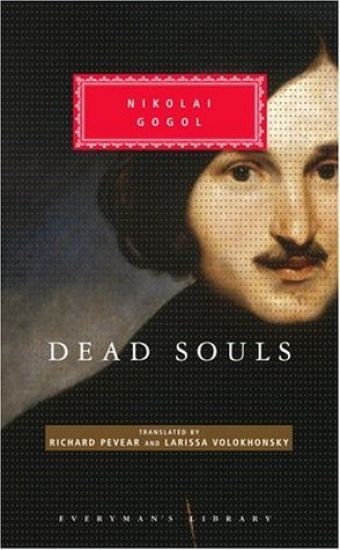
Nikolai Gogol's Dead Souls is the great comic masterpiece of Russian literature-a satirical and splendidly exaggerated epic of life in the benighted provinces. Gogol hoped to show the world "the untold riches of the Russian soul" in this 1842 novel, which he populated with a Dickensian swarm of characters: rogues and scoundrels, landowners and serfs, conniving petty officials-all of them both utterly lifelike and alarmingly larger than life. Setting everything in motion is the wily antihero, Chichikov, the trafficker in "dead souls"-deceased serfs who still represent profit to those clever enough to trade in them. This lively, idiomatic English version by the award-winning translators Richard Pevear and Larissa Volokhonsky makes accessible the full extent of the novel's lyricism, sulphurous humor, and delight in human oddity and error.
Since its publication in 1842, Dead Souls has been celebrated as a supremely realistic portrait of provincial Russian life and as a splendidly exaggerated tale; as a paean to the Russian spirit and as a remorseless satire of imperial Russian venality, vulgarity, and pomp. As Gogol's wily antihero, Chichikov, combs the back country wheeling and dealing for "dead souls"--deceased serfs who still represent money to anyone sharp enough to trade in them--we are introduced to a Dickensian cast of peasants, landowners, and conniving petty officials, few of whom can resist the seductive illogic of Chichikov's proposition. This lively, idiomatic English version by the award-winning translators Richard Pevear and Larissa Volokhonsky makes accessible the full extent of the novel's lyricism, sulphurous humour, and delight in human oddity and error.
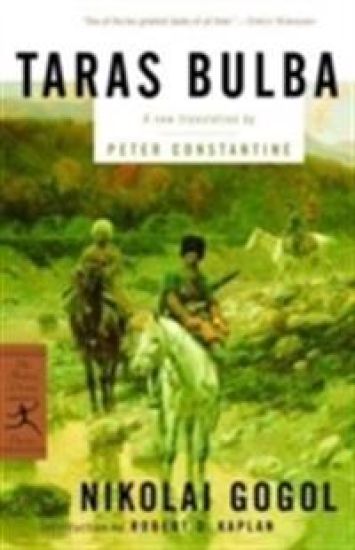
The First New Translation in Forty Years Set sometime between the mid-sixteenth and early-seventeenth century, Gogol's epic tale recounts both a bloody Cossack revolt against the Poles (led by the bold Taras Bulba of Ukrainian folk mythology) and the trials of Taras Bulba's two sons. As Robert Kaplan writes in his Introduction, " Taras Bulba] has a Kiplingesque gusto . . . that makes it a pleasure to read, but central to its theme is an unredemptive, darkly evil violence that is far beyond anything that Kipling ever touched on. We need more works like Taras Bulba to better understand the emotional wellsprings of the threat we face today in places like the Middle East and Central Asia." And the critic John Cournos has noted, "A clue to all Russian realism may be found in a Russian critic's observation about Gogol: 'Seldom has nature created a man so romantic in bent, yet so masterly in portraying all that is unromantic in life.' But this statement does not cover the whole ground, for it is easy to see in almost all of Gogol's work his 'free Cossack soul' trying to break through the shell of sordid today like some ancient demon, essentially Dionysian. So that his works, true though they are to our life, are at once a reproach, a protest, and a challenge, ever calling for joy, ancient joy, that is no more with us. And they have all the joy and sadness of the Ukrainian songs he loved so much."
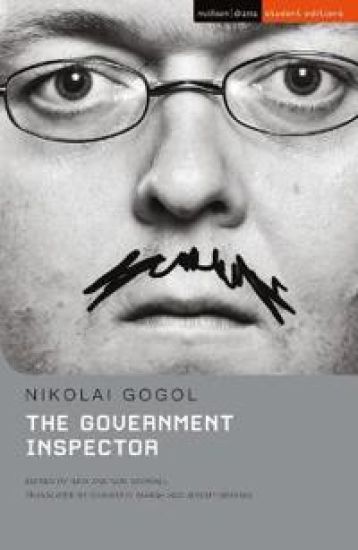
Widely held to have led the realist revolution in Russian drama, Gogol liberated comedy from a tradition of didacticism and sentimentality. The Government Inspector, Gogol's masterpiece, was regarded by Vladimir Nabokov as the greatest play in the Russian language. This is the poet and playwright Adrian Mitchell's version of Gogol's classic satire on human vanity with its story of a penniless nobody from Moscow who is mistaken for a government inspector by the corrupt and self-seeking officials of a small town in Tsarist Russia. Methuen Drama Student Editions are expertly annotated texts of a wide range of plays from the modern and classic repertoires. As well as the complete text, the volume contains a chronology of the playwright's life and works, an introduction with background, a discussion of various interpretations, and notes on words and phrases.

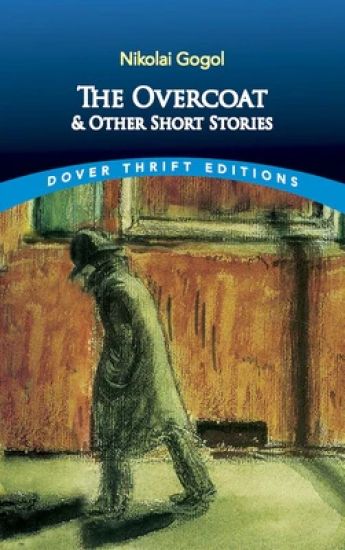
The Overcoat and Other Short Stories
Nikolai Gogol
Dover Publications Inc.
2000
nidottu
Halvin toimitettuna 11,90 €
Four works by great 19th-century Russian author: "The Nose," a savage satire of Russia's incompetent bureaucrats; "Old-Fashioned Farmers," a pleasant depiction of an elderly couple living in rustic seclusion; "The Tale of How Ivan Ivanovich Quarrelled with Ivan Nikiforovich," one of Gogol’s most famous comic stories; and "The Overcoat," widely considered a masterpiece of form.
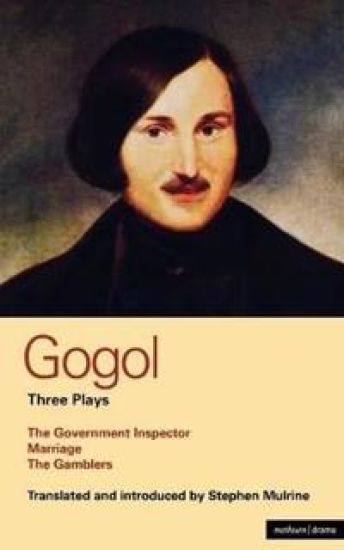
This collection contains Gogol's three completed plays The Government Inspector, which satirises a corrupt society was regarded by Nabokov as the greatest play in the Russian language and is still widely studied in schools and universities: "I resolved to gather into one heap everything that was bad in Russia which I was aware of at that time, all the injustices being perpetrated in those places, and in those circumstances that especially cried out for justice, and tried to hold them all up to ridicule, at one fell swoop." (Nikolai Gogol) Marriage is a comedy about the business of matchmaking and matrimony; The Gamblers is an exoriating piece about the excesses of the Moscow aristocracy." Two and two make five, if not the square root of five, and it all happens quite naturally in Gogol's world... Gogol was a strange creature, but then genius is always strange" (Vladimir Nabokov)
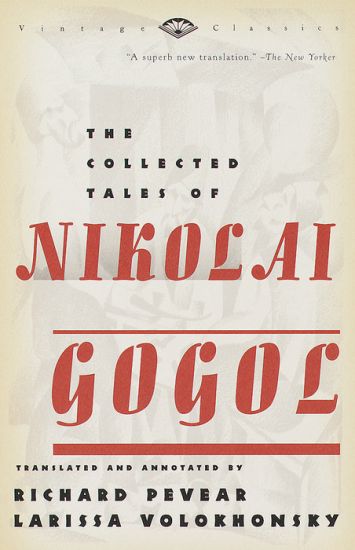
"A superb new translation" (The New Yorker) of stories that allow readers to experience the unmistakable genius of a writer who paved the way for Dostoevsky and Kafka. When Nikolai Gogol left his Ukrainian village in 1828 to seek his fortune in St. Petersburg, he began composing these marvelous stories--tales that combine the wide-eyed, credulous imagination of the peasant with the sardonic social criticism of the city-dweller. Collected here are Gogol's finest tales--from the demon-haunted "St. John's Eve" to the strange surrealism of "The Nose," from the heartrending trials of the copyist in "The Overcoat" to those of the delusional clerk in "The Diary of a Madman." To this exquisite translation--destined to become the definitive edition of Gogol's short fiction--Richard Pevear and Larissa Volokhonsky bring the same clarity and fidelity to the original that they brought to their brilliant translation of Gogol's classic novel Dead Souls and their award-winning version of Dostoevsky's The Brothers Karamazov.
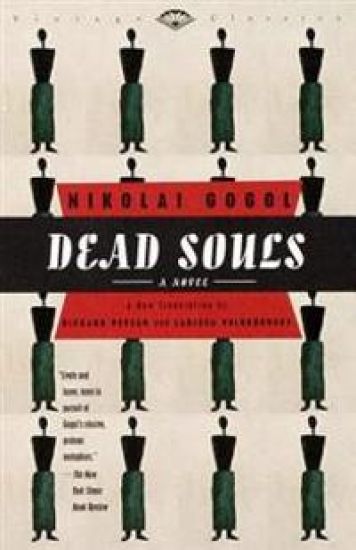
Since its publication in 1842, Dead Souls has been celebrated as a supremely realistic portrait of provincial Russian life and as a splendidly exaggerated tale; as a paean to the Russian spirit and as a remorseless satire of imperial Russian venality, vulgarity, and pomp. As Gogol's wily antihero, Chichikov, combs the back country wheeling and dealing for "dead souls"--deceased serfs who still represent money to anyone sharp enough to trade in them--we are introduced to a Dickensian cast of peasants, landowners, and conniving petty officials, few of whom can resist the seductive illogic of Chichikov's proposition. This lively, idiomatic English version by the award-winning translators Richard Pevear and Larissa Volokhonsky makes accessible the full extent of the novel's lyricism, sulphurous humor, and delight in human oddity and error.
Drama Classics: The World's Great Plays at a Great Little Price A classic satire of provincial bureaucracy, which only saw the stage after the personal intervention of Tsar Nicholas I. A small, corrupt Russian town receives a letter informing them of the imminent visit of a government inspector travelling incognito. When a passing civil servant is mistaken for the inspector, panic soon sets in. This English version of Nikolai Gogol's play The Government Inspector, in the Nick Hern Books Drama Classics series, is translated and introduced by Stephen Mulrine.
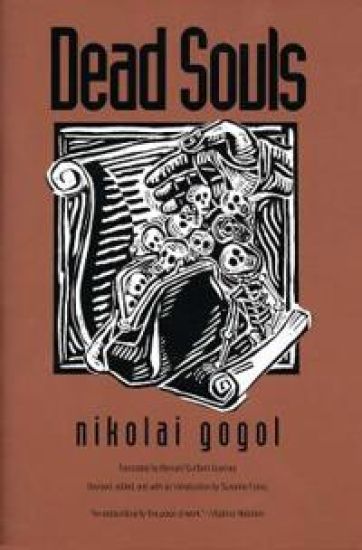
Gogol's 1842 novel Dead Souls, a comic masterpiece about a mysterious con man and his grotesque victims, is one of the major works of Russian literature. It was translated into English in 1942 by Bernard Guilbert Guerney; the translation was hailed by Vladimir Nabokov as "an extraordinarily fine piece of work" and is still considered the best translation of Dead Souls ever published. Long out of print, the Guerney translation of Dead Souls is now reissued. The text has been made more faithful to Gogol's original by removing passages that Guerney inserted from earlier drafts of Dead Souls. The text is accompanied by Susanne Fusso's introduction and by appendices that present excerpts from Guerney's translations of other drafts of Gogol's work and letters Gogol wrote around the time of the writing and publication of Deal Souls. "I am delighted that Guerney's translation of Dead Souls [is] available again. It is head and shoulders above all the others, for Guerney understands that to 'translate' Gogol is necessarily to undertake a poetic recreation, and he does so brilliantly."-Robert A. Maguire, Columbia University "The Guerney translation of Dead Souls is the only translation I know of that makes any serious attempt to approximate the qualities of Gogol's style-exuberant, erratic, 'Baroque,' bizarre."-Hugh McLean, University of California, Berkeley "A splendidly revised and edited edition of Bernard Guerney's classic English translation of Gogol's Dead Souls. The distinguished Gogol scholar Susanne Fusso may have brought us as close as the English reader may ever expect to come to Gogol's masterpiece. No student, scholar, or general reader will want to miss this updated, refined version of one of the most delightful and sublime works of Russian literature."-Robert Jackson, Yale University
This is the poet and playwright Adrian Mitchell's version of Gogol's classic satire on human vanity with its story of a penniless nobody from Moscow who is mistaken for a government inspector by the corrupt and self-seeking officials of a small town in Tsarist Russia." The greatest artist that Russia has yet produced" Vladimir Nabokov
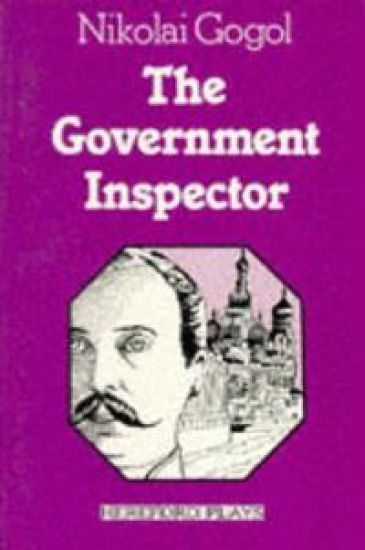
This series presents a wide choice of 20th-century drama. The books offer scene-by-scene analysis, structured questions and assignment suggestions for GCSE. In this Russian comedy, a young traveller in a provincial town is mistaken for a government inspector.
A few factual points ought to be explained to the reader, even though the novel itself eventually suffices to clarify some of them. First, the title of the book. Among Russian serf-owning gentry, the idiomatic way to assess someone’s wealth was to express it in terms of the number of “souls” he owned—that is, male, adult serfs. Taxes on serfs had to be paid by the owner until the next census or registration date even if they may have died in the meantime. Gogol’s “dead souls,” in addition to this literal reference to serfs who had died since the last registration date for serfs, are also a metaphor for the dead moral and spiritual sensibilities of the many inhabitants of Gogol’s zoo. This title ran into trouble with Gogol’s censors, who held the ridiculous suspicion that the title might be a blasphemous attack on the immortality of the human soul. Gogol therefore added the title “Chichikov’s Adventures.”
The compassion, simplicity, and gentle humor with which he treats the poignant quest of a hapless civil servant for the return of his stolen overcoat--and the fantastic yet realistic manner in which he takes revenge on his nemesis, the Very Important Person--mark "The Overcoat" as one of the greatest achievements of Gogol's genius. The five other "Tales of Good and Evil" in this superb collection demonstrate the broad range of Gogol's literary palette in his short fiction: the fantastic, supernaturally tinged "The Terrible Vengeance," the comic portraiture of "Ivan Fydorovich Shponka and His Aunt," the tragic moral realism of "The Portrait" and "Nevsky Avenue," and the rampaging satire and absurdism of his send-up of Russian upper-class stupidity, "The Nose." The stories offer the reader the perfect introduction to the imaginative genius of Gogol, which was to flower so triumphantly in his masterpiece, Deal Souls.
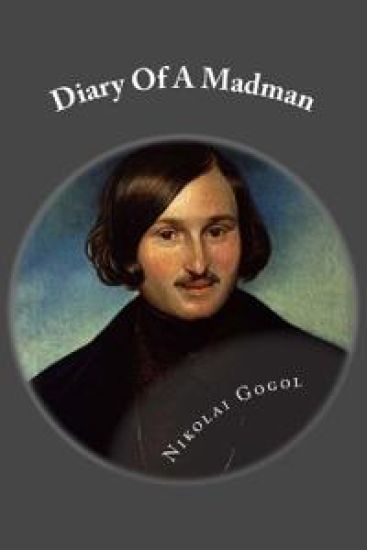
Diary of a Madman is a farcical short story by Nikolai Gogol. Along with The Overcoat and The Nose, Diary of a Madman is considered to be one of Gogol's greatest short stories. The tale centers on the life of a minor civil servant during the repressive era of Nicholas I. Following the format of a diary, the story shows the descent of the protagonist, Poprishchin, into insanity. Diary of a Madman, the only one of Gogol's works written in first person, follows diary-entry format.