Kirjojen hintavertailu – 12 903 725 kirjaa ja 27 kauppaa
Kirjailija
Occupational Safety and Administration
Kirjat ja teokset yhdessä paikassa: 182 kirjaa, julkaisuja vuosilta 2012–2015, suosituimpiin kuuluu Lead in Construction. Vertaile teosten hintoja ja tarkista saatavuus suomalaisista kirjakaupoista.
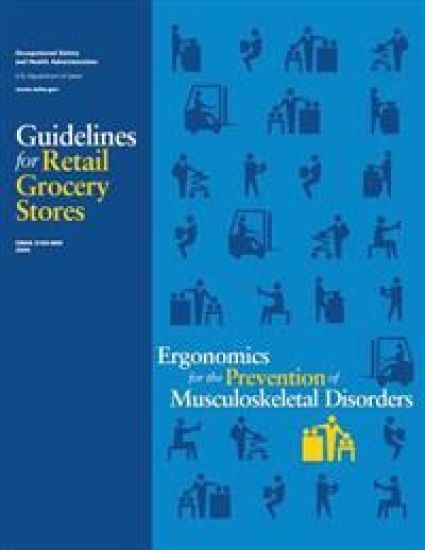
OSHA's Ergonomics for the Prevention of Musculoskeletal Disorders: Guidelines for Retail Grocery Stores provide practical recommendations to help grocery store employers and employees reduce the number and severity of injuries in their workplaces. Many of the work-related injuries and illnesses experienced by grocery store workers are musculoskeletal disorders (MSDs), such as back injuries and sprains or strains that may develop from various factors, including lifting, repetitive motion disorders such as carpal tunnel syndrome, or injuries resulting from overexertion. MSDs may also be caused partly or wholly by factors outside of work. More remains to be learned about the relationship between workplace activities and the development of MSDs. However, OSHA believes that the experiences of many grocery stores provide a basis for taking action to better protect workers. As the understanding of these injuries develops and information and technology improve, the recommendations made in this document may be modified. Grocery stores that have implemented injury prevention efforts have said they have success- fully reduced work-related injuries and workers' compensation costs. Many times, these efforts have reduced injuries and led to increased worker efficiency and lowered operating costs. For example, designing checkstands to reduce ergonomic risk factors such as twisting or ex- tended reaching can improve cashier effective- ness and productivity. The purpose of these voluntary guidelines is to build on the progress that the grocery store industry has made in addressing causes of work-related injuries and illnesses. These guidelines are intended only for retail grocery stores and combined full-line super- market and discount merchandisers including warehouse retail establishments. The discussion is intended primarily for grocery store managers and store employees, but may also be useful for corporate managers or corporate safety professionals. OSHA did not develop these guidelines to address warehouses, convenience stores, or business operations that may be located within grocery stores, such as banks, post offices, or coffee shops. However, operations in retail or distribution that involve similar tasks or operations as those addressed in these guidelines may find the information useful. The information in these guidelines provides grocery stores with effective approaches, as well as useful references to be used when determining the need for ergonomic solutions. The recommendations and information presented here are intended as a general guideline and flexible framework to be adapted to the needs and resources of each individual store. OSHA recognizes that small employers, in particular, may not have the need for as comprehensive a program as would result from implementation of every action and strategy described in these guidelines. Additionally, OSHA realizes that small grocery stores may need assistance to implement an appropriate ergonomics program.
Hazards exist in every workplace in many different forms: sharp edges, falling objects, flying sparks, chemicals, noise and a myriad of other potentially dangerous situations. The Occupational Safety and Health Administration (OSHA) requires that employers protect their employees from workplace hazards that can cause injury. Controlling a hazard at its source is the best way to protect employees. Depending on the hazard or workplace conditions, OSHA recommends the use of engineering or work practice controls to manage or eliminate hazards to the greatest extent possible. For example, building a barrier between the hazard and the employees is an engineering control; changing the way in which employees perform their work is a work practice control. When engineering, work practice and administrative controls are not feasible or do not provide sufficient protection, employers must provide personal protective equipment (PPE) to their employees and ensure its use. Personal protective equipment, commonly referred to as "PPE", is equipment worn to minimize exposure to a variety of hazards. Examples of PPE include such items as gloves, foot and eye protection, protective hearing devices (earplugs, muffs) hard hats, respirators and full body suits. This guide will help both employers and employees do the following: Understand the types of PPE; Know the basics of conducting a "hazard assessment" of the workplace; Select appropriate PPE for a variety of circumstances; Understand what kind of training is needed in the proper use and care of PPE.