Kirjojen hintavertailu – 12 903 725 kirjaa ja 27 kauppaa
Kirjailija
Occupational Safety and Administration
Kirjat ja teokset yhdessä paikassa: 182 kirjaa, julkaisuja vuosilta 2012–2015, suosituimpiin kuuluu Lead in Construction. Vertaile teosten hintoja ja tarkista saatavuus suomalaisista kirjakaupoista.
This Instruction establishes enforcement policies and procedures for OSHA's Severe Violator Enforcement Program (SVEP), which concentrates resources on inspecting employers who have demonstrated indifference to their OSH Act obligations by committing willful, repeated, or failure-to-abate violations. Enforcement actions for severe violator cases include mandatory follow-up inspections, increased company/corporate awareness of OSHA enforcement, corporate-wide agreements, where appropriate, enhanced settlement provisions, and federal court enforcement under Section 11(b) of the OSH Act. In addition, this Instruction provides for nationwide referral procedures, which includes OSHA's State Plan States. This Instruction replaces OSHA's Enhanced Enforcement Program (EEP). Significant Changes from the Enhanced Enforcement Program (EEP) include: High-Emphasis Hazards are targeted, which include fall hazards and specific hazards identified from selected National Emphasis Programs. The Assistant Secretary has determined that Nationwide Inspections of Related Workplaces/ Worksites are critical inspections for the purpose of 29 CFR 1908.7(b)(2)(iv). Creates a nationwide referral procedure for Regions and State Plan States.
This instruction provides guidance and direction to the Occupational Safety and Health Administration (OSHA) National, Regional, and Area Offices concerning OSHA's policies and procedures for training of Compliance Safety and Health Officers (CSHOs). It is essential that CSHOs have the requisite knowledge, skills, capability and varied professional backgrounds to accomplish OSHA's mission of promoting safe and healthful working conditions for America's working men and women. In this instruction, OSHA has provided detailed guidance for training required during the initial three-year period of a CSHO's career, including recommended training that assists the CSHO with preparation for professional certification exams. This instruction identifies training paths that provide assistance to the regions in managing their training programs. The goal of this instruction is to assist CSHOs and their supervisors with direction, guidance and training options that directly contribute to the CSHO's ability to represent OSHA with a high degree of professional expertise. In addition, the CSHO training program identifies a correlation between CSHO competency and achieving respected credentials in the fields of safety, health and construction such as Certified Safety Professional (CSP), Certified Industrial Hygienist (CIH) and Certified Construction Health and Safety Technician (CCHST(R)). This instruction describes the revised training program for OSHA compliance personnel and supersedes TED 01-00-012, Training Program for OSHA Compliance Personnel, dated July 7, 1992. Changes include: Each newly-hired CSHO will be required to complete a minimum of eight courses offered by the OSHA Training Institute (OTI) during the first three years of his/her career as a CSHO. The order and sequence of these courses are as prescribed in this instruction. The OTI training program offers Regional Administrators the opportunity to incorporate up to four additional technical courses into the CSHO's initial three-year training plan. Each CSHO and his/her supervisor will be required to track progress throughout the initial three-year period. An Individual Development Plan (IDP) will be updated annually. The IDP (Form DL-80) will be used as a planning and tracking document for reference by the CSHO and his/her supervisor to ensure that the CSHO receives all required training. A time extension policy has been added and the waiver policy has been clarified. Appendix A has been revised and expanded. Appendix A combines formalized training with self-instruction and on-the-job training recommendations in a comprehensive format. Supervisors and CSHOs will find this a useful tool for planning and sequencing professional development during the first year of the CSHO's career. Appendix B has been added to provide supervisors with recommended CSHO self instruction and follow-up on-the-job training to reinforce OTI training provided in years two and three. Appendix C lists OTI courses that are required or recommended in OSHA directives as a quick reference guide. This reference may be used to assist supervisors and CSHOs in developing IDPs for continuing professional development. Appendix D provides information to assist supervisors and CSHOs determine which OTI courses could help prepare a CSHO for the Certified Construction Health and Safety Technician (CCHST(R)), Certified Industrial Hygienist (CIH) or Certified Safety Professional (CSP) professional certification exam.
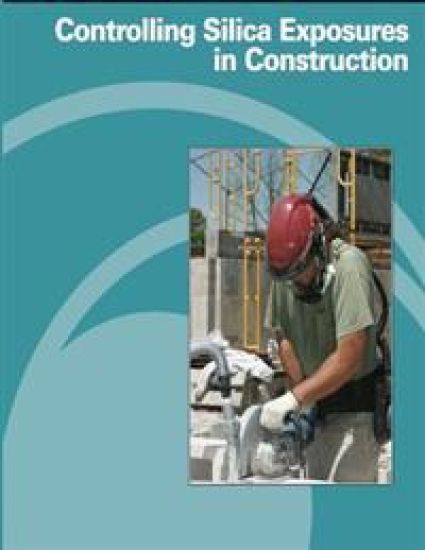
This guidance document, OSHA 3362-04, Controlling Silica Exposures in Construction, addresses the control of employee exposures to respirable dust containing crystalline silica, which is known to cause silicosis, a serious lung disease, as well as increase the risk of lung cancer and other systemic diseases. This document provides information on the effectiveness of various engineering control approaches for several kinds of construction operations and equipment, and contains recommendations for work practices and respiratory protection, as appropriate. Quartz is the most common form of crystalline silica. In fact, it is the second most common surface material accounting for almost 12% by volume of the earth's crust. Quartz is present in many materials in the construction industry, such as brick and mortar, concrete, slate, dimensional stone (granite, sandstone), stone aggregate, tile, and sand used for blasting. Other construction materials that contain crystalline silica are asphalt filler, roofing granules, plastic composites, soils, and to a lesser extent, some wallboard joint compounds, paint, plaster, caulking and putty. Cristobalite, a less common form of crystalline silica, is formed at high temperatures (>1,470 C) in nature and by industrial processes. The ceramic and brick lining of boilers and vessels, some ceramic tiles, and volcanic ash contain cristobalite. The crystalline silica permissible exposure limit (PEL) for the construction industry at 29 CFR 1926.55(a) is expressed in terms of millions of particles per cubic foot (mppcf). This PEL is based on a particle count method long rendered obsolete by respirable mass (gravimetric) sampling, which yields results reported in milligrams per cubic meter (mg/m3). In contrast with the construction PEL, the crystalline silica PEL for general industry is based on gravimetric sampling, which is the only method currently available to OSHA compliance personnel. In this guidance, OSHA uses a benchmark 8-hour time-weighted average exposure of 0.1 mg/m3 of respirable silica dust as a point of reference in describing control measures utilized by the construction trades. OSHA is reviewing the construction and general industry PELs for silica in its ongoing silica rulemaking. The recommendations presented in this document are based on a review of information in the published literature, NIOSH In-Depth Survey Reports and OSHA inspection data. Engineering control evaluations reported in the published literature were generally performed in controlled work environments and may not reflect actual workplace exposures experienced at construction worksites. Moreover, potential silica exposure levels will depend on the concentration of silica in materials at construction sites, as well as factors in the work environment (such as enclosed, semi-enclosed, or open spaces and/or multiple operations generating silica dust) as well as environmental conditions (such as wind direction and speed). Therefore, OSHA encourages employers to conduct periodic exposure monitoring to confirm that engineering and work practice controls are effective and that appropriate respiratory protection is being used where necessary. Controls continue to evolve and OSHA encourages equipment suppliers and contractors to work with industrial hygienists to evaluate new designs and products to obtain objective information that can be used to evaluate performance and support informed decisions on use. If you choose to modify equipment, it is important to follow equipment manufacturers' recommendations in order to ensure that modifications do not adversely affect equipment performance and that no additional hazards are created. Furthermore, ground-fault circuit interrupters (GFCI) and water tight/sealable electrical connectors should be used with electric tools and equipment on construction sites (OSHA, 1996). These features are particularly important in areas where water is used to control dust.