Kirjojen hintavertailu – 12 903 725 kirjaa ja 27 kauppaa

Kirjailija

Origen

Kirjat ja teokset yhdessä paikassa: 64 kirjaa, julkaisuja vuosilta 1911–2026, suosituimpiin kuuluu 100 devocionales para mujeres. Promesas de Dios con sopa de letras / One Hundred Devotionals for Women. God's Promises with Word Search. Vertaile teosten hintoja ja tarkista saatavuus suomalaisista kirjakaupoista.

64 kirjaa

Kirjojen julkaisuvuodet: 1911–2026.

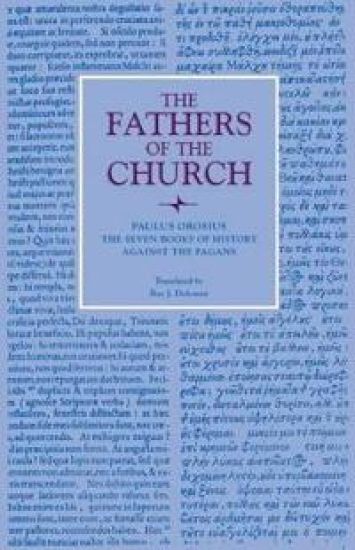
The Seven Books of History Against the Pagans

The Seven Books of History Against the Pagans

Origen

The Catholic University of America Press
2002
nidottu
Orosius wrote the first Christian Universal History, "Historiarum adversus paganos libri septem." It has been thought to be a supplement to the "City of God," "Civitate Dei," especially the third book, in which St. Augustine attempts to prove that the Roman Empire suffered as many disasters before as after Christianity was received. It was a common argument among the pagans that the abandonment of the worship of their deities had led to the general break-up of the Roman Empire and all its attendant evils. St. Augustine was annoyed by the persistence of this argument and hoped that a history of all the known people of antiquity, with the fundamental idea in mind that God determines the destinies of nations, would put an end to that pagan thinking. St. Augustine called upon his young friend Orosius to do this work. Added interest is attached to Orosius' History by reason of his think link with St. Augustine. The great St. Augustine, in his declining years, requested the youthful and far less gifted Orosius to perform a most important task. From the point of view of the modern historian and his scientific method, Orosius' work does not rate very high. The work completed in 418 shows sign of haste. In addition to Holy Scripture and the chronicle of Eusebius revised by St. Jerome, Orosius used Livy, Eutropius, Caesar, Suetonius, Florus, and Justin as sources. All the calamities suffered by the various peoples are described often with annoying monotony. Yet the work is valuable as history, containing as it does contemporary information on the period after 278 A. D. It was used widely during the Middle Ages, and the existence today of nearly 200 manuscript copies is evidence of its past popularity.
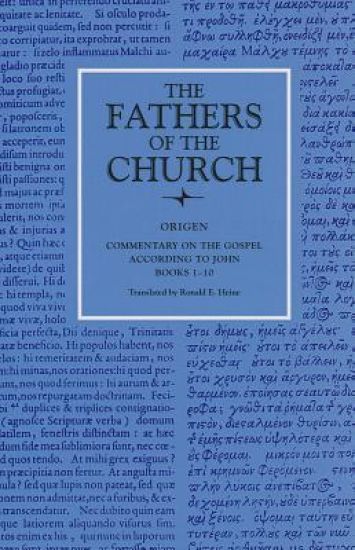
Commentary on the Gospel of John Books 1-10

Commentary on the Gospel of John Books 1-10

Origen; Ronald E. Heine

The Catholic University of America Press
2001
nidottu

Halvin toimitettuna 47,90 €

Origen composed at least thirty-two books of a commentary on the Gospel according to John, at the request of St. Ambrose of Milan. Of these, only nine books are extant in almost complete form, although we have selections of others persevered in other collections of the works of Origen. The commentary proceeds verse by verse, and is particularly notable for its emphasis on the spiritual meaning of the Gospel. This volume contains books 1,2,6, and 10, and fragments of books 4 and 5. Origen's main interest is the allegorical interpretation of the Gospel according to John, which makes this an important work in the study of Origen's mystical thought. A secondary interest is the refutation of Valentinian gnosticism. According to Eusebius, Ambrose had been a Valentinian before his conversion by Origen, and Origen refers to the Gnostic writer Heracleon regularly throughout the commentary in order to refute his views. Although the refutation of Heracleon may have been a stimulus for the composition of this work, Origen moved beyond this goal in order to present a commentary on the Gospel which would appeal to the growing number of educated Christians who wanted a scientific exegesis. The author's writing covers a wide range of historical, theological, philosophical and etymological topics, all focused on this Gospel of "spiritual food." "We might dare to say," Origen says as he begins his commentary, "that the Gospels are the first-fruits of all Scriptures, but that the first-fruits of the Gospels is that according to John. How great must be our understanding, that we may be able to understand in a worthy manner the word which is stored up in the earthen treasures of paltry language." The Spirit-led exegete can thus draw out of the words and symbols a higher level of insight. This "spiritual gospel" is the reality of which Christ's acts were symbols; it is the secrets hidden in the mysteries of Christ's words.
Origen: Contra Celsum

Origen: Contra Celsum

Origen

Cambridge University Press
1980
pokkari

Halvin toimitettuna 47,20 €

Few works of the early Church are as interesting to the modern reader or as important to the historian as Origen's reply to the attack on Christianity made by the pagan Celsus. The Contra Celsum is the culmination of the great apologetic movement of the second and third centuries AD, and is for the Greek Church what St Augustine's City of God is for Western Christendom. It is also one of the chief monuments of the coming together of ancient Greek culture and the new faith of the expanding Christian society. Thus Origen's work is of interest not only to the historian and theologian, but also to the hellenist. Professor Chadwick's English translation is preceded by a substantial introduction which includes discussion on Celsus' date, identity and theological outlook, as well as an account of Origen's philosophical background and method. The notes elucidate the many obscure allusions of a difficult text.
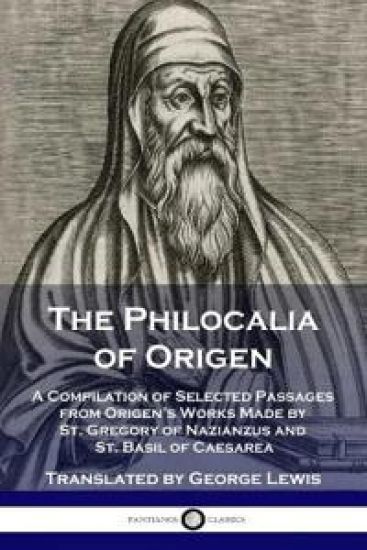
The Philocalia of Origen

The Philocalia of Origen

Origen; George Lewis

Pantianos Classics
1911
pokkari
These collected writings of Origen bring together the early Christian theologian's finest thoughts; his analyses of the Bible, his philosophical ideas, and his arguments against Pagan scholars opposed to Christianity. Noted for his prolific output totaling some 6,000 distinct works, Origen's voracious study of pertinent texts was coupled with a sharp insight into the extant lore. From a Biblical perspective, Origen's Hexapla - a study of five distinct translations of the Old Testament - is a groundbreaking work of Bible study and scriptural analysis. Origen was more than capable of sparring with philosophers who were opposed to Christianity on various grounds; some of these debates became valuable documents in themselves. Carefully selected so as to provide the reader with an accurate summation of Origen's most celebrated surviving writings, this book and its analyses are thorough, covering the most significant themes explored. More than 700 notes and scripture references are included, that the reader may follow the lines of reasoning - importantly for his era, Origen ventured that many key passages of the Bible were allegorical. Others he cited as supportive of Christian pacifism, which was a popular concept among early Christian groups.