Kirjojen hintavertailu – 12 859 824 kirjaa ja 27 kauppaa
Kirjailija
Oscar Wilde
Kirjat ja teokset yhdessä paikassa: 2 744 kirjaa, julkaisuja vuosilta 1890–2026, suosituimpiin kuuluu Aforismeja. Vertaile teosten hintoja ja tarkista saatavuus suomalaisista kirjakaupoista.
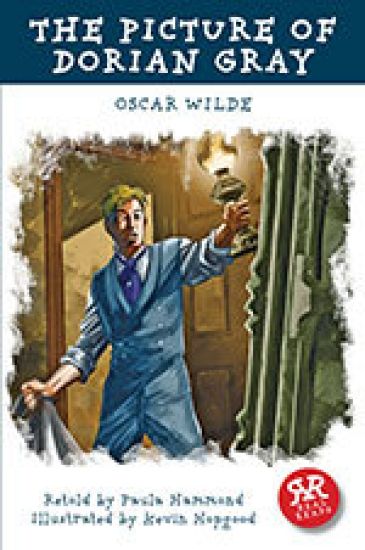
Two men hold the answer to Dorian’s secret. One is the artist, Basil Hallward, who paints Dorian’s portrait. The other is Lord Henry Wotton, who convinces the impressionable Dorian that youth and pleasure are the only things worth living for. Is Dorian Gray really as innocent as he seems? Can love and friendship save him from himself? Or will the secret of the picture of Dorian Gray be a secret he takes to his grave?
This collection of Oscar Wilde prose includes the following selections: How They Struck a Contemporary, The Quality of George Meredith, Life in the Fallacious Model, Life the Disciple, Life the Plagiarist, The Indispensable East. Oscar Fingal O'Flahertie Wills Wilde (16 October 1854 - 30 November 1900) was an Irish poet and playwright. After writing in different forms throughout the 1880s, he became one of London's most popular playwrights in the early 1890s. He is best remembered for his epigrams and plays, his novel The Picture of Dorian Gray, as well as the circumstances of his imprisonment and early death. Wilde's parents were successful Anglo-Irish intellectuals in Dublin. Their son became fluent in French and German early in life. At university, Wilde read Greats; he proved himself to be an outstanding classicist, first at Dublin, then at Oxford. He became known for his involvement in the rising philosophy of aestheticism, led by two of his tutors, Walter Pater and John Ruskin. After university, Wilde moved to London into fashionable cultural and social circles. As a spokesman for aestheticism, he tried his hand at various literary activities: he published a book of poems, lectured in the United States and Canada on the new "English Renaissance in Art", and then returned to London where he worked prolifically as a journalist. Known for his biting wit, flamboyant dress and glittering conversational skill, Wilde became one of the best-known personalities of his day. At the turn of the 1890s, he refined his ideas about the supremacy of art in a series of dialogues and essays, and incorporated themes of decadence, duplicity, and beauty into what would be his only novel, The Picture of Dorian Gray (1890). The opportunity to construct aesthetic details precisely, and combine them with larger social themes, drew Wilde to write drama. He wrote Salome (1891) in French while in Paris but it was refused a licence for England due to an absolute prohibition on the portrayal of Biblical subjects on the English stage. Unperturbed, Wilde produced four society comedies in the early 1890s, which made him one of the most successful playwrights of late-Victorian London. At the height of his fame and success, while The Importance of Being Earnest (1895) was still being performed in London, Wilde had the Marquess of Queensberry prosecuted for criminal libel. The Marquess was the father of Wilde's lover, Lord Alfred Douglas. The libel trial unearthed evidence that caused Wilde to drop his charges and led to his own arrest and trial for gross indecency with men. After two more trials he was convicted and sentenced to two years' hard labour, the maximum penalty, and was jailed from 1895 to 1897. During his last year in prison, he wrote De Profundis (published posthumously in 1905), a long letter which discusses his spiritual journey through his trials, forming a dark counterpoint to his earlier philosophy of pleasure. Upon his release, he left immediately for France, never to return to Ireland or Britain. There he wrote his last work, The Ballad of Reading Gaol (1898), a long poem commemorating the harsh rhythms of prison life. He died destitute in Paris at the age of 46.
Selected Poems of Oscar Wilde is a classic poetry collection by the great Irish poet. It is thought that a selection from Oscar Wilde's early verses may be of interest to a large public at present familiar only with the always popular BALLAD OF READING GAOL, also included in this volume. The poems were first collected by their author when he was twenty-sex years old, and though never, until recently, well received by the critics, have survived the test of NINE editions. Robert Ross Oscar Fingal O'Flahertie Wills Wilde (16 October 1854 - 30 November 1900) was an Irish poet and playwright. After writing in different forms throughout the 1880s, he became one of London's most popular playwrights in the early 1890s. He is best remembered for his epigrams and plays, his novel The Picture of Dorian Gray, as well as the circumstances of his imprisonment and early death. Wilde's parents were successful Anglo-Irish intellectuals in Dublin. Their son became fluent in French and German early in life. At university, Wilde read Greats; he proved himself to be an outstanding classicist, first at Dublin, then at Oxford. He became known for his involvement in the rising philosophy of aestheticism, led by two of his tutors, Walter Pater and John Ruskin. After university, Wilde moved to London into fashionable cultural and social circles. As a spokesman for aestheticism, he tried his hand at various literary activities: he published a book of poems, lectured in the United States and Canada on the new "English Renaissance in Art", and then returned to London where he worked prolifically as a journalist. Known for his biting wit, flamboyant dress and glittering conversational skill, Wilde became one of the best-known personalities of his day. At the turn of the 1890s, he refined his ideas about the supremacy of art in a series of dialogues and essays, and incorporated themes of decadence, duplicity, and beauty into what would be his only novel, The Picture of Dorian Gray (1890). The opportunity to construct aesthetic details precisely, and combine them with larger social themes, drew Wilde to write drama. He wrote Salome (1891) in French while in Paris but it was refused a licence for England due to an absolute prohibition on the portrayal of Biblical subjects on the English stage. Unperturbed, Wilde produced four society comedies in the early 1890s, which made him one of the most successful playwrights of late-Victorian London. At the height of his fame and success, while The Importance of Being Earnest (1895) was still being performed in London, Wilde had the Marquess of Queensberry prosecuted for criminal libel. The Marquess was the father of Wilde's lover, Lord Alfred Douglas. The libel trial unearthed evidence that caused Wilde to drop his charges and led to his own arrest and trial for gross indecency with men. After two more trials he was convicted and sentenced to two years' hard labour, the maximum penalty, and was jailed from 1895 to 1897. During his last year in prison, he wrote De Profundis (published posthumously in 1905), a long letter which discusses his spiritual journey through his trials, forming a dark counterpoint to his earlier philosophy of pleasure. Upon his release, he left immediately for France, never to return to Ireland or Britain. There he wrote his last work, The Ballad of Reading Gaol (1898), a long poem commemorating the harsh rhythms of prison life. He died destitute in Paris at the age of 46.
Lord Arthur Savile's Crime is a classic Irish literature volume and a collection of short stories by Oscar Wilde which includes the following: Lord Arthur Savile's Crime, The Canterville Ghost, The Sphinx Without a Secret, The Model Millionaire andThe Portrait of Mr. W. H.
"The life and death of Oscar Wilde, poet, playwright, poseur and convict, can only fittingly be summarised as a tragedy. Every misspent life is a tragedy more or less; but how much more tragic appear the elements of despair and disaster when the victim to his own vices is a man of genius exercising a considerable influence upon the thought and culture of his day, and possessing every advantage which birth, education, talent and station can bestow? Oscar Wilde was more than a clever and original thinker. He was the inventor of a certain literary style, and, though his methods, showy and eccentric as they were, lent themselves readily to imitation, none of his followers could approach their "Master" in the particular mode which he had made his own. There can be two opinions as to the merits of his plays. There can be only one judgment as to their daring and audacious originality. Of the ordinary and the commonplace Wilde had a horror, which with him was almost a religion," ...]Reprint of the book original published in 1906.
Charmides and Other Poems is a classic collection of Oscar Wilde poetry that includes the following selections: Charmides, Requiescat, San Miniato, Rome Unvisited, Humanitad, Louis Napoleon and many others. Contents: Charmides -- Requiescat -- San Miniato -- Rome unvisited -- Humanitad -- Louis Napoleon -- Endymion -- Le jardin -- La mer -- Le panneau -- Les ballons -- Canzonet -- Le Jardin des Tuileries -- Pan: Double villanelle -- In the forest -- Symphony in yellow. Sonnets: Helas -- To Milton -- On the massacre of the Christians in Bulgaria -- Holy Week at Genoa -- Urbs sacra aeterna -- E tenebris -- At Verona -- On the sale by auction of Keats' love letters -- The new remorse.
El ensayo pretende desbaratar la distinci n entre arte y cr tica tan estimada por artistas y cr ticos tales como Matthew Arnold o James Abbott McNeill Whistler s lo el esp ritu cr tico posibilita cualquier creaci n art stica de modo absoluto, mientras que la cr tica es independiente del objeto que critica y no est necesariamente sujeta al mismo. El ensayo aboga por la vida contemplativa frente a la vida activa. Seg n Gilbert, el principio cient fico sobre la herencia demuestra que nunca somos menos libres ni tenemos m s ilusiones que cuando tratamos de actuar con un prop sito consciente en mente. La contemplaci n cr tica se gu a por el sentido est tico consciente, as como por el alma. El alma es m s sabia que nosotros, es la experiencia de la raza concentrada, revelada por la imaginaci n. La cr tica est por encima de la raz n, la sinceridad y la imparcialidad; es necesariamente subjetiva. The essay sets to collapse the distinction between fine art and criticism cherished by artists and critics such as Matthew Arnold and James Abbott McNeill Whistler - only critical faculty enables any artistic creation at all, while criticism is independent of the object it criticises and not necessarily subject to it. The essay champions contemplative life to the life of action. According to Gilbert, scientific principle of heredity shows we are never less free, never have more illusions than when we try to act with some conscious aim in mind. Critical contemplation is guided by conscious aesthetic sense as well as by the soul.
La novela cuenta la historia de un joven llamado Dorian Gray, retratado por el artista Basilio Hallward, quien queda enormemente impresionado por la belleza f sica de Dorian y comienza a encapricharse con l, creyendo que esta belleza es la responsable de la nueva forma de su arte. Charlando en el jard n de Basil, Dorian conoce a Lord Henry Wotton, un amigo de Basil, y empieza a cautivarse por la visi n del mundo de Lord Henry. Exponiendo un nuevo tipo de hedonismo, Lord Henry indica que "lo nico que vale la pena en la vida es la belleza, y la satisfacci n de los sentidos". Al darse cuenta de que un d a su belleza se desvanecer , Dorian desea tener siempre la edad de cuando le pint en el cuadro Basil. El deseo de Dorian se cumple, mientras l mantiene para siempre la misma apariencia del cuadro, la figura en l retratada envejece por l. Su b squeda del placer lo lleva a una serie de actos de libertinaje y perversi n; pero, el retrato sirve como un recordatorio de los efectos de cada uno de los actos cometidos sobre su alma, con cada pecado siendo expuesto como una desfiguraci n de su rostro o a trav s de un signo de envejecimiento.
Dorian Gray est un jeune homme d'une tr s grande beaut . Son ami artiste peintre Basil Hallward est obs d par cette derni re et en tire toute son inspiration. Sa fascination pour le jeune homme le m ne faire son portrait, qui se r v le tre la plus belle oeuvre qu'il ait jamais peinte, et qu'il ne souhaite pas exposer: J'y ai mis trop de moi-m me . Dorian va faire la connaissance de Lord Henry, dit Harry, un ami de Basil. Conscient de la fascination et de la perversion que ce dernier pourrait avoir pour son id al de beaut , cette nature simple et belle, Basil demande Lord Henry de ne pas tenter de le corrompre. Mais Dorian se laisse s duire par les th ories sur la jeunesse et le plaisir de ce nouvel ami qui le r v le lui-m me en le flattant: Un nouvel h donisme ...] Vous pourriez en tre le symbole visible. Avec votre personnalit , il n'y a rien que vous ne puissiez faire . Va na tre d s lors en lui une profonde jalousie l' gard de son propre portrait peint par Basil Hallward. Il souhaite que le tableau vieillisse sa place pour que lui, Dorian Gray, garde toujours sa beaut d'adolescent. Si le tableau pouvait changer tandis que je resterais ce que je suis .
Una familia estadounidense adquiere el castillo de Canterville, en un hermoso lugar en la campi a inglesa a siete millas de Ascot, en Inglaterra. Hiram B. Otis se traslada con su familia al castillo, pero Lord Canterville, due o anterior del mismo, le advierte que el fantasma de sir Simon de Canterville anda en el edificio desde hace no menos de trescientos a os, despu s de asesinar a su esposa lady Eleonore de Canterville. Pero el Sr. Otis, estadounidense moderno y pr ctico, desoye sus advertencias. As , con su esposa Lucrecia, el hijo mayor Washington, la hermosa hija Virginia y dos traviesos gemelos, se mudan a la mansi n, burl ndose constantemente del fantasma debido su indiferencia ante los sucesos paranormales. El fantasma no logra asustarlos, y m s bien pasa a ser v ctima de las bromas de los terribles gemelos y en general, del pragmatismo de todos los miembros de la familia, por lo que cae en enojo y depresi n, hasta que finalmente, con ayuda de Virginia (quien se apena por el fantasma), logra alcanzar la paz de la muerte. The story of the Canterville Ghost takes place in an old English country house, Canterville Chase, which has all the accoutrements of a traditional haunted house. Descriptions of the wainscoting, the library panelled in black oak, and the armour in the hallway characterize the Gothic setting. Wilde mixes the macabre with comedy, juxtaposing devices from traditional English ghost stories such as creaking floorboards, clanking chains, and ancient prophecies with symbols of contemporary American consumerism.
Lord Arthur Saville, un joven acaudalado y de brillante porvenir; durante una fiesta un adivino le lee el futuro en las l neas de la mano y le pronostica un vuelco inesperado: el destino le conducir a cometer un asesinato. La vida del protagonista se trastoca por completo despu s de semejante revelaci n, pero su car cter decidido y tenaz pronto le lleva a buscar una soluci n: decide posponer su inminente compromiso matrimonial para no perjudicar a su prometida y, tras cavilar detenidamente, llevar a cabo el crimen lo antes posible para "pasar p gina" y dejar atr s cuanto antes ese penoso deber. Por supuesto, sus planes no resultar n tan f ciles de acometer como l cree y los designios del destino pondr n m s de una traba en el camino del noble. It was Lady Windermere's last reception before Easter, and Bentinck House was even more crowded than usual. Six Cabinet Ministers had come on from the Speaker's Lev e in their stars and ribands, all the pretty women wore their smartest dresses, and at the end of the picture-gallery stood the Princess Sophia of Carlsr he, a heavy Tartar-looking lady, with tiny black eyes and wonderful emeralds, talking bad French at the top of her voice, and laughing immoderately at everything that was said to her.
Fans of the new Showtime series 'Penny Dreadful' are in for a treat with this Penny Dreadful Double Bill. 'The Murders in the Rue Morgue' by Edgar Allan Poe Decades before Sherlock Holmes, American author Edgar Allan Poe created the detective story in this remarkable trilogy of short stories featuring genius French criminologist C. Auguste Dupin. 'The Murders in the Rue Morgue' represents the beginning of crime fiction. The story was first published in Graham's Magazine in 1841 and has been recognized as the first detective story. Poe referred to it as one of his "tales of ratiocination". As the first fictional detective, Poe's Dupin displays many traits which became literary conventions in subsequent fictional detectives including Sherlock Holmes and Hercule Poirot. Many later characters, for example, follow Poe's model of the brilliant detective, his personal friend who serves as narrator, and the final revelation being presented before the reasoning that leads up to it. Dupin himself reappears in "The Mystery of Marie Rog t" and "The Purloined Letter". 'The Canterville Ghost' by Oscar Wilde It was the first of Wilde's stories to be published, appearing in the magazine The Court and Society Review in February 1887. It was later included in a collection of short stories entitled Lord Arthur Savile's Crime and Other Stories in 1891. The eerie tale takes place in an old English country manor, Canterville Chase, which has all the accoutrements of a traditional haunted house. Descriptions of the wainscoting, the library panelled in black oak, and the armour in the hallway characterize the Gothic setting. Wilde mixes the macabre with comedy, juxtaposing devices from traditional English ghost stories such as creaking floorboards, clanking chains, and ancient prophecies with symbols of contemporary American consumerism. Wilde's chiller has been adapted for the stage and screen numerous times. A new cinematic version is rumored to be in the works for release in Christmas 2014 starring Hugh Laurie (House).
El cr tico artista es un ensayo de Oscar Wilde que contiene las declaraciones m s completas sobre su filosof a est tica. Es un di logo en dos partes, de lejos, el m s extenso incluido en su colecci n de ensayos titulada Intenciones publicada en mayo de 1891. Es una versi n ampliamente revisada de art culos que aparecieron por primera vez en los n meros de julio y septiembre de la revista literaria The Nineteenth Century, titulada originalmente La verdadera funci n y valor de la cr tica. El ensayo es una conversaci n entre el personaje principal, Gilbert, y Ernest, cuya importancia estriba en sugerir ideas que Gilbert rechace. El ensayo pretende desbaratar la distinci n entre arte y cr tica tan estimada por artistas y cr ticos tales como Matthew Arnold o James Abbott McNeill Whistler s lo el esp ritu cr tico posibilita cualquier creaci n art stica de modo absoluto, mientras que la cr tica es independiente del objeto que critica y no est necesariamente sujeta al mismo. El ensayo aboga por la vida contemplativa frente a la vida activa. Seg n Gilbert, el principio cient fico sobre la herencia demuestra que nunca somos menos libres ni tenemos m s ilusiones que cuando tratamos de actuar con un prop sito consciente en mente. La contemplaci n cr tica se gu a por el sentido est tico consciente, as como por el alma. El alma es m s sabia que nosotros, es la experiencia de la raza concentrada, revelada por la imaginaci n. La cr tica est por encima de la raz n, la sinceridad y la imparcialidad; es necesariamente subjetiva. Por ello es por lo que, cada vez m s, el futuro como tema pertenece a cr tica y no a la creaci n creaci n y la necesidad de imponer una forma al caos aumenta constantemente. Es la cr tica m s que la simpat as emocional, la tica abstracta o ventajas comerciales lo que nos har cosmopolitas y servir como base de la paz.