Kirjojen hintavertailu – 12 859 824 kirjaa ja 27 kauppaa

Kirjailija

Oscar Wilde

Kirjat ja teokset yhdessä paikassa: 2 744 kirjaa, julkaisuja vuosilta 1890–2026, suosituimpiin kuuluu Aforismeja. Vertaile teosten hintoja ja tarkista saatavuus suomalaisista kirjakaupoista.

2 744 kirjaa

Kirjojen julkaisuvuodet: 1890–2026.

El fantasma de Canterville 1887

El fantasma de Canterville 1887

Oscar Wilde

Createspace Independent Publishing Platform
2014
nidottu
Una familia estadounidense adquiere el castillo de Canterville, en un hermoso lugar en la campi a inglesa a siete millas de Ascot, en Inglaterra. Hiram B. Otis se traslada con su familia al castillo, pero Lord Canterville, due o anterior del mismo, le advierte que el fantasma de sir Simon de Canterville anda en el edificio desde hace no menos de trescientos a os, despu s de asesinar a su esposa lady Eleonore de Canterville. Pero el Sr. Otis, estadounidense moderno y pr ctico, desoye sus advertencias. As , con su esposa Lucrecia, el hijo mayor Washington, la hermosa hija Virginia y dos traviesos gemelos, se mudan a la mansi n, burl ndose constantemente del fantasma debido su indiferencia ante los sucesos paranormales. El fantasma no logra asustarlos, y m s bien pasa a ser v ctima de las bromas de los terribles gemelos y en general, del pragmatismo de todos los miembros de la familia, por lo que cae en enojo y depresi n, hasta que finalmente, con ayuda de Virginia (quien se apena por el fantasma), logra alcanzar la paz de la muerte.

Lord Arthur Savile's crime 1891

Lord Arthur Savile's crime 1891

Oscar Wilde

Createspace Independent Publishing Platform
2014
nidottu
It was Lady Windermere's last reception before Easter, and Bentinck House was even more crowded than usual. Six Cabinet Ministers had come on from the Speaker's Lev e in their stars and ribands, all the pretty women wore their smartest dresses, and at the end of the picture-gallery stood the Princess Sophia of Carlsr he, a heavy Tartar-looking lady, with tiny black eyes and wonderful emeralds, talking bad French at the top of her voice, and laughing im-moderately at everything that was said to her.
El crimen de Lord Arthur Savile 1891

El crimen de Lord Arthur Savile 1891

Oscar Wilde

Createspace Independent Publishing Platform
2014
nidottu
Lord Arthur Saville, un joven acaudalado y de brillante porvenir; durante una fiesta un adivino le lee el futuro en las l neas de la mano y le pronostica un vuelco inesperado: el destino le conducir a cometer un asesinato. La vida del protagonista se trastoca por completo despu s de semejante revelaci n, pero su car cter decidido y tenaz pronto le lleva a buscar una soluci n: decide posponer su inminente compromiso matrimonial para no perjudicar a su prometida y, tras cavilar detenidamente, llevar a cabo el crimen lo antes posible para "pasar p gina" y dejar atr s cuanto antes ese penoso deber. Por supuesto, sus planes no resultar n tan f ciles de acometer como l cree y los designios del destino pondr n m s de una traba en el camino del noble.
El retrato de Dorian Gray 1890

El retrato de Dorian Gray 1890

Oscar Wilde

Createspace Independent Publishing Platform
2014
nidottu
El retrato de Dorian Gray es considerada una de las ltimas obras cl sicas de la novela de terror g tica con una fuerte tem tica faustiana, adem s muestra un pintor con afecto ntimo y directo con el personaje principal. El libro caus controversia cuando fue publicado por primera vez; sin embargo, es considerado en la actualidad como uno de los cl sicos modernos de la literatura occidental.
The Picture of Dorian Gray: (starbooks Classics Editions)

The Picture of Dorian Gray: (starbooks Classics Editions)

Oscar Wilde

Createspace Independent Publishing Platform
2014
nidottu
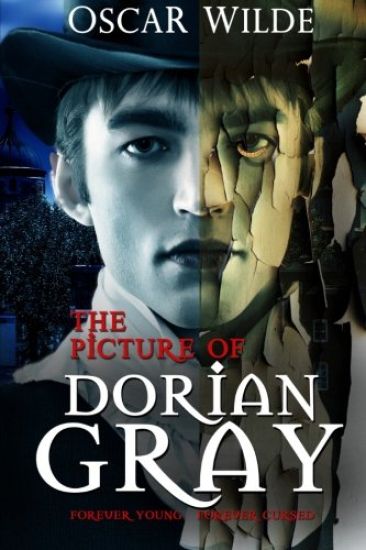
"You will always be fond of me. I represent to you all the sins you never had the courage to commit." ---Oscar Wilde, The Picture of Dorian Gray The novel tells of a young man named Dorian Gray, the subject of a painting by artist Basil Hallward. Dorian is selected for his remarkable physical beauty, and Basil becomes strongly infatuated with Dorian, believing that his beauty is responsible for a new mode of art. Talking in Basil's garden, Dorian meets Lord Henry Wotton, a friend of Basil's, and becomes enthralled by Lord Henry's world view. Espousing a new kind of hedonism, Lord Henry suggests that the only thing worth pursuing in life is beauty, and the fulfillment of the senses. Realising that one day his beauty will fade, Dorian cries out, wishing that the portrait Basil has painted of him would age rather than himself. Dorian's wish is fulfilled, subsequently plunging him into a sequence of debauched acts. The portrait serves as a reminder of the effect each act has upon his soul, each sin being displayed as a new sign of aging on the portrait. The Picture of Dorian Gray is considered one of the last works of classic gothic horror fiction with a strong Faustian theme. It deals with the artistic movement of the decadents, and homosexuality, both of which caused some controversy when the book was first published. However, in modern times, the book has been referred to as "one of the modern classics of Western literature.
The Picture of Dorian Gray

The Picture of Dorian Gray

Oscar Wilde

Createspace Independent Publishing Platform
2014
nidottu
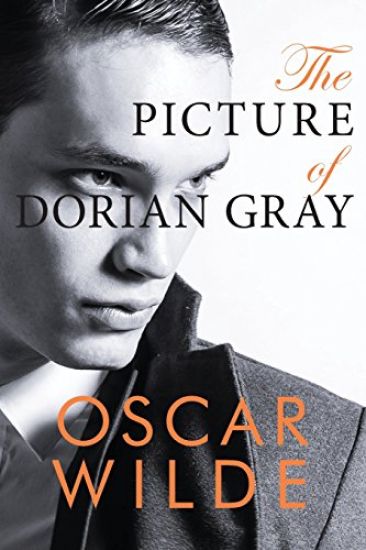
The Picture of Dorian Gray is the only published novel by Oscar Wilde. The novel tells of a young man named Dorian Gray, the subject of a painting by artist Basil Hallward. Basil is impressed by Dorian
The Picture of Dorian Gray

The Picture of Dorian Gray

Oscar Wilde

Createspace Independent Publishing Platform
2014
nidottu
The Picture of Dorian Gray is the only published novel by Oscar Wilde, appearing as the lead story in Lippincott's Monthly Magazine on 20 June 1890, printed as the July 1890 issue of this magazine.
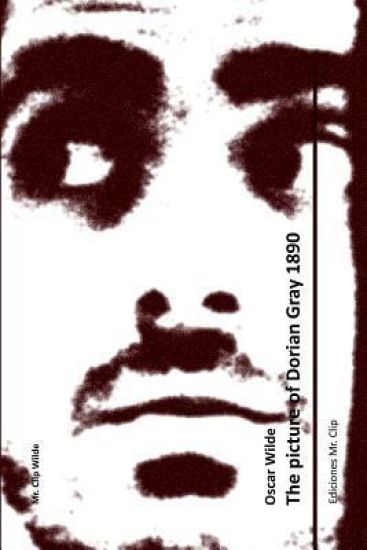
The picture of Dorian Gray 1890

The picture of Dorian Gray 1890

Oscar Wilde

Createspace Independent Publishing Platform
2014
nidottu
The novel begins on a beautiful summer day with Lord Henry Wotton, a strongly-opinionated man, observing the sensitive artist Basil Hallward painting the portrait of a handsome young man named Dorian Gray, who is Basil's ultimate muse. After hearing Lord Henry's world view, Dorian begins to think beauty is the only worthwhile aspect of life. He wishes that the portrait Basil painted would grow old in his place. Under the influence of Lord Henry (who relishes the hedonic lifestyle and is a major exponent thereof), Dorian begins to explore his senses. He discovers amazing actress Sibyl Vane, who performs Shakespeare plays in a dingy theatre. Dorian approaches her and soon proposes marriage. Sibyl, who refers to him as "Prince Charming", swoons with happiness, but her protective brother James tells her that if "Prince Charming" harms her, he will certainly kill him. Dorian invites Basil and Lord Henry to see Sibyl perform in Romeo and Juliet. Sibyl, whose only knowledge of love was love of theatre, casts aside her acting abilities through the experience of true love with Dorian. Disheartened, Dorian rejects her, saying her beauty was in her acting, and he is no longer interested in her. When he returns home, he notices that his portrait has changed. Dorian realises his wish has come true - the portrait now bears a subtle sneer and will age with each sin he commits, while his own appearance remains unchanged.
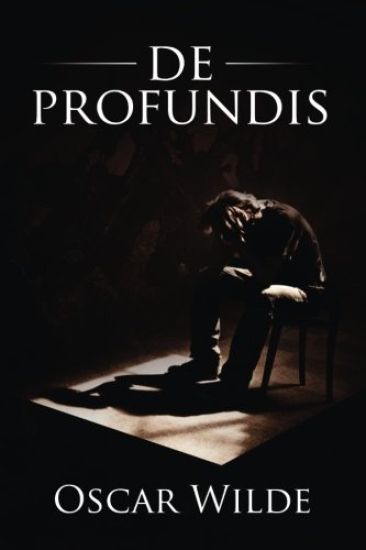
De Profundis

De Profundis

Oscar Wilde

Createspace Independent Publishing Platform
2014
nidottu
"The most terrible thing about it is not that it breaks one's heart-hearts are made to be broken-but that it turns one's heart to stone." Oscar Wilde, De Profundis De Profundis (Latin: "from the depths") is an epistle written by Oscar Wilde during his imprisonment in Reading Gaol, to Lord Alfred Douglas. During its first half Wilde recounts their previous relationship and extravagant lifestyle which eventually led to Wilde's conviction and imprisonment for gross indecency. He indicts both Lord Alfred's vanity and his own weakness in acceding to those wishes. In the second half, Wilde charts his spiritual development in prison and identification with Jesus Christ, whom he characterises as a romantic, individualist artist. Wilde wrote the letter between January and March 1897, close to the end of his imprisonment. Contact had lapsed between Douglas and Wilde and the latter had suffered from his physical labour and emotional isolation; a new warden thought that writing might be more cathartic than prison labour. Wilde's work was closely supervised and he was not allowed to send the letter, but took it with him upon release, whereupon he entrusted the manuscript to an ex-lover, the journalist Robert Ross, with instructions to have two copies made: one to be sent to the author himself and the other to Douglas. Ross published the letter in 1905, five years after Wilde's death, giving it the title "De Profundis" from Psalm 130. It was an incomplete version, excised of its autobiographical elements; various editions gave more text until 1962 when the complete and correct version appeared in a volume of Wilde's letters.
The picture of Dorian Gray

The picture of Dorian Gray

Oscar Wilde

Createspace Independent Publishing Platform
2014
nidottu
The novel begins on a beautiful summer day with Lord Henry Wotton, a strongly-opinionated man, observing the sensitive artist Basil Hallward painting the portrait of a handsome young man named Dorian Gray, who is Basil's ultimate muse. After hearing Lord Henry's world view, Dorian begins to think beauty is the only worthwhile aspect of life. He wishes that the portrait Basil painted would grow old in his place. Under the influence of Lord Henry (who relishes the hedonic lifestyle and is a major exponent thereof), Dorian begins to explore his senses. He discovers amazing actress Sibyl Vane, who performs Shakespeare plays in a dingy theatre. Dorian approaches her and soon proposes marriage. Sibyl, who refers to him as "Prince Charming", swoons with happiness, but her protective brother James tells her that if "Prince Charming" harms her, he will certainly kill him. Dorian invites Basil and Lord Henry to see Sibyl perform in Romeo and Juliet. Sibyl, whose only knowledge of love was love of theatre, casts aside her acting abilities through the experience of true love with Dorian. Disheartened, Dorian rejects her, saying her beauty was in her acting, and he is no longer interested in her. When he returns home, he notices that his portrait has changed. Dorian realises his wish has come true - the portrait now bears a subtle sneer and will age with each sin he commits, while his own appearance remains unchanged.