
Kirjailija
Oscar Wilde
Kirjat ja teokset yhdessä paikassa: 2 744 kirjaa, julkaisuja vuosilta 1890–2026, suosituimpiin kuuluu Aforismeja. Vertaile teosten hintoja ja tarkista saatavuus suomalaisista kirjakaupoista.
2 744 kirjaa
Kirjojen julkaisuvuodet: 1890–2026.
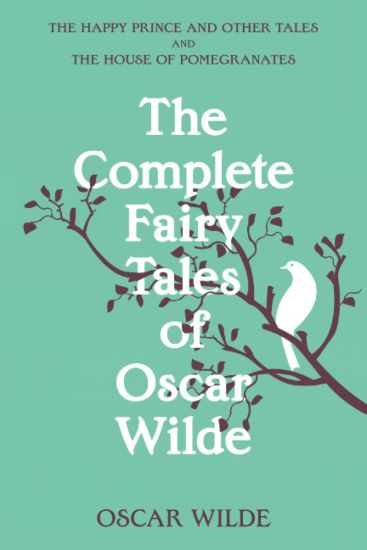
The Complete Fairy Tales of Oscar Wilde (Warbler Classics Annotated Edition)
Oscar Wilde
Warbler Classics
2022
pokkari
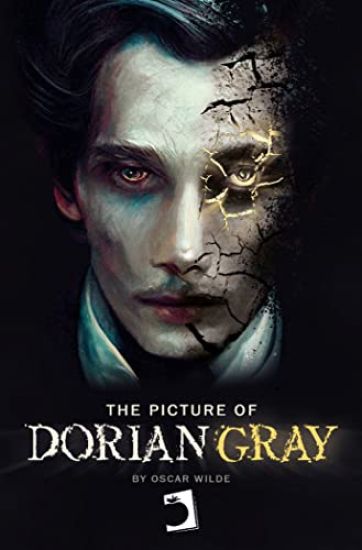
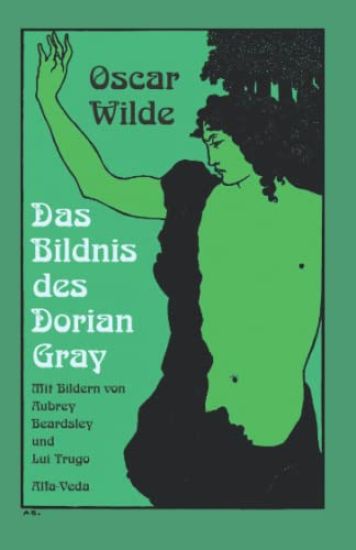
Oscar Wildes talented pen tells the story of one mans decline. It is a book considered the most moral of immoral stories. This work has earned its author to overcome the description of a writer and be considered almost as a philosopher. Dorian Gray in exchange for eternal youth delivers his soul and ends up being corrupted by the evil influence of his mentor. Highly recommended for readers of all times and geographies. The fantastic richness finds its most appropriate expression in a luminous and refined style, and the paradox governs and regulates matter and word, scene and dialogue, Wilde tries to show the transfiguration that art operates on reality.
Dorian Gray is arrogant. He is pompous, selfish, devastatingly narcissistic, and for much of his life he has never had to think twice about the ramifications of his actions. When the arrival of artist Basil Hallard forces Gray to confront his deepest insecurities, Dorian's most vulnerable self is imminently revealed. After having traded his righteousness for riches, Dorian Gray becomes faced with many regrettable truths he must learn to tackle head on. Needing to own up to his actions, Gray must finally learn to deal with the consequences of living a life that completely self-obsessed. Gripping with relatable prose analogous to the many conundrums of growing up, Wilde weaves a narrative of both self-desire and self-actualization. The Picture of Dorian Gray is a true coming of age tale in a time where the glamour of appearances was as heavy as the currency in your pocket.
“Backgrounds” includes essays on Wilde and the 1890s by prominent cultural critics Karl Beckson, Sharon Marcus, and Michael Patrick Gillespie. “Early Reviews and Reactions” collects contemporary responses to The Importance of Being Earnest, including George Bernard Shaw’s famous dissenting review and other commentary by H. G. Wells, Hamilton Fyfe, and William Archer. “Essays in Criticism” includes seven diverse assessments—six of them new to the Second Edition—of Wilde and the play by E. H. Mikhail, Burkhard Niederhoff, Christopher S. Nassaar, Clifton Snider, Brigitte Bastiat, Eibhear Walshe, and Maneck H. Daruwala. A chronology and selected bibliography are also included.

Gothic Horror Classics Collection
Mary Shelley; Oscar Wilde
SANAGE PUBLISHING HOUSE LLP
2022
nidottu
Seven Books In One A new collection of Seven of the most popular and influential classic gothic tales or horror. Included in This volume are: Frankenstein By Mary Shelley Dracula By Bram Stoker The Picture of Dorian Gray By Oscar Wilde The Strange Case of Dr Jekyll and Mr Hyde By Robert Louis Stevenson The Call of Cthulhu By H. P. Lovecraft The Castle of Otranto By Horace Walpole & Young Goodman Brown by Nathaniel Hawthorne

Gothic Horror Classics Collection
Mary Shelley; Oscar Wilde
SANAGE PUBLISHING HOUSE LLP
2022
sidottu
Seven Books In One A new collection of Seven of the most popular and influential classic gothic tales or horror. Included in This volume are: Frankenstein By Mary Shelley Dracula By Bram Stoker The Picture of Dorian Gray By Oscar Wilde The Strange Case of Dr Jekyll and Mr Hyde By Robert Louis Stevenson The Call of Cthulhu By H. P. Lovecraft The Castle of Otranto By Horace Walpole & Young Goodman Brown by Nathaniel Hawthorne
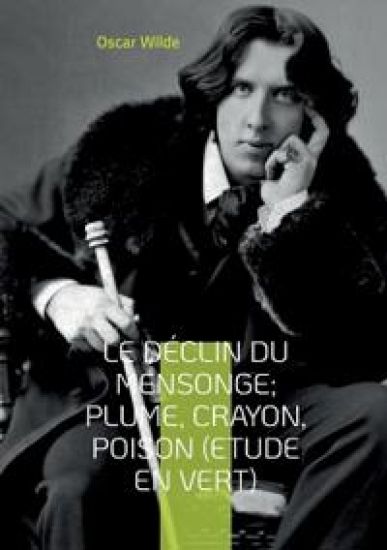
Le Déclin du Mensonge; Plume, Crayon, Poison (Etude en vert)
Oscar Wilde
BoD - Books on Demand
2022
pokkari
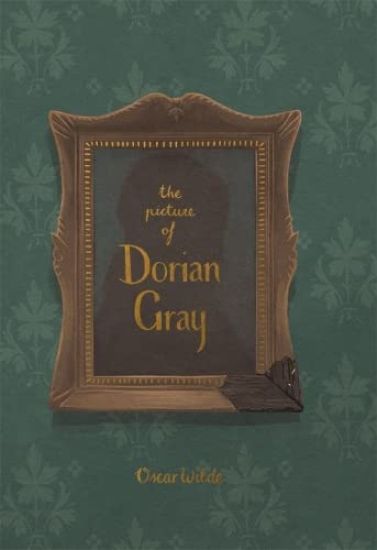
The Picture of Dorian Gray
Oscar Wilde
WORDSWORTH EDITIONS LTD
2022
sidottu
Halvin toimitettuna 18,90 €
Wilde's only novel, first published in 1890, is a brilliantly designed puzzle, intended to tease conventional minds with its exploration of the myriad interrelationships between art, life, and consequence. From its provocative Preface, challenging the reader to believe in 'art for art's sake', to its sensational conclusion, the story self-consciously experiments with the notion of sin as an element of design. Yet Wilde himself underestimated the consequences of his experiment, and its capacity to outrage the Victorian establishment. Its words returned to haunt him in his court appearances in 1895, and he later recalled the 'note of doom' which runs like 'a purple thread' through its carefully crafted prose.
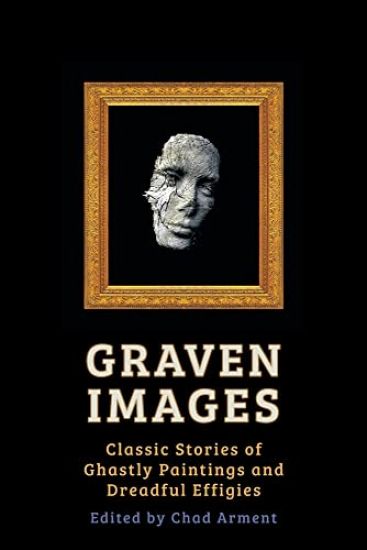
Graven Images: Classic Stories of Ghastly Paintings and Dreadful Effigies
Oscar Wilde; Prosper Mérimée; Nathaniel Hawthorne
COACHWHIP PUBLICATIONS
2022
nidottu
Art, and artists, have long resided in supernatural fiction. The artist gives life with each brushstroke or tap of the chisel, but what if that vital spark arises not from what is true, what is noble, what is lovely-but something darker? Nathaniel Hawthorne, Edgar Allan Poe, M. R. James, Lovecraft, and more offer 20 tales, and one novella, exploring uncanny art and haunted artists in this anthology. Contents include: La V nus d'Ille (M rim e); The Prophetic Pictures (Hawthorne); Schalken the Painter (Le Fanu); Edward Randolph's Portrait (Hawthorne); The Oval Portrait (Poe); Man-size in Marble (E. Nesbit); The Ebony Frame (E. Nesbit); The Phantom Model (H. Nisbet); Huguenin's Wife (Shiel); The Old Portrait (H. Nisbet); The Mezzotint (James); The Man with the Roller (Swain); The Room in the Tower (Benson); The Picture in the House (Lovecraft); A Square of Canvas (Rud); Pickman's Model (Lovecraft); Nude with a Dagger (Flanders); The Sinister Painting (La Spina); The Golgotha Dancers (Wellman); The Adventure of the Mysterious Picture (Irving); The Picture of Dorian Gray (Wilde).
Vera or, The Nihilists By Oscar WildeVera or, The Nihilists is a play by Oscar Wilde. It is a melodramatic tragedy set in Russia and is loosely based on the life of Vera Zasulich. It was Wilde's first play, and the first to be performed. In 1880, with only a few copies privately printed, arrangements were made with noted actresses for a production in the United Kingdom, but this never materialized. The first public performance was in New York City in 1883 at the Union Square Theatre, based on revisions made by Wilde while lecturing in America in 1882. The play was not a success and folded after only one week. It is rarely revived. At the time of writing, the reform-minded Tsar Alexander II was involved in a struggle with revolutionaries who sought to assassinate him (and eventually succeeded). Though none of Wilde's characters correspond to actual Russian people of the time, the above situation was well-known both to Wilde and to the audience for which he was writing. It has been suggested that the plot was inspired by true events. In 1878, three years before the play's completion, Vera Zasulich shot the Governor of St Petersburg, Trepov. Wilde described himself as a Socialist, although Ellmann describes his Socialism as more "a general hatred of tyranny" than a specific political belief. Marie Prescott and her husband, Mr Perzel purchased the rights to perform the play, and she was the leading actress in its first performance at the Union Square Theatre. Wilde travelled to America for the second time in his life specifically to oversee the production. The play was withdrawn after one week. Mr Perzel stated to newspapers "the play is withdrawn simply because it did not pay," citing that he had lost $2,500 on the piece the previous week. He also implied that he had hoped Wilde himself would lecture between the acts, allowing him to capitalise on Wilde's popularity as a public speaker. Peter Sabouroff (an Innkeeper). Vera Sabouroff (his Daughter). Michael (a Peasant). Dmitri Sabouroff. Colonel Kotemkin. Ivan the Czar. Prince Paul Maraloffski (Prime Minister of Russia). Prince Petrovitch. Count Rouvaloff. Marquis de Poivrard. Baron Raff. General Kotemkin. A Page. A Colonel of the Guard. Peter Tchernavitch, President of the Nihilists.
IntentionsOscar Wilde Cyril (coming in through the open window from the terrace): My dear Vivian, don't coop yourself up all day in the library. It is a perfectly lovely afternoon. The air is exquisite. There is a mist upon the woods, like the purple bloom upon a plum. Let us go and lie on the grass and smoke cigarettes and enjoy Nature. Vivian: Enjoy Nature I am glad to say that I have entirely lost that faculty. People tell us that Art makes us love Nature more than we loved her before that it reveals her secrets to us and that after a careful study of Corot and Constable we see things in her that had escaped our observation. My own experience is that the more we study Art, the less we care for Nature. What Art really reveals to us is Nature's lack of design, her curious crudities, her extraordinary monotony, her absolutely unfinished condition. Nature has good intentions, of course, but, as Aristotle once said, she cannot carry them out. When I look at a landscape I cannot help seeing all its defects. It is fortunate for us, however, that Nature is so imperfect, as otherwise we should have no art at all. Art is our spirited protest, our gallant attempt to teach Nature her proper place. As for the infinite variety of Nature, that is a pure myth. It is not to be found in Nature herself. It resides in the imagination, or fancy, or cultivated blindness of the man who looks at her. Cyril: Well, you need not look at the landscape. You can lie on the grass and smoke and talk. Vivian: But Nature is so uncomfortable. Grass is hard and lumpy and damp, and full of dreadful black insects. Why, even Morris's poorest workman could make you a more comfortable seat than the whole of Nature can. Nature pales before the furniture of 'the street which from Oxford has borrowed its name, ' as the poet you love so much once vilely phrased it. I don't complain. If Nature had been comfortable, mankind would never have invented architecture, and I prefer houses to the open air. In a house we all feel of the proper proportions. Everything is subordinated to us, fashioned for our use and our pleasure. Egotism itself, which is so necessary to a proper sense of human dignity, is entirely the result of indoor life. Out of doors one becomes abstract and impersonal. One's individuality absolutely leaves one. And then Nature is so indifferent, so unappreciative
Charmides and Other Poems: poems and poetry by Oscar WildeThis short collection brings together some poems written by the Irish author, playwright and poet, Oscar Wilde. After writing in different forms throughout the 1880s, he became one of London's most popular playwrights in the early 1890s. He is remembered for his epigrams, his novel The Picture of Dorian Gray, his plays, as well as the circumstances of his imprisonment and early death.
An Ideal Husband is an 1895 comedic stage play by Oscar Wilde which revolves around blackmail and political corruption, and touches on the themes of public and private honour. The action is set in London, in "the present", and takes place over the course of twenty-four hours." Sooner or later," Wilde notes, "we shall all have to pay for what we do." But he adds that, "No one should be entirely judged by their past." Together with The Importance of Being Earnest, it is often considered Wilde's dramatic masterpiece. After Earnest, it is his most popularly produced play.