
Kirjailija
Oscar Wilde
Kirjat ja teokset yhdessä paikassa: 2 744 kirjaa, julkaisuja vuosilta 1890–2026, suosituimpiin kuuluu Aforismeja. Vertaile teosten hintoja ja tarkista saatavuus suomalaisista kirjakaupoista.
2 744 kirjaa
Kirjojen julkaisuvuodet: 1890–2026.
A Critic in Pall Mall; Being Extracts from Reviews and Miscellanies
Oscar Wilde
ALPHA EDITION
2022
pokkari


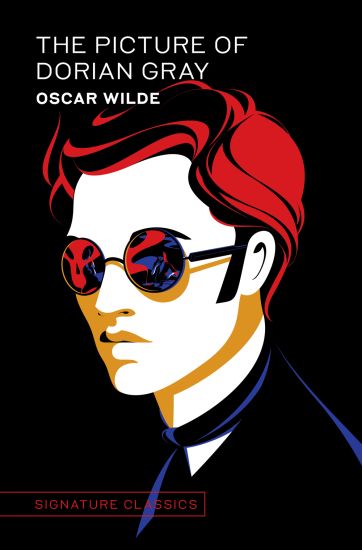
Oscar Wilde's only novel is the dreamlike story of a young man who sells his soul for eternal youth and beauty. Now, distinctively packaged with a beautifully designed jacket by noted illustrator Malika Favre. When handsome young Dorian Gray sees a painter's stunning portrait of him, he is transfixed by its reflection of his own beauty. He is also troubled by the knowledge that the image in the painting will remain forever youthful and handsome while he himself will grow older and less desirable. He wishes aloud that the roles were reversed, saying that he would give his soul if only the painting would suffer the ravages of time and he were to remain forever young. From that point on, Dorian lives a life of hedonistic indulgence, knowing that only the painting will show his moral corruption.
Miscellaneous Aphorisms by Oscar Wilde The mystery of love is greater than the mystery of death. Women are made to be loved, not to be understood. It is absurd to have a hard and fast rule about what one should read and what one shouldn't. More than half of modern culture depends on what one shouldn't read. Women, as someone says, love with their ears, just as men love with their eyes, if they ever love at all. It is better to be beautiful than to be good, but it is better to be good than to be ugly. Nothing looks so like innocence as an indiscretion. Misfortunes one can endure, they come from outside, they are accidents. But to suffer for one's faults-ah there is the sting of life. Beauty is the only thing that time cannot harm. Philosophies fall away like sand, creeds follow one another, but what is beautiful is a joy for all seasons, a possession for all eternity. Questions are never indiscreet; answers sometimes are. Twenty years of romance make a woman look like a ruin; but twenty years of marriage make her something like a public building. The only thing that one really knows about human nature is that it changes. Anyone can sympathise with the sufferings of a friend, but it requires a very fine nature to sympathise with a friend's success. Selfishness is not living as one wishes to live, it is asking others to live as one wishes to live: and unselfishness is letting other people's lives alone, not interfering with them. A man who does not think for himself does not think at all. Nowadays people seem to look on life as a speculation. It is not a speculation. It is a sacrament. Its ideal is love. Its purification is sacrifice. In old days nobody pretended to be a bit better than his neighbour. In fact, to be a bit better than one's neighbour was considered excessively vulgar and middle class. Nowadays, with our modern mania for morality, everyone has to pose as a paragon of purity, incorruptibility, and all the other seven deadly virtues. And what is the result? You all go over like ninepins-one after the other. All sympathy is fine, but sympathy with suffering is the least fine mode. If you pretend to be good the world takes you very seriously. If you pretend to be bad it doesn't. Such is the astounding stupidity of optimism.
Essays and Lectures Oscar Wilde HISTORICAL criticism nowhere occurs as an isolated fact in the civilisation or literature of any people. It is part of that complex working towards freedom which may be described as the revolt against authority. It is merely one facet of that speculative spirit of an innovation, which in the sphere of action produces democracy and revolution, and in that of thought is the parent of philosophy and physical science and its importance as a factor of progress is based not so much on the results it attains, as on the tone of thought which it represents, and the method by which it works. Being thus the resultant of forces essentially revolutionary, it is not to be found in the ancient world among the material despotisms of Asia or the stationary civilisation of Egypt. The clay cylinders of Assyria and Babylon, the hieroglyphics of the pyramids, form not history but the material for history. The Chinese annals, ascending as they do to the barbarous forest life of the nation, are marked with a soberness of judgment, a freedom from invention, which is almost unparalleled in the writings of any people but the protective spirit which is the characteristic of that people proved as fatal to their literature as to their commerce. Free criticism is as unknown as free trade. While as regards the Hindus, their acute, analytical and logical mind is directed rather to grammar, criticism and philosophy than to history or chronology. Indeed, in history their imagination seems to have run wild, legend and fact are so indissolubly mingled together that any attempt to separate them seems vain. If we except the identification of the Greek Sandracottus with the Indian Chandragupta, we have really no clue by which we can test the truth of their writings or examine their method of investigation. It is among the Hellenic branch of the Indo-Germanic race that history proper is to be found, as well as the spirit of historical criticism among that wonderful offshoot of the primitive Aryans, whom we call by the name of Greeks and to whom, as has been well said, we owe all that moves in the world except the blind forces of nature.
The Happy Prince, and Other Tales By Oscar WildeThe Happy Prince and Other Tales (sometimes called The Happy Prince and Other Stories) is a collection of stories for children by Oscar Wilde first published in May 1888. It contains five stories: "The Happy Prince", "The Nightingale and the Rose", "The Selfish Giant", "The Devoted Friend", and "The Remarkable Rocket". In a town where there are a lot of poor people who suffer, a swallow who was left behind after his flock flew off to Egypt for the winter, meets the statue of the late "Happy Prince", who in reality has never experienced true sorrow, for he lived in a palace where sorrow was not allowed to enter. Viewing various scenes of people suffering in poverty from his tall monument, the Happy Prince asks the swallow to take the ruby from his hilt, the sapphires from his eyes, and the gold leaf covering his body to give to the poor. As the winter comes and the Happy Prince is stripped of all of his beauty, his lead heart breaks when the swallow dies as a result of his selfless deeds and severe cold. The people, unaware of their good deeds, take the statue down from the pillar due to its shabbiness (intending to replace it with one of the Mayor, ) and the metal melted in a furnace, leaving behind the broken heart and the dead swallow they are thrown in a dust heap. These are taken up to heaven by an angel that has deemed them the two most precious things in the city. This is affirmed by God, and they live forever in his "city of gold" and garden of paradise. A nightingale overhears a student complaining that the professor's daughter will not dance with him, as he is unable to give her a red rose a lizard, a butterfly and a daisy laugh at the student for doing so. The nightingale visits all the rose-trees in the garden, and one of the roses tells her there is a way to produce a red rose, but only if the nightingale is prepared to sing the sweetest song for the rose all night with her heart pressing into a thorn, sacrificing her life. Seeing the student in tears, and valuing his human life above her bird life, the nightingale carries out the ritual and dies painfully. The student takes the rose to the professor's daughter, but she again rejects him because the Chamberlain's nephew has sent her some real jewels and "everybody knows that jewels cost far more than flowers". The student angrily throws the rose into the gutter, returns to his study of metaphysics, and decides not to believe in true love anymore.
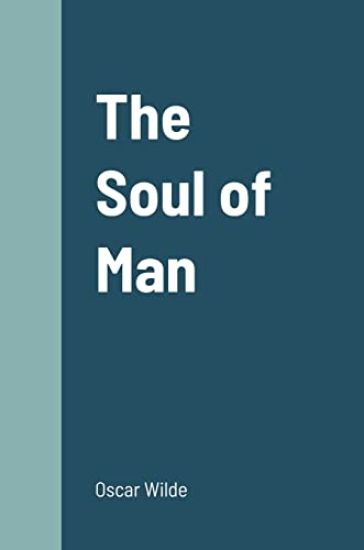
The Soul of Man By Oscar Wilde"The Soul of Man under Socialism" is an 1891 essay by Oscar Wilde in which he expounds a libertarian socialist worldview and a critique of charity. The writing of "The Soul of Man" followed Wilde's conversion to anarchist philosophy, following his reading of the works of Peter Kropotkin. In "The Soul of Man" Wilde argues that, under capitalism, "the majority of people spoil their lives by an unhealthy and exaggerated altruism-are forced, indeed, so to spoil them" instead of realising their true talents, they waste their time solving the social problems caused by capitalism, without taking their common cause away. Thus, caring people "seriously and very sentimentally set themselves to the task of remedying the evils that they see in poverty but their remedies do not cure the disease: they merely prolong it" because, as Wilde puts it, "the proper aim is to try and reconstruct society on such a basis that poverty will be impossible." Wilde did not see kindness or altruism per se as a problem what worried him was its misapplication in a way which leaves unaddressed the roots of the problem: "the altruistic virtues have really prevented the carrying out of this aim. Just as the worst slave-owners were those who were kind to their slaves, and so prevented the horror of the system being realised by those who suffered from it, and understood by those who contemplated it, so, in the present state of things in England, the people who do most harm are the people who try to do most good" while preserving the system. Wilde's deepest concern was with man's soul when he analysed poverty and its causes and effects in "The Soul of Man under Socialism" it was not simply the material well-being of the poor that distressed him, but how society does not allow them to reach a form of self-understanding and enlightenment. He adopted Jesus of Nazareth as a symbol of the supreme individualist. Wilde advocated socialism, which, he argued, "will be of value simply because it will lead to individualism" and "substituting cooperation for competition will restore society to its proper condition ... and ensure material well being for each member of the community." Wilde examined the political conditions necessary for full self-development and devotion to art, arguing, "Art is individualism, and individualism is a disturbing and disintegrating force. There lies its immense value.
Essays and LecturesOscar WildeHISTORICAL criticism nowhere occurs as an isolated fact in the civilisation or literature of any people. It is part of that complex working towards freedom which may be described as the revolt against authority. It is merely one facet of that speculative spirit of an innovation, which in the sphere of action produces democracy and revolution, and in that of thought is the parent of philosophy and physical science and its importance as a factor of progress is based not so much on the results it attains, as on the tone of thought which it represents, and the method by which it works. Being thus the resultant of forces essentially revolutionary, it is not to be found in the ancient world among the material despotisms of Asia or the stationary civilisation of Egypt. The clay cylinders of Assyria and Babylon, the hieroglyphics of the pyramids, form not history but the material for history. The Chinese annals, ascending as they do to the barbarous forest life of the nation, are marked with a soberness of judgment, a freedom from invention, which is almost unparalleled in the writings of any people but the protective spirit which is the characteristic of that people proved as fatal to their literature as to their commerce. Free criticism is as unknown as free trade. While as regards the Hindus, their acute, analytical and logical mind is directed rather to grammar, criticism and philosophy than to history or chronology. Indeed, in history their imagination seems to have run wild, legend and fact are so indissolubly mingled together that any attempt to separate them seems vain. If we except the identification of the Greek Sandracottus with the Indian Chandragupta, we have really no clue by which we can test the truth of their writings or examine their method of investigation. It is among the Hellenic branch of the Indo-Germanic race that history proper is to be found, as well as the spirit of historical criticism among that wonderful offshoot of the primitive Aryans, whom we call by the name of Greeks and to whom, as has been well said, we owe all that moves in the world except the blind forces of nature.
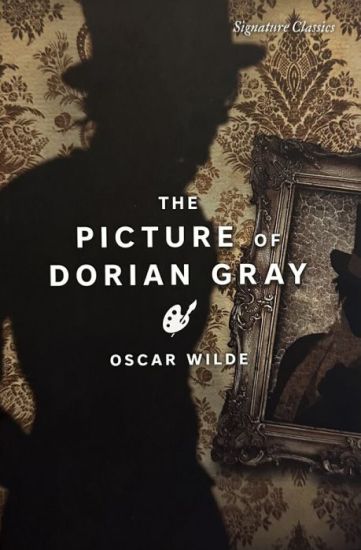
Oscar Wilde's only novel is the dreamlike story of a young man who sells his soul for eternal youth and beauty. Now, distinctively packaged with a beautifully designed jacket by noted illustrator Malika Favre. When handsome young Dorian Gray sees a painter's stunning portrait of him, he is transfixed by its reflection of his own beauty. He is also troubled by the knowledge that the image in the painting will remain forever youthful and handsome while he himself will grow older and less desirable. He wishes aloud that the roles were reversed, saying that he would give his soul if only the painting would suffer the ravages of time and he were to remain forever young. From that point on, Dorian lives a life of hedonistic indulgence, knowing that only the painting will show his moral corruption.

The Decay of Lying: An Observation By Oscar Wilde"The Decay of Lying - An Observation" is an essay by Oscar Wilde included in his collection of essays titled Intentions, published in 1891. This is a significantly revised version of the article that first appeared in the January 1889 issue of The Nineteenth Century. Wilde presents the essay in a Socratic dialogue between with Vivian and Cyril, two characters named after his own sons. Their conversation, though playful and whimsical, promotes Wilde's view of Romanticism over Realism. Vivian tells Cyril of an article he has been writing called "The Decay Of Lying: A Protest". According to Vivian, the decay of Lying "as an art, a science, and a social pleasure" is responsible for the decline of modern literature, which is excessively concerned with the representation of facts and social reality. He writes, "if something cannot be done to check, or at least to modify, our monstrous worship of facts, Art will become sterile and beauty will pass away from the land." Moreover, Vivian defends the idea that Life imitates Art far more than vice versa. Nature, he argues, is no less an imitation of Art than Life. Vivian also contends that Art is never representative of a time or place: rather, "the highest art rejects the burden of the human spirit ...] She develops purely on her own lines. She is not symbolic of any age." Vivian thus defends Aestheticism and the concept of "art for art's sake". At Cyril's behest, Vivian briefly summarizes the doctrines of the "new aesthetics" in the following terms: Art never expresses anything but itself. All bad art comes from returning to Life and Nature, and elevating them into ideals. Life imitates Art far more than Art imitates Life. It follows as a corollary that external Nature also imitates Art. Lying, the telling of beautiful untrue things, is the proper aim of Art. The essay ends with the two characters going outside, as Cyril asked Vivian to do at the beginning of the essay. Vivian finally complies, saying that twilight nature's "chief use" may be to "illustrate quotations from the poets." As Mich le Mendelssohn points out, "in an era when sociology was still in its infancy, psychology wasn't yet a discipline, and theories of performativity were still a long way off, Wilde's essay touched on a profound truth about human behaviour in social situations. The laws of etiquette governing polite society were, in fact, a mask. Tact was merely an elaborate art of impression management."
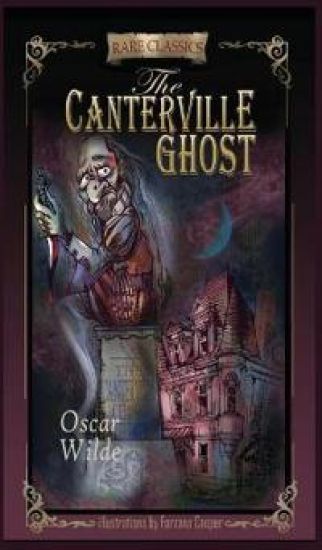
The ghost of Sir Simon has been haunting Canterville Chase since his disappearance three hundred years ago. He terrifies all who come there determined to not let anyone live in peace. However, this ghost has not dealt with the tough, American family who have taken residence. Will the ghost be able to terrify the American family full of eccentric individuals? Or will the world be finally rid of this specter known by everyone in England as the Canterville Ghost? Who will win this battle of horror: the ghost, the American family or someone else? Read The Canterville Ghost by Oscar Wilde expertly abridged for children of ages 7-12 by authors Fiza Pathan and Michaelangelo Zane. The book contains twenty-two B/W illustrations conceived by Fiza Pathan and executed by the illustrator Farzana Cooper. This is the sixth book in our Rare Classics Series.