Kirjailija
Peter Burke
Kirjat ja teokset yhdessä paikassa: 107 kirjaa, julkaisuja vuosilta 1899–2026, suosituimpiin kuuluu Kunskap och information : den mänskliga intelligensen potential och fara. Vertaile teosten hintoja ja tarkista saatavuus suomalaisista kirjakaupoista.
107 kirjaa
Kirjojen julkaisuvuodet: 1899–2026.
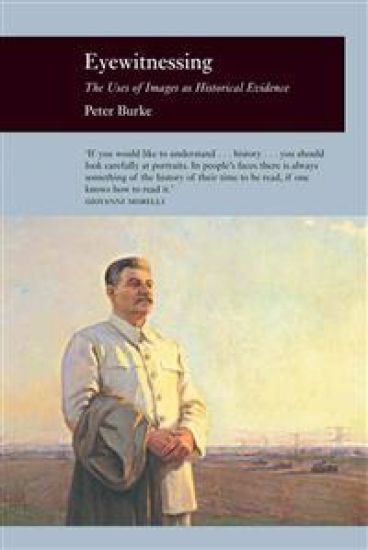
Eyewitnessing evaluates the place of images among other kinds of historical evidence. By reviewing the many varieties of images by region, period and medium, and looking at the pragmatic uses of images (e.g. the Bayeux Tapestry, an engraving of a printing press, a reconstruction of a building), Peter Burke sheds light on our assumption that these practical uses are 'reflections' of specific historical meanings and influences. He also shows how this assumption can be problematic. Traditional art historians have depended on two types of analysis when dealing with visual imagery, iconography and iconology. Burke describes and evaluates these approaches, concluding that they are insufficient. Focusing instead on the medium as message and on the social contexts and uses of images, he discusses both religious images and political ones, also looking at images in advertising and as commodities. Ultimately, Burke's purpose is to show how iconographic and post-iconographic methods - psychoanalysis, semiotics, viewer response, deconstruction - are both useful and problematic to contemporary historians.
The Historical Anthropology of Early Modern Italy
Peter Burke
Cambridge University Press
2005
pokkari
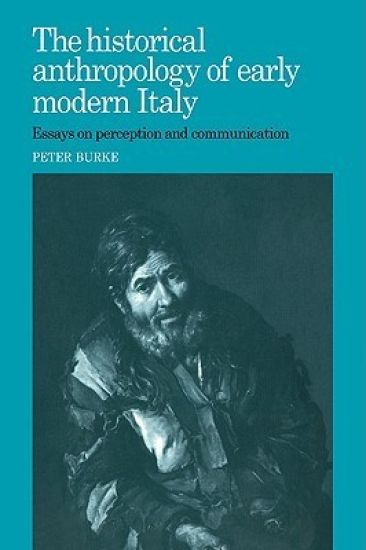
Based on archival material from the cities of Genoa, Milan, Venice, Florence, Rome, and Naples, as well as on published sources, such as travel journals, and artistic representations, this volume presents an original view of the culture of early modern Italy. The book addresses particular themes - specifically those of perception and communication - as well as serving to exemplify modes of analysis in the currently developing field of historical anthropology. In the first part of the book, Peter Burke examines the stereotyped ways in which contemporaries perceived social groups such as saints, beggars, and working women, and shows how these stereotypes were used, consciously and unconsciously, both by the authorities and by ordinary people.
What is the use of social theory to historians, and of history to social theorists? In clear and energetic prose, a preeminent cultural historian here offers a far-reaching response to these deceptively simple questions. Peter Burke reviews the emergence of the fields of history and social science and traces their tentative convergence as he reappraises the relations between them. Burke first examines what uses historians have made—or might make—of the models, methods, and concepts of the social sciences, and then analyzes some of the intellectual conflicts that are at the heart of the tension between history and social theory. Throughout, he draws from a broad range of cultures and periods to illustrate how history, in turn, has been used to create and validate social theories. This new edition brings the book up to date with the addition of examples and discussions of new topics such as social capital, globalization, and postcolonialism.
What is the use of social theory to historians, and of history to social theorists? In clear and energetic prose, a pre-eminent cultural historian here offers a far-reaching response to these deceptively simple questions. In this classic text, now revised and updated in its second edition, Peter Burke reviews afresh the relationship between the fields of history and the social sciences and their tentative convergence in recent decades. Burke first examines what uses historians have made - or might make - of the models, methods, and concepts of the social sciences, and then analyzes some of the intellectual conflicts, such as the opposition between structure and human agency, which are at the heart of the tension between history and social theory. Throughout, he draws from a broad range of cultures and periods to illustrate how history, in turn, has been used to create and validate social theories. This new edition brings the book up to date with the addition of examples and discussions of new topics such as social capital, globalization and post-colonialism. The second edition of History and Social Theory will continue to stimulate both students and scholars across a range of disciplines with its challenging assessment of the roles of history and social science today.
History and Social Theory
Peter Burke
JOHN WILEY AND SONS LTD
2005
nidottu
Halvin toimitettuna 29,10 €
What is the use of social theory to historians, and of history to social theorists? In clear and energetic prose, a pre-eminent cultural historian here offers a far-reaching response to these deceptively simple questions. In this classic text, now revised and updated in its second edition, Peter Burke reviews afresh the relationship between the fields of history and the social sciences and their tentative convergence in recent decades. Burke first examines what uses historians have made - or might make - of the models, methods, and concepts of the social sciences, and then analyzes some of the intellectual conflicts, such as the opposition between structure and human agency, which are at the heart of the tension between history and social theory. Throughout, he draws from a broad range of cultures and periods to illustrate how history, in turn, has been used to create and validate social theories. This new edition brings the book up to date with the addition of examples and discussions of new topics such as social capital, globalization and post-colonialism. The second edition of History and Social Theory will continue to stimulate both students and scholars across a range of disciplines with its challenging assessment of the roles of history and social science today.
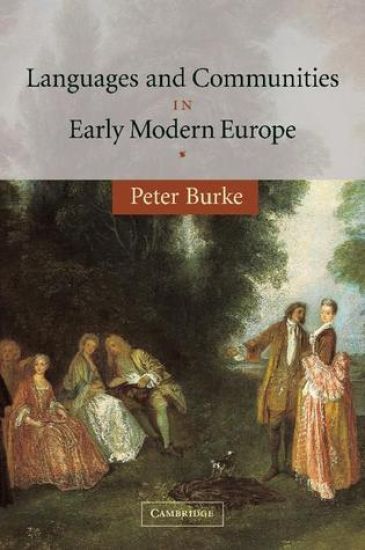
Languages and Communities in Early Modern Europe
Peter Burke
Cambridge University Press
2004
pokkari
In this magisterial new study, Peter Burke explores the social and cultural history of the languages spoken or written in Europe between the invention of printing and the French Revolution, arguing that, from a linguistic point of view, 1450 to 1789 should be regarded as a distinct period. One major theme of the book is the relation between languages and communities (regions, churches, occupations and genders as well as nations) and the place of language as a way of identifying others as well as a symbol of one’s own identity. A second, linked theme is that of competition: between Latin and the vernaculars, between different vernaculars, dominant and subordinate, and finally between different varieties of the same vernacular, such as standard languages and dialects. Written by one of Europe’s leading cultural historians, this book restores the history of the many languages of Europe in a large variety of contexts.
Languages and Communities in Early Modern Europe
Peter Burke
Cambridge University Press
2004
sidottu
In this magisterial new study, Peter Burke explores the social and cultural history of the languages spoken or written in Europe between the invention of printing and the French Revolution, arguing that, from a linguistic point of view, 1450 to 1789 should be regarded as a distinct period. One major theme of the book is the relation between languages and communities (regions, churches, occupations and genders as well as nations) and the place of language as a way of identifying others as well as a symbol of one’s own identity. A second, linked theme is that of competition: between Latin and the vernaculars, between different vernaculars, dominant and subordinate, and finally between different varieties of the same vernacular, such as standard languages and dialects. Written by one of Europe’s leading cultural historians, this book restores the history of the many languages of Europe in a large variety of contexts.
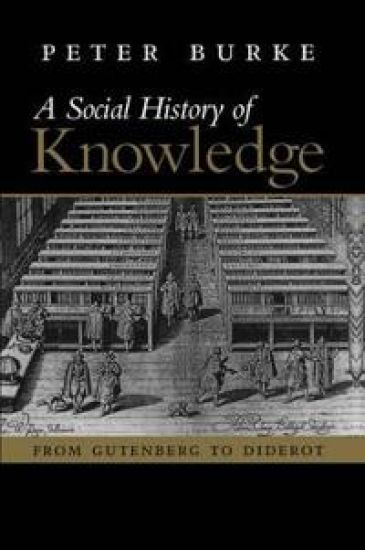
In this book Peter Burke adopts a socio-cultural approach to examine the changes in the organization of knowledge in Europe from the invention of printing to the publication of the French Encyclopédie. The book opens with an assessment of different sociologies of knowledge from Mannheim to Foucault and beyond, and goes on to discuss intellectuals as a social group and the social institutions (especially universities and academies) which encouraged or discouraged intellectual innovation. Then, in a series of separate chapters, Burke explores the geography, anthropology, politics and economics of knowledge, focusing on the role of cities, academies, states and markets in the process of gathering, classifying, spreading and sometimes concealing information. The final chapters deal with knowledge from the point of view of the individual reader, listener, viewer or consumer, including the problem of the reliability of knowledge discussed so vigorously in the seventeenth century. One of the most original features of this book is its discussion of knowledges in the plural. It centres on printed knowledge, especially academic knowledge, but it treats the history of the knowledge 'explosion' which followed the invention of printing and the discovery of the world beyond Europe as a process of exchange or negotiation between different knowledges, such as male and female, theoretical and practical, high-status and low-status, and European and non-European. Although written primarily as a contribution to social or socio-cultural history, this book will also be of interest to historians of science, sociologists, anthropologists, geographers and others in another age of information explosion.
'Joe is Joe, a different label is not going to make him suddenly think he is someone else' (Joe's Mum) Quotations like this about five year old Joe are used to illustrate this text, which draws on the experience of learning disabilities in the family. Peter Burke and Katy Cigno provide helpful definitions and reflect on some preliminary, but important theoretical ideas linking to social exclusion and vulnerability. Drawing on research and experience, different aspects of family lives are illustrated in all their diversity. The implications of stressful times, major upheavals and transitions for family members are examined in detail, indicating when help from professionals should be readily available. Learning Disabilities in Children introduces the theory relating to learning disabilities from the family perspective, and includes an examination of support systems for parents, caregivers and siblings. The authors emphasize why contact from service providers is necessary, particularly those based in health, education and welfare agencies. In addition, the need to give power to children and families as a multi-agency responsibility is addressed, with the aim of promoting positive practice in the professional sector for the benefit of the children involved. Learning Disabilities in Children is a useful resource for postgraduates specializing in child welfare, social work and community care. It will also be of interest to social workers, community caregivers, healthcare professionals and teachers, as well as to families where there is a child with learning disabilities. Key features: *Based on the experience of families with children who have learning disabilities *A practical guide for professionals and care givers seeking to clarify and understand family needs *Explains how a more inclusive partnership between children, their families and professionals may be achieved *Includes a chapter on child development *Provides a unifying framework for working in the complex field of childhood learning disabilities. Learning Disabilities in Children is a useful resource for postgraduates specializing in child welfare, social work and community care. It will also be of interest to social workers, community caregivers, healthcare professionals and teachers, and families where there is a child with learning disabilities.
Second edition. The art of translating private troubles into public issues is in danger of falling into disuse and of being forgotten. The argument of this volume is that making the translation possible again is an urgent and vital imperative for the renewal of politics today.
This is a fascinating account of the geography, chronology and sociology of one of the major cultural movements in European history.
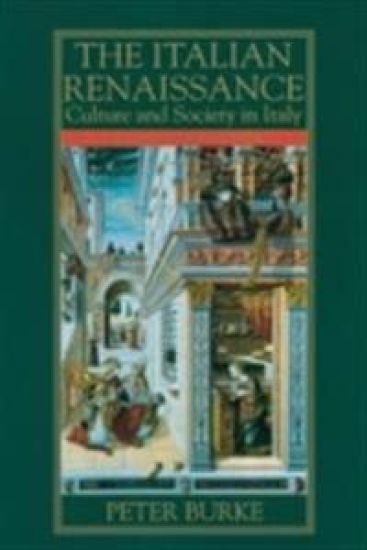
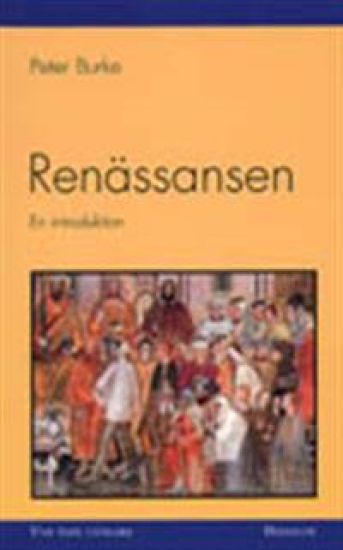
I sin Renässansen - en introduktion gör Peter Burke upp med denna mäktiga myt. Burckhardts misstag var att han alltför okritiskt tog fasta på den bild periodens lärda och konstnärer hade av sig själva. Modern historievetenskap, framför allt medeltidsforskingen, har underminerat denna 1800-talsbild av renässansen. Burke urskiljer två huvudtyper av argument: Dels var de så kallade »renässansmänniskorna» till sin karaktär mer medeltida än man föreställt sig, dels kan man egentligen inte urskilja en enda renässans, begreppet bör användas i pluralis. Det fanns åtskilliga »renässanser» under medeltiden. Vad leder då detta till? frågar sig Peter Burke. Fanns det över huvud taget en renässans? Om vi beskriver »renässansen» i purpur och guld, som ett isolerat kulturellt mirakel eller som ett plötsligt utbrott av modernitet, då måste svaret bli »nej». Renässansens arkitekter skapade mästerverk, med det gjorde även de gotiska byggmästarna. 1500-talets Italien hade sin Rafael, men 1700-talets Japan hade sin Hokusai. Machiavelli var en tänkare med väldig kraft och originalitet, men det var även den arabiske historikern Ibn Khaldun, som levde i Nordafrika på 1300-talet. Om man dock utan förutfattade meningar om framstegen under medeltiden eller i världen bortom Europa använder sig av termen »renässans» för att peka på en viss grupp av förändringar i den västerländska kulturen, då kan man kanske ändå betrakta detta som ett strukturerande begrepp som vi fortfarande har bruk för. Att i en sådan anda beskriva och tolka denna grupp av förändringar är den uppgift Peter Burke ställer sig i Renässansen - en introduktion.
The aim of this book is both to illustrate and to discuss some of the main varieties of cultural history which have emerged since the questioning of what might be called its "classic" form, exemplified in the work of Jacob Burckhardt and Johan Huizinga. Among the themes of individual chapters are the history of popular culture, the history of Carnival, the history of mentalities, the history of gestures, the history of jokes, and even the history of dreams. The emphasis of both the introduction and the case-studies which follow is on the variety of forms taken by cultural history today. The classic model has not been replaced by any new orthodoxy, despite the importance of approaches inspired by social and cultural anthropology. Variety is to be found in the cultures studied as well as among their historians. The case-studies included in the volume come not only from Europe (and in particular from Italy) but also from the New World, especially Brazil. Particular emphasis is placed on the importance of cultural encounters, cultural conflicts, and their consequences, whether these consequences should be described in terms of mixing, syncretism or synthesis. Written by one of the leading cultural historians in Europe today, this book will be of particular interest to students of early modern Europe, of the encounters between European culture and the New World, and to students and scholars interested in problems of historiography.
Explains cultural history, demonstrating the relationship between historians' and social anthropologists' search for collective representations, and describes the myriad ways in which the discipline has branched out.
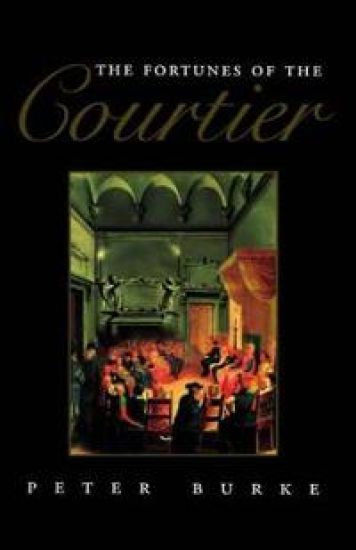
This book aims to understand the different readings of Castiglione's Cortegiano or Book of the Courtier from the Renaissance to the twentieth century.
... om Peter Burkes suveräna behärskning av olika kunskapsområden: teologi, antropologi, lingvistik, skönlitteratur, samhällsforskning. Han är, i mina ögon, en av de intressantaste historikerna i dag - och i en mening alldeles obrittisk, eftersom han väljer att behandla ämnen som ligger bortom den snävt insulära horisonten. /Anders Björnson, SvD