Kirjojen hintavertailu – 12 903 724 kirjaa ja 27 kauppaa
Kirjailija
Peter Burke
Kirjat ja teokset yhdessä paikassa: 107 kirjaa, julkaisuja vuosilta 1899–2026, suosituimpiin kuuluu Kunskap och information : den mänskliga intelligensen potential och fara. Vertaile teosten hintoja ja tarkista saatavuus suomalaisista kirjakaupoista.
This volume gathers Professor Burke's most important essays on the theory and the practice of history. In the first part, the main theme is the way in which concepts borrowed from social and cultural theory may encourage historians to ask new questions about the past or help them to answer old ones. The second part of the author's work is to illustrate some major new trends in historical practice: the use of images as evidence, for instance, the interest in different attitudes to time, and the increasing awareness of the relation, close or distant, between historians and the past that they study.
The essays on language have been inspired by the work of sociolinguists on the ways in which the same individual may use different languages or forms of language in different situations. The essays on cities are more diverse, including violence, noise and even smells, but most of them share two themes with the essays on language. The first and most obvious theme is communication, the second is identity, since language and clothes were and are a means to place unknown individuals in their social group.
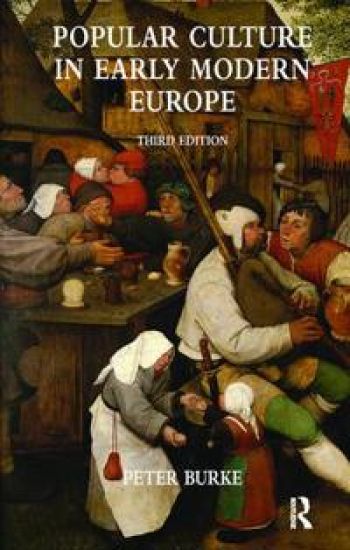
The concept of cultural history has in the last few decades come to the fore of historical research into early modern Europe. Due in no small part to the pioneering work of Peter Burke, the tools of the cultural historian are now routinely brought to bear on every aspect of history, and have transformed our understanding of the past. First published in 1978, this study examines the broad sweep of pre-industrial Europe's popular culture. From the world of the professional entertainer to the songs, stories, rituals and plays of ordinary people, it shows how the attitudes and values of the otherwise inarticulate shaped - and were shaped by - the shifting social, religious and political conditions of European society between 1500 and 1800. This third edition of Peter Burke's groundbreaking study has been published to mark the thirtieth anniversary of the book's publication in 1978. It provides a new introduction reflecting the growth of cultural history, and its increasing influence on 'mainstream' history, as well as an extensive supplementary bibliography which further adds to the information about new research in the area.
In this wide-ranging consideration of intellectual diasporas, historian Peter Burke questions what distinctive contribution to knowledge exiles and expatriates have made. The answer may be summed up in one word: deprovincialization. Historically, the encounter between scholars from different cultures was an education for both parties, exposing them to research opportunities and alternative ways of thinking. Deprovincialization was in part the result of mediation, as many émigrés informed people in their “hostland” about the culture of the native land, and vice versa. The detachment of the exiles, who sometimes viewed both homeland and hostland through foreign eyes, allowed them to notice what scholars in both countries had missed. Yet at the same time, the engagement between two styles of thought, one associated with the exiles and the other with their hosts, sometimes resulted in creative hybridization, for example, between German theory and Anglo-American empiricism. This timely appraisal is brimming with anecdotes and fascinating findings about the intellectual assets that exiles and immigrants bring to their new country, even in the shadow of personal loss.
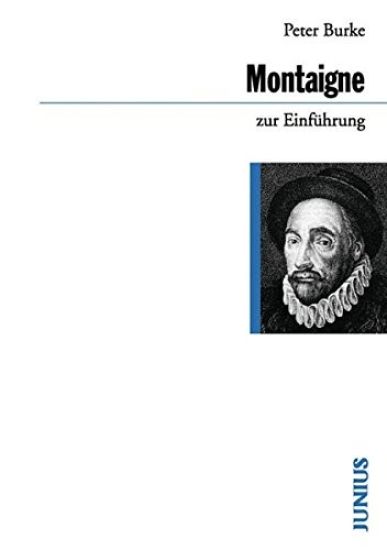
"Ich belehre nicht, ich erzähle." So charakterisiert Michel de Montaigne (1533-1592) seine "Essais". Peter Burke, der hervorragende Kenner der Renaissance, lotet aus, warum diese Versuche so modern anmuten und uns vertraut erscheinen. Zugleich rät er davon ab, Montaigne zum Zeitgenossen zu machen. Denn zuerst muss Montaigne in seiner Zeit begriffen werden - in seinem Individualismus, in seiner eigenwilligen Haltung zu ästhetischen, historischen, religiösen und politischen Fragen. Montaignes unverminderte Aktualität liegt in seiner Kritik jeglicher geistiger Autorität, der Verweigerung jedes letztgültigen Urteils.
The leading cultural historian Professor Peter Burke offers here several innovative approaches to cultural history. A key topic, from which the volume derives its name, is 'secret history', a phrase that came into use in the later seventeenth century to describe a new genre of historical writing by authors who claimed to be able to go behind the scenes and tell the public the real reasons for important events. The volume is introduced by an important autobiographical essay in which the author attempts to place his own career in its historical context. Professor Burke focusses on key topics that he believes to have been unjustly neglected, such as the rise of 'literal-mindedness' or the history of the idea of context. In the history of historical writing itself, one of these neglected topics is allegorical history - in other words, writing about the past in order to communicate a message about the present. The book ranges from the history of humour to the history of stereotypes (the 'Black Legend' of the Jesuits). Professor Burke studies the history of oral poetry, as well as changing conceptions of biography, linked to changing perceptions of individuals. He addresses pivotal issues and some familiar themes from unusual angles. These include the case of the anthropology and the geography of the Renaissance, and the study of postmodern views of history as myth, compared with the views of seventeenth-century sceptics.
Hybrid Renaissance introduces the idea that the Renaissance in Italy, elsewhere in Europe, and in the world beyond Europe is an example of cultural hybridization. The two key concepts used in this book are “hybridization” and “Renaissance”. Roughly speaking, hybridity refers to something new that emerges from the combination of diverse older elements. (The term “hybridization” is preferable to “hybridity” because it refers to a process rather than to a state, and also because it encourages the writer and the readers alike to think in terms of degree: where there is more or less, rather than presence versus absence.) The book begins with a discussion of the concept of cultural hybridization and a cluster of other concepts related to it. Then comes a geography of cultural hybridization focusing on three locales: courts, major cities (whether ports or capitals) and frontiers. The following seven chapters describe the hybridity of the Renaissance in different fields: architecture, painting and sculpture, languages, literature, music, philosophy and law and finally religion. The essay concludes with a brief account of attempts to resist hybridization or to purify cultures or domains from what was already hybridized.
Sociologists and historians are not always the best of neighbours, each group tending to perceive the other in terms of the crudest of stereotypes. However, the two approaches are obviously complementary – change is structured, and structures change. Each discipline can free the other from its own kind of parochialism and the aim of this book is to bridge the gap between these tow subcultures, to give historians a more acute sense of structure and sociologists a more acute sense of change.
What is the history of knowledge? This engaging and accessible introduction explains what is distinctive about the new field of the history of knowledge (or, as some scholars say, ‘knowledges in the plural’) and how it differs from the history of science, intellectual history, the sociology of knowledge or from cultural history. Leading cultural historian, Peter Burke, draws upon examples of this new kind of history from different periods and from the history of India, East Asia and the Islamic world as well as from Europe and the Americas. He discusses some of the main concepts used by scholars working in the field, among them ‘order of knowledge’, ‘situated knowledge’ and ‘knowledge society’. This book tells the story of the transformation of relatively raw ‘information’ into knowledge via processes of classification, verification and so on, the dissemination of this knowledge and finally its employment for different purposes, by governments, corporations or private individuals. A concluding chapter identifies central problems in the history of knowledge, from triumphalism to relativism, together with attempts to solve them. The only book of its kind yet to be published, What is the History of Knowledge? will be essential reading for all students of history and the humanities in general, as well as the interested general reader.
What is the history of knowledge? This engaging and accessible introduction explains what is distinctive about the new field of the history of knowledge (or, as some scholars say, ‘knowledges in the plural’) and how it differs from the history of science, intellectual history, the sociology of knowledge or from cultural history. Leading cultural historian, Peter Burke, draws upon examples of this new kind of history from different periods and from the history of India, East Asia and the Islamic world as well as from Europe and the Americas. He discusses some of the main concepts used by scholars working in the field, among them ‘order of knowledge’, ‘situated knowledge’ and ‘knowledge society’. This book tells the story of the transformation of relatively raw ‘information’ into knowledge via processes of classification, verification and so on, the dissemination of this knowledge and finally its employment for different purposes, by governments, corporations or private individuals. A concluding chapter identifies central problems in the history of knowledge, from triumphalism to relativism, together with attempts to solve them. The only book of its kind yet to be published, What is the History of Knowledge? will be essential reading for all students of history and the humanities in general, as well as the interested general reader.
The Low-Tech, No-Grow-Lights Approach to Abundant HarvestYear-Round Indoor Salad Gardening offers good news: with nothing more than a cupboard and a windowsill, you can grow all the fresh salad greens you need for the winter months (or throughout the entire year) with no lights, no pumps, and no greenhouse. Longtime gardener Peter Burke was tired of the growing season ending with the first frost, but due to his busy work schedule and family life, didn't have the time or interest in high-input grow lights or greenhouses. Most techniques for growing what are commonly referred to as "microgreens" left him feeling overwhelmed and uninterested. There had to be a simpler way to grow greens for his family indoors. After some research and diligent experimenting, Burke discovered he was right-there was a way! And it was even easier than he ever could have hoped, and the greens more nutrient packed. He didn't even need a south-facing window, and he already had most of the needed supplies just sitting in his pantry. The result: healthy, homegrown salad greens at a fraction of the cost of buying them at the market. The secret: start them in the dark. Growing "Soil Sprouts"-Burke's own descriptive term for sprouted seeds grown in soil as opposed to in jars-employs a method that encourages a long stem without expansive roots, and provides delicious salad greens in just seven to ten days, way earlier than any other method, with much less work. Indeed, of all the ways to grow immature greens, this is the easiest and most productive technique. Forget about grow lights and heat lamps! This book is a revolutionary and inviting guide for both first-time and experienced gardeners in rural or urban environments. All you need is a windowsill or two. In fact, Burke has grown up to six pounds of greens per day using just the windowsills in his kitchen! Year-Round Indoor Salad Gardening offers detailed step-by-step instructions to mastering this method (hint: it's impossible not to succeed, it's so easy!), tools and accessories to have on hand, seeds and greens varieties, soil and compost, trays and planters, shelving, harvest and storage, recipes, scaling up to serve local markets, and much more.
In the 20th century, historians began arguing for new ways of doing history. This "new history" movement called for a total history open to exploring every human activity. Instead of concentrating on the great deeds of statesmen and generals, new history considered the views and experiences of ordinary people. Instead of limiting themselves to official documents, new historians examined a greater variety of evidence, collaborating with sociologists, anthropologists, economists, linguists, and psychologists. Instead of traditional narratives, new history examined structures. Instead of claiming objective truth, new history acknowledged the prejudices associated with color, creed, class or gender. In this newly revised and updated edition of The French Historical Revolution, renowned cultural historian Peter Burke provides a critical history of this movement most associated with the French journal Annales, from its foundation in 1929 to the present. From founding historians Lucien Febvre and Marc Bloch through the "new history" movement's best-known champions Jacques Le Goff and Fernand Braudel to current practitioners Roger Chartier and Serge Gruzinski, Burke traces and analyzes the contributions of one of the most important historical movements of the last century.
This book provides a critical history of the movement associated with the journal Annales, from its foundation in 1929 to the present. This movement has been the single most important force in the development of what is sometimes called ‘the new history’. Renowned cultural historian, Peter Burke, distinguishes between four main generations in the development of the Annales School. The first generation included Lucien Febvre and Marc Bloch, who fought against the old historical establishment and founded the journal Annales to encourage interdisciplinary collaboration. The second generation was dominated by Fernand Braudel, whose magnificent work on the Mediterranean has become a modern classic. The third generation, deeply associated with the ‘cultural turn’ in historical scholarship, includes recently well-known historians such as Emmanuel Le Roy Ladurie, Jacques Le Goff and Georges Duby. This new edition brings us right up to the present, and contemplates the work of a fourth generation, including practitioners such as Roger Chartier, Serge Gruzinski and Jacques Revel. This new generation continued much of the cultural focus of the previous Annales historians, while diversifying further, and becoming increasingly ‘reflexive’, a move that owes much to the sociocultural theories of Michel Foucault, Michel de Certeau and Pierre Bourdieu. Wide-ranging yet concise, this new edition of a classic work of analysis of one of the most important historical movements of the twentieth century will be welcomed by students of history and other social sciences and by the interested general reader.
This book provides a critical history of the movement associated with the journal Annales, from its foundation in 1929 to the present. This movement has been the single most important force in the development of what is sometimes called ‘the new history’. Renowned cultural historian, Peter Burke, distinguishes between four main generations in the development of the Annales School. The first generation included Lucien Febvre and Marc Bloch, who fought against the old historical establishment and founded the journal Annales to encourage interdisciplinary collaboration. The second generation was dominated by Fernand Braudel, whose magnificent work on the Mediterranean has become a modern classic. The third generation, deeply associated with the ‘cultural turn’ in historical scholarship, includes recently well-known historians such as Emmanuel Le Roy Ladurie, Jacques Le Goff and Georges Duby. This new edition brings us right up to the present, and contemplates the work of a fourth generation, including practitioners such as Roger Chartier, Serge Gruzinski and Jacques Revel. This new generation continued much of the cultural focus of the previous Annales historians, while diversifying further, and becoming increasingly ‘reflexive’, a move that owes much to the sociocultural theories of Michel Foucault, Michel de Certeau and Pierre Bourdieu. Wide-ranging yet concise, this new edition of a classic work of analysis of one of the most important historical movements of the twentieth century will be welcomed by students of history and other social sciences and by the interested general reader.
Sociologists and historians are not always the best of neighbours, each group tending to perceive the other in terms of the crudest of stereotypes. However, the two approaches are obviously complementary – change is structured, and structures change. Each discipline can free the other from its own kind of parochialism and the aim of this book is to bridge the gap between these tow subcultures, to give historians a more acute sense of structure and sociologists a more acute sense of change.
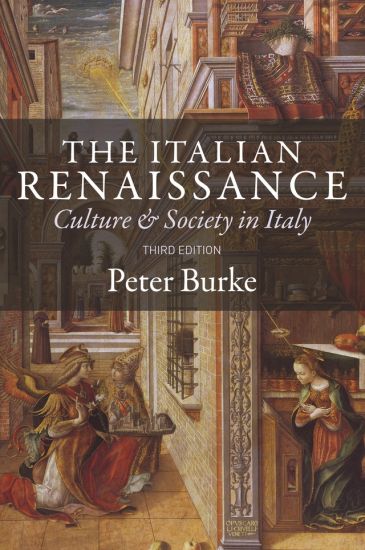
In this brilliant and widely acclaimed work, Peter Burke presents a social and cultural history of the Italian Renaissance. He discusses the social and political institutions that existed in Italy during the fifteenth and sixteenth centuries, and he analyses the ways of thinking and seeing that characterized this period of extraordinary artistic creativity. Developing a distinctive sociological approach, Peter Burke is concerned not only with the finished works of Michelangelo, Raphael, Leonardo da Vinci, and others, but also with the social background, patterns of recruitment, and means of subsistence of this 'cultural elite.' He thus makes a major contribution to our understanding of the Italian Renaissance, and to our comprehension of the complex relations between culture and society. Burke has thoroughly revised and updated the text for this new edition, including a new introduction, and the book is richly illustrated throughout. It will have a wide appeal among historians, sociologists, and anyone interested in one of the most creative periods of European history.
In this brilliant and widely acclaimed work, Peter Burke presents a social and cultural history of the Italian Renaissance. He discusses the social and political institutions which existed in Italy during the fifteenth and sixteenth centuries and analyses the ways of thinking and seeing which characterized this period of extraordinary artistic creativity. Developing a distinctive sociological approach, Peter Burke is concerned with not only the finished works of Michelangelo, Raphael, Leonardo da Vinci and others, but also with the social background, patterns of recruitment and means of subsistence of this ‘cultural elite’. New to this edition is a fully revised introduction focusing on what Burke terms ‘the domestic turn’ in Renaissance studies and discussing the relation of the Renaissance to global trends. He thus makes a major contribution to our understanding of the Italian Renaissance, and to our comprehension of the complex relations between culture and society. This thoroughly revised and updated third edition is richly illustrated throughout. It will have a wide appeal among historians, sociologists and anyone interested in one of the most creative periods of European history.