Kirjojen hintavertailu – 12 903 724 kirjaa ja 27 kauppaa

Kirjailija

Peter Burke

Kirjat ja teokset yhdessä paikassa: 107 kirjaa, julkaisuja vuosilta 1899–2026, suosituimpiin kuuluu Kunskap och information : den mänskliga intelligensen potential och fara. Vertaile teosten hintoja ja tarkista saatavuus suomalaisista kirjakaupoista.

107 kirjaa

Kirjojen julkaisuvuodet: 1899–2026.

The Italian Renaissance

The Italian Renaissance

Peter Burke

Polity Press
2013
nidottu
In this brilliant and widely acclaimed work, Peter Burke presents a social and cultural history of the Italian Renaissance. He discusses the social and political institutions which existed in Italy during the fifteenth and sixteenth centuries and analyses the ways of thinking and seeing which characterized this period of extraordinary artistic creativity. Developing a distinctive sociological approach, Peter Burke is concerned with not only the finished works of Michelangelo, Raphael, Leonardo da Vinci and others, but also with the social background, patterns of recruitment and means of subsistence of this ‘cultural elite’. New to this edition is a fully revised introduction focusing on what Burke terms ‘the domestic turn’ in Renaissance studies and discussing the relation of the Renaissance to global trends. He thus makes a major contribution to our understanding of the Italian Renaissance, and to our comprehension of the complex relations between culture and society. This thoroughly revised and updated third edition is richly illustrated throughout. It will have a wide appeal among historians, sociologists and anyone interested in one of the most creative periods of European history.
A Social History of Knowledge II

A Social History of Knowledge II

Peter Burke

Polity Press
2011
nidottu

Halvin toimitettuna 38,10 €

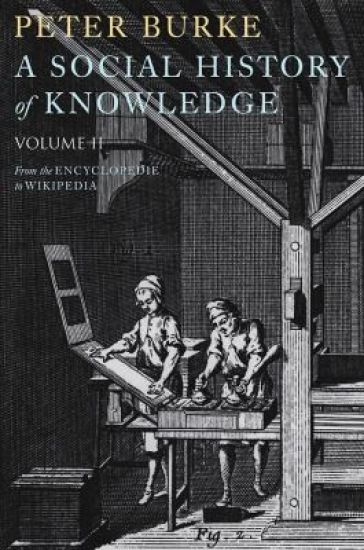
Peter Burke follows up his magisterial Social History of Knowledge, picking up where the first volume left off around 1750 at the publication of the French Encyclopédie and following the story through to Wikipedia. Like the previous volume, it offers a social history (or a retrospective sociology of knowledge) in the sense that it focuses not on individuals but on groups, institutions, collective practices and general trends. The book is divided into 3 parts. The first argues that activities which appear to be timeless - gathering knowledge, analysing, disseminating and employing it - are in fact time-bound and take different forms in different periods and places. The second part tries to counter the tendency to write a triumphalist history of the 'growth' of knowledge by discussing losses of knowledge and the price of specialization. The third part offers geographical, sociological and chronological overviews, contrasting the experience of centres and peripheries and arguing that each of the main trends of the period - professionalization, secularization, nationalization, democratization, etc, coexisted and interacted with its opposite. As ever, Peter Burke presents a breath-taking range of scholarship in prose of exemplary clarity and accessibility. This highly anticipated second volume will be essential reading across the humanities and social sciences.
A Social History of Knowledge II

A Social History of Knowledge II

Peter Burke

Polity Press
2011
sidottu
Peter Burke follows up his magisterial Social History of Knowledge, picking up where the first volume left off around 1750 at the publication of the French Encyclopédie and following the story through to Wikipedia. Like the previous volume, it offers a social history (or a retrospective sociology of knowledge) in the sense that it focuses not on individuals but on groups, institutions, collective practices and general trends. The book is divided into 3 parts. The first argues that activities which appear to be timeless - gathering knowledge, analysing, disseminating and employing it - are in fact time-bound and take different forms in different periods and places. The second part tries to counter the tendency to write a triumphalist history of the 'growth' of knowledge by discussing losses of knowledge and the price of specialization. The third part offers geographical, sociological and chronological overviews, contrasting the experience of centres and peripheries and arguing that each of the main trends of the period - professionalization, secularization, nationalization, democratization, etc, coexisted and interacted with its opposite. As ever, Peter Burke presents a breath-taking range of scholarship in prose of exemplary clarity and accessibility. This highly anticipated second volume will be essential reading across the humanities and social sciences.
Cultural Hybridity

Cultural Hybridity

Peter Burke

Polity Press
2009
sidottu
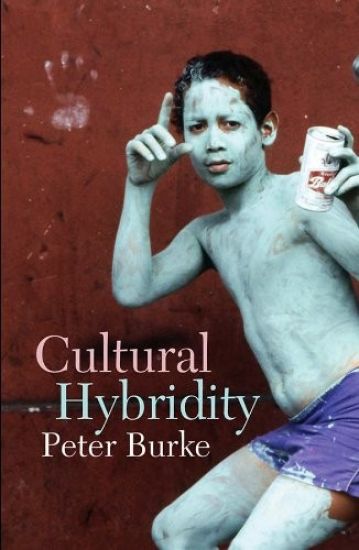
The period in which we live is marked by increasingly frequent and intense cultural encounters of all kinds. However we react to it, the global trend towards mixing or hybridization is impossible to miss, from curry and chips – recently voted the favourite dish in Britain – to Thai saunas, Zen Judaism, Nigerian Kung Fu, ‘Bollywood’ films or salsa or reggae music. Some people celebrate these phenomena, whilst others fear or condemn them. No wonder, then, that theorists such as Homi Bhabha, Stuart Hall, Paul Gilroy, and Ien Ang, have engaged with hybridity in their work and sought to untangle these complex events and reactions; or that a variety of disciplines now devote increasing attention to the works of these theorists and to the processes of cultural encounter, contact, interaction, exchange and hybridization. In this concise book, leading historian Peter Burke considers these fascinating and contested phenomena, ranging over theories, practices, processes and events in a manner that is as wide-ranging and vibrant as the topic at hand.
Cultural Hybridity

Cultural Hybridity

Peter Burke

Polity Press
2009
nidottu

Halvin toimitettuna 29,10 €

The period in which we live is marked by increasingly frequent and intense cultural encounters of all kinds. However we react to it, the global trend towards mixing or hybridization is impossible to miss, from curry and chips – recently voted the favourite dish in Britain – to Thai saunas, Zen Judaism, Nigerian Kung Fu, ‘Bollywood’ films or salsa or reggae music. Some people celebrate these phenomena, whilst others fear or condemn them. No wonder, then, that theorists such as Homi Bhabha, Stuart Hall, Paul Gilroy, and Ien Ang, have engaged with hybridity in their work and sought to untangle these complex events and reactions; or that a variety of disciplines now devote increasing attention to the works of these theorists and to the processes of cultural encounter, contact, interaction, exchange and hybridization. In this concise book, leading historian Peter Burke considers these fascinating and contested phenomena, ranging over theories, practices, processes and events in a manner that is as wide-ranging and vibrant as the topic at hand.
Popular Culture in Early Modern Europe

Popular Culture in Early Modern Europe

Peter Burke

Ashgate Publishing Limited
2009
nidottu
The concept of cultural history has in the last few decades come to the fore of historical research into early modern Europe. Due in no small part to the pioneering work of Peter Burke, the tools of the cultural historian are now routinely brought to bear on every aspect of history, and have transformed our understanding of the past. First published in 1978, this study examines the broad sweep of pre-industrial Europe's popular culture. From the world of the professional entertainer to the songs, stories, rituals and plays of ordinary people, it shows how the attitudes and values of the otherwise inarticulate shaped - and were shaped by - the shifting social, religious and political conditions of European society between 1500 and 1800. This third edition of Peter Burke's groundbreaking study has been published to mark the thirtieth anniversary of the book's publication in 1978. It provides a new introduction reflecting the growth of cultural history, and its increasing influence on 'mainstream' history, as well as an extensive supplementary bibliography which further adds to the information about new research in the area.
Ludwig XIV

Ludwig XIV

Peter Burke

Wagenbach Klaus GmbH
2009
pokkari
Peter Burke untersucht die Außenhaut eines Mythos: Die Geschichte Ludwigs XIV. erscheint hier als gigantische Werbekampagne, die den König über Frankreichs Grenzen hinaus als unvergleichliches Produkt anpries und durchsetzte - ein Ziel, dem Bevölkerung, Kultur und Politik bedenkenlos unterworfen wurden.
Annales-skolan : en introduktion

Annales-skolan : en introduktion

Peter Burke

Bokförlaget Daidalos
2006
pokkari
Ett nyckelord för de tidiga Annaleshistorikerna var global historia och i en annan betydelse än de tänkt sig lyckades de onekligen etablera en sådan. Att en engelsk kulturhistoriker som Peter Burke nu i en liten innehållsrik volym tecknat rörelsens historia är bara ett mått på inflytandet. Av den svenska professorn Birgitta Odéns förord framgår att Sverige egentligen är det enda land där historikerna undgått att inspireras av Annales-skolan. /Karl Steinck, Helsingborgs Dagblad ... en utmärkt översikt... /Nils Fredrik Aurelius, Barometern ... en utmärkt introduktion /Dan Karlholm, Dagens Nyheter