Kirjojen hintavertailu – 12 903 724 kirjaa ja 27 kauppaa

Kirjailija

Peter Davies

Kirjat ja teokset yhdessä paikassa: 70 kirjaa, julkaisuja vuosilta 1993–2026, suosituimpiin kuuluu Ray Atkins: A Painter's Odyssey. Vertaile teosten hintoja ja tarkista saatavuus suomalaisista kirjakaupoista.

70 kirjaa

Kirjojen julkaisuvuodet: 1993–2026.

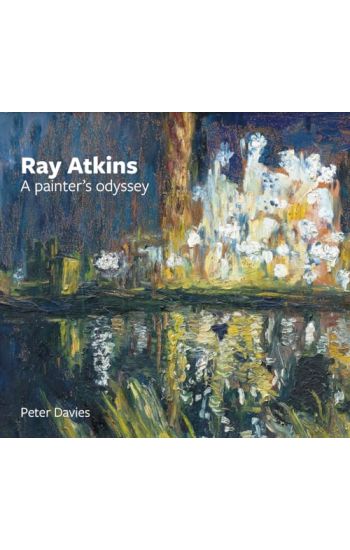
Ray Atkins: A Painter's Odyssey

Ray Atkins: A Painter's Odyssey

Peter Davies; David Stoker; Pauline Sheppard

SANSOM CO
2024
sidottu
Ray Atkins (b.1937) is one of the least well known major painters of his generation. He studied at Bromley College of Art in Kent before gaining a post graduate place at the Slade despite having failed the National Diploma in Design in 1961\. His first teaching post was at Reading University in 1965 where he lived and recorded in paint the huge upheavals that the town was undergoing, leading to a one person exhibition at the Whitechapel Gallery, London in 1974. A teaching post at Falmouth Art School in 1974 led to a thirty four year stay in Cornwall where he painted the extraordinary landscape of the china clay country around St Austell with its collossal pits and mounds of micae. The desolation left over by the demise of the tin mining industry was also a major theme, The more intimate subjects of children, gardens, family life and inevitably the sea were also part of the oevre. The nineties also saw a long series of works on the theme of dance. To celebrate the uncelebrated was his dictum. Peter Davies follows Atkins’ journey from the dark but creative London period to the high spots in the eighties with a retrospective at the Royal West of England Academy and with work selected for the John Moores in Liverpool, a room at a Serpentine summer Show, and representation in shows at the Hayward gallery. The book also follows the tensions and problems arising from Atkins’ insistence on working direct from his subjects and places the artist’s career in the wider context of the twists and turns of events in the art world in the UK, Europe and beyond. In addition, David Stoker gives a personal account of his discovery of Atkins in France, leading to a growing friendship and a deep understanding and respect for the work.
The Art of Jeremy Gardiner

The Art of Jeremy Gardiner

Wendy Baron; Ian Collins; William Varley; Peter Davies; Christiana Payne; Simon Martin

Lund Humphries Publishers Ltd
2013
muu
Providing a comprehensive assessment of Jeremy Gardiner's career to date, this monograph, the first of its kind, explains how this distinctive artist has taken the exploratory landscape vision of mid-century St Ives modernists like Ben Nicholson, Peter Lanyon and John Tunnard into a new post-millennial era. Gardiner's unique geological interpretation of landscape not only describes the current lie of the land but portrays it as a complex outcome of natural processes over vast periods of time. While indebted to British and American modernism, Gardiner's new conceptual rigour and technical repertoire is informed by science, geomorphology, new technologies and direct physical engagement with ancient landscapes. Following a distinguished international teaching career, based in Britain and the United States, Gardiner's landscape subjects have included geographically varied locations from the Jurassic Coast in his native Dorset and the rugged Atlantic seaboard of Cornwall, to the jagged volcanic topographies of the Brazilian oceanic islands and the Lake District. Including essays from leading art writers, this book provides an insight into the career of one of Britain's most innovative contemporary landscape artists.
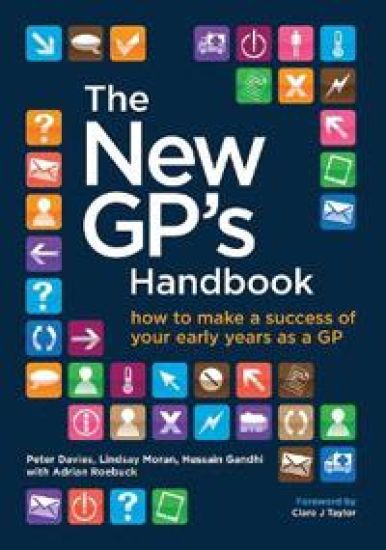
The New GP's Handbook

The New GP's Handbook

Peter Davies; Lindsay Moran; Adrian Roebuck

Radcliffe Publishing Ltd
2012
nidottu
General Practice has never been an easy occupation. In the past there were some clear structures and routes for new GPs to take. You could expect to join a practice and progress through the ranks, growing in seniority and confidence. You might have been informally mentored by one of the older colleagues; learning management and business skills gradually. It is no longer like this. The market has changed, the range of options is wider, and the way through the labyrinth is far from clear. You might find yourself confused and overwhelmed by all the new opportunities, possibilities and prospects. This book helps to clarify uncertainties and guide you towards the right path. It offers ways to formulate strategies when planning your career and maps out the landscape of general practice, enabling you to make, confident and informed decisions about your professional future. Supporting the initiative of First5(R), The New GP's Handbook is highly recommended for newly qualified GPs who will find it answers so many of their questions and helps make the first five years (and beyond) in general practice more understandable, productive and enjoyable. Experienced GPs too, will find the guide invaluable as a current, general overview. General practice is an exciting and rewarding career which provides a host of opportunities for new GPs entering the profession today. Finding the right job, achieving a good work-life balance and developing a culture of lifelong learning are vital not only for the fulfilment of new GPs themselves but for the future of the profession. This book will help you achieve these objectives. Clare J Taylor, in the Foreword
Olga Lengyel, Auschwitz Survivor

Olga Lengyel, Auschwitz Survivor

Peter Davies; Hannah Holtschneider; Jelen Sheila E.; Christoph Thonfeld

Springer International Publishing AG
2026
Nidottu
This book arises out of a long series of conversations about one of the most intriguing, but still under-researched, aspects of testimony: how the remembering and telling of an individual Holocaust survivor changes through time, through shifting contexts and with increasing age. It comes at this issue from an interdisciplinary perspective, not with the intention to develop a synthetic method but to explore how different perspectives overlap, conflict with or complement each other. It sets its definition of 'testimony statement' very broadly, treating published texts, video testimonies, and fragmentary statements and publications as of equal interest, without a hierarchy of value. The book focuses on Olga Lengyel (1908-2001). She wrote a memoir about her imprisonment in Auschwitz, first published in French in 1946, which was translated into English with modifications in 1947, and, half a century later, in 1998, she gave video testimony for the USC Shoah Foundation’s Visual History Archive. Her testimony is well known enough to have gained a public profile and to have attracted some scholarly attention, but is not 'canonical'. Her work is internationally known, having been translated and received in a number of languages, and having been an inspiration for William Styron’s bestseller Sophie’s Choice. This book provides a condensed critical resource on Lengyel’s testimonies, addressing matters of historical veracity, of trauma, of gender, of memory, and of genre in the transmission and reception of Holocaust testimonies over time and across cultures.
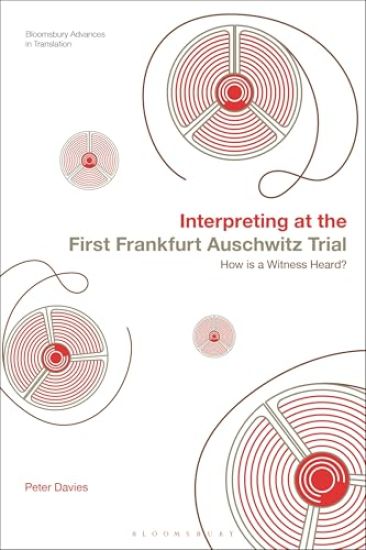
Interpreting at the First Frankfurt Auschwitz Trial

Interpreting at the First Frankfurt Auschwitz Trial

Peter Davies

BLOOMSBURY PUBLISHING PLC
2025
sidottu
This book explores the work of interpreters and translators at the First Frankfurt Auschwitz Trial of 22 former SS Auschwitz personnel in the mid-1960s, when the voices of dozens of witnesses, speaking 10 different languages, had a profound impact on public understanding of the Holocaust in Germany and beyond. The book asks vital questions about how victims of genocide can make their voices heard in legal systems, and the processes by which the testimony of Holocaust survivors has entered the public record. The author discusses interpreters’ professional practice and ethical self-understanding in the unequal linguistic and institutional structures of the courtroom, and shows how translation and interpreting affected the way victims’ voices were heard. The survivors came from many different national, linguistic and cultural backgrounds, and their testimonies are often multilingual or hybrid, providing illuminating insights into the significance of the language(s) in which testimony is given, but presenting interpreters with linguistic and ethical challenges. The preserved audio recordings of courtroom testimony show that interpreters and translators played a key role not only in attaining justice but also in helping to shape the ways in which victim testimony was given, heard, understood and valued within and beyond the courtroom. The author considers how trust is established, developed, challenged and lost, and how this affects the ability of Auschwitz survivors to give testimony in a complex and emotionally demanding situation. In doing so, he also explores the contribution of interpreting and translation to the developing memory of the Holocaust in the 1960s and to the public image of the survivor-witness.
Olga Lengyel, Auschwitz Survivor

Olga Lengyel, Auschwitz Survivor

Peter Davies; Hannah Holtschneider; Sheila E. Jelen; Christoph Thonfeld

Springer International Publishing AG
2025
sidottu
This book arises out of a long series of conversations about one of the most intriguing, but still under-researched, aspects of testimony: how the remembering and telling of an individual Holocaust survivor changes through time, through shifting contexts and with increasing age. It comes at this issue from an interdisciplinary perspective, not with the intention to develop a synthetic method but to explore how different perspectives overlap, conflict with or complement each other. It sets its definition of 'testimony statement' very broadly, treating published texts, video testimonies, and fragmentary statements and publications as of equal interest, without a hierarchy of value. The book focuses on Olga Lengyel (1908-2001). She wrote a memoir about her imprisonment in Auschwitz, first published in French in 1946, which was translated into English with modifications in 1947, and, half a century later, in 1998, she gave video testimony for the USC Shoah Foundation’s Visual History Archive. Her testimony is well known enough to have gained a public profile and to have attracted some scholarly attention, but is not 'canonical'. Her work is internationally known, having been translated and received in a number of languages, and having been an inspiration for William Styron’s bestseller Sophie’s Choice. This book provides a condensed critical resource on Lengyel’s testimonies, addressing matters of historical veracity, of trauma, of gender, of memory, and of genre in the transmission and reception of Holocaust testimonies over time and across cultures.
The Adventures of Rhonnie the Cross-Eyed Rhino (and Friends)

The Adventures of Rhonnie the Cross-Eyed Rhino (and Friends)

Peter Davies

GROSVENOR HOUSE PUBLISHING LTD
2022
nidottu
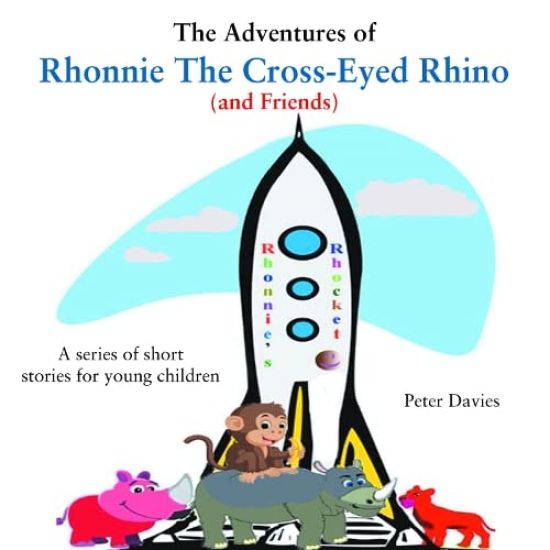
The Adventures Of Rhonnie The Cross-eyed Rhino (And Friends) Is a series of eight short stories for young children of ages from very early learners to age 7 - 9 years. It would also be found entertaining and informative to some older children and adults alike. The lead or main character, Rhonnie, is a young Rhinoceros who is born with eyes that are crossed and from an early age he decides that he's going to find a way to have his eyes straightened so that he will not appear different to his mother, his siblings and other rhinos. As he travels around, he discovers that life can be much harder for others and he learns to understand and accept this. Sometimes his efforts to get them straightened gets him into some scrapes and funny situations. Eventually he arrives at the conclusion that it isn't so important and accepts his disability as just an annoyance and sets out his ambition to adjust to it and to become the best rhino he can possibly be. As he is growing up he makes many new friends and acquaintances. He is determined to have the best time he can and sets out on adventure after adventure with his friends. Nothing fazes him in his explorations and search for fun. All stories were written entirely by Peter Davies whilst looking for a productive hobby during the lock-down period caused by the COVID19 pandemic. Each story contains life lessons for the younger reader, also morals to adopt in developing life skills. He learns the importance of sharing. It deals with diversity issues and also natural systems including environmental and social harmony.
The Authorised History of British Defence Economic Intelligence
This book is the first history of UK economic intelligence and offers a new perspective on the evolution of Britain's national intelligence machinery and how it worked during the Cold War. British economic intelligence has a longer pedigree than the Joint Intelligence Committee (JIC) and was the vanguard of intelligence coordination in Whitehall, yet it remains a missing field in intelligence studies. This book is the first history of this core government capability and shows how central it was to the post-war evolution of Whitehall's national intelligence machinery. It places special emphasis on the Joint Intelligence Bureau and Defence Intelligence Staff - two vital organisations in the Ministry of Defence underpinning the whole Whitehall intelligence edifice, but almost totally ignored by historians. Intelligence in Whitehall was not conducted in a parallel universe. This contrasts with the conventional wisdom which accepts the uniqueness of intelligence as a government activity and is symbolised by the historical profile of the JIC. The study draws on the official archives to show that the mantra of the existence of a semi-autonomous UK intelligence community cannot be sustained against the historical evidence of government departments using the machinery of government to advance their traditional priorities. Rivalries within and between agencies and departments, and their determination to resist any central encroachment on their authority, emasculated a truly professional multi-skilled capability in Whitehall at the very moment when it was needed to address emerging global economic issues. This book will be of much interest to students of British government and politics, intelligence studies, defence studies, security studies and international relations in general.
Thousands Of Heroes Have Arisen

Thousands Of Heroes Have Arisen

Sukwinder Singh Bassi; Peter Davies

Helion Company
2019
nidottu
After the annexation of the Punjab in 1849, the British were quick to acknowledge the fighting prowess of the proud Sikh nation and started to recruit Sikhs into the British Indian army. This soldiering tradition continued into the early 20th century and when the Great War commenced in 1914, Sikhs were in high demand. They came forward in their thousands and enlisted in numbers disproportionate to their population. Although they made up approximately 1-2% of the Indian population they made up 20% of the British Indian Army at the beginning of the Great War. The Great War was truly a global conflict for the Sikhs, who fought in every arena of the war including the Western Front, Gallipoli, Mesopotamia, Persia, Africa, Palestine and the Far East. Their contribution in manpower to the war effort reached over 100,000 men by the end of the conflict. The Great War produced a vast literature of novels, poems and myths. But the story of these Sikh soldiers and the Sikh people is mostly forgotten. This book seeks to address this by telling the story of the Great War through the eyes of the Sikh soldier and Sikh people themselves, by examining their war time experiences from France, from the hospital, from the trench, from the village and an array of lands. The book also tells the story of parallel Sikh movements of the time, from fighting against racism in the Empire to would-be revolutionaries returning from aboard to uproot the British from India. Most fascinatingly, the story is told in their own words by previously anonymous Sikhs such as Gajan Singh, a cavalryman, who tells of the horrors of the Somme in his own unique Indian way, and Mul Singh, who waxes lyrical about the grandeur of England he had encountered on a tour. Poetry from Gurdit Singh exhorting loyalty to a King-Emperor that he had no real knowledge of, and a letter full of emotion and desperation from Partap Kaur, a widow, whose husband had been killed in Flanders. Their voices are arranged by theme and ordered chronologically to allow the reader to understand how perspectives changed through the course of the war. The book explores many reasons why Sikhs rose to the challenge of fighting in the Great War, and how this is linked to the Sikh psyche, their martial traditions, coercion and to the prevailing situation in the Punjab. Utilising research from hundreds of unpublished letters written to and from Sikh soldiers, testimonies, newspaper articles, archives and a range of other sources, the book builds a picture of the human experience of Sikhs during the Great War, a war of the 20th century whose effects are still being felt a century later.