Kirjailija
Plato
Kirjat ja teokset yhdessä paikassa: 1 115 kirjaa, julkaisuja vuosilta 1821–2026, suosituimpiin kuuluu Ion. Vertaile teosten hintoja ja tarkista saatavuus suomalaisista kirjakaupoista.
1 115 kirjaa
Kirjojen julkaisuvuodet: 1821–2026.
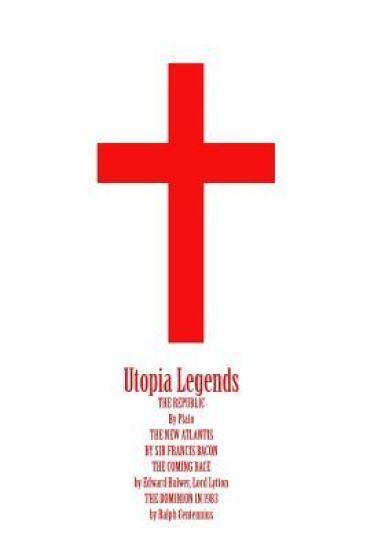
Utopia Legends: The Republic by Plato the New Atlantis by Sir Francis Bacon the Coming Race by Edward Bulwer, Lord Lytton the Dominion
Plato; Frances Bacon; Edward Bulwer Bulwer-Lytton
Createspace Independent Publishing Platform
2016
nidottu
Complete digitally restored reprint(facsimile) of the original edition of 1908 (third edition) with excellent resolution and outstanding readability. Translated by Benjamin Jowett (1817-1893). The Layout is +30 % larger as the original. "The Republic" is Plato's best-known work, it has proven to be one of the world's most influential works of philosophy and political theory, both intellectually and historically. In it, Socrates along with various Athenians and foreigners discuss the meaning of justice and examine whether or not the just man is happier than the unjust man by considering a series of different cities coming into existence "in speech," culminating in a city called Kallipolis, which is ruled by philosopher-kings; and by examining the nature of existing regimes. The participants also discuss the theory of forms, the immortality of the soul, and the roles of the philosopher and of poetry in society.
Complete digitally restored reprint (facsimile handmade reproduction) of the edition de luxe by The Nottingham Society (volume III of III) with excellent resolution and outstanding readability. Translated by F. J. Church (1854-1888). Illustrated with 5 images. The Layout is +30 % larger as the original for a better readability. Volume I (Dialogues): Phaedrus (on the beautiful), Lysis (on friendship), Protagoras (the sophists), Charmides (on temperance), Laches (on fortitude) - Volume II: The Republic - Volume III: Euthyphron (on holiness), Apology of Socrates, Crito (the duty of a citizen), Phaedo (the immortality of the soul), Philebus (the greatest good).
Complete digitally restored reprint (facsimile handmade reproduction) of the edition de luxe by The Nottingham Society (volume I of III) with excellent resolution and outstanding readability. Translated by John Wright (1852-1908). Illustrated with 5 images. The Layout is +30 % larger as the original for a better readability. Volume I (Dialogues): Phaedrus (on the beautiful), Lysis (on friendship), Protagoras (the sophists), Charmides (on temperance), Laches (on fortitude) - Volume II: The Republic - Volume III: Euthyphron (on holiness), Apology of Socrates, Crito (the duty of a citizen), Phaedo (the immortality of the soul), Philebus (the greatest good).
The Republic of Plato: The Original Edition of 1908
Plato
Reprint Publishing
2016
nidottu
Halvin toimitettuna 23,70 €
Complete digitally restored reprint (facsimile handmade reproduction) of the original edition of 1908 (third edition) with excellent resolution and outstanding readability. Translated by Benjamin Jowett (1817-1893). The Layout is +30 % larger as the original. "The Republic" is Plato's best-known work, it has proven to be one of the world's most influential works of philosophy and political theory, both intellectually and historically. In it, Socrates along with various Athenians and foreigners discuss the meaning of justice and examine whether or not the just man is happier than the unjust man by considering a series of different cities coming into existence "in speech," culminating in a city called Kallipolis, which is ruled by philosopher-kings; and by examining the nature of existing regimes. The participants also discuss the theory of forms, the immortality of the soul, and the roles of the philosopher and of poetry in society.
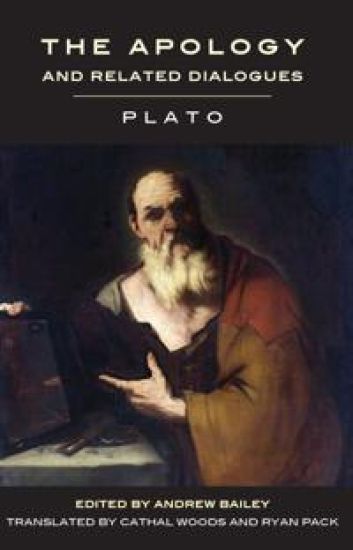
Socrates, the first of the great ancient Greek philosophers, left no written works. What survives of his philosophical thought are second-hand descriptions of his teachings and conversations—including, most famously, the accounts of his trial and execution composed by his friend, student, and philosophical successor, Plato. These dialogues, though fallible as historical record, contain some of the most fascinating and well-known arguments in Western philosophy, and offer a dramatic picture of Socrates as uncompromising in the face of death. In Euthyphro, Socrates examines the concept of piety, and displays his propensity for questioning Athenian authorities. Such audacity is not without consequence, and in the Apology we find Socrates defending himself in court against charges of impiety and corruption of the youth. Crito depicts Socrates choosing to accept the resulting death sentence, rather than escape Athens and avoid execution. All three dialogues are included here, as is the final scene of Phaedo, in which the sentence is carried out. Woods and Pack’s new translation strikes a fine balance between literal exactness and readability, and thorough annotations make Plato’s prose more accessible than ever before. A non-technical introduction sets the stage for new readers, detailing the historical context of Plato’s writing, and offering useful background information.
The magnum opus of Plato's writings that detail out the utopia that Socrates had thought of when debating with his contemporaries in ancient Greece. While many people have criticized these views over the years, these ideas have sparked many ideas of what makes government work and what does not as well as laying down the foundations for our own democratic systems in the present day. Socrates has many things to say about people and society in general making it a very enlightening piece of work.
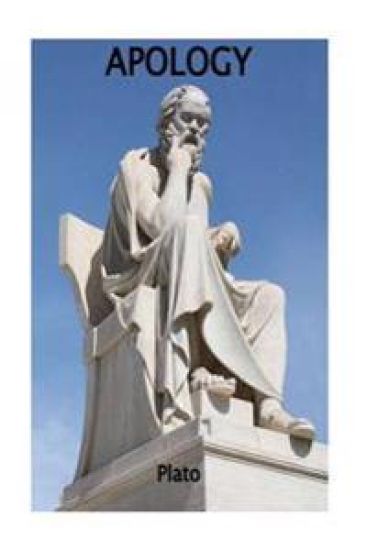
The Apology is Plato's version of the speech given by Socrates as he defended himself in 399 BC against the charges of "corrupting the young, and by not believing in the gods in whom the city believes, but in other daimonia that are novel" (24b). "Apology" here has its earlier meaning (now usually expressed by the word "apologia") of speaking in defense of a cause or of one's beliefs or actions. The general term apology, in context to literature, defends a world from attack (opposite of satire-which attacks the world). Apology is often ranked one of Plato's finest works. The dialogue, which depicts the death of Socrates, is among the four through which Plato details the philosopher's final days, along with Euthyphro, Phaedo, and Crito. Begins with Socrates saying he does not know if the men of Athens (his jury) have been persuaded by his accusers. This first sentence is crucial to the theme of the entire speech. Indeed, in the Apology Socrates will suggest that philosophy begins with a sincere admission of ignorance; he later clarifies this, dramatically stating that whatever wisdom he has, comes from his thinking that he knows nothing (23b, 29b).
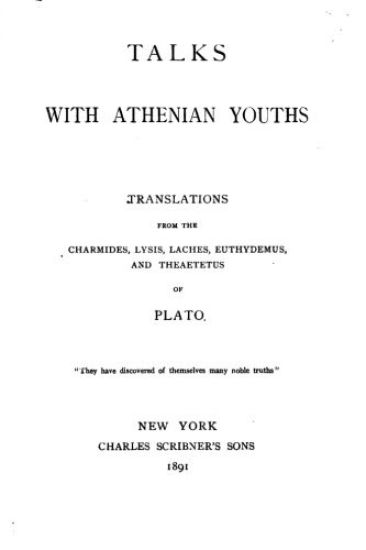
Talks with Athenian youths, translations from the Charmides, Lysis, Laches, Euthydemus, and Theaetetus of Plato
Plato
Createspace Independent Publishing Platform
2016
nidottu
Is based largely on "definition by division". Socrates goads Euthyphro to offer one definition after another for the word 'piety'. The hope is to use a clear definition as the basis for Euthyphro to teach Socrates the answer to the question, "What is piety?", ostensibly so that Socrates can use this to defend himself against the charge of impiety. It is clear that Socrates wants a definition of piety that will be universally true (i.e., a 'universal'), against which all actions can be measured to determine whether or not they are pious. It is equally clear that to be universal, the definition must express what is essential about the thing defined, and be in terms of genus, species, and its differentiae (this terminology is somewhat later than Socrates, made more famous with Aristotle). Hence this dialogue is important not just for theology, ethics, and epistemology, but even for metaphysics. Indeed: Plato's approach here has been accused of being too overtly anachronistic, since it is highly unlikely that Socrates himself was such a "master metaphysicist". But the more expository treatment of metaphysics we find in Aristotle has its roots in the Platonic dialogues, especially in the Euthyphro.
The Republic is a Socratic dialogue, written by Plato around 380 BC, concerning the definition of justice, the order and character of the just city-state and the just man-for this reason, ancient readers used the name On Justice as an alternative title (not to be confused with the spurious dialogue also titled On Justice). The dramatic date of the dialogue has been much debated and though it might have taken place some time during the Peloponnesian War, "there would be jarring anachronisms if any of the candidate specific dates between 432 and 404 were assigned". Plato's best-known work, it has proven to be one of the world's most influential works of philosophy and political theory, both intellectually and historically. In it, Socrates along with various Athenians and foreigners discuss the meaning of justice and examine whether or not the just man is happier than the unjust man by considering a series of different cities coming into existence "in speech", culminating in a city called Kallipolis, which is ruled by philosopher-kings; and by examining the nature of existing regimes. The participants also discuss the theory of forms, the immortality of the soul, and the roles of the philosopher and of poetry in society.
Vertheidigungsrede des Sokrates und Kriton
Plato
Createspace Independent Publishing Platform
2016
nidottu
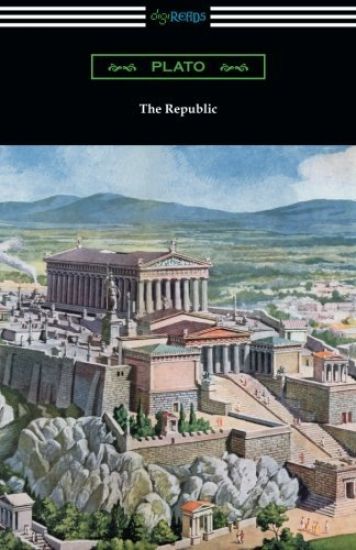
The Republic (Translated by Benjamin Jowett with an Introduction by Alexander Kerr)
Plato
Digireads.com
2016
pokkari
Halvin toimitettuna 24,10 €

Do You Really Know Anything About Love? Unless you've studied the classics, you don't know what you've been missing. These days there is a great deal of talk about diversity and equality, in both gender and preferences. A discussion held well over a thousand years ago can teach us more than we might suspect. In this work, Love is examined in a sequence of speeches by men attending a symposium, or drinking party. Basically, party-goers celebrating Agathon's first victory in a drama contest decide to do something besides drink themselves into a stupor because they are still paying for such activity the night before. Socrates joins the group on this second night, and it is decided that each man in turn will offer his praises to love. For a reader (and especially a writer) of Romance works, this might just explain some of the questions that our modern novels raise. Or, it's just a chance to get another feel-good read in during an afternoon. Scroll up and get your copy now.