
Kirjailija
Plato
Kirjat ja teokset yhdessä paikassa: 1 115 kirjaa, julkaisuja vuosilta 1821–2026, suosituimpiin kuuluu Ion. Vertaile teosten hintoja ja tarkista saatavuus suomalaisista kirjakaupoista.
1 115 kirjaa
Kirjojen julkaisuvuodet: 1821–2026.
The traditional subtitle (which may or may not be Plato's) is "or the Sophists". The main argument is between the elderly Protagoras, a celebrated Sophist, and Socrates.
Reason and Persuasion: Three Dialogues By Plato: Euthyphro, Meno, Republic Book I
Plato; John Holbo
Createspace Independent Publishing Platform
2015
nidottu
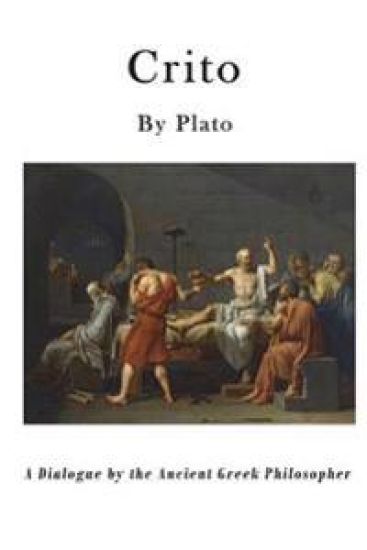
Crito: A Dialogue by the Ancient Greek Philosopher
Plato
Createspace Independent Publishing Platform
2015
nidottu
CritoA Dialogue by the Ancient Greek PhilosopherBy PlatoTranslated by Benjamin JowettCrito is a dialogue by the ancient Greek philosopher Plato. It is a conversation between Socrates and his wealthy friend Crito regarding justice, injustice, and the appropriate response to injustice. Socrates thinks that injustice may not be answered with injustice, and refuses Crito's offer to finance his escape from prison. This dialogue contains an ancient statement of the social contract theory of government. The dialogue begins with Socrates waking up to the presence of Crito in his prison cell and inquires whether it is early in the day. Crito informs Socrates that it is indeed early and that he, Crito, chose to let Socrates sleep in peace, especially given Socrates' current distressful circumstance of awaiting his own execution. Crito explains that he admires the peaceful manner in which Socrates has heretofore lived and the level of calm that Socrates displays in the face of death. Socrates replies that it is only fitting that he react in such a manner given his age and expresses surprise that the guard has let Crito into his cell at such an early hour. Crito informs Socrates that he is well-acquainted with the guard and has done him a certain benefaction. Crito relays bad news to Socrates. He tells him that there are eyewitness reports that the ship has come in from Delos, and that tomorrow Socrates will be executed. Socrates rebuffs the report, saying he has had a dream - a vision of a woman in a white cloak telling him that on the third day hence he will go to Phthia, which is a reference to Achilles' threat in the Iliad that he--the mightiest of Greek warriors--might just leave for his home in "fertile" Phthia and be there in "just three days" if the Greeks fail to show him due respect. Socrates says that the meaning of this is perfectly clear - it will be three days until he dies.
In the Euthyphro, Socrates is awaiting his trial for impiety. But before the trial begins, Plato would like to put the world on their trial, and convince them of ignorance in that very matter touching which Socrates is accused. An incident which may perhaps really have occurred in the family of Euthyphro, a learned Athenian diviner and soothsayer, furnishes the occasion of the discussion. Translated by B. Jowett. The Euthyphro dialogue occurs near the court of the Archon basileus (Magistrate-king), where Socrates and Euthyphro encounter each other; each man is present at the court for the preliminary hearings to possible trials (2a). Euthyphro has come to present charges of murder against his father, who had allowed one of his workers to die of exposure to the elements without proper care and attention. (3e-4d) The dead worker, earlier had killed a slave from the family estate on Naxos Island. As Euthyphro's father awaited to hear from the exegetes (cf. Laws 759d) about how to proceed, the bound-and-gagged worker died in a ditch. Socrates is astonished by Euthyphro's confidence in being able to prosecute his own father for the serious charge of manslaughter, despite the fact that Athenian Law allows only relatives of the dead man to file suit for murder. Euthyphro dismisses the astonishment of Socrates, which confirms his overconfidence in his own critical judgement of matters religious and ethical. In an example of Socratic irony, Socrates says that Euthyphro obviously has a clear understanding of what is pious and impious Because he is facing a formal charge of impiety, Socrates expresses the hope to learn from Euthyphro, all the better to defend himself in the trial. Euthyphro says that what lies behind the charge of impiety presented against Socrates, by Meletus and the others, is Socrates' claim that he is subjected to a daimon, (divine sign) which warns him of various courses of action. (3b) From the perspective of some Athenians, Socrates expressed scepticism of the accounts about the Greek gods, which he and Euthyphro briefly discuss, before proceeding to the main argument of their dialogue: the definition of "piety". Moreover, Socrates further expresses critical reservations about such divine accounts that emphasise the cruelty and inconsistent behaviour of the Greek gods, such as the castration of the early sky-god Uranus, by his son Cronus; a story Socrates said is difficult to accept. (6a-6c) After claiming to know and be able to tell more astonishing divine stories, Euthyphro spends little time and effort defending the conventional, Greek view of the gods. Instead, he is led to the true task at hand, as Socrates forces him to confront his ignorance, by pressing Euthyphro for a definition of "piety"; yet, Socrates finds flaw with each definition of "piety" proposed by Euthyphro.(6d ff.) At the dialogue's conclusion, Euthyphro is compelled to admit that each of his definitions of "piety" has failed, but, rather than correct his faulty logic, he says that it is time for him to leave, and excuses himself from their dialogue. To that end, Socrates concludes the dialogue with Socratic irony: Since Euthyphro was unable to define "piety", Euthyphro has failed to teach Socrates about piety. Therefore, from his dialogue with Euthyphro, Socrates received nothing helpful to his defense against a formal charge of impiety


ALCIBIADES I/ ALCIBIADES II (annotated)
Plato
Createspace Independent Publishing Platform
2015
nidottu
Timaeus is one of Plato's dialogues, mostly in the form of a long monologue given by the title character Timaeus of Locri, written c. 360 BC. The work puts forward speculation on the nature of the physical world and human beings and is followed by the dialogue Critias. Participants in the dialogue include Socrates, Timaeus, Hermocrates, and Critias. Some scholars believe that it is not the Critias of the Thirty Tyrants who is appearing in this dialogue, but his grandfather, who is also named Critias. It has been suggested that Timaeus influenced a book about Pythagoras, written by Philolaus. The dialogue takes place the day after Socrates described his ideal state. In Plato's works such a discussion occurs in the Republic. Socrates feels that his description of the ideal state wasn't sufficient for the purposes of entertainment and that "I would be glad to hear some account of it engaging in transactions with other states" (19b). Hermocrates wishes to oblige Socrates and mentions that Critias knows just the account (20b) to do so. Critias proceeds to tell the story of Solon's journey to Egypt where he hears the story of Atlantis, and how Athens used to be an ideal state that subsequently waged war against Atlantis (25a). Critias believes that he is getting ahead of himself, and mentions that Timaeus will tell part of the account from the origin of the universe to man. Timaeus begins with a distinction between the physical world, and the eternal world. The physical one is the world which changes and perishes: therefore it is the object of opinion and unreasoned sensation. The eternal one never changes: therefore it is apprehended by reason (28a). The speeches about the two worlds are conditioned by the different nature of their objects. Indeed, "a description of what is changeless, fixed and clearly intelligible will be changeless and fixed," (29b), while a description of what changes and is likely, will also change and be just likely. "As being is to becoming, so is truth to belief" (29c). Therefore, in a description of the physical world, one "should not look for anything more than a likely story" (29d). Timaeus suggests that since nothing "becomes or changes" without cause, then the cause of the universe must be a demiurge or a god, a figure Timaeus refers to as the father and maker of the universe. And since the universe is fair, the demiurge must have looked to the eternal model to make it, and not to the perishable one (29a). Hence, using the eternal and perfect world of "forms" or ideals as a template, he set about creating our world, which formerly only existed in a state of disorder. Timaeus continues with an explanation of the creation of the universe, which he ascribes to the handiwork of a divine craftsman. The demiurge, being good, wanted there to be as much good as was the world. The demiurge is said to bring order out of substance by imitating an unchanging and eternal model (paradigm). The ananke, often translated as 'necessity', was the only other co-existent element or presence in Plato's cosmogony. Later Platonists clarified that the eternal model existed in the mind of the Demiurge. Timaeus describes the substance as a lack of homogeneity or balance, in which the four elements (earth, air, fire and water) were shapeless, mixed and in constant motion. Considering that order is favourable over disorder, the essential act of the creator was to bring order and clarity to this substance. Therefore, all the properties of the world are to be explained by the demiurge's choice of what is fair and good; or, the idea of a dichotomy between good and evil. First of all, the world is a living creature. Since the unintelligent creatures are in their appearance less fair than intelligent creatures, and since intelligence needs to be settled in a soul, the demiurge "put intelligence in soul, and soul in body" in order to make a living and intelligent whole.
Some dialogues of Plato are of so various a character that their relation to the other dialogues cannot be determined with any degree of certainty. The Theaetetus, like the Parmenides, has points of similarity both with his earlier and his later writings. The perfection of style, the humour, the dramatic interest, the complexity of structure, the fertility of illustration, the shifting of the points of view, are characteristic of his best period of authorship. The Theaetetus is one of Plato's dialogues concerning the nature of knowledge, written circa 369 BC. In this dialogue, Socrates and Theaetetus discuss three definitions of knowledge: knowledge as nothing but perception, knowledge as true judgment, and, finally, knowledge as a true judgment with an account. Each of these definitions is shown to be unsatisfactory. Socrates declares Theaetetus will have benefited from discovering what he does not know, and that he may be better able to approach the topic in the future. The conversation ends with Socrates' announcement that he has to go to court to face a criminal indictment. The dialogue is framed by a brief scene in which Euclid of Megara tells his friend Terpsion that he has a written record of a dialogue between Socrates and Theaetetus, which occurred when Theaetetus was quite a young man. This dialogue is then read aloud to the two men by a slave boy owned by Euclid. Socrates asks Theodorus if he knows of any geometry students who show particular promise. Theodorus assures him that he does, but that he does not want to over-praise the boy, lest anyone suspect he is in love with him. He says that the boy, Theaetetus, is a young Socrates look-alike, rather homely, with a snub-nose and protruding eyes. The two older men spot Theaetetus rubbing himself down with oil, and Theodorus reviews the facts about him, that he is intelligent, virile, and an orphan whose inheritance has been squandered by trustees. Socrates tells Theaetetus that he cannot make out what knowledge is, and is looking for a simple formula for it. Theaetetus says he really has no idea how to answer the question, and Socrates tells him that he is there to help. Socrates says he has modelled his career after his midwife mother. She delivered babies and for his part, Socrates can tell when a young man is in the throes of trying to give birth to a thought. Socrates considers his philosophical work as midwifery (Maieutics). This method, later also called Socratic method, consists in eliciting knowledge by a series of questions and answers. Socrates thinks that the idea that knowledge is perception must be identical in meaning, if not in actual words, to Protagoras' famous maxim "Man is the measure of all things." Socrates wrestles to conflate the two ideas, and stirs in for good measure a claim about Homer being the captain of a team of Heraclitan flux theorists. Socrates dictates a complete textbook of logical fallacies to the bewildered Theaetetus. When Socrates tells the child that he (Socrates) will later be smaller without losing an inch because Theaetetus will have grown relative to him, the child complains of dizziness (155c). In an often quoted line, Socrates says with delight that "wonder (thaumazein) belongs to the philosopher". He admonishes the boy to be patient and bear with his questions, so that his hidden beliefs may be yanked out into the bright light of day.
The Symposium is a philosophical text by Plato dated c. 385-370 BC. It depicts a friendly contest of extemporaneous speeches given by a group of notable men attending a banquet. The men include the philosopher Socrates, the general and political figure Alcibiades, and the comic playwright Aristophanes. The speeches are to be given in praise of Eros, who is the god of love and desire, and the son of Aphrodite. In the Symposium, Eros is recognized both as erotic love, and as a phenomenon that is capable of inspiring courage, valor, great deeds and works, and vanquishing man's natural fear of death. It is seen as transcending its earthly origins, and attaining spiritual heights. This extraordinary elevation of the concept of love raises a question of whether some of the most extreme extents of meaning might be intended as humor or farce. Eros is almost always translated as "love", and the English word has its own varieties and ambiguities that provide additional challenges to the effort to understand the Eros of ancient Athens. The event depicted in the Symposium is a banquet attended by a group of men, who have come to the symposium, which was, in ancient Greece, a traditional part of the same banquet that took place after the meal, when drinking for pleasure was accompanied by music, dancing, recitals, or conversation. 6] The setting means that the participants will be drinking wine; this suggests that the men might be induced to say things they wouldn't say elsewhere or when sober. They might speak frankly, or take risks, or be prone to hubris - they might even be inspired to make speeches that are particularly heartfelt and noble. The host has challenged the men to deliver, each in turn, an encomium - a speech in praise of Love (Eros). The party takes place at the house of the tragedian Agathon in Athens. This dialogue is one of Plato's major works; it is appreciated for its philosophical content and literary quality. The Symposium is considered a dialogue - a form used by Plato in more than thirty works - but in fact it is predominantly a series of essay-like speeches from differing points of view. So dialogue plays a smaller role in the Symposium than it does in Plato's other dialogues. With dialogue, Socrates is renowned for his dialectic, which is his ability to ask questions that encourage others to think deeply about what they care about, and articulate their ideas. In the Symposium the dialectic exists among the speeches: in seeing how the ideas conflict from speech-to-speech, and in the effort to resolve the contradictions and see the philosophy that underlies them all. It is important to understand that the Symposium is, like all of Plato's dialogues, fiction. The characters and the settings are to some degree based on history, but they are not reports of events that actually occurred or words that were actually spoken. There is no reason to think they were not composed entirely by Plato. The reader, understanding that Plato was not governed by the historical record, can read the Symposium, and ask why the author, Plato, arranged the story the way he did, and what he meant by including the various aspects of setting, composition, characters, and theme, etc.
Critias is one of Plato's late dialogues, recounts the story of the mighty island kingdom Atlantis and its attempt to conquer Athens, which failed due to the ordered society of the Athenians. Critias is the second of a projected trilogy of dialogues, preceded by Timaeus and followed by Hermocrates. The latter was possibly never written and Critias was left incomplete. Because of their resemblance (e.g. in terms of persons appearing), modern classicists occasionally combine both Timaeus and Critias as Timaeus-Critias. According to Critias, in ancient times, the Earth was divided among the gods by allotment. The gods treated the humans in their districts much as shepherds treat sheep, tending and guiding them like nurselings and possessions. They did this not by force, but by persuasion. In those days, the areas which are now the islands of Greece were high hills covered in good soil. A number of great deluges came (including the global flood of Deucalion), and because no soil washed down from the mountains to replace the lost soil, the soil in that land was stripped away, causing much of the area to sink out of sight, and the islands that remained to become the "bones of a dead body." Athens in those days, was very different. The land was rich and water was brought in from underground springs (which were later destroyed by earthquake). He describes the civilization of Athens at that time as ideal: pursuing all virtue, living in moderation, and excelling in their work. He then moves on to describe the origins of Atlantis. He said that Atlantis was allotted to Poseidon. Poseidon fell in love with a mortal girl named Cleito (daughter of Evenor and Leucippe), and she bore him a number of children, the first of which was named Atlas, who inherited the kingdom and passed it onto his firstborn for many generations. Critias then goes into a great deal of detail in describing the island of Atlantis and the Temple to Poseidon and Cleito on the island, and refers to the legendary metal orichalcum. Critias then reiterates the remarkable virtue of the Atlanteans, saying: "For many generations, as long as the divine nature lasted in them, they were obedient to the laws, and well-affectioned towards the god, whose seed they were; for they possessed true and in every way great spirits, uniting gentleness with wisdom in the various chances of life, and in their intercourse with one another. They despised everything but virtue, caring little for their present state of life, and thinking lightly of the possession of gold and other property, which seemed only a burden to them; neither were they intoxicated by luxury; nor did wealth deprive them of their self-control; but they were sober, and saw clearly that all these goods are increased by virtue and friendship with one another, whereas by too great regard and respect for them, they are lost and friendship with them."
The Cratylus has always been a source of perplexity to the student of Plato. While in fancy and humour, and perfection of style and metaphysical originality, this dialogue may be ranked with the best of the Platonic writings, there has been an uncertainty about the motive of the piece, which interpreters have hitherto not succeeded in dispelling. We need not suppose that Plato used words in order to conceal his thoughts, or that he would have been unintelligible to an educated contemporary. The subject of Cratylus is the correctness of names in other words, it is a critique on the subject of naming (Baxter). When discussing an onoma and how it would relate to its subject, Socrates compares the original creation of a word to the work of an artist. 11] An artist uses color to express the essence of his subject in a painting. In much the same way, the creator of words uses letters containing certain sounds to express the essence of a word's subject. There is a letter that is best for soft things, one for liquid things, and so on. 12] He comments;The best possible way to speak consists in using names all (or most) of which are like the things they name (that is, are appropriate to them), while the worst is to use the opposite kind of names. One countering position, held by Hermogenes, is that names have come about due to custom and convention. They do not express the essence of their subject, so they can be swapped with something unrelated by the individuals or communities who use them. The line between the two perspectives is often blurred. clarification needed] During more than half of the dialogue, Socrates makes guesses at Hermogenes' request as to where names and words have come from. These include the names of the Olympian gods, personified deities, and many words that describe abstract concepts. He examines whether, for example, giving names of "streams" to Cronus and Rhea - flow or space) are purely accidental. Don't you think he who gave to the ancestors of the other gods the names "Rhea" and "Cronus" had the same thought as Heracleitus? Do you think he gave both of them the names of streams merely by chance? The Greek term may refer to the flow of any medium and is not restricted to the flow of water or liquids. 16] Many of the words which Socrates uses as examples may have come from an idea originally linked to the name, but have changed over time. Those of which he cannot find a link, he often assumes have come from foreign origins or have changed so much as to lose all resemblance to the original word. He states, "names have been so twisted in all manner of ways, that I should not be surprised if the old language when compared with that now in use would appear to us to be a barbarous tongue." The final theory of relations between name and object named is posited by Cratylus, a disciple of Heraclitus, who believes that names arrive from divine origins, making them necessarily correct. Socrates rebukes this theory by reminding Cratylus of the imperfection of certain names in capturing the objects they seek to signify. From this point, Socrates ultimately rejects the study of language, believing it to be philosophically inferior to a study of things themselves.
Charmides (annotated)
Benjamin Jowett; Plato
Createspace Independent Publishing Platform
2015
nidottu
Charmides is a classic Greek philosophy work by Plato. In Plato's writings there is both unity, and also growth and development; but that we must not intrude upon him either a system or a technical language. Translated by Benjamin Jowett. Socrates narrates the dialogue, and says that he has just returned from a battle at Potidaea, a city besieged and conquered by the Athenians at the beginning of the Peloponnesian War. Socrates says that, shortly after returning home, he again sought out his habitual conversations by heading to the palaestra of Taureas, a wrestling school where boys gathered. With the help of Chaerephon, who pushes him for details about the battle, he finds his way to Critias and asks him about affairs at home, the present state of philosophy, and whether any of the boys had distinguished himself for wisdom or beauty, or both. Critias answers that Socrates will soon get to know the beauties firsthand, for Charmides and his entourage have just arrived. Critias tells Socrates that Charmides is his cousin, son of his uncle Glaucon. Chaerephon rushes over and asks Socrates if the boy is not beautiful, and Socrates agrees. Chaerephon says suggestively that if Socrates could see his naked form, he would forget all about his handsome face. Socrates says all this will be good and well if the boy also has a noble soul. Socrates tells Critias that before they look at his body, they will ask the boy to strip and show them his soul. Charmides was Plato's uncle, his mother's brother. Critias, Socrates' other interlocutor, was Charmides' first cousin, making Plato Critias' first cousin once removed. Both Critias and Charmides went on to become important members of the Thirty Tyrants, the short-lived oligarchic regime that was established following Athenian defeat in the Peloponnesian War in 404 BCE, making the question of their sophrosyne, or moderation, alternatively ironic or pressing. Socrates tells Critias that there would be no shame in his just talking to the beautiful and popular boy, even if he were younger than he is. Socrates informs the reader that Critias is the child's guardian or caretaker one to whom the charge of anything is entrusted) (155a). Critias agrees and tells an attendant to tell Charmides to come and see the physician ("iatros") about an illness that Charmides has complained about. Critias suggests that Socrates pretend to know a cure for a headache to lure the boy over. Charmides first suggests that sophrosyne is a kind of quietness (159b). Socrates talks him out of this, and Charmides proposes that sophrosyne is the same as modesty. Socrates says this can't be right because Homer (whose authority they both accept on this point) says that modesty is not good for all people, but it is agreed that sophrosyne is (160e). Charmides proposes that temperance is minding your own business. Socrates finds this particularly offensive, and tells Charmides that he must have heard this from some fool (162b). Socrates can tell from the uneasy look on Critias face that this was his idea, and they exchange some words. Socrates says to him testily that at his age, Charmides can hardly be expected to understand temperance (162e). At this point in the argument, Critias takes up the argument with Socrates suggesting that temperance might be the same as self-knowledge. Socrates confesses as they discuss this that his motive in refuting Critias is to examine himself, that he pursues the argument for his own sake.