
Kirjailija
Plato
Kirjat ja teokset yhdessä paikassa: 1 115 kirjaa, julkaisuja vuosilta 1821–2026, suosituimpiin kuuluu Ion. Vertaile teosten hintoja ja tarkista saatavuus suomalaisista kirjakaupoista.
1 115 kirjaa
Kirjojen julkaisuvuodet: 1821–2026.
Thank you for checking out this book by Theophania Publishing. We appreciate your business and look forward to serving you soon. We have thousands of titles available, and we invite you to search for us by name, contact us via our website, or download our most recent catalogues. The dialogue is set near the king-archon's court, where the two men encounter each other. They are both there for preliminary hearings before possible trials. Euthyphro has come to lay manslaughter charges against his father, as his father had allowed one of his workers to die exposed to the elements without proper care and attention . This worker had killed a slave belonging to the family estate on the island of Naxos; while Euthyphro's father waited to hear from the expounders of religious law about how to proceed, the worker died bound and gagged in a ditch. Socrates expresses his astonishment at the confidence of a man able to take his own father to court on such a serious charge, even when Athenian Law allows only relatives of the deceased to sue for murder . Euthyphro misses the astonishment, and merely confirms his overconfidence in his own judgment of religious/ethical matters. In an example of "Socratic irony," Socrates states that Euthyphro obviously has a clear understanding of what is pious and impious . Since Socrates himself is facing a charge of impiety, he expresses the hope to learn from Euthyphro, all the better to defend himself in his own trial. Euthyphro claims that what lies behind the charge brought against Socrates by Meletus and the other accusers is Socrates' claim that he is subjected to a daimon or divine sign which warns him of various courses of action. Even more suspicious from the viewpoint of many Athenians, Socrates expresses skeptical views on the main stories about the Greek gods, which the two men briefly discuss before plunging into the main argument. Socrates expresses reservations about such accounts which show up the gods' cruelty and inconsistency. He mentions the castration of the early sky god, Uranus, by his son Cronus, saying he finds such stories very difficult to accept. Yet after claiming to be able to tell even more amazing such stories, Euthyphro spends little time or effort defending the conventional view of the gods. Instead, he is led straight to the real task at hand, as Socrates forces him to confront his ignorance, ever pressing him for a definition of 'piety'. Yet with every definition Euthyphro proposes, Socrates very quickly finds a fatal flaw.
The unabridged version of this definitive work is now available as an elegantly designed clothbound edition with a new introduction by Odysseus Makridis. Part of the Knickerbocker Classics series, an elastic closure and flexible binding make this timeless book a perfect travel companion. Published around 380 BCE, Plato's most famous work explores the idea of justness, among other things, through a Socratic dialogue. Considered to be one of the most influential writings in the development of Western philosophy and political theory, Republic is as relevant today as when it was originally published.
Socrates and the Soul of Man: Incorporating Plato's Phaedo
Plato; E. A. Havelock
Literary Licensing, LLC
2011
nidottu
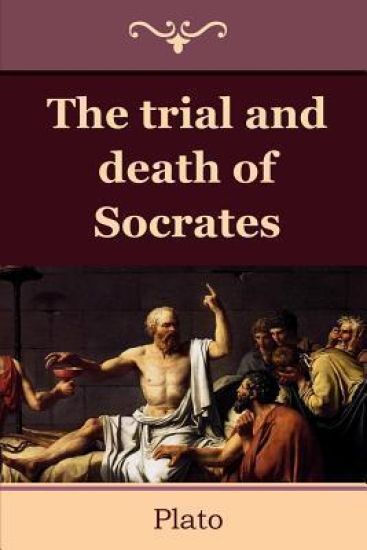
The Apology
Plato
Createspace Independent Publishing Platform
2011
nidottu
Halvin toimitettuna 16,40 €
Supplement Edition: Apology of Socrates, and The Crito: and the text of Xenophon's Apology of Socrates
Sasha Newborn; Plato
Bandanna Books
2011
nidottu
The Supplement Edition: Apology of Socrates & The Crito is designed to aid teachers with a wealth of background information and opinions. The Supplement includes the text of the class book Apology of Socrates & The Crito (with the same page numbering), plus the supplement material, with bibliography, glossary, and the text of Xenophon's Apology of Socrates about the same trial from a different point of view. Benjamin Jowett's early translation of Plato's Apology is remarkably free of Victorianisms, and brings to life the figure of Socrates with an easy colloquialism. Almost the entire dialogue is actually a monologue, battling the demons, real or imaginary, that had haunted him for decades. The record we have is Plato's rendition of Socrates' words and the court proceedings. Our best assumption is that Plato himself was there-he places himself as a mute audience member in the dialogue. Are Plato's words direct from Socrates' mouth? Common Greek practice by Herodotus, Thucydides and others, was to recreate scenes or even entire speeches from the past as they might have happened; today we would describe taking those liberties with history as docudrama. The later dialogues that Plato wrote featuring Socrates have led critics to wonder how much in these texts represent Plato, a systematic philosophizer, and how much could be attributed to actual statements made by Socrates, the perennial seeker. Xenophon also wrote a work about the same trial; he was not present. The text of his account, with his interpretation of events, follows the Supplement section; however, the Supplement material in this volume does not deal directly with the Xenophon text. Here are the contents of the Supplementary material: This Supplement is organized around a series of typical student questions; the answers are short paragraphs gleaned from many critical sources, often contradicting each other. Socrates has had perhaps as many critical detractors as proponents down through history, plus a Glossary for Greek names of people, gods, and events, a Bibliography, and the text of Xenophon's Apology of Socrates. PLATO: Supplement Edition: The Apology of Socrates & The Crito. Table of Contents Preface for Teachers What is important about the Apology? What is an apology? Who was Socrates? Who was Plato? Why did Plato write the Apology? Who else wrote firsthand about Socrates? Is Plato's text accurate? What did Socrates' contemporaries say? Why is this trial taking place now? What was the larger political picture? What were the charges against Socrates? How did Socrates defend himself? What is the "Socratic problem"? Why did Socrates attack the early accusers first? Did the Athenians sentence Socrates unjustly? What was the public reaction after the trial? Was Socrates singled out? What do moderns say about Socrates? Did Socrates have a gospel or teaching? Was Socrates anti-democratic? What is the publishing history of the Apology? What is important about the Crito? Bibiography the text of Xenophon's Apology of Socrates Glossary
E´tudes sur le Time´e de Platon, par T. H. Martin. [With the text of the Timæus, commentaries, etc.]
Plato; Thomas Henri Martin
British Library, Historical Print Editions
2011
pokkari
Ostensibly a discussion about love, the debate in the Phaedrus also encompasses the art of rhetoric and how it should be practised. This new edition contains an introductory essay outlining the argument of the dialogue as a whole and Plato's arguments about rhetoric and eros in particular. The Introduction also considers Plato's style and offers an account of the reception of the dialogue from its composition to the twentieth century. A new Greek text of the dialogue is accompanied by a select textual apparatus. The greater part of the book consists of a Commentary, which elucidates the text and makes clear how Plato achieves his philosophical and literary objectives. Primarily intended for advanced undergraduates and graduate students of ancient Greek literature and philosophy, it will also benefit scholars who want an up-to-date account of how to understand the text, argument, style and background of the work.
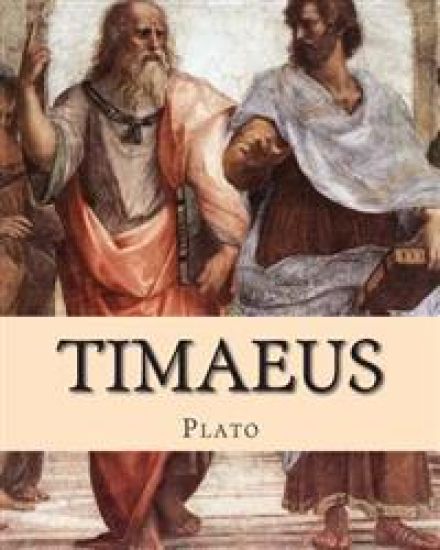
Ostensibly a discussion about love, the debate in the Phaedrus also encompasses the art of rhetoric and how it should be practised. This new edition contains an introductory essay outlining the argument of the dialogue as a whole and Plato's arguments about rhetoric and eros in particular. The Introduction also considers Plato's style and offers an account of the reception of the dialogue from its composition to the twentieth century. A new Greek text of the dialogue is accompanied by a select textual apparatus. The greater part of the book consists of a Commentary, which elucidates the text and makes clear how Plato achieves his philosophical and literary objectives. Primarily intended for advanced undergraduates and graduate students of ancient Greek literature and philosophy, it will also benefit scholars who want an up-to-date account of how to understand the text, argument, style and background of the work.
The Apology is Plato's version of the speech given by Socrates as he defended himself in 399 BC against the charges of "corrupting the young, and by not believing in the gods in whom the city believes, but in other daimonia that are novel". "Apology" here has its earlier meaning (now usually expressed by the word "apologia") of speaking in defense of a cause or of one's beliefs or actions.
Packaged in handsome, affordable trade editions, Clydesdale Classics is a new series of essential works. From the musings of intellectuals such as Thomas Paine in Common Sense to the striking personal narrative of Harriet Jacobs in Incidents in the Life of a Slave Girl, this new series is a comprehensive collection of our intellectual history through the words of the exceptional few. Originating in approximately 380 BC, Republic is a Socratic dialogue written by famed Greek philosopher Plato. Often referred to as Plato s masterwork, Republic s central goal is to define the ideal state. By conceptualizing this model state, Greeks believed it would lead states formed with its principles in mind to function the most efficiently and fairly, striving toward justice and the greater good of society. This edition includes a foreword by British American philosopher and Plato expert Simon Blackburn. Widely read around the world by philosophy students and academics alike, Plato s Republic is sure to pass on its invaluable lessons and enlighten the next generation of thinkers."