Kirjojen hintavertailu – 12 859 819 kirjaa ja 27 kauppaa

Kirjailija

Plato

Kirjat ja teokset yhdessä paikassa: 1 115 kirjaa, julkaisuja vuosilta 1821–2026, suosituimpiin kuuluu Ion. Vertaile teosten hintoja ja tarkista saatavuus suomalaisista kirjakaupoista.

1 115 kirjaa

Kirjojen julkaisuvuodet: 1821–2026.

The Republic

The Republic

Plato

Createspace Independent Publishing Platform
2011
nidottu
Plato's "Republic" is widely acknowledged as the cornerstone of Western philosophy. Presented in the form of a dialogue between Socrates and three different interlocutors, it is an enquiry into the notion of a perfect community and the ideal individual within it. During the conversation other questions are raised: what is goodness; what is reality; what is knowledge? "The Republic" also addresses the purpose of education and the role of both women and men as 'guardians' of the people. With remarkable lucidity and deft use of allegory, Plato arrives at a depiction of a state bound by harmony and ruled by 'philosopher kings'.
Symposium

Symposium

Plato

Createspace Independent Publishing Platform
2011
nidottu
"Being led by another to the things of love, is to begin from the beauties of earth and mount upwards for the sake of that other beauty, until he arrives at the notion of absolute beauty... and at last knows what the essence of beauty is..." With these words, Plato invites us on his examination and exploration of the many perspectives of love: the meaning of the love, the highest purpose of love, and the outcomes of love. Set at a small cocktail party, Plato conveys his message through the conversations that take place. Dialogue from "Symposium" has been used for decades by social historians in the quest for insight into life in ancient Athens, particularly the sexual norms and behaviors of the time.
Plato's Meno

Plato's Meno

Plato

Cambridge University Press
2011
pokkari
This 1961 edition of Plato's Meno was originally edited by R. S. Bluck, Senior Lecturer in Greek at the University of Manchester. Its value lies in the incredibly extensive preliminary chapters provided by Bluck, designed to truly enhance the reader's engagement with this ancient text. In almost 150 pages of introductory chapters, Bluck reviews the argument of the Meno, its relation to wider philosophical and dialogues (written both before and after Plato), and summarises Plato's use of the hypothetical method in the Meno, the Phaedo and the Republic. He also provides a detailed synopsis of Plato's Meno before presenting the full Greek text, accompanied by a wide-ranging and incredibly accessible commentary. Finally, Bluck presents the reader with indices in both English and Greek, ensuring that this volume remains an endlessly rewarding reference and research work.
Dialogues of Plato

Dialogues of Plato

Plato

SIMON SCHUSTER
2010
pokkari
In these influential dialogues--Euthyphro, Apology, Crito, Meno, Phaedo, Symposium--Plato employs the dialectic method to examine the trial and death of his mentor, Socrates, and address the eternal questions of human existence. Dialogues of Plato offers a philosophy that has guided man through the ages. In his magnificent writings, Plato, considered one of the greatest philosophers in history, examines our virtues and vices, our problems and questions. With remarkable literary grace, he shows us how man can understand his place in the world and live an intelligent and happy life. This revised edition features the complete texts of Euthyphro, Apology, Crito, Meno, Phaedo, and Symposium. This edition includes: -A concise introduction that gives the reader important background information -A chronology of the author's life and work -A timeline of significant events that provides the book's historical context -An outline of key themes and plot points to guide the reader's own interpretations -Detailed explanatory notes -Critical analysis and modern perspectives on the work -Discussion questions to promote lively classroom and book group interaction -A list of recommended related books and films to broaden the reader's experience Simon & Schuster Enriched Classics offer readers affordable editions of great works of literature enhanced by helpful notes and insightful commentary. The scholarship provided in Enriched Classics enables readers to appreciate, understand, and enjoy the world's finest books to their full potential.

The Last Days of Socrates

The Last Days of Socrates

Plato

Penguin Classics
2010
pokkari

Halvin toimitettuna 17,00 €

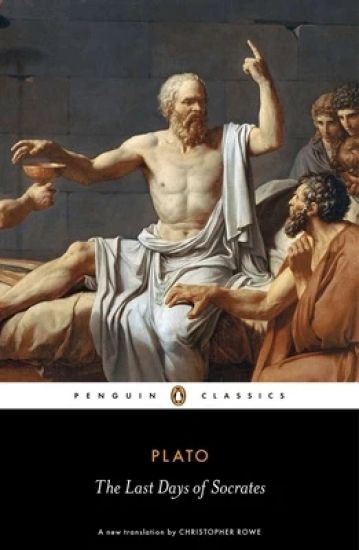
'Consider just this, and give your minds to this alone: whether or not what I say is just' Plato's account of Socrates' trial and death (399 BC) is a significant moment in Classical literature and the life of Classical Athens. In these four dialogues, Plato develops the Socratic belief in responsibility for one's self and shows Socrates living and dying under his philosophy. In Euthyphro, Socrates debates goodness outside the courthouse; Apology sees him in court, rebutting all charges of impiety; in Crito, he refuses an entreaty to escape from prison; and in Phaedo, Socrates faces his impending death with calmness and skilful discussion of immortality. Christopher Rowe's introduction to his powerful new translation examines the book's themes of identity and confrontation, and explores how its content is less historical fact than a promotion of Plato's Socratic philosophy.
Symposium

Symposium

Plato

Createspace Independent Publishing Platform
2010
nidottu
"Being led by another to the things of love, is to begin from the beauties of earth and mount upwards for the sake of that other beauty, until he arrives at the notion of absolute beauty... and at last knows what the essence of beauty is..."
Socrates and the Sophists

Socrates and the Sophists

Plato

Focus Publishing/r Pullins C
2010
pokkari
This is an English translation of four of Plato's dialogue (Protagoras, Euthydemus, Hippias Major, and Cratylus) that explores the topic of sophistry and philosophy, a key concept at the source of Western thought. Includes notes and an introductory essay. Focus Philosophical Library translations are close to and are non-interpretative of the original text, with the notes and a glossary intending to provide the reader with some sense of the terms and the concepts as they were understood by Plato's immediate audience.
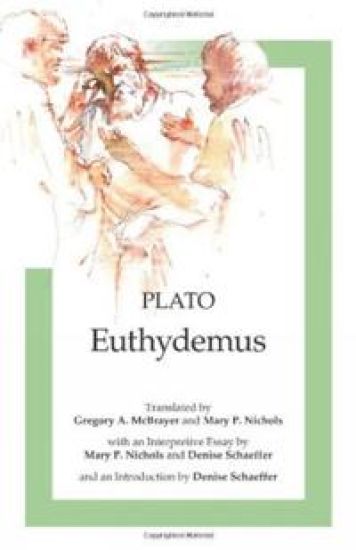
Euthydemus

Euthydemus

Plato

Focus Publishing/R Pullins Co
2010
nidottu
This is an English translation of Plato's dialogue of Socrates and two prominent Sophists, Euthydemus and Dionysodorus, and their conflicting philosophical views, of which Plato satirizes the logical fallacies of the Sophists. Focus Philosophical Library translations are close to and are non-interpretative of the original text, with the notes and a glossary intending to provide the reader with some sense of the terms and the concepts as they were understood by Plato's immediate audience.
The Republic

The Republic

Plato

Createspace Independent Publishing Platform
2010
nidottu
Plato's "Republic" is widely acknowledged as the cornerstone of Western philosophy. Presented in the form of a dialogue between Socrates and three different interlocutors, it is an enquiry into the notion of a perfect community and the ideal individual within it. During the conversation other questions are raised: what is goodness; what is reality; what is knowledge? "The Republic" also addresses the purpose of education and the role of both women and men as 'guardians' of the people. With remarkable lucidity and deft use of allegory, Plato arrives at a depiction of a state bound by harmony and ruled by 'philosopher kings'.
The Republic

The Republic

Plato

Createspace Independent Publishing Platform
2010
nidottu
Plato's "Republic" is widely acknowledged as the cornerstone of Western philosophy. Presented in the form of a dialogue between Socrates and three different interlocutors, it is an enquiry into the notion of a perfect community and the ideal individual within it. During the conversation other questions are raised: what is goodness; what is reality; what is knowledge? "The Republic" also addresses the purpose of education and the role of both women and men as 'guardians' of the people. With remarkable lucidity and deft use of allegory, Plato arrives at a depiction of a state bound by harmony and ruled by 'philosopher kings'.