

Kirjailija
Plato
Kirjat ja teokset yhdessä paikassa: 1 115 kirjaa, julkaisuja vuosilta 1821–2026, suosituimpiin kuuluu Ion. Vertaile teosten hintoja ja tarkista saatavuus suomalaisista kirjakaupoista.
1 115 kirjaa
Kirjojen julkaisuvuodet: 1821–2026.
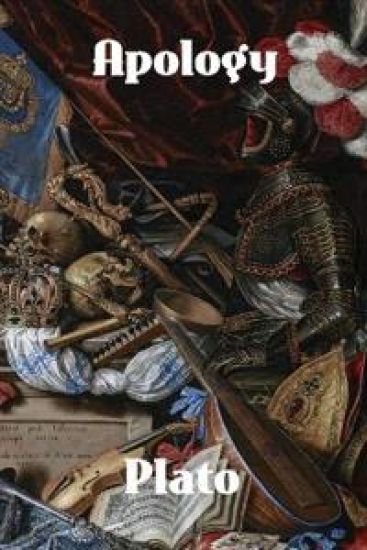
The Apology of Socrates (Greek: Ἀπολογία Σωκράτους, Apolog a Sokr tous; Latin: Apologia Socratis), written by Plato, is a Socratic dialogue of the speech of legal self-defence which Socrates (469-399 BC) spoke at his trial for impiety and corruption in 399 BC. 1]Specifically, the Apology of Socrates is a defence against the charges of "corrupting the youth" and "not believing in the gods in whom the city believes, but in other daimonia that are novel" to Athens (24b). 2]Among the primary sources about the trial and death of the philosopher Socrates, the Apology of Socrates is the dialogue that depicts the trial, and is one of four Socratic dialogues, along with Euthyphro, Phaedo, and Crito, through which Plato details the final days of the philosopher Socrates. The Apology of Socrates begins with Socrates addressing the jury of perhaps 500 Athenian men to ask if they have been persuaded by the Orators Lycon, Anytus, and Meletus, who have accused Socrates of corrupting the young people of the city and impiety against the pantheon of Athens. The first sentence of his speech establishes the theme of the dialogue-that philosophy begins with an admission of ignorance. Socrates later clarifies that point of philosophy when he says that whatever wisdom he possesses comes from knowing that he knows nothing (23b, 29b). In the course of the trial, Socrates imitates, parodies, and corrects the Orators, his accusers, and asks the jury to judge him by the truth of his statements, not by his oratorical skill (cf. Lysias XIX 1,2,3; Isaeus X 1; Isocrates XV 79; Aeschines II 24). Socrates says he will not use sophisticated language-carefully arranged ornate words and phrases-but will speak using the common idiom of the Greek language. Socrates says that he will speak in the manner he has used in the agora and at the money tables which he states is his native tongue and the fashion of his country. Although offered the opportunity to appease the prejudices of the jury, with a minimal concession to the charges of corruption and impiety, Socrates does not yield his integrity to avoid the penalty of death. The jury condemns Socrates to death.

"Joe Sachs is a national treasure. His brilliant translations from the Greek, spanning works from Homer to Aristotle, have long enriched scholars and students alike. He crowns those achievements with this exquisite rendering of two of Plato's most beautiful dialogues, with an introduction that evidences his deft ability to drill down to 'the thing itself.'"--Thomas Sheehan, Professor Emeritus of Religious Studies, Stanford University The Phaedrus and Symposium are Plato's two dialoguesabout Eros--that is, desirous longing. In these new translations byformer St. John's College tutor Joe Sachs, the reader imaginatively becomes amember, if a silent one, of the conversations Socrates has with his companions. While both dialogues are about love, they differ in intriguingand important ways. The conversation of the Phaedrus takes place in thecountryside and that of the Symposium in Athens. In the Phaedrus onlySocrates and Phaedrus are present; in the Symposium many participate inthe drinking party. But in both, Socrates presents singularly abiding images: The winged horses and chariot in the Phaedrus; the ladder of love in theSymposium. These compelling images attract and move the reader to askquestions of the dialogues, which in their unique ways seem to reply. The interplay of the two texts may spark an unfolding in the reader's thinkingabout love, but for the dialectical motion that mustoccur between the speeches and between the lines of Plato's texts, the readermust do the work, provoked, invited, and assisted by what they contain. The context for our thinking includes inone case the subject of tragedy and comedy, in the other the nature of rhetoricand writing, but it is philosophy, and not poetry or politics, that persistentlyclaims the center of attention. The dialogues themselves seem as different asnight from day, as urbane wit from rustic charm--but do they point to opposingor converging attitudes toward erotic love?
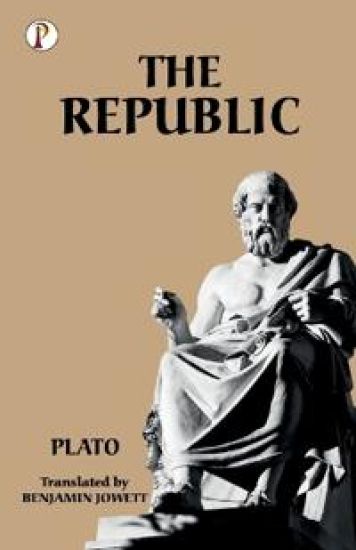

Plato, an early Greek philosopher, composed "Gorgias" as a Socratic conversation about 380 BC. It is named after the dialogue's main character, the famous Greek sophist Gorgias. The discussion examines a number of philosophical and rhetorical subjects, such as the essence of rhetoric, the search of knowledge, and the effectiveness of persuasion. The dialogue starts with Socrates conversing with Gorgias, who is renowned for his rhetorical prowess. Gorgias is questioned by Socrates over the moral implications of eloquence and its genuine nature. Through their conversation, Socrates refutes Gorgias' beliefs and makes the case that genuine wisdom and virtue are more important than mere persuasion. The conversation then moves on to further participants, including Callicles, a well-known Athenian politician, and Polus, another young sophist. The essence of justice, morality, and the use of power are further explored in these conversations. The "Gorgias" by Plato addresses important issues on the morality and function of persuasion. It criticizes the dishonest use of language for self-advancement and promotes the quest for truth and the development of virtue. The fact that "Gorgias" is still a well-known work in the Platonic corpus shows how engaged Plato is with sophistry and how crucial ethical reasoning is to the search for the truth.

The Socratic dialogue "Meno" was written by the Greek philosopher Plato. The nature of virtue and the method of learning are both topics covered in the conversation. It gets its name from Meno, a young and aspirational aristocrat from Thessaly who serves as the story's protagonist. Socrates and Meno have a discussion in which they analyze different beliefs and definitions of virtue via a series of perceptive exchanges and philosophical inquiries. The conversation digs into issues including the essence of goodness, how knowledge differs from opinion, and the idea of intrinsic knowledge. The "Meno's Paradox," which asks Socrates if it is possible to seek knowledge when one does not already know what one is searching for, is one of the most well-known passages in the debate. Due to this contradiction, Socrates explains his idea of anamnesis, which contends that all knowledge is inherent and may be recalled via questioning and research. "Meno" provides a look into Plato's philosophical approach and his pursuit of discovering fundamental truths via deductive reasoning. As one of Plato's key conversations that influenced the development of Western philosophy, it is still researched and dissected today.

Authored around 375 BCE, Plato's Republic is set as a Socratic dialogue and explores the nature of the perfect political community, how it should be structured, and its ideal inhabitants.
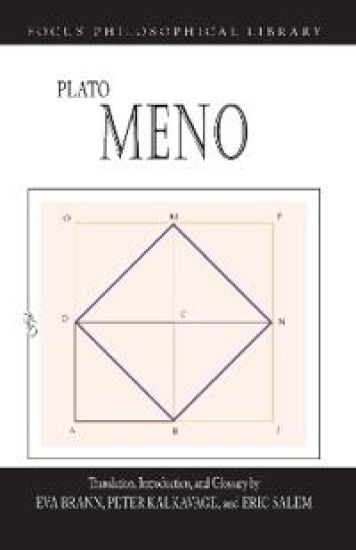
HarperCollins is proud to present its incredible range of best-loved, essential classics. Plato's The Republic has influenced Western philosophers for centuries, with its main focus on what makes a well-balanced society and individual.
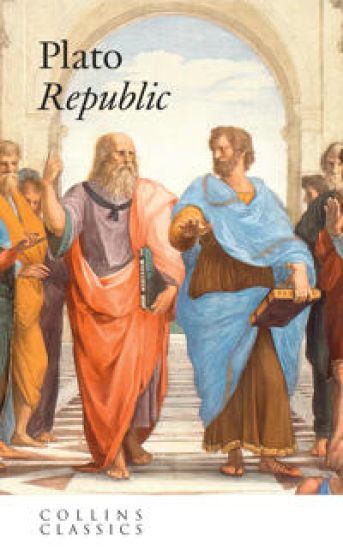
HarperCollins is proud to present its incredible range of best-loved, essential classics. Plato's Republic has influenced Western philosophers for centuries, with its main focus on what makes a well-balanced society and individual.


This work has been selected by scholars as being culturally important and is part of the knowledge base of civilization as we know it. This work is in the public domain in the United States of America, and possibly other nations. Within the United States, you may freely copy and distribute this work, as no entity (individual or corporate) has a copyright on the body of the work. Scholars believe, and we concur, that this work is important enough to be preserved, reproduced, and made generally available to the public. To ensure a quality reading experience, this work has been proofread and republished using a format that seamlessly blends the original graphical elements with text in an easy-to-read typeface. We appreciate your support of the preservation process, and thank you for being an important part of keeping this knowledge alive and relevant.

Plato's Theory of Knowledge; the Theaetetus and the Sophist of Plato
Plato; Francis MacDonald 1874-1943 Cornford
Hassell Street Press
2021
nidottu
This work has been selected by scholars as being culturally important and is part of the knowledge base of civilization as we know it. This work is in the public domain in the United States of America, and possibly other nations. Within the United States, you may freely copy and distribute this work, as no entity (individual or corporate) has a copyright on the body of the work. Scholars believe, and we concur, that this work is important enough to be preserved, reproduced, and made generally available to the public. To ensure a quality reading experience, this work has been proofread and republished using a format that seamlessly blends the original graphical elements with text in an easy-to-read typeface. We appreciate your support of the preservation process, and thank you for being an important part of keeping this knowledge alive and relevant.

This work has been selected by scholars as being culturally important and is part of the knowledge base of civilization as we know it. This work is in the public domain in the United States of America, and possibly other nations. Within the United States, you may freely copy and distribute this work, as no entity (individual or corporate) has a copyright on the body of the work. Scholars believe, and we concur, that this work is important enough to be preserved, reproduced, and made generally available to the public. To ensure a quality reading experience, this work has been proofread and republished using a format that seamlessly blends the original graphical elements with text in an easy-to-read typeface. We appreciate your support of the preservation process, and thank you for being an important part of keeping this knowledge alive and relevant.

This work has been selected by scholars as being culturally important and is part of the knowledge base of civilization as we know it. This work is in the public domain in the United States of America, and possibly other nations. Within the United States, you may freely copy and distribute this work, as no entity (individual or corporate) has a copyright on the body of the work. Scholars believe, and we concur, that this work is important enough to be preserved, reproduced, and made generally available to the public. To ensure a quality reading experience, this work has been proofread and republished using a format that seamlessly blends the original graphical elements with text in an easy-to-read typeface. We appreciate your support of the preservation process, and thank you for being an important part of keeping this knowledge alive and relevant.
Plato's Theory of Knowledge; the Theaetetus and the Sophist of Plato
Plato; Francis MacDonald 1874-1943 Cornford
Hassell Street Press
2021
sidottu

This work has been selected by scholars as being culturally important and is part of the knowledge base of civilization as we know it. This work is in the public domain in the United States of America, and possibly other nations. Within the United States, you may freely copy and distribute this work, as no entity (individual or corporate) has a copyright on the body of the work. Scholars believe, and we concur, that this work is important enough to be preserved, reproduced, and made generally available to the public. To ensure a quality reading experience, this work has been proofread and republished using a format that seamlessly blends the original graphical elements with text in an easy-to-read typeface. We appreciate your support of the preservation process, and thank you for being an important part of keeping this knowledge alive and relevant.

This work has been selected by scholars as being culturally important and is part of the knowledge base of civilization as we know it. This work is in the public domain in the United States of America, and possibly other nations. Within the United States, you may freely copy and distribute this work, as no entity (individual or corporate) has a copyright on the body of the work. Scholars believe, and we concur, that this work is important enough to be preserved, reproduced, and made generally available to the public. To ensure a quality reading experience, this work has been proofread and republished using a format that seamlessly blends the original graphical elements with text in an easy-to-read typeface. We appreciate your support of the preservation process, and thank you for being an important part of keeping this knowledge alive and relevant.