Kirjojen hintavertailu – 12 859 819 kirjaa ja 27 kauppaa

Kirjailija

Plato

Kirjat ja teokset yhdessä paikassa: 1 115 kirjaa, julkaisuja vuosilta 1821–2026, suosituimpiin kuuluu Ion. Vertaile teosten hintoja ja tarkista saatavuus suomalaisista kirjakaupoista.

1 115 kirjaa

Kirjojen julkaisuvuodet: 1821–2026.

World Classics Library: Plato
"The safest general characterization of the European philosophical tradition is that it consists of a series of footnotes to Plato." - Alfred North Whitehead Plato's ideas on reason, justice, and religion have had profound impact on Western philosophy and politics. This beautiful jacketed hardback collects some of his most celebrated writings, including his iconic work The Republic. These Ancient Greek dialogues are written as conversations between Plato's mentor Socrates and various Athenian citizens, covering vast range of topics including the construction of communities, immortality of the soul, temperance, rhetoric and virtue. His writings have been studied for hundreds of years and yet remain strikingly pertinent in the modern world. Includes:• The Republic• Charmides• Meno• Gorgias• Parmenides• Symposium • Euthyphro• Apology• Crito• PhaedoABOUT THE SERIES: The World Classics Library series gathers together the work of authors and philosophers whose ideas have stood the test of time. Perfect for bibliophiles, these gorgeous jacketed hardbacks are a wonderful addition to any bookshelf.
Plato

Plato

Plato

Royal Classics
2020
sidottu
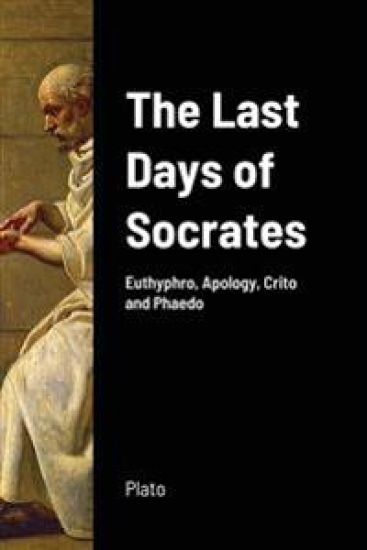
Euthyphro is a Socratic dialogue whose events occur in the weeks before the trial of Socrates, between Socrates and Euthyphro. The dialogue covers subjects such as the meaning of piety and justice. Apology is the Socratic dialogue that presents the speech of legal self-defense, which Socrates presented at his trial for impiety and corruption, in 399 bc. The dialogue is a defence against the charges of "corrupting the youth" and not believing in the gods in whom the city believes. Crito depicts a conversation between Socrates and his wealthy friend Crito regarding justice, injustice, and the appropriate response to injustice. Socrates thinks that injustice may not be answered with injustice, and refuses Crito's offer to finance his escape from prison. Meno introduces Socrates' positive ideas: the immortality of the soul, the theory of knowledge as recollection, the method of hypothesis, and, in the final lines, the distinction between knowledge and true belief. Phaedo is one of Plato's best-known dialogues. The philosophical subject of the dialogue is the immortality of the soul. It is set in the last hours prior to the death of Socrates. This case laminate collector's edition includes a Victorian inspired dust-jacket.
The Republic

The Republic

Plato; Benjamin Jowett

E-Artnow
2020
pokkari
The Republic is a Socratic dialogue, written by Plato around 380 BC, concerning justice, the order and character of the just city-state, and the just man. It is Plato's best-known work, and has proven to be one of the world's most influential works of philosophy and political theory, both intellectually and historically. In the book's dialogue, Socrates discusses with various Athenians and foreigners about the meaning of justice and whether the just man is happier than the unjust man. They consider the natures of existing regimes and then propose a series of different, hypothetical cities in comparison, culminating in Kallipolis, a hypothetical city-state ruled by a philosopher king. They also discuss the theory of forms, the immortality of the soul, and the role of the philosopher and of poetry in society.
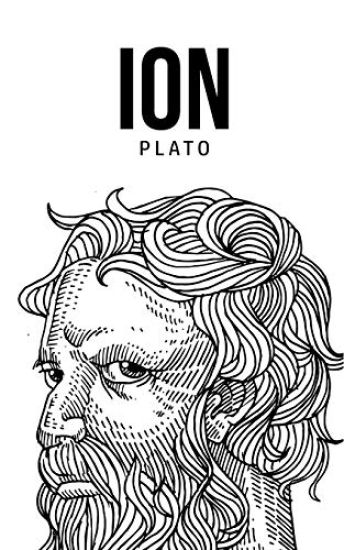
Ion

Ion

Plato

Les Prairies Numeriques
2020
pokkari
In Plato's Ion Socrates discusses with Ion, a professional rhapsode who also lectures on Homer, the question of whether the rhapsode, a performer of poetry, gives his performance on account of his skill and knowledge or by virtue of divine possession. It is one of the shorter of Plato's dialogues. About the AuthorBorn to a politically connected and aristocratic family between 428 and 423 B. C., Plato received a good standard of education at an early age and was able to immerse himself in the intellectual community of Ancient Athens. His most notable contemporary and mentor was Socrates, an eccentric but highly capable philosopher who was to feature as a principle character in most of Plato's scholarly writings. Owing to his high standard of education in art, mathematics, rhetoric and philosophy, Plato was able to assemble a comprehensive philosophy of his own via his favoured form of writing which was the dialogue. In total, over thirty of these Platonic dialogues have survived the passage of time - and together they form the backbone of Ancient Greek philosophy. After enjoying success as a writer and academic, Plato in 385 B. C. founded The Academy. This school was to unite the most capable thinkers of Greece, and would help to advance learning throughout Greek society's Golden Age. It was in the Academy that Plato would instruct and apprentice Aristotle, who was to go on to gain renown as a philosopher and scholar. Owing to his reputation Plato was hired by Dion, whose nephew Dionysus II was the rightful ruler of Sicily - Dion wished his nephew to receive a good education in the art of sound and wise governance. However Dionysus II became suspicious and accused both Plato and Dion of conspiracy - after some time spent under arrest, Plato returned to his homeland. In his late period, Plato continued to tutor and mentor the best young minds of Athens, and he would perish around 348 B. C. having lived beyond the age of eighty. Today Plato's legacy remains lauded: the philosopher ably used logic and reason to imbue insight on democratic governance, while developing a cohesive philosophy on topics such as art, metaphysics, justice and the 'Theory of Forms' - his iconic take on how ideas related to reality.
Apology, Crito, and Phaedo of Socrates

Apology, Crito, and Phaedo of Socrates

Plato

Les Prairies Numeriques
2020
pokkari
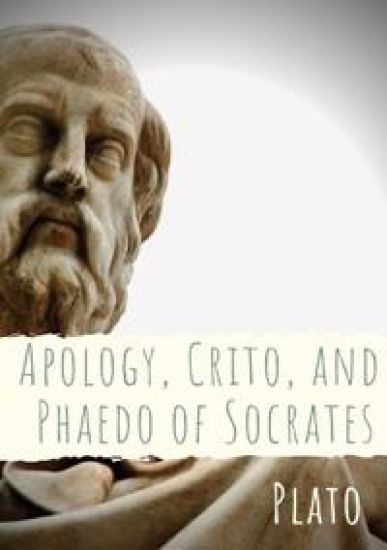
Apology, Crito, and Phaedo of SocratesBy Plato transl. Benjamin JowettThe Apology of Socrates by Plato is the Socratic dialogue that presents the speech of legal self-defence, which Socrates presented at his trial for impiety and corruption in 399 BC. Specifically, the Apology of Socrates is a defence against the charges of "corrupting the young" and "not believing in the gods in whom the city believes, but in other daimonia that are novel" to Athens. Crito is a dialogue by Plato. It depicts a conversation between Socrates and his wealthy friend Crito regarding justice, injustice, and the appropriate response to injustice. Socrates thinks that injustice may not be answered with injustice, and refuses Crito's offer to finance his escape from prison. This dialogue contains an ancient statement of the social contract theory of government. Ph do or Phaedo, also known to ancient readers as "On The Soul", is one of the best-known dialogues of Plato's middle period. The Phaedo, which depicts the death of Socrates, is also Plato's fourth and last dialogue to detail the philosopher's final days, following Euthyphro, Apology, and Crito. In the dialogue, Socrates discusses the nature of the afterlife on his last day before being executed by drinking hemlock. Each dialogue contains insights into Ancient Greek thought, and the culture of the society as a whole. All three of these texts use ordinary conversations as a means of conveying and evolving individual ideas. It is within these early texts that Socrates demonstrates his manner of gaining insight via asking questions - this Socratic method, whereby Socrates maintains an impression of ignorance - was to define the thought of Plato. ApologyIn this dialogue, Socrates makes his case to the Athenian people at his trial. Passionately arguing against the charges of impiety levied upon him, the philosopher uses logic, reason and his natural gifts of speech in attempting to convince the crowd against sentencing him to death. While unsuccessful, the margin of the vote was narrow - it is now that Socrates is taken to the cells, where his final conversations are to take place. CritoWhen speaking to Crito, a man from a wealthy local family, Socrates advances a number of points about justice and injustice. After Crito declares his admiration for Socrates peace of mind and collectiveness in the face of his death sentence, the two commence a philosophical debate. Together the pair draw a number of comparisons with society in order to reach a definition of what is just and unjust in the context of human living. The text makes a point of noting Crito's attempts at convincing Socrates to escape from prison and thus his death sentence - although such an escape might be arranged, Socrates refuses on the grounds that it is his duty as a citizen to face the death penalty. PhaedoOne of the most famous dialogues of Plato, in Phaedo we witness the final philosophic discussions which Socrates partakes in before dying. His friends and family are variously present, until the final death sentence - that of drinking a poison solution of hemlock - is carried out. The topics here range from the form and essential immortality of the soul, the nature of learning and memory, and the nature of life. It is here that Plato, with Socrates as his principle character, advances a number of philosophic arguments and ideas which were to evolve later in his writings. An iconic text, the death of Socrates remains one of the most pivotal and popularly known events in the history of philosophy.

Plato's Phädrus und Gastmahl

Plato's Phädrus und Gastmahl

Plato

Salzwasser-Verlag Gmbh
2020
pokkari
Excerpt from Plato's Ph drus und Gastmahl: Ubersetzt mit Einleitendem Vorwort (einleitung.%rei bon jeher B tgematt 28anhett oben in he 2id)ice %iuren (c) ttli ) unter G ttern hie. About the Publisher Forgotten Books publishes hundreds of thousands of rare and classic books. Find more at www.forgottenbooks.com This book is a reproduction of an important historical work. Forgotten Books uses state-of-the-art technology to digitally reconstruct the work, preserving the original format whilst repairing imperfections present in the aged copy. In rare cases, an imperfection in the original, such as a blemish or missing page, may be replicated in our edition. We do, however, repair the vast majority of imperfections successfully; any imperfections that remain are intentionally left to preserve the state of such historical works.
Plato's Phädrus und Gastmahl

Plato's Phädrus und Gastmahl

Plato

Salzwasser-Verlag Gmbh
2020
sidottu
Excerpt from Plato's Ph drus und Gastmahl: Ubersetzt mit Einleitendem Vorwort (einleitung.%rei bon jeher B tgematt 28anhett oben in he 2id)ice %iuren (c) ttli ) unter G ttern hie. About the Publisher Forgotten Books publishes hundreds of thousands of rare and classic books. Find more at www.forgottenbooks.com This book is a reproduction of an important historical work. Forgotten Books uses state-of-the-art technology to digitally reconstruct the work, preserving the original format whilst repairing imperfections present in the aged copy. In rare cases, an imperfection in the original, such as a blemish or missing page, may be replicated in our edition. We do, however, repair the vast majority of imperfections successfully; any imperfections that remain are intentionally left to preserve the state of such historical works.
Symposium

Symposium

Plato

Lulu.com
2020
pokkari
In the Symposium, Plato presents a fantastic dinner-party set in Athens in 416 BC, where the guests include Aristophanes, Socrates, and the most famous Athenian of his day, Alcibiades. A sequence of dazzling speeches culminates in Socrates' brilliant account of the views of Diotima, a prophetess who taught him that love is our means of trying to attain goodness.
Symposium

Symposium

Plato

Lulu.com
2020
sidottu

Halvin toimitettuna 30,40 €

In the Symposium, Plato presents a fantastic dinner-party set in Athens in 416 BC, where the guests include Aristophanes, Socrates, and the most famous Athenian of his day, Alcibiades. A sequence of dazzling speeches culminates in Socrates' brilliant account of the views of Diotima, a prophetess who taught him that love is our means of trying to attain goodness.
Ion

Ion

Plato

Les Prairies Numeriques
2020
pokkari
In Plato's Ion Socrates discusses with the titular character, a professional rhapsode who also lectures on Homer, the question of whether the rhapsode, a performer of poetry, gives his performance on account of his skill and knowledge or by virtue of divine possession. It is one of the shortest of Plato's dialogues. CommentaryPlato's argument is supposed to be an early example of a so-called genetic fallacy since his conclusion arises from his famous lodestone (magnet) analogy. Ion, the rhapsode "dangles like a lodestone at the end of a chain of lodestones. The muse inspires the poet (Homer in Ion's case) and the poet inspires the rhapsode." Plato's dialogues are themselves "examples of artistry that continue to be stageworthy;" it is a paradox that "Plato the supreme enemy of art is also the supreme artist." Plato develops a more elaborate critique of poetry in other dialogues such as in Phaedrus 245a, Symposium 209a, Republic 398a, Laws 817 b-d. summaryIon's skill: Is it genuine? (530a-533c)Ion has just come from a festival of Asclepius at the city of Epidaurus, after having won first prize in the competition. Socrates engages him in discussion and Ion explains how his knowledge and skill is limited to Homer, whom he claims to understand better than anyone alive. Socrates finds this puzzling as to him it seems that Homer treats many of the same subjects as other poets like Hesiod, subjects such as war or divination, and that if someone is knowledgeable in any one of those he should be able to understand what both of these poets say. Furthermore, this man is probably not the poet, like Ion, but a specialist like a doctor, who knows better about nutrition. The nature of poetic inspiration (533d-536d)Socrates deduces from this observation that Ion has no real skill, but is like a soothsayer or prophet in being divinely possessed: "For not by art do they utter these things, but by divine influence; since, if they had fully learned by art to speak on one kind of theme, they would know how to speak on all. And for this reason God takes away the mind of these men and uses them as his ministers, just as he does soothsayers and godly seers, in order that we who hear them may know that it is not they who utter these words of great price, when they are out of their wits, but that it is God himself who speaks and addresses us through them." (534b-d)Ion's choice: To be skilled or inspired (536e-542a)Ion tells Socrates that he cannot be convinced that he is possessed or mad when he performs (536d, e). Socrates then recites passages from Homer which concern various arts such as medicine, divining, fishing, and making war. He asks Ion if these skills are distinct from his art of recitation. Ion admits that while Homer discusses many different skills in his poetry, he never refers specifically to the rhapsode's craft, which is acting.
Ion

Ion

Plato

USA Public Domain Books
2020
pokkari
Do you want to read ION? If so then keep reading... Socrates figures in all of these, and they are considered the most faithful representations of the historical Socrates; hence they are also called the Socratic dialogues. Most of them consist of Socrates discussing a subject, often an ethical one (friendship, piety) with a friend or with someone presumed to be an expert on it. Through a series of questions he will show that apparently they don't understand it at all. It is left to the reader to figure out if "he" really understands "it". This makes these dialogues "indirect" teachings. This period also includes several pieces surrounding the trial and execution of Socrates. What are you waiting for ION is one click away, select the "Buy Now" button in the top right corner NOW
Ion

Ion

Plato

Toronto Public Domain Publishing
2020
pokkari
Do you want to read ION? If so then keep reading... Socrates figures in all of these, and they are considered the most faithful representations of the historical Socrates; hence they are also called the Socratic dialogues. Most of them consist of Socrates discussing a subject, often an ethical one (friendship, piety) with a friend or with someone presumed to be an expert on it. Through a series of questions he will show that apparently they don't understand it at all. It is left to the reader to figure out if "he" really understands "it". This makes these dialogues "indirect" teachings. This period also includes several pieces surrounding the trial and execution of Socrates. What are you waiting for ION is one click away, select the "Buy Now" button in the top right corner NOW