Kirjojen hintavertailu – 12 859 819 kirjaa ja 27 kauppaa

Kirjailija

Ralph Waldo Emerson

Kirjat ja teokset yhdessä paikassa: 994 kirjaa, julkaisuja vuosilta 1836–2026, suosituimpiin kuuluu Essays by Ralph Waldo Emerson. Vertaile teosten hintoja ja tarkista saatavuus suomalaisista kirjakaupoista.

Nimi esiintyy myös muodoissa: Ralph Waldo. Emerson

994 kirjaa

Kirjojen julkaisuvuodet: 1836–2026.

Representative Men (1850). By: Ralph Waldo Emerson: Representative Men is a collection of seven lectures by Ralph Waldo Emerson, published as a book
Representative Men is a collection of seven lectures by Ralph Waldo Emerson, published as a book of essays in 1850. The first essay discusses the role played by "great men" in society, and the remaining six each extoll the virtues of one of six men deemed by Emerson to be great: Plato ("the Philosopher") Emanuel Swedenborg ("the Mystic") Michel de Montaigne ("the Skeptic") William Shakespeare ("the Poet") Napoleon ("the Man of the World") Johann Wolfgang von Goethe ("the Writer") Ralph Waldo Emerson (May 25, 1803 - April 27, 1882) was an American essayist, lecturer, and poet who led the transcendentalist movement of the mid-19th century. He was seen as a champion of individualism and a prescient critic of the countervailing pressures of society, and he disseminated his thoughts through dozens of published essays and more than 1,500 public lectures across the United States. Emerson gradually moved away from the religious and social beliefs of his contemporaries, formulating and expressing the philosophy of transcendentalism in his 1836 essay "Nature". Following this work, he gave a speech entitled "The American Scholar" in 1837, which Oliver Wendell Holmes Sr. considered to be America's "intellectual Declaration of Independence". Emerson wrote most of his important essays as lectures first and then revised them for print. His first two collections of essays, Essays: First Series (1841) and Essays: Second Series (1844), represent the core of his thinking. They include the well-known essays "Self-Reliance", "The Over-Soul", "Circles", "The Poet" and "Experience". Together with "Nature", these essays made the decade from the mid-1830s to the mid-1840s Emerson's most fertile period. Emerson wrote on a number of subjects, never espousing fixed philosophical tenets, but developing certain ideas such as individuality, freedom, the ability for humankind to realize almost anything, and the relationship between the soul and the surrounding world. Emerson's "nature" was more philosophical than naturalistic: "Philosophically considered, the universe is composed of Nature and the Soul". Emerson is one of several figures who "took a more pantheist or pandeist approach by rejecting views of God as separate from the world." He remains among the linchpins of the American romantic movement, and his work has greatly influenced the thinkers, writers and poets that followed him. When asked to sum up his work, he said his central doctrine was "the infinitude of the private man." Emerson is also well known as a mentor and friend of Henry David Thoreau, a fellow transcendentalist.
May-day and other pieces (1867). By: Ralph Waldo Emerson: Collection of poems by the American essayist, poet, and leader of the Transcendentalist move
Collection of poems by the American essayist, poet, and leader of the Transcendentalist movement in the early nineteenth century. Ralph Waldo Emerson (May 25, 1803 - April 27, 1882) was an American essayist, lecturer, and poet who led the transcendentalist movement of the mid-19th century. He was seen as a champion of individualism and a prescient critic of the countervailing pressures of society, and he disseminated his thoughts through dozens of published essays and more than 1,500 public lectures across the United States. Emerson gradually moved away from the religious and social beliefs of his contemporaries, formulating and expressing the philosophy of transcendentalism in his 1836 essay "Nature". Following this work, he gave a speech entitled "The American Scholar" in 1837, which Oliver Wendell Holmes Sr. considered to be America's "intellectual Declaration of Independence". Emerson wrote most of his important essays as lectures first and then revised them for print. His first two collections of essays, Essays: First Series (1841) and Essays: Second Series (1844), represent the core of his thinking. They include the well-known essays "Self-Reliance", "The Over-Soul", "Circles", "The Poet" and "Experience". Together with "Nature", these essays made the decade from the mid-1830s to the mid-1840s Emerson's most fertile period. Emerson wrote on a number of subjects, never espousing fixed philosophical tenets, but developing certain ideas such as individuality, freedom, the ability for humankind to realize almost anything, and the relationship between the soul and the surrounding world. Emerson's "nature" was more philosophical than naturalistic: "Philosophically considered, the universe is composed of Nature and the Soul". Emerson is one of several figures who "took a more pantheist or pandeist approach by rejecting views of God as separate from the world." He remains among the linchpins of the American romantic movement, and his work has greatly influenced the thinkers, writers and poets that followed him. When asked to sum up his work, he said his central doctrine was "the infinitude of the private man." Emerson is also well known as a mentor and friend of Henry David Thoreau, a fellow transcendentalist.
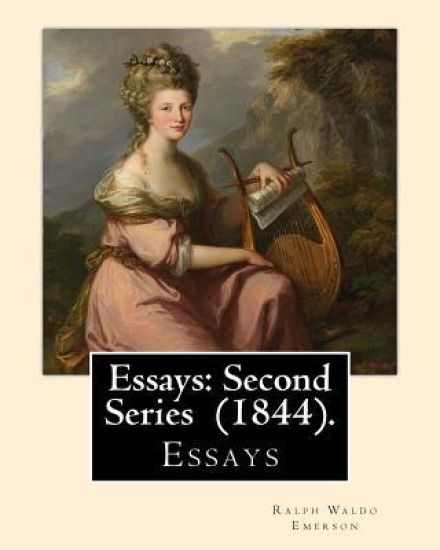
Essays: Second Series (1844). By: Ralph Waldo Emerson: Essays

Essays: Second Series (1844). By: Ralph Waldo Emerson: Essays

Ralph Waldo Emerson

Createspace Independent Publishing Platform
2017
nidottu
Essays: Second Series (1844) by Ralph Waldo Emerson: The Poet Experience Character Manners Gifts Nature Politics Nominalist and Realist New England Reformers Ralph Waldo Emerson (May 25, 1803 - April 27, 1882) was an American essayist, lecturer, and poet who led the transcendentalist movement of the mid-19th century. He was seen as a champion of individualism and a prescient critic of the countervailing pressures of society, and he disseminated his thoughts through dozens of published essays and more than 1,500 public lectures across the United States. Emerson gradually moved away from the religious and social beliefs of his contemporaries, formulating and expressing the philosophy of transcendentalism in his 1836 essay "Nature". Following this work, he gave a speech entitled "The American Scholar" in 1837, which Oliver Wendell Holmes Sr. considered to be America's "intellectual Declaration of Independence". Emerson wrote most of his important essays as lectures first and then revised them for print. His first two collections of essays, Essays: First Series (1841) and Essays: Second Series (1844), represent the core of his thinking. They include the well-known essays "Self-Reliance", "The Over-Soul", "Circles", "The Poet" and "Experience". Together with "Nature", these essays made the decade from the mid-1830s to the mid-1840s Emerson's most fertile period. Emerson wrote on a number of subjects, never espousing fixed philosophical tenets, but developing certain ideas such as individuality, freedom, the ability for humankind to realize almost anything, and the relationship between the soul and the surrounding world. Emerson's "nature" was more philosophical than naturalistic: "Philosophically considered, the universe is composed of Nature and the Soul". Emerson is one of several figures who "took a more pantheist or pandeist approach by rejecting views of God as separate from the world." He remains among the linchpins of the American romantic movement, and his work has greatly influenced the thinkers, writers and poets that followed him. When asked to sum up his work, he said his central doctrine was "the infinitude of the private man." Emerson is also well known as a mentor and friend of Henry David Thoreau, a fellow transcendentalist.
Self-Reliance

Self-Reliance

Ralph Waldo Emerson

Createspace Independent Publishing Platform
2017
nidottu
Classics for Your Collection: goo.gl/U80LCr --------- Trust Thyself In a world where people are self-conscious and have lots of self-doubt, the legendary Ralph Waldo Emerson teaches us about Self-Reliance, the success secret of people who do well in life and get success of all kind and more importantly, people who are self-fulfilled. "Self-Reliance" is Ralph Waldo Emerson's compilation of many years' works and the archetype for his transcendental philosophies. Emerson presupposes that the mind is initially subject to an unhappy conformism. Throughout the essay he gives a defense for his famous catch-phrase "Trust thyself". This argument makes three major points: that each person has his own self-contained genius, that society and worldly influences must be resisted in favor of one's own individuality, and that self-worth has great importance and value. In the first section, Emerson argues that inside of each person is genius. He writes: "To believe your own thought, to believe that what is true for you in your private heart is true for all men, - that is genius." He says that only a man who is self-reliant will be successful and any outside influences would take away from personal satisfaction. Emerson claims that examples of people who trusted themselves above all else include Moses, Plato, and John Milton. He then goes on to highlight the value of individual expression. Emerson says that a man should not worry that he will be misunderstood or thought less of because his opinions changed. He writes, "To be great is to be misunderstood." A man must be willing, every day, to open his consciousness to his intuition, whether or not what it tells him is in conflict with his past conclusions. He also states how a man should still follow his own path even if other people feel offended by this idea. He writes, "My life is for itself", "and not for a spectacle" emphasizing the idea of not following what other people think, adding to the idea that this compromises their individual values. Emerson wrote that if a person were self-reliant, he would have "consistent access to survival." He mentions how family, work, and society can hinder the ability for a man to thrive. He says that they can only stimulate his own thinking, not teach him anything. He explains how in order to be happy and peaceful, one should not care about the consumerism but should focus on his own situation. He ends with "Nothing can bring you peace but yourself." Throughout this essay, Emerson argues against conformity with the world. He argues how people should not conform to what other people in society think, but instead he should transform society with his thoughts. He gives an archetype for his own transcendental beliefs, but also argues for his slogan "trust thyself". To follow Emerson's self-reliant credo fully, one must learn to hear and obey what is most true within one's heart, and both think and act independent of popular opinion and social pressure, in order to bring satisfaction to one's self. Scroll Up and Get Your Copy Timeless Classics for Your Bookshelf Classic Books for Your Inspiration and Entertainment Visit Us at: goo.gl/U80LCr
Representative Men: Seven Lectures

Representative Men: Seven Lectures

Ralph Waldo Emerson

Createspace Independent Publishing Platform
2017
nidottu
In 1845 Ralph Waldo Emerson began a series of lectures and writings in which he limned six figures who embodied the principles and aspirations of a still-young American republic. Emerson offers timeless meditations on the value of individual greatness, reconnecting readers with the everyday virtues of his "Representative Men": Plato, in whose writings are contained "the culture of nations"; Emanuel Swedenborg, a "rich discoverer" who strove to unite the scientific and spiritual planes; Michel de Montaigne, "the frankest and honestest of all writers"; William Shakespeare, who "wrote the text of modern life"; Napoleon Bonaparte, who had the "virtues and vices" of common men writ large; and Johann Wolfgang von Goethe, who "in conversation, in calamity...finds new materials."
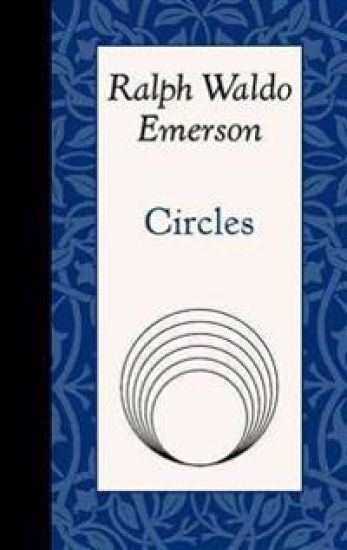
Circles

Circles

Ralph Waldo Emerson

Applewood Books
2016
sidottu
One of Emerson's Most Beloved Nature Essays Transcendentalist Ralph Waldo Emerson's 1841 essay Circles reflects the endless circles found in nature, and the fluidity of the universe. Discover a selection of Emerson's groundbreaking philosophy in this rumination on nature, love, god, art and more. This short work is part of Applewood's American Roots series, tactile mementos of American passions by some of America's most famous writers.
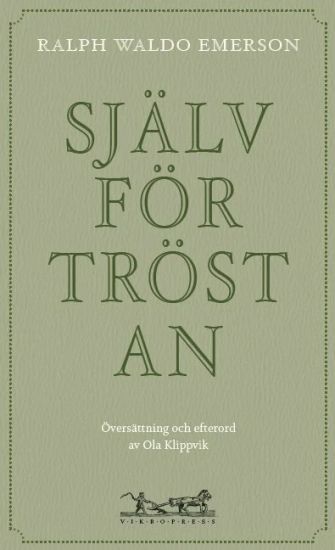
Självförtröstan

Självförtröstan

Ralph Waldo Emerson

Vikbopress
2016
nidottu
"Varje anständig och belevad person påverkar mig mer än rimligt. Jag borde uppträda rakryggat och oförskräckt och i alla lägen säga den bistra sanningen. Om illviljan och fåfängan ifört sig filantropins dräkt, ska det få passera?" Ralph Waldo Emerson (1803–1882) brukar kallas Amerikas första författare. Detta epitet har Self-Reliance till inte ringa del förärat honom. Här utvecklar han sina idéer om falsk konformism, befängd konsekvens och mänskligt självförtroende på ett sätt som saknar motstycke i litteraturhistorien. För första gången på hundra år utkommer nu Emersons signifikanta essä på svenska. Översatt och försedd med ett fördjupande efterord av Ola Klippvik.
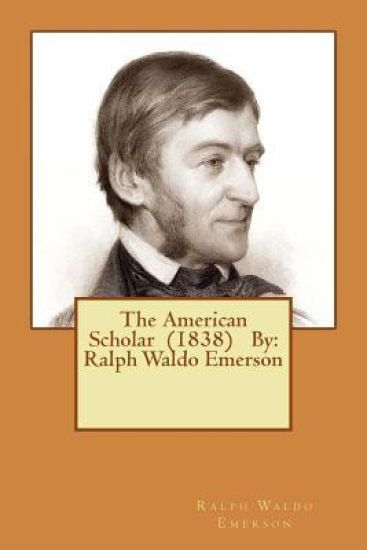
The American Scholar (1838) By: Ralph Waldo Emerson

The American Scholar (1838) By: Ralph Waldo Emerson

Ralph Waldo Emerson

Createspace Independent Publishing Platform
2016
nidottu
Ralph Waldo Emerson (May 25, 1803 - April 27, 1882), known professionally as Waldo Emerson, was an American essayist, lecturer, and poet who led the transcendentalist movement of the mid-19th century. He was seen as a champion of individualism and a prescient critic of the countervailing pressures of society, and he disseminated his thoughts through dozens of published essays and more than 1,500 public lectures across the United States. Emerson gradually moved away from the religious and social beliefs of his contemporaries, formulating and expressing the philosophy of transcendentalism in his 1836 essay "Nature". Following this groundbreaking work, he gave a speech entitled "The American Scholar" in 1837, which Oliver Wendell Holmes Sr. considered to be America's "intellectual Declaration of Independence".
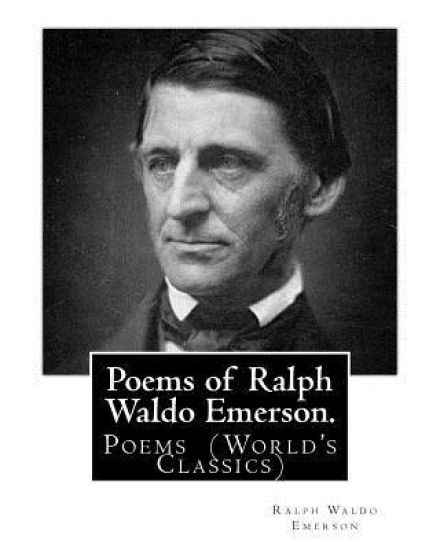
Poems of Ralph Waldo Emerson. By: Ralph Waldo Emerson: Poems (World's Classics)

Poems of Ralph Waldo Emerson. By: Ralph Waldo Emerson: Poems (World's Classics)

Ralph Waldo Emerson

Createspace Independent Publishing Platform
2016
nidottu
Ralph Waldo Emerson (May 25, 1803 - April 27, 1882), known professionally as Waldo Emerson, was an American essayist, lecturer, and poet who led the transcendentalist movement of the mid-19th century. He was seen as a champion of individualism and a prescient critic of the countervailing pressures of society, and he disseminated his thoughts through dozens of published essays and more than 1,500 public lectures across the United States. Emerson gradually moved away from the religious and social beliefs of his contemporaries, formulating and expressing the philosophy of transcendentalism in his 1836 essay "Nature". Following this groundbreaking work, he gave a speech entitled "The American Scholar" in 1837, which Oliver Wendell Holmes Sr. considered to be America's "intellectual Declaration of Independence". Emerson wrote most of his important essays as lectures first and then revised them for print. His first two collections of essays, Essays: First Series (1841) and Essays: Second Series (1844), represent the core of his thinking. They include the well-known essays "Self-Reliance", "The Over-Soul", "Circles", "The Poet" and "Experience". Together with "Nature", these essays made the decade from the mid-1830s to the mid-1840s Emerson's most fertile period. Emerson wrote on a number of subjects, never espousing fixed philosophical tenets, but developing certain ideas such as individuality, freedom, the ability for humankind to realize almost anything, and the relationship between the soul and the surrounding world. Emerson's "nature" was more philosophical than naturalistic: "Philosophically considered, the universe is composed of Nature and the Soul". Emerson is one of several figures who "took a more pantheist or pandeist approach by rejecting views of God as separate from the world." He remains among the linchpins of the American romantic movement, and his work has greatly influenced the thinkers, writers and poets that followed him. When asked to sum up his work, he said his central doctrine was "the infinitude of the private man." Emerson is also well known as a mentor and friend of Henry David Thoreau, a fellow transcendentalist.
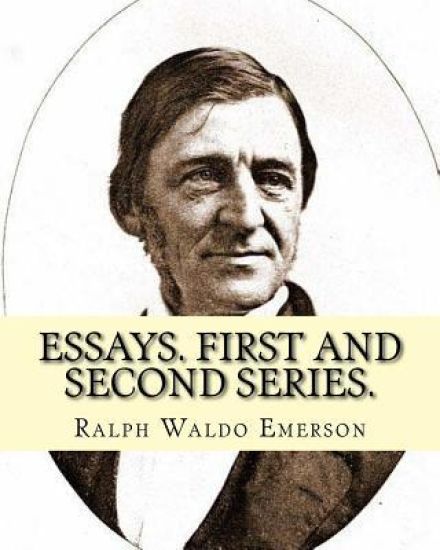
Essays. First and second series. By: Ralph Waldo Emerson: (Essays) Ralph Waldo Emerson (May 25, 1803 - April 27, 1882), known professionally as Waldo
Ralph Waldo Emerson (May 25, 1803 - April 27, 1882), known professionally as Waldo Emerson, was an American essayist, lecturer, and poet who led the transcendentalist movement of the mid-19th century. He was seen as a champion of individualism and a prescient critic of the countervailing pressures of society, and he disseminated his thoughts through dozens of published essays and more than 1,500 public lectures across the United States. Emerson gradually moved away from the religious and social beliefs of his contemporaries, formulating and expressing the philosophy of transcendentalism in his 1836 essay "Nature". Following this groundbreaking work, he gave a speech entitled "The American Scholar" in 1837, which Oliver Wendell Holmes Sr. considered to be America's "intellectual Declaration of Independence". Emerson wrote most of his important essays as lectures first and then revised them for print. His first two collections of essays, Essays: First Series (1841) and Essays: Second Series (1844), represent the core of his thinking. They include the well-known essays "Self-Reliance", "The Over-Soul", "Circles", "The Poet" and "Experience". Together with "Nature", these essays made the decade from the mid-1830s to the mid-1840s Emerson's most fertile period. Emerson wrote on a number of subjects, never espousing fixed philosophical tenets, but developing certain ideas such as individuality, freedom, the ability for humankind to realize almost anything, and the relationship between the soul and the surrounding world. Emerson's "nature" was more philosophical than naturalistic: "Philosophically considered, the universe is composed of Nature and the Soul". Emerson is one of several figures who "took a more pantheist or pandeist approach by rejecting views of God as separate from the world." He remains among the linchpins of the American romantic movement, and his work has greatly influenced the thinkers, writers and poets that followed him. When asked to sum up his work, he said his central doctrine was "the infinitude of the private man." Emerson is also well known as a mentor and friend of Henry David Thoreau, a fellow transcendentalist.
An address delivered before the senior class in Divinity College, Cambridge. (1838) by: Ralph Waldo Emerson
Ralph Waldo Emerson (May 25, 1803 - April 27, 1882), known professionally as Waldo Emerson, was an American essayist, lecturer, and poet who led the transcendentalist movement of the mid-19th century. He was seen as a champion of individualism and a prescient critic of the countervailing pressures of society, and he disseminated his thoughts through dozens of published essays and more than 1,500 public lectures across the United States. Emerson gradually moved away from the religious and social beliefs of his contemporaries, formulating and expressing the philosophy of transcendentalism in his 1836 essay "Nature". Following this groundbreaking work, he gave a speech entitled "The American Scholar" in 1837, which Oliver Wendell Holmes Sr. considered to be America's "intellectual Declaration of Independence".