Kirjojen hintavertailu – 12 859 819 kirjaa ja 27 kauppaa
Kirjailija
Ralph Waldo Emerson
Kirjat ja teokset yhdessä paikassa: 994 kirjaa, julkaisuja vuosilta 1836–2026, suosituimpiin kuuluu Essays by Ralph Waldo Emerson. Vertaile teosten hintoja ja tarkista saatavuus suomalaisista kirjakaupoista.
Nimi esiintyy myös muodoissa: Ralph Waldo. Emerson
The Transcendentalist/The Conservative is a compilation of two classic philosophy essays by Ralph Waldo Emerson. The first thing we have to say respecting what are called new views here in New England, at the present time, is, that they are not new, but the very oldest of thoughts cast into the mould of these new times. The light is always identical in its composition, but it falls on a great variety of objects, and by so falling is first revealed to us, not in its own form, for it is formless, but in theirs; in like manner, thought only appears in the objects it classifies.
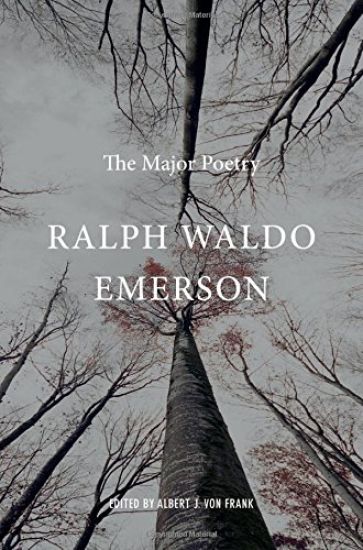
Ralph Waldo Emerson: The Major Poetry, like its companion prose volume, presents a selection of definitively edited texts drawn chiefly from the multivolume Collected Works. Accompanying each poem is a headnote prepared by Albert von Frank for the student and general reader, which serves as an entryway to the poem, offering critical and historical contexts. Detailed annotations provide further guidance. A master of the essay form, a philosopher of moods and self-reliance, and the central figure in the American romantic movement, Emerson makes many claims on our attention. Ralph Waldo Emerson: The Major Poetry reminds us exactly why his poetry also matters and why he remains one of our most important theoreticians of verse. Emerson saw his poetry and philosophy as coordinate ways of seeing the world. “It is not metres,” he once declared, “but a metre-making argument, that makes a poem,—a thought so passionate and alive, that, like the spirit of a plant or an animal, it has an architecture of its own, and adorns nature with a new thing.” All the major poems published in Emerson’s lifetime—chosen from Poems (1847), May-Day and Other Pieces (1867), and Selected Poems (1876) as well as uncollected poems—are represented here. Also included in an appendix is the first selection ever made of the poems and poetic fragments that Emerson addressed to his first wife, Ellen, during their courtship and marriage and concluding with the anguish of bereavement following her death on February 8, 1831, at the age of nineteen.
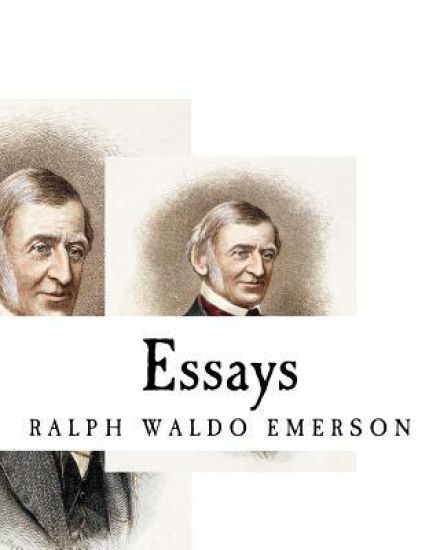
Ralph Waldo Emerson (May 25, 1803 - April 27, 1882) was an American essayist, lecturer, and poet who led the Transcendentalist movement of the mid-19th century. He was seen as a champion of individualism and a prescient critic of the countervailing pressures of society, and he disseminated his thoughts through dozens of published essays and more than 1,500 public lectures across the United States. Emerson gradually moved away from the religious and social beliefs of his contemporaries, formulating and expressing the philosophy of Transcendentalism in his 1836 essay, Nature. Following this ground-breaking work, he gave a speech entitled "The American Scholar" in 1837, which Oliver Wendell Holmes, Sr. considered to be America's "Intellectual Declaration of Independence". Emerson wrote most of his important essays as lectures first, then revised them for print. His first two collections of essays - Essays: First Series and Essays: Second Series, published respectively in 1841 and 1844 - represent the core of his thinking, and include such well-known essays as Self-Reliance, The Over-Soul, Circles, The Poet and Experience. Together with Nature, these essays made the decade from the mid-1830s to the mid-1840s Emerson's most fertile period. Emerson wrote on a number of subjects, never espousing fixed philosophical tenets, but developing certain ideas such as individuality, freedom, the ability for humankind to realize almost anything, and the relationship between the soul and the surrounding world. Emerson's "nature" was more philosophical than naturalistic: "Philosophically considered, the universe is composed of Nature and the Soul." Emerson is one of several figures who "took a more pantheist or pandeist approach by rejecting views of God as separate from the world." He remains among the linchpins of the American romantic movement, and his work has greatly influenced the thinkers, writers and poets that have followed him. When asked to sum up his work, he said his central doctrine was "the infinitude of the private man." Emerson is also well known as a mentor and friend of fellow Transcendentalist Henry David Thoreau.