Kirjailija
Rene Descartes
Kirjat ja teokset yhdessä paikassa: 410 kirjaa, julkaisuja vuosilta 1960–2026, suosituimpiin kuuluu Geometria A Renato Des Cartes. Vertaile teosten hintoja ja tarkista saatavuus suomalaisista kirjakaupoista.
Nimi esiintyy myös muodoissa: René Descartes, René Descartes
410 kirjaa
Kirjojen julkaisuvuodet: 1960–2026.
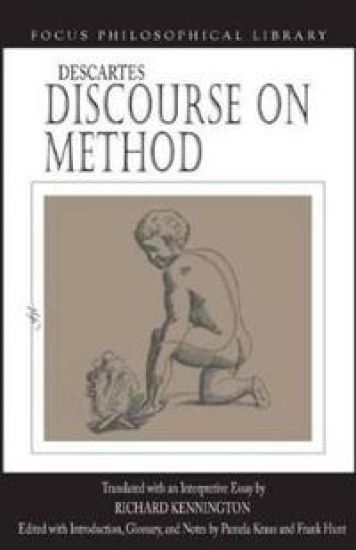
This is an English translation of Descartes' seminal discourse, with an original essay by Richard Kennington. This text is designed to provide the student with a close translation, notes, and a glossary of key terms, facilitating access to ideas as they originally were presented and helping to make the translator's work transparent. Focus Philosophical Library translations are close to and are non-interpretative of the original text, with the notes and a glossary intending to provide the reader with some sense of the terms and the concepts as they were understood by Decartes' immediate audience.
Mit den "Principia Philosophiae" (1644) gab Ren? Descartes der Welt den Vorblick auf eine neue Physik; nicht die Inhalte, aber das Modell seiner von der Intuition ausgehenden, mathematischen Grundsätzen folgenden und hypothetisch operierenden Erklärung aller Naturerscheinungen setzte sich durch. Daß Descartes - im Anschluß an den "Discours de la m?thode" (1637) und die "Meditationes de prima philosophia" (1641) - mit der Veröffentlichung der "Principia" die Zäsur setzte, die seinen Rang als erster Denker der "Philosophie der Neuzeit" begründete, ist ein Topos der Philosophiegeschichte. Uneinigkeit besteht aber bis heute unter den Biographen und Interpreten über die Frage, ob Descartes selbst sich dessen bewußt war, daß alle Aussagen bzw. Erkenntnisse über das Geschehen in der Natur notwendig hypothetisch bleiben (unter metaphysischem Aspekt) und dennoch (sofern methodisch gewonnen) die Wirklichkeit treffen und berechenbar machen. Oder ob er in den "Principia" nur deshalb darauf verfiel, alle seine Aussagen über die Prinzipien der körperlichen Dinge, die sichtbare Welt und die Erde in bloß hypothetischer Form vorzutragen, um der Verfolgung durch die Inquisition zu entgehen. Diese neue, zweisprachige Ausgabe der philosophiegeschichtlich Epoche machenden Schrift bietet neben dem lateinischen Originaltext und der völlig neu erstellten, terminologischen Unterscheidungen genau Rechnung tragenden Übersetzung erstmals auch eine umfassende Erschließung der von Descartes herangezogen Quellen, d. i. der zeitgenössischen Publikationen zur Untersuchung von Naturphänomenen, die wir heute - seit Descartes - als physikalische oder naturwissenschaftliche Untersuchungen einordnen können.

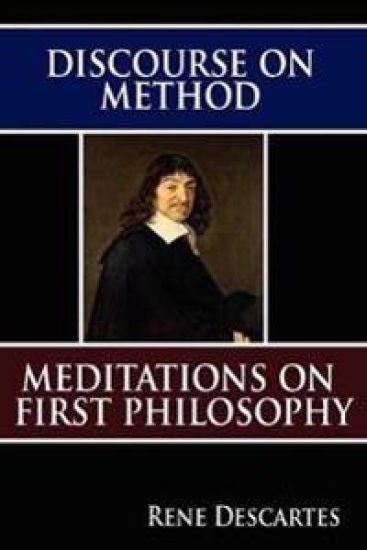
Discourse on Method and Meditations on First Philosophy
Rene Descartes
www.bnpublishing.com
2007
pokkari
Meditaciones Metafisicas / Metaphysical Meditations
Rene Descartes
www.bnpublishing.com
2007
pokkari
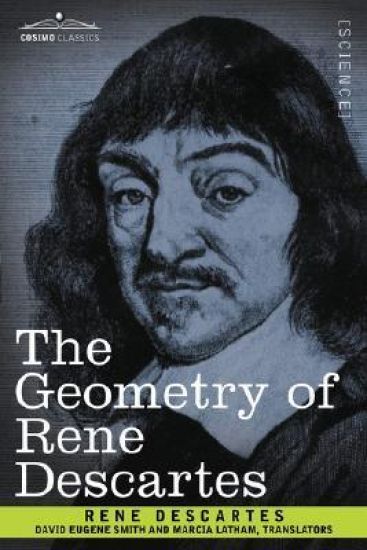
The Geometry of Rene Descartes
Rene Descartes
Cosimo Classics
2007
sidottu
Halvin toimitettuna 35,10 €
This is a new release of the original 1952 edition.
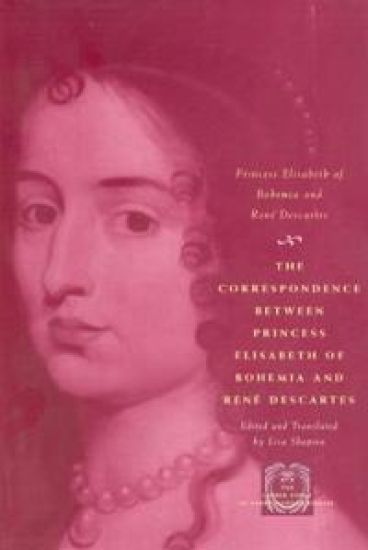
The Correspondence between Princess Elisabeth of Bohemia and René Descartes
Rene Descartes
University of Chicago Press
2007
nidottu
Between the years 1643 and 1649, Princess Elisabeth of Bohemia (1618-80) and Rene Descartes (1596-1650) exchanged fifty-eight letters - thirty-two from Descartes and twenty-six from Elisabeth. Their correspondence contains the only known extant philosophical writings by Elisabeth and reveals her mastery of metaphysics, analytic geometry, and moral philosophy, as well as her keen interest in natural philosophy. The letters are essential reading for anyone interested in Descartes' philosophy, in particular his account of the human being as a union of mind and body, as well as his ethics. They also provide a unique insight into the character of their authors and the way ideas develop through intellectual collaboration. Philosophers have long been familiar with Descartes' side of the correspondence. Now Elisabeth's letters - never before available in translation in their entirety - emerge in this volume, adding much-needed context and depth both to Descartes' ideas and the legacy of the princess. Lisa Shapiro's annotated edition, which also includes Elisabeth's correspondence with the Quakers William Penn and Robert Barclay, will be heralded by students of philosophy, feminist theorists, and historians of the early modern period.
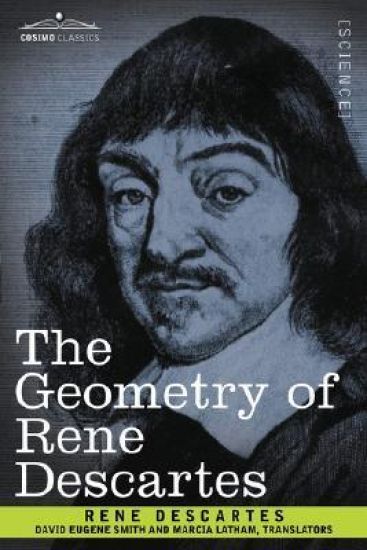
The Geometry of Rene Descartes
Rene Descartes; David Eugene Smith; Marcia L. Latham
Kessinger Pub
2007
pokkari
Rene Dekart - osnovopolozhnik novoj ratsionalisticheskoj filosofii, prinadlezhit k chislu vydajuschikhsja evropejskikh myslitelej. Kartezianstvo (ot Cartesius - latinizirovannogo imeni Dekarta) stalo svoego roda obektom filosofskogo kulta. Do sikh por ego idei ne tolko izuchajut, no i ispovedujut. Obajanie mysli Dekarta oschutit kazhdyj chitatel. Vnimatelnyj k neposvjaschennym, sniskhoditelnyj k knizhnoj mudrosti filosof obraschaetsja k nam ne kak metr, a kak skromnyj uchenik, gotovyj otkazatsja ot svoikh vyvodov, uslyshav ubeditelnuju kritiku. V nastojaschee izdanie voshli tri naibolee vazhnykh traktata Rene Dekarta: "Razyskanie istiny", "Rassuzhdenie o metode" (publikuetsja v novom, sovremennom perevode) i "Razmyshlenija o pervoj filosofii". V kachestve prilozhenija predstavlena rabota T. Gobbsa. Izdanie vkljuchaet bolshoj spravochnyj apparat: vstupitelnuju statju i podrobnyj kommentarij.
This edition features reliable, accessible translations; useful editorial materials; and a straightforward presentation of the Objections and Replies, including the objections from Caterus, Arnauld, and Hobbes, accompanied by Descartes' replies, in their entirety. The letter serving as a reply to Gassendi--in which several of Descartes' associates present Gassendi's best arguments and Descartes' replies--conveys the highlights and important issues of their notoriously extended exchange. Roger Ariew's illuminating Introduction discusses the Meditations and the intellectual environment surrounding its reception.
Provides translations, useful editorial materials, and a presentation of the Objections and Replies, including the Objections from Caterus, Arnauld, and Hobbes, and Descartes' Replies. The general Introduction discusses the Meditations and the intellectual environment surrounding its reception. Also included are a bibliography and chronology.
Discourse on the Method of Rightly...
Rene Descartes
1st World Library - Literary Society
2006
sidottu
Discourse on the Method of Rightly...
Rene Descartes
1st World Library - Literary Society
2004
pokkari
Discourse On The Method Of Rightly Conducting The Reason And Seeking Truth In The Sciences
Rene Descartes
KESSINGER PUBLISHING CO
2004
pokkari
Discourse on Method (Barnes & Noble Library of Essential Reading)
Rene Descartes
Barnes Noble Inc
2004
pokkari
Rene Descartes was born in La Haye, known today as La Haye-Descartes in 1596. After studying classical literature, history, rhetoric, and philosophy at the college des Jesuites de la Fleche, he obtained his law degree from the University of Poitiers. In 1618, he enrolled in the Dutch army commanded by the prince Maurice of Nassau. Upon invitation by Queen Christina of Sweden, Descartes moved to Sweden in 1649 in order to tutor her in philosophy. Shortly thereafter he became ill with pneumonia and died in early 1650.
Besides his more famous works of philosophy - "Discourse on Method", "Meditations on First Philosophy", and "Principles of Philosophy" - Descartes devoted a great deal of time and thought to the study of physiology and anatomy. An account of his activities in 1629 reports that he visited butcher shops on an almost daily basis to study specific animal organs, and he practised dissection and even vivisection to explore the workings of major organ systems. In the 1630s, he assisted in the dissection of human cadavers - all to satisfy his intense curiosity about how bodies, animal and human, work. The fruits of this research can be found in his "Treatise of Man", a work that he decided not to publish for fear of suffering the same fate as Galileo. Consequently, this fascinating treatise did not appear until twelve years after his death. This is a landmark work that students of history, medicine, biology, and the history of science will find richly rewarding.
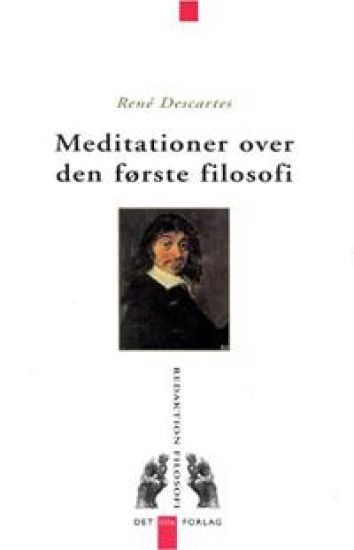
Den nye filosofis hovedværk om rationalitetens altafgørende kraft. I "Meditationer over den første filosofi" præsenterer Descartes sit berømte "Cogito, ergo sum" argument, hvilket på dansk betyder "jeg tænker, derfor er jeg", for at etablere et sikkert punkt for erkendelsen. Værket er opdelt i seks "meditationer". I den første meditations søgen efter en sikker grund for videnskaben, opnår Descartes en radikal tvivl. Al vores viden, som er baseret på sansning, kan ifølge Descartes være fejlagtig, da vores sanser ofte bedrager os. I den anden meditation opdager Descartes, at selv i radikal tvivl kan han ikke tvivle på, at han tænker, og derfor eksisterer han. I de efterfølgende meditationer forsøger Descartes at bevise Guds eksistens, og at vores klare og tydelige perceptioner er sande, da en god og ikke-bedragerisk Gud vil sikre sandheden i disse. Oversat af Niels Henningsen, der også har skrevet indledning og noter.