Kirjojen hintavertailu – 12 859 828 kirjaa ja 27 kauppaa

Kirjailija

Richard Bradley

Kirjat ja teokset yhdessä paikassa: 93 kirjaa, julkaisuja vuosilta 1975–2026, suosituimpiin kuuluu An appendix to the New improvements of planting and gardening. Containing the culture of such forest-trees, flowers, &c. as were omitted in the former impressions; ... Illustrated with copper plates. By R. Bradley, .... Vertaile teosten hintoja ja tarkista saatavuus suomalaisista kirjakaupoista.

93 kirjaa

Kirjojen julkaisuvuodet: 1975–2026.

Ritual and Domestic Life in Prehistoric Europe
This fascinating study explores how our prehistoric ancestors developed rituals from everyday life and domestic activities. Richard Bradley contends that for much of the prehistoric period, ritual was not a distinct sphere of activity. Rather it was the way in which different features of the domestic world were played out until they took on qualities of theatrical performance. With extensive illustrated case-studies, this book examines farming, craft production and the occupation of houses, all of which were ritualized in prehistoric Europe. Successive chapters discuss the ways in which ritual has been studied, drawing on a series of examples that range from Greece to Norway and from Romania to Portugal. They consider practices that extend from the Mesolithic period to the Early Middle Ages and discuss the ways in which ritual and domestic life were intertwined.
Ritual and Domestic Life in Prehistoric Europe

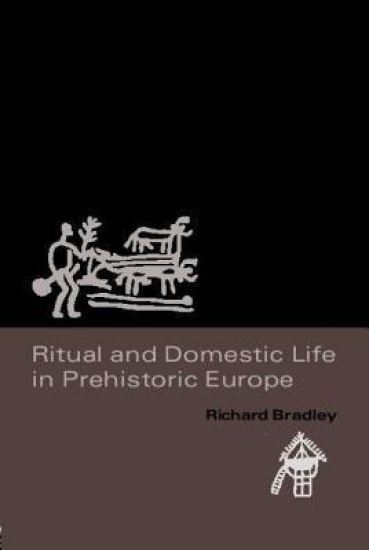
Ritual and Domestic Life in Prehistoric Europe

Richard Bradley

Routledge
2005
nidottu

Halvin toimitettuna 74,10 €

This fascinating study explores how our prehistoric ancestors developed rituals from everyday life and domestic activities. Richard Bradley contends that for much of the prehistoric period, ritual was not a distinct sphere of activity. Rather it was the way in which different features of the domestic world were played out until they took on qualities of theatrical performance. With extensive illustrated case-studies, this book examines farming, craft production and the occupation of houses, all of which were ritualized in prehistoric Europe. Successive chapters discuss the ways in which ritual has been studied, drawing on a series of examples that range from Greece to Norway and from Romania to Portugal. They consider practices that extend from the Mesolithic period to the Early Middle Ages and discuss the ways in which ritual and domestic life were intertwined.
Interpreting the Axe Trade

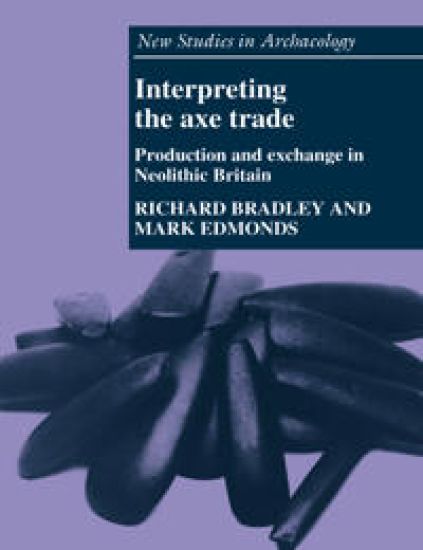
Interpreting the Axe Trade

Richard Bradley; Mark Edmonds

Cambridge University Press
2005
pokkari
Interpreting the Axe Trade documents the changing character and context of stone axe production and exchange in the British Neolithic. Drawing on a variety of studies, the authors explore some of the problems and potentials that attend archaeological discussions of exchange at both a theoretical and a methodological level. Out of this critique arises an argument for an integrated approach to the production, circulation and consumption of past material - an approach which acknowledges the subtle and complex roles that 'things' may play in the reproduction of social life. These arguments provide the basis for a case study which explores the links between the social contexts within which Neolithic stone axes circulated in Britain, and the social and material conditions under which those objects were originally produced. Field survey, excavation and detailed technological studies at the largest stone axe source in Britain are set alongside analyses of the changing character and social context of axe circulation and deposition across the country as a whole. These different analytical threads are then woven together in the final section of the book, where the authors suggest that the patterns explored in the course of their work reflect major changes in the nature of social life during the Neolithic.
The Past in Prehistoric Societies

The Past in Prehistoric Societies

Richard Bradley

Routledge
2002
sidottu
The idea of prehistory dates from the nineteenth century, but Richard Bradley contends that it is still a vital area for research. He argues that it is only through a combination of oral tradition and the experience of encountering ancient material culture that people were able to formulate a sense of their own pasts without written records. The Past in Prehistoric Societies presents case studies which extend from the Palaeolithic to the early Middle Ages and from the Alps to Scandinavia. It examines how archaeologists might study the origin of myths and the different ways in which prehistoric people would have inherited artefacts from the past. It also investigates the ways in which ancient remains might have been invested with new meanings long after their original significance had been forgotten. Finally, the author compares the procedures of excavation and field survey in the light of these examples. The work includes a large number of detailed case studies, is fully illustrated and has been written in an extremely accessible style.
The Past in Prehistoric Societies

The Past in Prehistoric Societies

Richard Bradley

Routledge
2002
nidottu
The idea of prehistory dates from the nineteenth century, but Richard Bradley contends that it is still a vital area for research. He argues that it is only through a combination of oral tradition and the experience of encountering ancient material culture that people were able to formulate a sense of their own pasts without written records. The Past in Prehistoric Societies presents case studies which extend from the Palaeolithic to the early Middle Ages and from the Alps to Scandinavia. It examines how archaeologists might study the origin of myths and the different ways in which prehistoric people would have inherited artefacts from the past. It also investigates the ways in which ancient remains might have been invested with new meanings long after their original significance had been forgotten. Finally, the author compares the procedures of excavation and field survey in the light of these examples. The work includes a large number of detailed case studies, is fully illustrated and has been written in an extremely accessible style.
An Archaeology of Natural Places

An Archaeology of Natural Places

Richard Bradley

Routledge
2000
nidottu
This volume explores why natural places such as caves, mountains, springs and rivers assumed a sacred character in European prehistory, and how the evidence for this can be analysed in the field. It shows how established research on votive deposits, rock art and production sites can contribute to a more imaginative approach to the prehistoric landscape, and can even shed light on the origins of monumental architecture. The discussion is illustrated through a wide range of European examples, and three extended case studies. An Archaeology of Natural Places extends the range of landscape studies and makes the results of modern research accessible to a wider audience, including students and academics, field archaeologists, and those working in heritage management.
An Archaeology of Natural Places

An Archaeology of Natural Places

Richard Bradley

Routledge
2000
sidottu
This volume explores why natural places such as caves, mountains, springs and rivers assumed a sacred character in European prehistory, and how the evidence for this can be analysed in the field. It shows how established research on votive deposits, rock art and production sites can contribute to a more imaginative approach to the prehistoric landscape, and can even shed light on the origins of monumental architecture. The discussion is illustrated through a wide range of European examples, and three extended case studies. An Archaeology of Natural Places extends the range of landscape studies and makes the results of modern research accessible to a wider audience, including students and academics, field archaeologists, and those working in heritage management.
The Significance of Monuments

The Significance of Monuments

Richard Bradley

Routledge
1998
nidottu
The text studies the importance of monuments tracing their history from their first creation to over 6000 years later. Part one discusses how monuments first developed, and part two studies how such monuments were modified and reinterpreted to suit the changing needs of society.
The Significance of Monuments

The Significance of Monuments

Richard Bradley

Routledge
1998
sidottu
The Neolithic period, when agriculture began and many monuments - including Stonehenge - were constructed, is an era fraught with paradoxes and ambiguities. Starting in the Mesolithic and carrying his analysis through to the Late Bronze Age, Richard Bradley sheds light on this complex period and the changing consciousness of these prehistoric peoples. The Significance of Monuments studies the importance of monuments tracing their history from their first creation over six thousand years later. Part One discusses how monuments first developed and their role in developing a new sense of time and space among the inhabitants of prehistoric Europe. Other features of the prehistoric landscape - such as mounds and enclosures - across Continental Europe are also examined. Part Two studies how such monuments were modified and reinterpreted to suit the changing needs of society through a series of detailed case studies. The Significance of Monuments is an indispensable text for all students of European prehistory. It is also an enlightening read for professional archaeologists and all those interested in this fascinating period.
Rock Art and the Prehistory of Atlantic Europe
Along the Atlantic seaboard, from Scotland to Spain, are numerous rock carvings made four to five thousand years ago, whose interpretation poses a major challenge to the archaeologist. In the first full-length treatment of the subject, based largely on new fieldwork, Richard Bradley argues that these carvings should be interpreted as a series of symbolic messages that are shared between monuments, artefacts and natural places in the landscape. He discusses the cultural setting of the rock carvings and the ways in which they can be interpreted in relation to ancient land use, the creation of ritual monuments and the burial of the dead. Integrating this fascinating yet little-known material into the mainstream of prehistoric studies, Richard Bradley demonstrates that these carvings played a fundamental role in the organization of the prehistoric landscape.