Kirjojen hintavertailu – 12 859 828 kirjaa ja 27 kauppaa

Kirjailija

Richard Bradley

Kirjat ja teokset yhdessä paikassa: 93 kirjaa, julkaisuja vuosilta 1975–2026, suosituimpiin kuuluu An appendix to the New improvements of planting and gardening. Containing the culture of such forest-trees, flowers, &c. as were omitted in the former impressions; ... Illustrated with copper plates. By R. Bradley, .... Vertaile teosten hintoja ja tarkista saatavuus suomalaisista kirjakaupoista.

93 kirjaa

Kirjojen julkaisuvuodet: 1975–2026.

The Country Gentleman and Farmer's Monthly Director. Containing Necessary Instructions for the Management and Improvement of a Farm, in Every Month of the Year. ... By R. Bradley,
The 18th century was a wealth of knowledge, exploration and rapidly growing technology and expanding record-keeping made possible by advances in the printing press. In its determination to preserve the century of revolution, Gale initiated a revolution of its own: digitization of epic proportions to preserve these invaluable works in the largest archive of its kind. Now for the first time these high-quality digital copies of original 18th century manuscripts are available in print, making them highly accessible to libraries, undergraduate students, and independent scholars. Medical theory and practice of the 1700s developed rapidly, as is evidenced by the extensive collection, which includes descriptions of diseases, their conditions, and treatments. Books on science and technology, agriculture, military technology, natural philosophy, even cookbooks, are all contained here.++++The below data was compiled from various identification fields in the bibliographic record of this title. This data is provided as an additional tool in helping to insure edition identification: ++++British LibraryT014512Titlepage in red and black. The ornaments are those used by Henry Woodfall. London: printed for James Woodman, and David Lyon, 1726. xx,132p.: ill.; 8
New Improvements of Planting and Gardening, Both Philosophical and Practical. Explaining the Motion of the sap and Generation of Plants
The 18th century was a wealth of knowledge, exploration and rapidly growing technology and expanding record-keeping made possible by advances in the printing press. In its determination to preserve the century of revolution, Gale initiated a revolution of its own: digitization of epic proportions to preserve these invaluable works in the largest archive of its kind. Now for the first time these high-quality digital copies of original 18th century manuscripts are available in print, making them highly accessible to libraries, undergraduate students, and independent scholars. Medical theory and practice of the 1700s developed rapidly, as is evidenced by the extensive collection, which includes descriptions of diseases, their conditions, and treatments. Books on science and technology, agriculture, military technology, natural philosophy, even cookbooks, are all contained here.++++The below data was compiled from various identification fields in the bibliographic record of this title. This data is provided as an additional tool in helping to insure edition identification: ++++British LibraryT039869Titlepage in red and black. With a final leaf of advertisements. London: printed for W. Mears, 1717. 16],70, 2]p., plate; 8
Dictionarium Botanicum

Dictionarium Botanicum

Richard Bradley

Gale Ecco, Print Editions
2018
sidottu
The 18th century was a wealth of knowledge, exploration and rapidly growing technology and expanding record-keeping made possible by advances in the printing press. In its determination to preserve the century of revolution, Gale initiated a revolution of its own: digitization of epic proportions to preserve these invaluable works in the largest archive of its kind. Now for the first time these high-quality digital copies of original 18th century manuscripts are available in print, making them highly accessible to libraries, undergraduate students, and independent scholars. Medical theory and practice of the 1700s developed rapidly, as is evidenced by the extensive collection, which includes descriptions of diseases, their conditions, and treatments. Books on science and technology, agriculture, military technology, natural philosophy, even cookbooks, are all contained here.++++The below data was compiled from various identification fields in the bibliographic record of this title. This data is provided as an additional tool in helping to insure edition identification: ++++British LibraryT026904The ornament on the last page of the appendix bears the legend: "Imprim. Sam. Aris". London: printed by Samuel Aris] for T. Woodward, and J. Peele, 1728. 2v.; 8
A Survey of the Ancient Husbandry and Gardening, Collected From Cato, Varro, Columella, Virgil, and Others the Most Eminent Writers Among the Greeks and Romans
The 18th century was a wealth of knowledge, exploration and rapidly growing technology and expanding record-keeping made possible by advances in the printing press. In its determination to preserve the century of revolution, Gale initiated a revolution of its own: digitization of epic proportions to preserve these invaluable works in the largest archive of its kind. Now for the first time these high-quality digital copies of original 18th century manuscripts are available in print, making them highly accessible to libraries, undergraduate students, and independent scholars. Medical theory and practice of the 1700s developed rapidly, as is evidenced by the extensive collection, which includes descriptions of diseases, their conditions, and treatments. Books on science and technology, agriculture, military technology, natural philosophy, even cookbooks, are all contained here.++++The below data was compiled from various identification fields in the bibliographic record of this title. This data is provided as an additional tool in helping to insure edition identification: ++++British LibraryT144641With an index. London: printed for B. Motte, 1725. 16],373, 11]p., plates; 8
New Improvements of Planting and Gardening, Both Philosophical and Practical
The 18th century was a wealth of knowledge, exploration and rapidly growing technology and expanding record-keeping made possible by advances in the printing press. In its determination to preserve the century of revolution, Gale initiated a revolution of its own: digitization of epic proportions to preserve these invaluable works in the largest archive of its kind. Now for the first time these high-quality digital copies of original 18th century manuscripts are available in print, making them highly accessible to libraries, undergraduate students, and independent scholars. Medical theory and practice of the 1700s developed rapidly, as is evidenced by the extensive collection, which includes descriptions of diseases, their conditions, and treatments. Books on science and technology, agriculture, military technology, natural philosophy, even cookbooks, are all contained here.++++The below data was compiled from various identification fields in the bibliographic record of this title. This data is provided as an additional tool in helping to insure edition identification: ++++British LibraryT108861The main titlepage in red and black. The three parts have each a separate titlepage, pagination and register. The Kalendar has a separate titlepage and pagination but the register continues that of part 2; its titlepage reads: 'The gentleman and gardeneDublin: printed by and for George Grierson, 1720-21. 10], ij i.e.iv],44; 8],81, 3];iii, 1],71, 1]; 4],184p., plates; 8
A Complete Body of Husbandry

A Complete Body of Husbandry

Richard Bradley

Palala Press
2018
pokkari
This work has been selected by scholars as being culturally important, and is part of the knowledge base of civilization as we know it. This work was reproduced from the original artifact, and remains as true to the original work as possible. Therefore, you will see the original copyright references, library stamps (as most of these works have been housed in our most important libraries around the world), and other notations in the work. This work is in the public domain in the United States of America, and possibly other nations. Within the United States, you may freely copy and distribute this work, as no entity (individual or corporate) has a copyright on the body of the work. As a reproduction of a historical artifact, this work may contain missing or blurred pages, poor pictures, errant marks, etc. Scholars believe, and we concur, that this work is important enough to be preserved, reproduced, and made generally available to the public. We appreciate your support of the preservation process, and thank you for being an important part of keeping this knowledge alive and relevant.
Decision Theory with a Human Face

Decision Theory with a Human Face

Richard Bradley

Cambridge University Press
2017
sidottu
When making decisions, people naturally face uncertainty about the potential consequences of their actions due in part to limits in their capacity to represent, evaluate or deliberate. Nonetheless, they aim to make the best decisions possible. In Decision Theory with a Human Face, Richard Bradley develops new theories of agency and rational decision-making, offering guidance on how 'real' agents who are aware of their bounds should represent the uncertainty they face, how they should revise their opinions as a result of experience and how they should make decisions when lacking full awareness of, or precise opinions on relevant contingencies. He engages with the strengths and flaws of Bayesian reasoning, and presents clear and comprehensive explorations of key issues in decision theory, from belief and desire to semantics and learning. His book draws on philosophy, economics, decision science and psychology, and will appeal to readers in all of these disciplines.
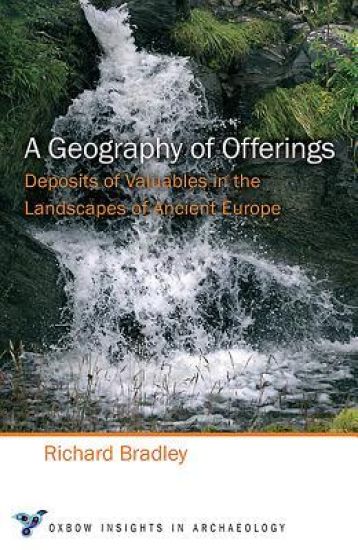
A Geography of Offerings

A Geography of Offerings

Richard Bradley

Oxbow Books
2016
nidottu
More than quarter of a century ago Richard Bradley published The Passage of Arms. It was conceived as An Archaeological Analysis of Prehistoric Hoards and Votive Deposits, but, as the author concedes, these terms were too narrowly focused for the complex subject of deliberate deposition and the period covered too short. A Geography of Offerings has been written to provoke a reaction from archaeologists and has two main aims. The first is to move this kind of archaeology away from the minute study of ancient objects to a more ambitious analysis of ancient places and landscapes. The second is to recognise that problems of interpretation are not restricted to the pre-Roman period. Mesolithic finds have a place in this discussion, and so do those of the 1st millennium AD. Archaeologists studying individual periods confront with similar problems and the same debates are repeated within separate groups of scholars – but they arrive at different conclusions. Here, the author presents a review that brings these discussions together and extends across the entire sequence. Rather than offer a comprehensive survey, this is an extended essay about the strengths and weaknesses of current thinking regarding specialised deposits, which encompass both sacrificial deposits characterised by large quantities of animal and human bones and other collections which are dominated by finds of stone or metal artefacts. It considers current approaches and theory, the histories of individual artefacts and the landscape and physical context of the of places where they were deposited, the character of materials, the importance of animism and the character of ancient cosmologies.
The Prehistoric Settlement of Britain

The Prehistoric Settlement of Britain

Richard Bradley

Routledge
2016
nidottu
This study, first published in 1978, explores the evidence for pre-Roman settlement in Britain. Four aspects of the prehistoric economy are described by the author – colonisation and clearance; arable and pastoral farming; transhumance and nomadism; and hunting, gathering and fishing. These aspects have been brought together to formulate a structure which contains the evidence more naturally than chronological schemes that depend on assumed changes in population or technology. The book draws upon environmental evidence and recent developments in archaeological fieldwork. It also provides an extensive exploration of the published literature on the subject and the scope of the evidence. Originally conceived as an ‘ideas book’ rather than a final synthesis, the author’s intention throughout is to stimulate argument and research, and not to replace one dogma with another.
Nouvelles Observations Phisyques Et Pratiques Sur Le Jardinage Et l'Art de Planter, Tome 3
Nouvelles Observations phisyques et pratiques sur le jardinage et l'art de planter, avec le calendrier des jardiniers. Tome 3 /: ouvrage traduit de l'anglais de Bradley... Date de l'edition originale: 1756Ce livre est la reproduction fidele d'une oeuvre publiee avant 1920 et fait partie d'une collection de livres reimprimes a la demande editee par Hachette Livre, dans le cadre d'un partenariat avec la Bibliotheque nationale de France, offrant l'opportunite d'acceder a des ouvrages anciens et souvent rares issus des fonds patrimoniaux de la BnF. Les oeuvres faisant partie de cette collection ont ete numerisees par la BnF et sont presentes sur Gallica, sa bibliotheque numerique. En entreprenant de redonner vie a ces ouvrages au travers d'une collection de livres reimprimes a la demande, nous leur donnons la possibilite de rencontrer un public elargi et participons a la transmission de connaissances et de savoirs parfois difficilement accessibles. Nous avons cherche a concilier la reproduction fidele d'un livre ancien a partir de sa version numerisee avec le souci d'un confort de lecture optimal. Nous esperons que les ouvrages de cette nouvelle collection vous apporteront entiere satisfaction. Pour plus d'informations, rendez-vous sur www.hachettebnf.fr
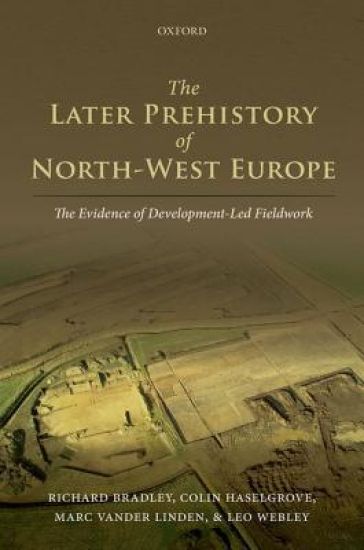
The Later Prehistory of North-West Europe

The Later Prehistory of North-West Europe

Richard Bradley; Colin Haselgrove; Marc Vander Linden; Leo Webley

Oxford University Press
2015
sidottu
The Later Prehistory of North-West Europe provides a unique, up-to-date, and easily accessible synthesis of the later prehistoric archaeology of north-west Europe, transcending political and language barriers that can hinder understanding. By surveying changes in social forms, landscape organization, monument types, and ritual practices over six millennia, the volume reassesses the prehistory of north-west Europe from the late Mesolithic to the end of the pre-Roman Iron Age. It explores how far common patterns of social development are apparent across north-west Europe, and whether there were periods when local differences were emphasized instead. In relation to this, it also examines changes through time in the main axes of contact between the various regions of continental Europe, Britain, and Ireland. Key to the volume's broad scope is its focus on the vast mass of new evidence provided by recent development-led excavations. The authors collate data that has been gathered on thousands of sites across Britain, Ireland, northern France, the Low Countries, western Germany, and Denmark, using sources including unpublished 'grey literature' reports. The results challenge many aspects of previous narratives of later prehistory, allowing the volume to present a distinctively fresh perspective.
The Prehistoric Settlement of Britain

The Prehistoric Settlement of Britain

Richard Bradley

Routledge
2014
sidottu
This study, first published in 1978, explores the evidence for pre-Roman settlement in Britain. Four aspects of the prehistoric economy are described by the author – colonisation and clearance; arable and pastoral farming; transhumance and nomadism; and hunting, gathering and fishing. These aspects have been brought together to formulate a structure which contains the evidence more naturally than chronological schemes that depend on assumed changes in population or technology. The book draws upon environmental evidence and recent developments in archaeological fieldwork. It also provides an extensive exploration of the published literature on the subject and the scope of the evidence. Originally conceived as an ‘ideas book’ rather than a final synthesis, the author’s intention throughout is to stimulate argument and research, and not to replace one dogma with another.
The Idea of Order

The Idea of Order

Richard Bradley

Oxford University Press
2012
sidottu
Richard Bradley investigates the idea of circular buildings - whether houses or public architecture - which, though unfamiliar in the modern West, were a feature of many parts of prehistoric Europe. Why did so many people build circular monuments? Why did they choose to live in circular houses, when other communities rejected them? Why was it that those who preferred to inhabit a world of rectangular dwellings often buried their dead in round mounds and worshipped their gods in circular temples? Why did people who lived in roundhouses decorate their pottery and metalwork with rectilinear motifs, and why was it that the inhabitants of longhouses placed so much emphasis on curvilinear designs? Although their distinctive character has engaged the interest of alternative archaeologists, the significance of circular structures has rarely been discussed in a rigorous manner. The Idea of Order uses archaeological evidence, combined with insights from anthropology, to investigate the creation, use, and ultimate demise of circular architecture in prehistoric Europe. Concerned mainly with the prehistoric period from the origins of farming to the early first millennium AD, but extending to the medieval period, the volume considers the role of circular features from Turkey to the Iberian Peninsula and from Sardinia through Central Europe to Sweden. It places emphasis on the Western Mediterranean and the Atlantic coastline, where circular dwellings were particularly important, and discusses the significance of prehistoric enclosures, fortifications, and burial mounds in regions where longhouse structures were dominant.