Kirjojen hintavertailu – 12 859 819 kirjaa ja 27 kauppaa
Kirjailija
Richard Sennett
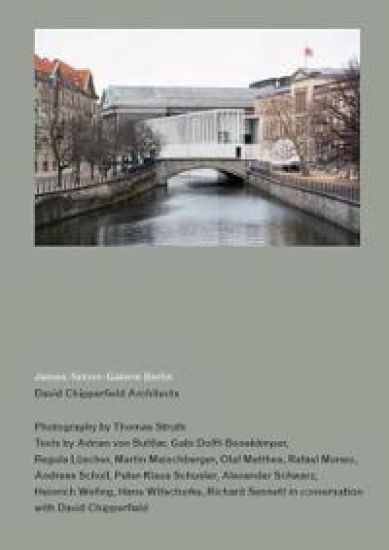
Kirjat ja teokset yhdessä paikassa: 51 kirjaa, julkaisuja vuosilta 1970–2025, suosituimpiin kuuluu David Chipperfield Architects: James-Simon-Galerie Berlin. Vertaile teosten hintoja ja tarkista saatavuus suomalaisista kirjakaupoista.
Gabi Dolff-Bonekämper; Regula Lüscher; Martin Maischberger; Olaf Matthes; Rafael Moneo; Andreas Scholl; Peter-Klaus Schuster; Alexander Schwarz; Heinrich Wefing; Hans Witschurke; Richard Sennett
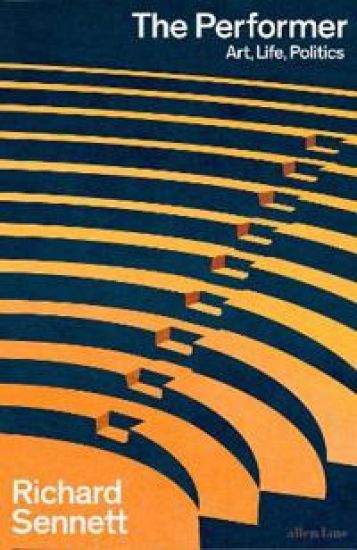
An acclaimed sociologist's exploration of the connections among performances in life, art, and politics "A thought-provoking, essayistic and touchingly personal exploration of the ethics and aesthetics of performance from one of the leading intellectuals of our time."--Lucasta Miller, The Spectator, "Best Books of 2024" "Constantly fascinating and often illuminating."--Simon Callow, New York Review of Books In The Performer, Richard Sennett explores the relations between performing in art (particularly music), politics, and everyday experience. It focuses on the bodily and physical dimensions of performing, rather than on words. Sennett is particularly attuned to the ways in which the rituals of ordinary life are performances. The book draws on history and sociology, and more personally on the author's early career as a professional cellist, as well as on his later work as a city planner and social thinker. It traces the evolution of performing spaces in the city; the emergence of actors, musicians, and dancers as independent artists; the inequality between performer and spectator; the uneasy relations between artistic creation and social and religious ritual; the uses and abuses of acting by politicians. The Janus-faced art of performing is both destructive and civilizing.
An exploration of public performance in everyday life, by the leading cultural and social thinkerThe Performer explores the relations between performing in art (particularly music), politics and everyday experience. It focuses on the bodily and physical dimensions of performing, rather than on words. Richard Sennett is particularly attuned to the ways in which the rituals of ordinary life are performances. The book draws on history and sociology, and more personally on the author's early career as a professional cellist, as well as on his later work as a city planner and social thinker. It traces the evolution of performing spaces in the city; the emergence of actors, musicians, and dancers as independent artists; the inequality between performer and spectator; the uneasy relations between artistic creation and social and religious ritual; the uses and abuses of acting by politicians. The Janus-faced art of performing is both destructive and civilizing. This is the first in a trilogy of books on the fundamental DNA of human expression: performing, narrating, and imaging.
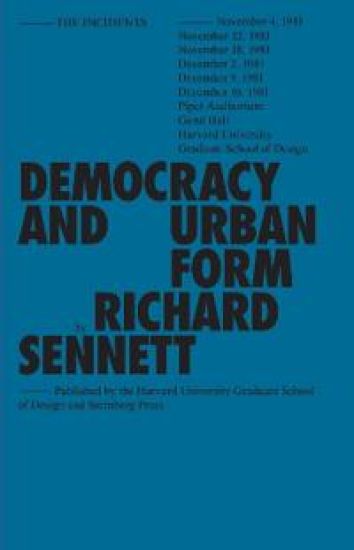
If discourse is the foundation of democracy, how can the design of our cities empower and enable discourse? "Never have the potential political consequences of architecture been greater, and never has the political sensibility of architecture been less." This was the state of the discipline that social theorist and urban thinker Richard Sennett declared when he addressed an audience at the Harvard University Graduate School of Design in 1981. Over a series of six lectures, Sennett presented discourse as the foundation of democracy, and posited that our cities are uniquely positioned to either empower or constrict this discourse--and that the difference could lie in architecture and urban design. Now, over 40 years later, as political polarization persists and its consequences arise in both new and familiar ways, Democracy and Urban Form revisits questions that remain relevant: If discourse is the foundation of democracy, how can the design of our cities empower and enable discourse?
An acclaimed sociologist's exploration of the connections among performances in life, art, and politics "A thought-provoking, essayistic and touchingly personal exploration of the ethics and aesthetics of performance from one of the leading intellectuals of our time."--Lucasta Miller, The Spectator, "Best Books of 2024" "Constantly fascinating and often illuminating."--Simon Callow, New York Review of Books In The Performer, Richard Sennett explores the relations between performing in art (particularly music), politics, and everyday experience. It focuses on the bodily and physical dimensions of performing, rather than on words. Sennett is particularly attuned to the ways in which the rituals of ordinary life are performances. The book draws on history and sociology, and more personally on the author's early career as a professional cellist, as well as on his later work as a city planner and social thinker. It traces the evolution of performing spaces in the city; the emergence of actors, musicians, and dancers as independent artists; the inequality between performer and spectator; the uneasy relations between artistic creation and social and religious ritual; the uses and abuses of acting by politicians. The Janus-faced art of performing is both destructive and civilizing.
An exploration of public performance in everyday life, by the leading cultural and social thinkerThe Performer explores the relations between performing in art (particularly music), politics and everyday experience. It focuses on the bodily and physical dimensions of performing, rather than on words. Richard Sennett is particularly attuned to the ways in which the rituals of ordinary life are performances. The book draws on history and sociology, and more personally on the author's early career as a professional cellist, as well as on his later work as a city planner and social thinker. It traces the evolution of performing spaces in the city; the emergence of actors, musicians, and dancers as independent artists; the inequality between performer and spectator; the uneasy relations between artistic creation and social and religious ritual; the uses and abuses of acting by politicians. The Janus-faced art of performing is both destructive and civilizing. This is the first in a trilogy of books on the fundamental DNA of human expression: performing, narrating, and imaging.
A reflection on the past and present of city life, and a bold proposal for its future In this sweeping work, the preeminent sociologist Richard Sennett traces the anguished relation between how cities are built and how people live in them, from ancient Athens to twenty-first-century Shanghai. He shows how Paris, Barcelona, and New York City assumed their modern forms; rethinks the reputations of Jane Jacobs, Lewis Mumford, and others; and takes us on a tour of emblematic contemporary locations, from the backstreets of Medell n, Colombia, to Google headquarters in Manhattan. Through it all, Sennett laments that the "closed city"--segregated, regimented, and controlled--has spread from the Global North to the exploding urban centers of the Global South. He argues instead for a flexible and dynamic "open city," one that provides a better quality of life, that can adapt to climate change and challenge economic stagnation and racial separation. With arguments that speak directly to our moment--a time when more humans live in urban spaces than ever before--Sennett forms a bold and original vision for the future of cities.
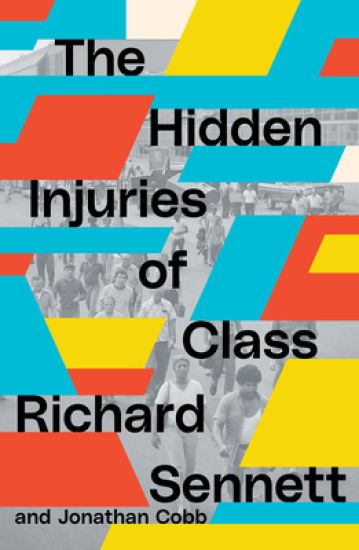
In this reissue of the 1972 classic of social anatomy, Richard Sennets adds a new introduction to shows how the injuries of class persist into the 21st century. In this intrepid, groundbreaking book, Richard Sennett and Jonathan Cobb uncover and define a new form of class conflict in America?an internal conflict in the heart and mind of the blue-collar worker who measures his own value against those lives and occupations to which our society gives a special premium. The authors conclude that in the games of hierarchical respect, no class can emerge the victor; and that true egalitarianism can be achieved only by rediscovering diverse concepts of human dignity. Examining personal feelings in terms of a totality of human relations, and looking beyond the struggle for economic survival, The Hidden Injuries of Class takes an important step forward in the sociological critique of everyday life.
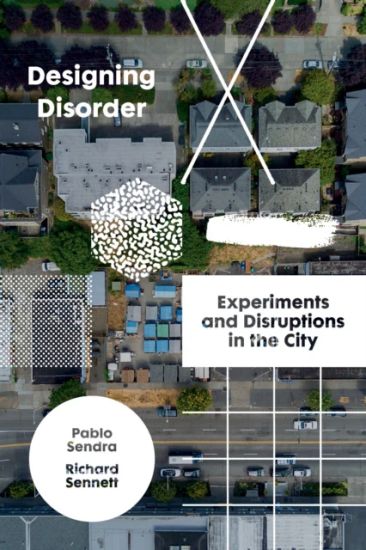
In 1970, Richard Sennett published the groundbreaking The Uses of Disorder, arguing that the ideal of a planned and ordered city was flawed. Fifty years later, Sennett returns to these still fertile ideas and, alongside campaigner and architect Pablo Sendra, sets out an agenda for the design and ethics of the Open City. The public spaces of our cities are under siege from planners, privatisation and increased surveillance. Our streets are becoming ever more lifeless and ordered. What is to be done? Can disorder be designed? In this provocative essay Sendra and Sennett propose a reorganisation of how we think and plan the social life of our cities. 'Infrastructures of disorder' combine architecture, politics, urban planning and activism in order to develop places that nurture rather than stifle, bring together rather than divide up, remain open to change rather than closed off.
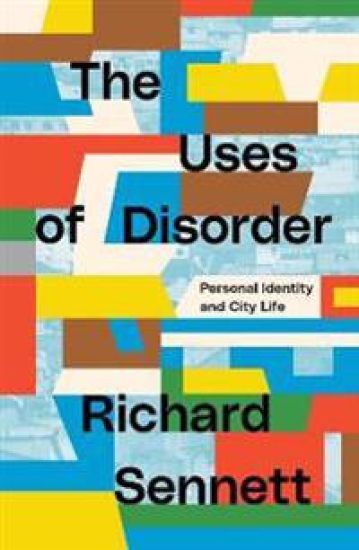
When first published in 1970, The Uses of Disorder, was a call to arms against the deadening hand of modernist urban planning upon the thriving chaotic city. Written in the aftermath of the 1968 student uprising in the US and Europe, it demands a reimagination of the city and how class, city life and identity combine. Too often, this leads to divisions, such as the middle class flight to the suburbs, leaving the inner cities in desperate straits. In response, Sennett offers an alternative image of a "dense, disorderly, overwhelming cities" that allow for change and the development of community. Fifty years later this book is as essential as it was when it first came out, and remains an inspiration to architects, planners and urban thinkers everywhere.
Den som bor i en stad bor på sätt och vis i två olika slags städer på samma gång: en uppbyggd miljö och en social sådan. Sociologen och stadsplaneraren Richard Sennett använder sig i "Den öppna staden" av franskans båda ord för stad, "ville" och "cité", för att ringa in denna dynamik mellan staden som fysisk plats med hus, kvarter och stadsdelar ("ville") och staden som levande mänsklig gemenskap med sedvanor och traditioner ("cité"). En stadsplanering värd namnet måste kunna hantera de målkonflikter som denna dynamik oupphörligt ger upphov till. En gata, till exempel, är så mycket mer än bara summan av en körbana och en trottoar. Hur skapar man i praktiken förutsättningar för en vital urban tillvaro? Hur balanserar man mellan kravet på tillgänglighet och behovet av skyddade miljöer och rumslig variation? Sennett tar ett brett grepp om sitt ämne. Han diskuterar till exempel historiska planeringsstrategier förknippade med namn som Haussmann (Paris) och Cerdà (Barcelona) och tar oss med på utflykter i intressanta miljöer i Berlin, Dehli, Shanghai, Medellín, New York och en rad andra städer. I fokus står (det åtminstone i teorin möjliga) mötet mellan den goda strukturen och det goda livet. Med rätt sorts stadsplanering – då inte minst en stadsplanering som tar etiska hänsyn – kan man på allvar, menar Sennett, berika stadsinvånarnas liv. Det går att skapa och bevara en ”öppen stad”. Richard Sennett är professor i sociologi vid London School of Economics, MIT och New York University, och författare till en rad böcker. År 2006 fick Richard Sennett Hegelpriset, som delas ut av staden Stuttgart.
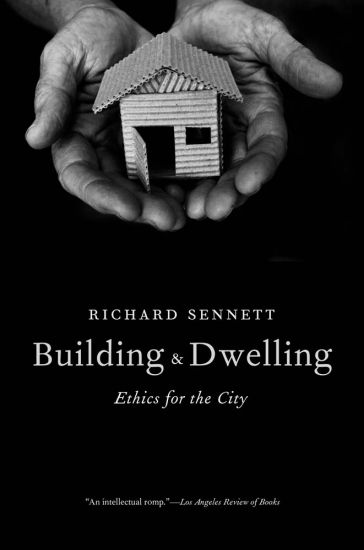
'Thank god for Richard Sennett ... essential reading for all students of the city' Anna Minton, Prospect'Constantly stimulating ideas from a veteran of urban thinking' Jonathan Meades, GuardianIn Building and Dwelling, Richard Sennett distils a lifetime's thinking and practical experience to explore the relationship between the good built environment and the good life. He argues for, and describes in rich detail, the idea of an open city, one in which people learn to manage complexity. He shows how the design of cities can enrich or diminish the everyday experience of those who dwell in them. The book ranges widely - from London, Paris and Barcelona to Shanghai, Mumbai and Medellin in Colombia - and draws on classic thinkers such as Tocqueville, Heidegger, Max Weber, and Walter Benjamin. It also draws on Sennett's many decades as a practical planner himself, testing what works, what doesn't, and why. He shows what works ethically is often the most practical solution for cities' problems. This is a humane and thrilling book, which allows us to think freshly about how we live in cities.'Sennett is my kind of urbanist. He sees the modern city. He reads its secrets as he walks down the street, kicking over the detritus of the past ... There is no alternative to the planner, but please a planner who has read Sennett's book' Simon Jenkins, Sunday Times