
Kirjailija
Richard Sennett
Kirjat ja teokset yhdessä paikassa: 51 kirjaa, julkaisuja vuosilta 1970–2025, suosituimpiin kuuluu David Chipperfield Architects: James-Simon-Galerie Berlin. Vertaile teosten hintoja ja tarkista saatavuus suomalaisista kirjakaupoista.
51 kirjaa
Kirjojen julkaisuvuodet: 1970–2025.

Building and Dwelling: Ethics for the City
Richard Sennett
Farrar, Straus and Giroux
2018
sidottu
Halvin toimitettuna 31,60 €
A preeminent thinker redefines the meaning of city life and charts a way forward Building and Dwelling is the definitive statement on cities by the renowned public intellectual Richard Sennett. In this sweeping work, he traces the anguished relation between how cities are built and how people live in them, from ancient Athens to twenty-first-century Shanghai. He shows how Paris, Barcelona, and New York City assumed their modern forms; rethinks the reputations of Jane Jacobs, Lewis Mumford, and others; and takes us on a tour of emblematic contemporary locations, from the backstreets of Medell n, Colombia, to the Google headquarters in Manhattan. Through it all, he laments that the "closed city"--segregated, regimented, and controlled--has spread from the global North to the exploding urban agglomerations of the global South. As an alternative, he argues for the "open city," where citizens actively hash out their differences and planners experiment with urban forms that make it easier for residents to cope. Rich with arguments that speak directly to our moment--a time when more humans live in urban spaces than ever before--Building and Dwelling draws on Sennett's deep learning and intimate engagement with city life to form a bold and original vision for the future of cities.
Richard Sennett has spent an intellectual lifetime exploring how humans live in cities. In this pair of essays he visits two of the world's greatest cities at crucial moments in their history to meditate on the condition of exile in both geographical and psychic space: the Jewish Ghetto of Renaissance Venice,; and nineteenth-century Paris.
The Fall of Public Man
Richard Sennett
W. W. Norton Company
2017
nidottu
Halvin toimitettuna 28,20 €
A sweeping, farsighted study of the changing nature of public culture and urban society, The Fall of Public Man spans more than two centuries of Western sociopolitical evolution and investigates the causes of our declining involvement in political life. Richard Sennett's insights into the danger of the cult of individualism remain thoroughly relevant to our world today. In a new epilogue, he extends his analysis to the new "public" realm of social media, questioning how public culture has fared since the digital revolution.

Together: The Rituals, Pleasures and Politics of Cooperation
Richard Sennett
YALE UNIVERSITY PRESS
2013
nidottu
In this sequel to his influential work The Craftsman, Richard Sennett explores how we can learn to cooperate in the intensely tribal, competitive, and self-interested cultures we inhabit Living with people who differ--racially, ethnically, religiously, or economically--is the most urgent challenge facing civil society today. We tend socially to avoid engaging with people unlike ourselves, and modern politics encourages the politics of the tribe rather than of the city. In this thought-provoking book, Richard Sennett discusses why this has happened and what might be done about it. Sennett contends that cooperation is a craft, and the foundations for skillful cooperation lie in learning to listen well and discuss rather than debate. In Together he explores how people can cooperate online, on street corners, in schools, at work, and in local politics. He traces the evolution of cooperative rituals from medieval times to today, and in situations as diverse as slave communities, socialist groups in Paris, and workers on Wall Street. The book addresses the nature of cooperation, why it has become weak, and how it could be strengthened. Sennett warns that we must learn the craft of cooperation if we are to make our complex society prosper, yet he reassures us that we can do this, for the capacity for cooperation is embedded in human nature.
Living with people who differ - racially, ethnically, religiously or economically - is one of the most urgent challenges facing civil society today. Together argues that co-operation needs more than good will: it is a craft that requires skill. In modern society traditional bonds are waning, and we must develop new forms of secular, civic ritual that make us more skilful in living with others. From Medieval guilds to today's social networks, Richard Sennett's visionary book explores the nature of co-operation, why it has become weak and how it can be strengthened.
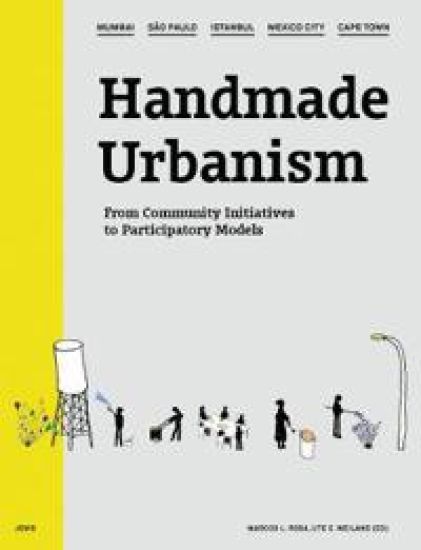
Menschen interessieren sich für die Städte, in denen sie leben. Mit der weltweit zunehmenden Verstädterung wächst auch das Engagement der Bürger für „ihre" Stadt. Fernab von traditioneller Stadtplanung nutzen sie ihre eingeschränkten Ressourcen und finden Lösungsansätze für die Herausforderungen in ihrem unmittelbaren Umfeld. Auf diese Weise schaffen sie soziale Infrastrukturen, die die Lebensbedingungen der Bewohner nachhaltig verbessern. Handmade Urbanism präsentiert 5 beispielhafte Projekte aus eher strukturschwachen Stadtvierteln in fünf Schwellenländern und untersucht dabei, welches Potenzial diese in Eigeninitiative entwickelten Projekte für den gesamtstädtischen Transformationsprozess haben. Wie sehen solche Initiativen „an der Basis" aus, welcher Instrumente und Werkzeuge bedienen sie sich? Funktionsweise und Organisationsprozess der Projekte aus insgesamt fünf Metropolen werden anschaulich mittels Illustrationen dargestellt. Interviews mit Experten, Akteuren und Interessensvertretern beleuchten deren Bedeutung für die jeweiligen lokalen Herausforderungen. Im weltweiten Vergleich werden Unterschiede und Gemeinsamkeiten deutlich und nicht zuletzt übergreifende Lösungsansätze offenbar. Handmade Urbanism schildert, wie ein zeitgemäßes urbanes Leitbild aussehen könnte, das partizipative Initiativen fördert und deren Potenziale zugleich für den gesamtstädtischen Kontext – zum Vorteil aller – nutzt. Der Publikation liegt eine DVD mit der Dokumentation „Urban Future" bei, die weitere Informationen „von der Basis" bietet.
The Marine Steam Engine
Richard Sennett; Henry J Oram
Europaischer Hochschulverlag Gmbh Co. Kg
2012
pokkari
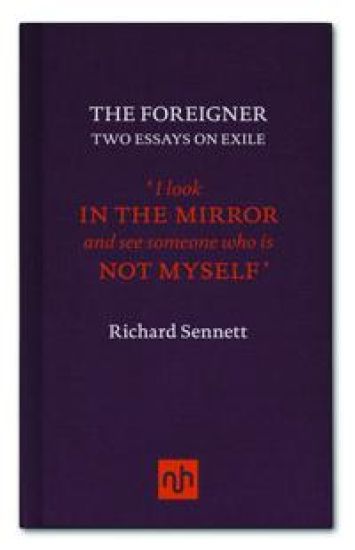
Paris in the nineteenth century was a magnet for Europe's exiles, among them the Russian genius, Alexander Herzen, who described the experience of displacement from the inside. Richard Sennett plunges into this vibrant, anxious world to recreate the experiences of Herzen and his contemporaries.

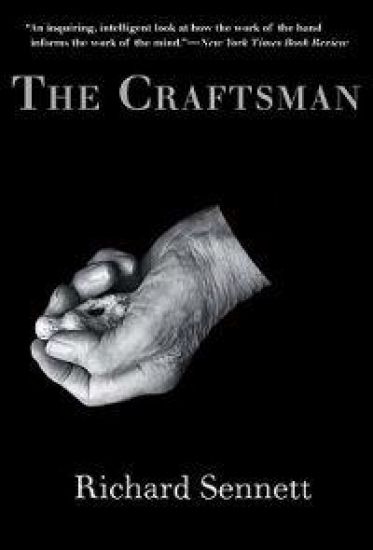
In his most ambitious book to date, Richard Sennett offers an original perspective on craftsmanship and its close connections to work and ethical values " Sennett] compellingly explores the universe of skilled work."--Brian C. Anderson, Wall Street Journal Craftsmanship, says Richard Sennett, names the basic human impulse to do a job well for its own sake, and good craftsmanship involves developing skills and focusing on the work rather than ourselves. The computer programmer, the doctor, the artist, and even the parent and citizen all engage in a craftsman's work. In this thought-provoking book, Sennett explores the work of craftsmen past and present, identifies deep connections between material consciousness and ethical values, and challenges received ideas about what constitutes good work in today's world. The Craftsman engages the many dimensions of skill--from the technical demands to the obsessive energy required to do good work. Craftsmanship leads Sennett across time and space, from ancient Roman brickmakers to Renaissance goldsmiths to the printing presses of Enlightenment Paris and the factories of industrial London; in the modern world he explores what experiences of good work are shared by computer programmers, nurses and doctors, musicians, glassblowers, and cooks. Unique in the scope of his thinking, Sennett expands previous notions of crafts and craftsmen and apprises us of the surprising extent to which we can learn about ourselves through the labor of making physical things.
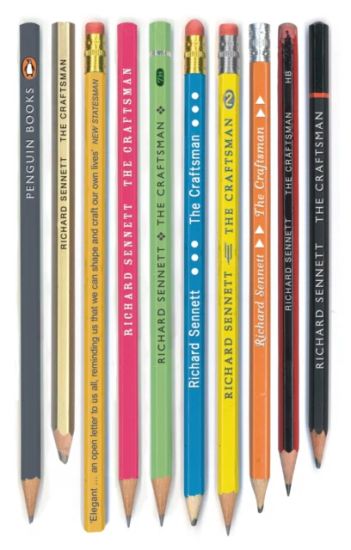
Why do people work hard, and take pride in what they do? This book discusses about what happens when people try to do a good job. It asks us to think about the true meaning of skill in the 'skills society' and argues that pure competition is a poor way to achieve quality work. Sennett suggests, instead, that there is a craftsman in every human being, which can sometimes be enormously motivating and inspiring - and can also in other circumstances make individuals obsessive and frustrated. The Craftsman shows how history has drawn fault-lines between craftsman and artist, maker and user, technique and expression, practice and theory, and that individuals' pride in their work, as well as modern society in general, suffers from these historical divisions. But the past lives of crafts and craftsmen show us ways of working (using tools, acquiring skills, thinking about materials) which provide rewarding alternative ways for people to utilise their talents. We need to recognise this if motivations are to be understood and lives made as fulfilling as possible.
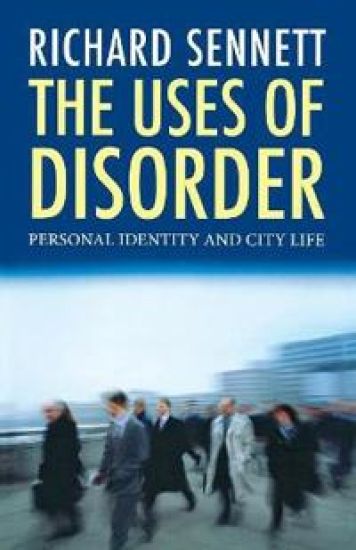
Richard Sennett is one of the world's leading sociologists, and this book, first published in 1970, was his first single-authored work. It launched his exploration of communities and how they live in cities, and outlined his view that order breeds narrow, violence-prone lives, while an 'equilibrium of disorder' brings vigour and diversity to urban life. The New York Times described it as 'the best available contemporary defence of anarchism'. 'The Uses of Disorder' followed the student and urban rebellions of the late 1960s. But it remains relevant to the problems of city life sixty years on. In a new preface Sennett considers his own objectives in writing the book and the enduring benefits of a strong and fresh urban experience in the twenty-first century. The body of the text remains unchanged, ready for a new generation of readers. Richard Sennett is professor of social and cultural theory at the London School of Economics, and Bemis Professor of Social Science at MIT.
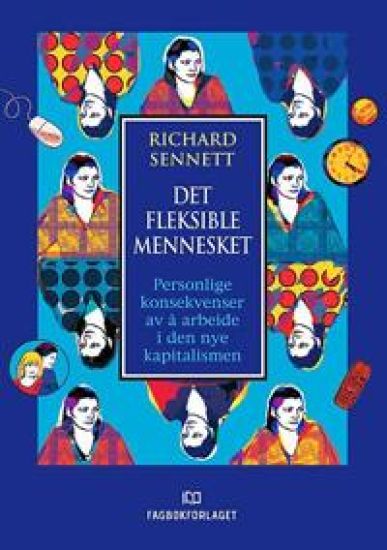
En sosiologisk klassiker! Med innledning av Tian Sørhaug. Den nye, fleksible kapitalismen fremtvinger spørsmål om vår karakter - de personlige egenskapene vi verdsetter ved oss selv, og som vi ønsker at også andre skal verdsette. Hvordan kan vi avgjøre hva som er av varig verdi i oss selv, når samfunnet er så utålmodig og kun fokuserer på det umiddelbare øyeblikk? Hvordan kan langsiktige mål etterstrebes innenfor en økonomi som er hengitt til det kortsiktige? Hvordan kan gjensidig lojalitet og forpliktelse opprettholdes av institusjoner som hele tiden plukkes fra hverandre og kontinuerlig blir reorganisert? I Det fleksible mennesket tar Richard Sennett for seg fleksibilitetens innvirkning på den personlige karakteren. Han utforsker kontrasten mellom den "gamle" kapitalismens rigide, hierarkiske organisasjoner og det nye arbeidslivets krav om fleksibilitet, omorganisering, risikotaking, kortvarig gruppearbeid og nettverksbygging. Boken tar opp sentrale tema for fag som sosiologi, arbeidslivs- og organisasjonsstudier, ledelse og etikk. Boken er en oversettelse av The Corrosion of Character (1998). Richard Sennett er professor i sosiologi ved London School of Economics og New York University. Tian Sørhaug er antropolog og senterleder ved Senter for teknologi, innovasjon og kultur, Universitetet i Oslo. «Sennett er en mester i å vikle ut store sammenhenger av konkrete hendelser og situasjoner. Denne teksten er breddfull av skarpt sette og beskrevne situasjoner. En samtale på et fly med en jaget og plaget konsulent eller arbeidsforholdene på et moderne bakeri blir til miniatyrportretter av levende mennesker fanget i egne liv. I situasjoner de både skaper og blir skapt av. Det handler om et vedvarende tema i Sennetts forskning; kapitalismens sosialpsykologi.» - Tian Sørhaug
Uppföljaren till klassikern "När karaktären krackelerar". Ett helt nytt sätt att se på arbete, talang och konsumtion har under det senaste decenniet slagit igenom på bred front. Det talas om flexiblitet och mobilitet, med exempel från en liten del av arbetslivet, där yrken inom högteknologi, media, finans och serviceyrken ryms. De flesta människor i världen arbetar inte för sådana företag, ändå har denna lilla skärva av ekonomin en enorm kulturell inverkan och dess löften om större frihet i det moderna samhället påverkar politiker och organisationer världen över. Sennett menar att institutioner, kunskap och konsumtionsmönster utan tvekan har förändrats under de senaste decennierna, men han menar tvärtom att dessa förändringar inte har gjort människor friare, utan tvärtom ställs dagens allt flexiblare individer inför nya utmaningar och nya hot.
Et utdrag fra den sosiologiske klassikeren The Fall of Public Man (1977). Sennett peker på det faktum at vi i vår tid søker personlig mening i det som burde vært upersonlig - f.eks. politikken. Oversatt av Eivind Tjønneland. Nr. 11 i Cappelens upopulære skrifter.
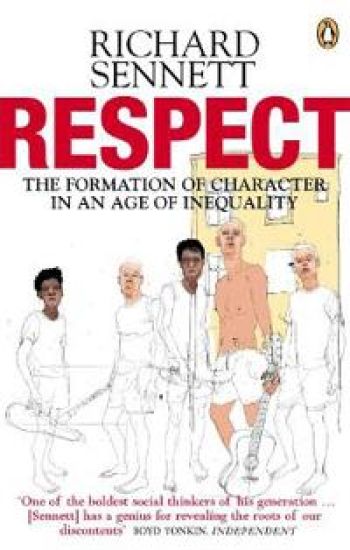
Richard Sennett's Respect: The Formation of Character in an Age of Equality is a provocative and timely examination of the forces that erode respect in modern society. 'Unlike food, respect costs nothing. Why, then, should it be in short supply?' Respect can be attained by gaining success, by developing talents, through financial independence and by helping others. But, Sennett argues, many who are not able to achieve the demands of today's meritocracy lose the esteem that should be given to them. From his childhood in a poor Chicago housing project to the contrasting methods of care practised by a nun and a social worker, from the harmonious interaction of musicians to the welfare system, Sennett explores the ways in which mutual respect can forge bonds across the divide of inequality. 'One of the boldest social thinkers of his generation ... [Sennett] has a genius for revealing the roots of our discontents' Boyd Tonkin, Independent 'Dazzling ... an elegant mix of interview, anecdote and wide research' Jenny Turner, Guardian 'This is the voice of a prophet' Scott McLemee, Washington Post 'Wise and humane ... Sennett has set his sights on that most daring of missions: to make the world a better place' Alain de Botton, Daily Telegraph 'Wholly engrossing ... [Sennett] explores ways of preserving an equality of respect' Alan Ryan, New York Review of Books Richard Sennett's previous works include The Fall of Public Man, The Corrosion of Character, Respect, Flesh and Stone and The Craftsman. He taught for many years at the New York Institute of the Humanities and is now a Professor at the London School of Economics.