Kirjojen hintavertailu – 12 859 819 kirjaa ja 27 kauppaa
Kirjailija
Richard Sennett
Kirjat ja teokset yhdessä paikassa: 51 kirjaa, julkaisuja vuosilta 1970–2025, suosituimpiin kuuluu David Chipperfield Architects: James-Simon-Galerie Berlin. Vertaile teosten hintoja ja tarkista saatavuus suomalaisista kirjakaupoista.
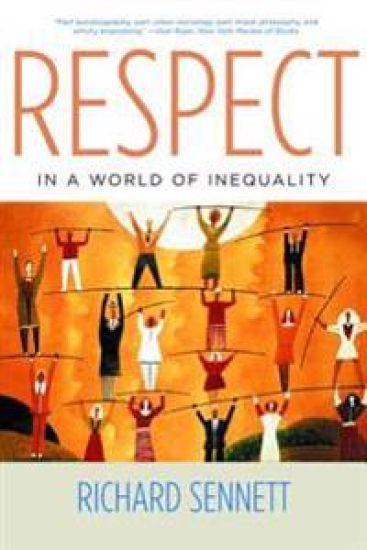
As various forms of social welfare were dismantled through the last decade of the 20th century, many thinkers argued that human well-being was best served by a focus on potential, not need. Richard Sennett disagrees. In this fusion of personal memoir and reflective scholarship, he addresses the need and social responsibility across the gulf of inequality. In the uncertain world of "flexible" social relationships, all are troubled by issues of respect: whether it is an employee stuck with insensitive management, a social worker trying to aid a resentful client, or a virtuoso artist and an accompanist aiming for a perfect duet.
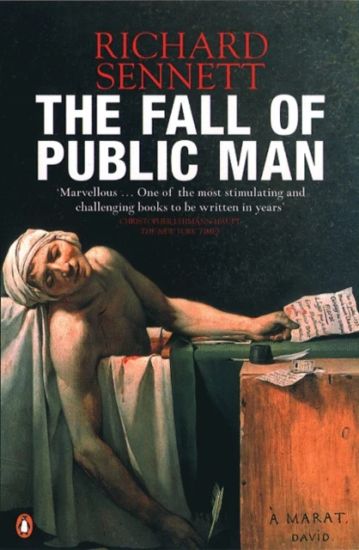
Richard Sennett's The Fall of Public Man examines the growing imbalance between private and public experience, and asks what can bring us to reconnect with our communities. Are we now so self-absorbed that we take little interest in the world beyond our own lives? Or has public life left no place for individuals to participate? Tracing the changing nature of urban society from the eighteenth century to the world we now live in, and the decline of involvement in political life in recent decades, Richard Sennett discusses the causes of our social withdrawal. His landmark study of the imbalance of modern civilization provides a fascinating perspective on the relationship between public life and the cult of the individual. 'Brilliant ... One admires the breadth of Professor Sennett's erudition, the reach of his historical imagination, the doggedness of his analysis ... Buy this book and read it. Ironically, it may provide a key to happiness' The New York Times
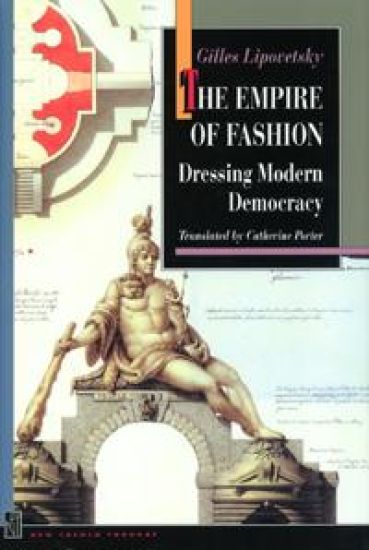
In a book full of playful irony and striking insights, the controversial social philosopher Gilles Lipovetsky draws on the history of fashion to demonstrate that the modern cult of appearance and superficiality actually serves the common good. Focusing on clothing, bodily deportment, sex roles, sexual practices, and political rhetoric as forms of "fashion," Lipovetsky bounds across two thousand years of history, showing how the evolution of fashion from an upper-class privilege into a vehicle of popular expression closely follows the rise of democratic values. Whereas Tocqueville feared that mass culture would create passive citizens incapable of political reasoning, Lipovetsky argues that today's mass-produced fashion offers many choices, which in turn enable consumers to become complex individuals within a consolidated, democratically educated society. Superficiality fosters tolerance among different groups within a society, claims Lipovetsky. To analyze fashion's role in smoothing over social conflict, he abandons class analysis in favor of an inquiry into the symbolism of everyday life and the creation of ephemeral desire. Lipovetsky examines the malaise experienced by people who, because they can fulfill so many desires, lose their sense of identity. His conclusions raise disturbing questions about personal joy and anguish in modern democracy.
In The Corrosion of Character, Richard Sennett, "among the country's most distinguished thinkers . . . has concentrated into 176 pages a profoundly affecting argument" (Business Week) that draws on interviews with dismissed IBM executives, bakers, a bartender turned advertising executive, and many others to call into question the terms of our new economy. In his 1972 classic, The Hidden Injuries of Class (written with Jonathan Cobb), Sennett interviewed a man he called Enrico, a hardworking janitor whose life was structured by a union pay schedule and given meaning by his sacrifices for the future. In this new book-a #1 bestseller in Germany-Sennett explores the contemporary scene characterized by Enrico's son, Rico, whose life is more materially successful, yet whose work lacks long-term commitments or loyalties. Distinguished by Sennett's "combination of broad historical and literary learning and a reporter's willingness to walk into a store or factory [and] strike up a conversation" (New York Times Book Review), this book "challenges the reader to decide whether the flexibility of modern capitalism . . . is merely a fresh form of oppression" (Publishers Weekly, starred review). Praise for The Corrosion of Character: "A benchmark for our time."—Daniel Bell "[A]n incredibly insightful book."—William Julius Wilson "[A] remarkable synthesis of acute empirical observation and serious moral reflection."—Richard Rorty "[Sennett] offers abundant fresh insights . . . illuminated by his concern with people's struggle to give meaning to their lives."—[Memphis] Commercial Appeal
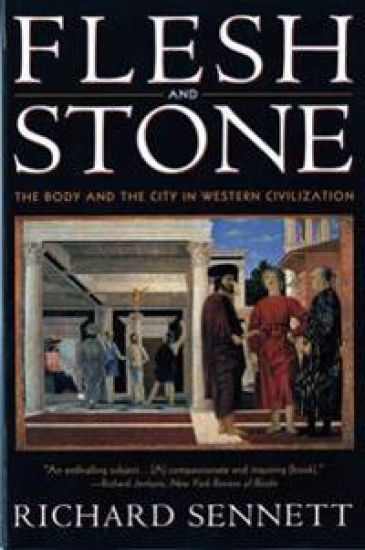
Flesh and Stone is the story of the deepest parts of life-how women and men moved in public and private spaces, what they saw and heard, the smells that assailed them, where they ate, how they dressed, the mores of bathing and of making love-all in the architecture of stone and space from ancient Athens to modern New York. Early in Flesh and Stone, Richard Sennett probes the ways in which the ancient Athenians experienced nakedness, and the relation of nakedness to the shape of the ancient city, its troubled politics, and the inequalities between men and women. The story then moves to Rome in the time of the Emperor Hadrian, exploring Roman beliefs in the geometrical perfection of the body. The second part of the book examines how Christian beliefs about the body related to the Christian city-the Venetian ghetto, cloisters, and markets in Paris. The final part of Flesh and Stone deals with what happened to urban space as modern scientific understanding of the body cut free from pagan and Christian beliefs. Flesh and Stone makes sense of our constantly evolving urban living spaces, helping us to build a common home for the increased diversity of bodies that make up the modern city.
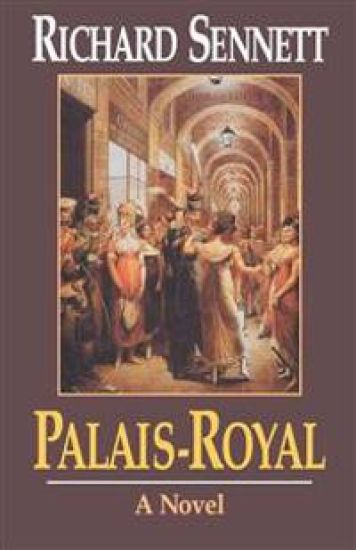
Ablaze with intellectual and social change, Paris in the 1830s and 1840s beckons to two English brothers--Frederick and Charles Courtland, an architect and a priest--each of whom is struggling for self-definition and social recognition. Of their lives and this world Sennett has made a remarkable work of fiction that transports the reader into nineteenth century Europe and into the nature and inconsistencies of culture and faith, and the way each is shaped by the passage of time.
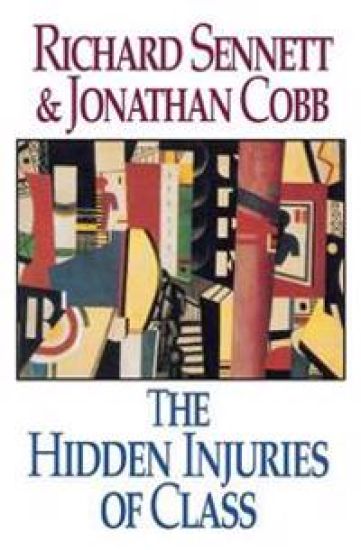
The authors conclude that in the games of hierarchical respect, no class can emerge the victor; and that true egalitarianism can be achieved only by rediscovering diverse concepts of human dignity. Examining personal feelings in terms of a totality of human relations, and looking beyond the struggle for economic survival, The Hidden Injuries of Class takes an important step forward in the sociological critique of everyday life.
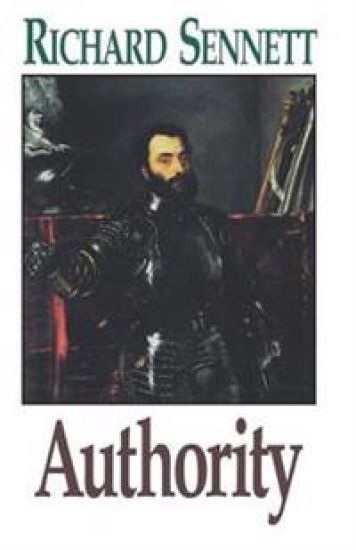
A master of the interplay between politics and psychology, Richard Sennett here analyzes the nature, the role, and the faces of authority--authority in personal life, in the public realm, authority as an idea. Why have we become so afraid of authority? What real needs for authority do we have--for guidance, stability, images of strength? What happens when our fear of and our need for authority come into conflict? In exploring these questions, Sennett examines traditional forms of authority (The father's in the family, the lord's in society) and the dominant contemporary styles of authority, and he shows how our needs for, no less than our resistance to, authority have been shaped by history and culture, as well as by psychological disposition.
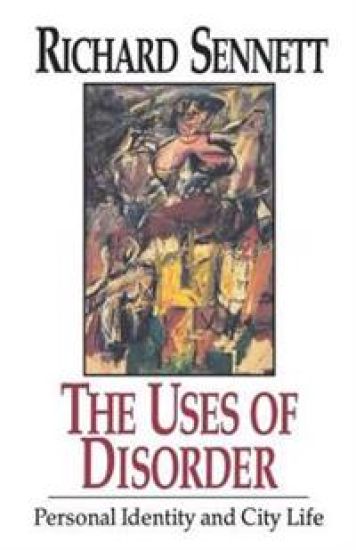
The distinguished social critic Richard Sennett here shows how the excessively ordered community freezes adults--both the young idealists and their security-oriented parents--into rigid attitudes that stifle personal growth. He argues that the accepted ideal of order generates patterns of behavior among the urban middle classes that are stultifying, narrow, and violence-prone. And he proposes a functioning city that can incorporate anarchy, diversity, and creative disorder to bring into being adults who can openly respond to and deal with the challenges of life.
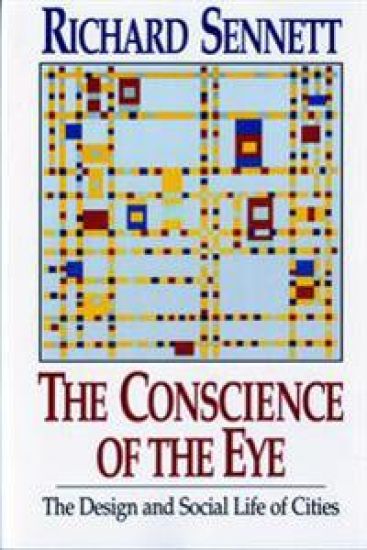
From the assembly halls of Athens to the Turkish baths of New York's Lower East Side, from eighteenth-century English gardens to the housing projects of Harlem-a study of the physical fabric of the city as a mirror of Western society and culture.