

Kirjailija
Richard Taylor
Kirjat ja teokset yhdessä paikassa: 167 kirjaa, julkaisuja vuosilta 1979–2026, suosituimpiin kuuluu Social Work. Vertaile teosten hintoja ja tarkista saatavuus suomalaisista kirjakaupoista.
167 kirjaa
Kirjojen julkaisuvuodet: 1979–2026.
Richard Taylor has lived for five years with a diagnosis of dementia probably of the Alzheimer's type. A former psychologist, he is now a champion for individuals with early-stage and early-onset Alzheimer's disease. Richard served on the board of the Houston and Southeast Texas Alzheimer's Association and is now a member of a special committee of the National Alzheimer's Association looking at how to evaluate and provide effective support to individuals in the early stages of the disease. He has started over 50 chat rooms worldwide for people with Alzheimer's disease and their loved ones and he is also the editor of a quarterly newsletter for people with early-onset, early-stage Alzheimer's disease and their caregivers. Originally, Richard started writing essays to better understand for himself what was going on inside of him. He now writes to share his experiences with other individuals with the disease and their caregivers. His insights into himself and the disease are always honest, direct, poignant, and sometimes even witty. His essays have been published in ""Alzheimer's Care Quarterly"". Richard lives in Cypress, Texas with his spouse Linda and his Bouvier des Flandres dog, Annie. His son and family live across the street from him. He spends his days playing with his two grandchildren, gardening, and writing.2009 John Mackey Award for Exellence in Dementia Care2009 Carter Williams Legacy Fund2007 Book of the Year (Consumer Health) from American Journal Nursing 2007 National Mature Media (Bronze Award Winner)

Blends fictional elements with historical fact in a historical novel about Jerome Clark, a quiet orphan boy who follows a relative into the ranks of the Confederate infantry, only to be hanged as a Confederate guerrilla in the final days of the war.
Vsevolod Pudovkin – Selected Essays
Vsevolod Pudovkin; Richard Taylor
Seagull Books London Ltd
2006
nidottu
Vsevolod Pudovkin (1893-1953) was one of the leading Soviet film directors in the 'golden age' of silent cinema in the 1920s. His films - especially "The Mother", "The End of St Petersburg" and "Storm Over Asia" - are classics of silent cinema. Like Eisenstein, Pudovkin was also a major theorist of film. This new translation of Pudovkin's seminal writings brings together his most important essays from his two key books, "Film Technique" and "Film Acting". The essays highlight the development of Pudovkin's revolutionary thinking on scripts, directing, time, sound, and acting.

Explores the principal features of a church or cathedral and what each represents, such as the significance of church layout, the importance of such details as the use of colors or letters, the identity of people and scenes, and the symbolism of animals and plants. Original.

Finally, a book that will make readers laugh as they have never laughed before. Even if you are a miserable person and do not like laughing at all, you surely will be laughing now! Trust me on this! You can thank me later!
Blackstone's Guide to the Criminal Justice Act 2003
Richard Taylor; Martin Wasik; Roger Leng
Oxford University Press
2004
nidottu
This book analyses, explains, and evaluates the Government's flagship criminal justice legislation, the Criminal Justice Act 2003. It provides an accessible commentary on the wide ranging and complex changes introduced by the Act, which will leave few areas of the criminal justice system untouched. The Act starts with changes to police powers, bail, cautioning, and pre-trial disclosure, and moves on to the abolition of committal proceedings and the introduction of the possibility of trials on indictment without juries. It then goes on to provide for prosecution appeals and a broad range of offences where a trial following acquittal can exceptionally be allowed. The rules on evidence are significantly reformed providing firstly, a much wider basis on which evidence of bad character (including previous convictions) can be admitted, and secondly, for the admissibility of hearsay 'where it is not contrary to the interests of justice' to admit it. The Act also provides a major restatement and reform of the sentencing framework and the provisions for release on licence, and abolishes most of the categories of exemption from the duty to perform jury service. Anyone working in the Criminal Justice System or interested in its operation will welcome this guide, which provides invaluable insights into the purposes of the Act and a detailed explanation of its provisions. The book also includes the full text of the Act.
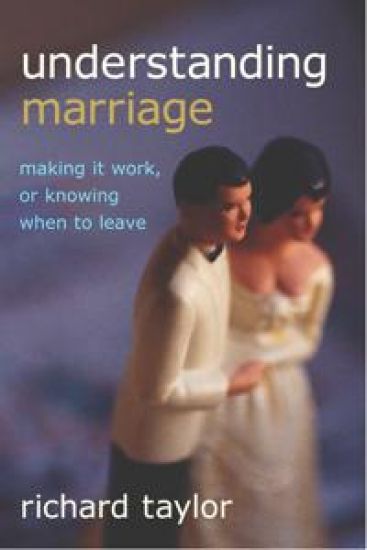
Based on numerous interviews with people from both good and failed marriages, his own experience, and years of thinking about the subject, philosopher/marriage counsellor Richard Taylor has developed a set of compelling proposals for reforming marriage. In a culture that produces marital unhappiness by fostering unrealistic romantic fantasies about love and marriage, Taylor's radical prescription for reforming our attitudes toward marriage makes eminently good sense.
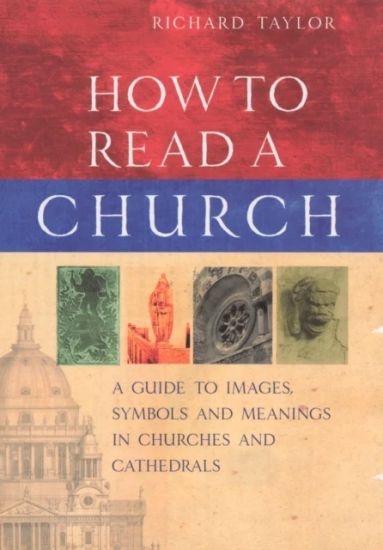
'[a] gem of a book' SpectatorChurches and cathedrals were originally built to be read. They are alive with images and symbols. But today few people, including regular visitors, truly understand the wealth of meaning in what they find there. How to Read a Church is a fascinating guide for anybody who wants to know more about what they see in a church or cathedral. It explains the significance of church layout, the symbolism of key scenes and the importance of details such as the use of colours and letters. It is an essential guide to the history, meanings and messages of these beautiful buildings and the treasures they contain.

Writer, surfer, and househusband Richard Taylor is mad about beaches and islands, and was inspired by a house exchange that whisked him and his family from a freezing Ottawa winter to a year of some of the world's best surf on the east coast of Australia. In an era of packaged paradises and cyber surfers, the forty-something writer's first case of the mid-life blues seduced him into recapturing his youthful romance with surfing.
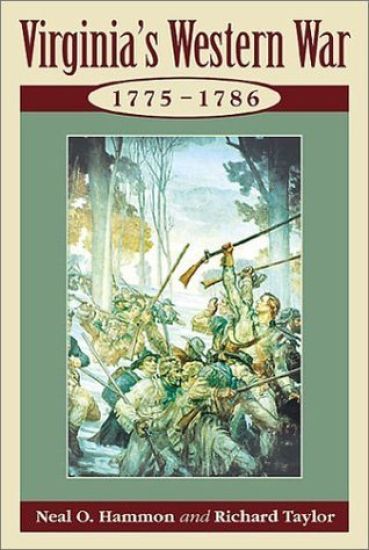
More than any other colony, Virginia looked to the West for its future. After the French and Indian War, the Royal Proclamation of 1754 declared that officers and soldiers would be paid with parcels of Western land, vaguely extending about eighty miles in all directions from Lexington. By 1768 most of the area had been explored by the Long Hunters, including Daniel and Squire Boone, James Knox, Hasker Mansker, and the Skagg Brothers. These brave, enterprising men battled both with nature and with the Indians, bringing their families to settle this rough frontier. "Virginia's Western War" traces the little-known period of colonial history.
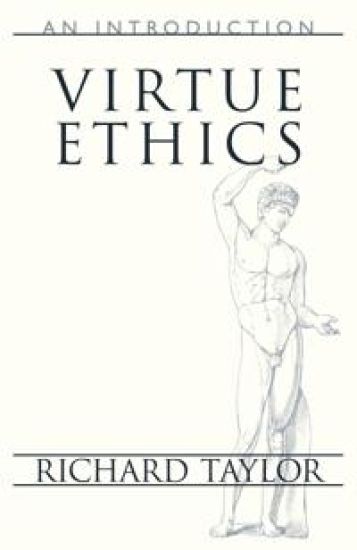
In this fresh evaluation of Western ethics, noted philosopher Richard Taylor argues that philosophy must return to the classical notion of virtue as the basis of ethics. To ancient Greek and Roman philosophers, ethics was chiefly the study of how individuals attain personal excellence, or "virtue," defined as intellectual sophistication, wisdom, strength of character, and creativity. With the ascendancy of the Judeo-Christian ethic, says Taylor, this emphasis on pride of personal worth was lost. Instead, philosophy became preoccupied with defining right and wrong in terms of a divine lawgiver, and the concept of virtue was debased to mean mere obedience to divine law. Even today, in the absence of religious belief, modern thinkers unwittingly continue this legacy by creating hairsplitting definitions of good and evil. Taylor points out that the ancients rightly understood the ultimate concern of ethics to be the search for happiness, a concept that seems to have eluded contemporary society despite unprecedented prosperity and convenience. Extolling Aristotle's Nicomachean Ethics, Taylor urges us to reread this brilliant and still relevant treatise, especially its emphasis on an ethic of aspiration.

The Geometry and Cohomology of Some Simple Shimura Varieties
Michael Harris; Richard Taylor
Princeton University Press
2001
pokkari
This book aims first to prove the local Langlands conjecture for GLn over a p-adic field and, second, to identify the action of the decomposition group at a prime of bad reduction on the l-adic cohomology of the "simple" Shimura varieties. These two problems go hand in hand. The results represent a major advance in algebraic number theory, finally proving the conjecture first proposed in Langlands's 1969 Washington lecture as a non-abelian generalization of local class field theory. The local Langlands conjecture for GLn(K), where K is a p-adic field, asserts the existence of a correspondence, with certain formal properties, relating n-dimensional representations of the Galois group of K with the representation theory of the locally compact group GLn(K). This book constructs a candidate for such a local Langlands correspondence on the vanishing cycles attached to the bad reduction over the integer ring of K of a certain family of Shimura varieties. And it proves that this is roughly compatible with the global Galois correspondence realized on the cohomology of the same Shimura varieties. The local Langlands conjecture is obtained as a corollary. Certain techniques developed in this book should extend to more general Shimura varieties, providing new instances of the local Langlands conjecture. Moreover, the geometry of the special fibers is strictly analogous to that of Shimura curves and can be expected to have applications to a variety of questions in number theory.
Schaum's Outline of Investments
Jack Clark Francis; Richard Taylor
McGraw-Hill Professional
2000
nidottu
Master investments with "Schaum's" - the high-performance study guide. It will help you cut study time, hone problem-solving skills, and achieve your personal best on exams! Students love "Schaum's Outlines" because they produce results. Each year, hundreds of thousands of students improve their test scores and final grades with these indispensable study guides. Get the edge on your classmates. Use "Schaum's"! If you don't have a lot of time but want to excel in class, this book helps you: brush up before tests; find answers fast; study quickly and more effectively; get the big picture without poring over lengthy textbooks. Inside, you will find: 396 solved problems, including step-by-step solutions; hundreds of additional practice problems, with answers supplied; clear explanations of all major topics covered in investment courses, including common stock valuation, portfolio analysis, and international investing; easy-to-understand coverage of put and call options, futures, arbitrage pricing theory. The content is organized for compatibility with college and university investment courses. If you want top grades and thorough understanding of investments, this powerful study tool is the best tutor you can have!

The discussion of good and evil must not be confined to the sterile lecture halls of academics but related instead to ordinary human feelings, needs, and desires, says noted philosopher Richard Taylor. Efforts to understand morality by exploring human reason will always fail because we are creatures of desire as well. All morality arises from our intense and inescapable longing. The distinction between good and evil is always clouded by rationalists who convert the real problems of ethics into complex philosophical puzzles. In the first part of Good and Evil, Taylor looks for a more meaningful conception by reexamining and rejecting the whole rationalistic tradition that dominates philosophical ethics. The second part provides an empirical explanation of good and evil, noting that one does not have to look too far to find prime examples of the failure of fixed moral rules. Including important commentary on Joseph Fletcher's groundbreaking situation ethics, and Aristotle's virtues (e.g., magnanimity and pride), Taylor rounds out the book by developing a philosophy of aspiration--personal worth as an ethical ideal--to replace the morality of duty. He offers a modified form of situation ethics to fit the contemporary problems we face.
This highly literate account by the son of President Zachary Taylor follows the author's Confederate commands in all three major theatres of the war, and provides a unique view of the Reconstruction period. Taylor possessed literary art that approached the first rank.-Douglas Southall Freeman.
The Report of the National Committee of Inquiry into Higher Education chaired by Sir Ron Dearing was published in July 1997. It represents the first officially sponsored systematic examination of the United Kingdom's system of higher education since the Robbins Report over 25 years ago. This book is an authoritative evaluation of the cogency, relevance and prospects for success of the Dearing vision and recommendations. Like the members of the comittee, the authors have sought to take a holistic view; to consider the underlying implications of genuine lifelong learning for the university system, and how institutions and the system will need to adjust. The outcomes are threefold: a description of what a UK higher education system that is genuinely part of a national learning society might look like, as well as the impetus this provides for radical reform; identification of features of its historical (especially recent) development, as well as wider social forces, which might inhibit or encourage its performance in this way; and an assessment of the coherence, desirability and practicality of the Dearing proposals in bringing about this end.
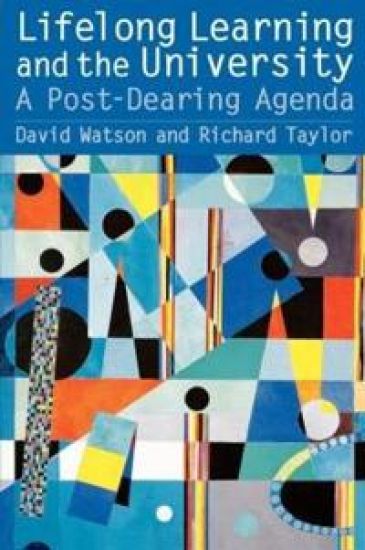
The Report of the National Committee of Inquiry into Higher Education chaired by Sir Ron Dearing was published in July 1997. It represents the first officially sponsored systematic examination of the United Kingdom's system of higher education since the Robbins Report over 25 years ago. This book is an authoritative evaluation of the cogency, relevance and prospects for success of the Dearing vision and recommendations. Like the members of the comittee, the authors have sought to take a holistic view; to consider the underlying implications of genuine lifelong learning for the university system, and how institutions and the system will need to adjust. The outcomes are threefold: a description of what a UK higher education system that is genuinely part of a national learning society might look like, as well as the impetus this provides for radical reform; identification of features of its historical (especially recent) development, as well as wider social forces, which might inhibit or encourage its performance in this way; and an assessment of the coherence, desirability and practicality of the Dearing proposals in bringing about this end.