Kirjojen hintavertailu – 12 859 828 kirjaa ja 27 kauppaa

Kirjailija

Richard Taylor

Kirjat ja teokset yhdessä paikassa: 167 kirjaa, julkaisuja vuosilta 1979–2026, suosituimpiin kuuluu Social Work. Vertaile teosten hintoja ja tarkista saatavuus suomalaisista kirjakaupoista.

167 kirjaa

Kirjojen julkaisuvuodet: 1979–2026.

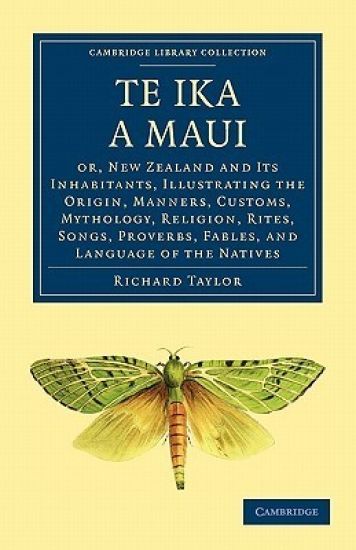
Te Ika a Maui

Te Ika a Maui

Richard Taylor

Cambridge University Press
2010
pokkari
Reverend Richard Taylor (1805–1873) was an English missionary, who wrote extensively on Maori culture and the plant and animal life of New Zealand. Taylor graduated from Queens' College, Cambridge in 1828 and was ordained as an Anglican priest the same year. After serving as a curate in the Isle of Ely, Taylor was appointed as a missionary to New Zealand for the Church Missionary Society. He arrived in Australia in 1836 and landed in New Zealand in 1839. Taylor quickly became a peacekeeper between the different Maori tribes in his district. This volume, first published in 1855, provides a detailed account of Maori mythology and culture with a description of the plant life, animal life and geology of the North Island. Taylor strongly condemns contemporary (nineteenth-century) attitudes to Maori culture and demonstrates the complexity of their society in this sympathetic book.

Knowledge Diffusion and Innovation

Knowledge Diffusion and Innovation

Piergiuseppe Morone; Richard Taylor

Edward Elgar Publishing Ltd
2010
sidottu
Modern economies are described as ‘knowledge based’. This book investigates the meaning of such a statement, assessing the relevance of knowledge and the channels through which knowledge is exchanged, both from a theoretical and an empirical perspective. Moving within the realm of complexity theory, the authors provide a methodological assessment of the knowledge diffusion debate as well as presenting theoretical and applied models of knowledge diffusion and innovation. They illustrate how geography plays a role in shaping innovative patterns and how dense networks generally result in more innovative environments. The book concludes that establishing the right connections within such dense networks appears to be more crucial than any other factor, thus highlighting the importance of linkages (or the effects of their absence) within innovation systems. Proposing a taxonomy of knowledge-sharing patterns, this book will be warmly welcomed by academics, researchers and postgraduate students in the areas of the economics of innovation, evolutionary economics and knowledge economics.
Film Propaganda

Film Propaganda

Richard Taylor

I.B. Tauris
2009
nidottu
Lenin, Stalin, Trotsky, Hitler and Goebbels all regarded cinema as their most important weapon for mass political propaganda. This revised and expanded edition of "Film Propaganda" examines the ways in which cinema was used for political purposes by two of the most highly politicised societies in twentieth-century European history. "Film Propaganda" is still to date the only book in English to compare these two cinemas and examine both in depth. Richard Taylor demonstrates how cinema was brought under political control in each country and goes on to explore the themes and stereotypes projected by the feature films that were produced. In so doing, he highlights the means used by the authorities to condition and control the filmgoer as individual spectator and as member of a mass audience. This process is examined in greater depth in a series of detailed analyses of films selected for their particular political significance, including "October", "Alexander Nevsky", "Triumph of the Will", "The Wandering Jew" and, new to this edition, the 1949 Stalin cult film, "The Fall of Berlin". Also new to this edition are appendices with details of films viewed by Hitler and Goebbels, which were captured by the Red Army from Berlin 's ruins in 1945 and were considered by Stalin for release during the film famine years after the war.
Sue Mundy

Sue Mundy

Richard Taylor

The University Press of Kentucky
2009
nidottu
On March 15, 1865, three weeks before the end of the Civil War, twenty-year-old M. Jerome Clarke was hanged as a Confederate guerrilla in Louisville, Kentucky, as a crowd of thousands looked on. In the official charges against him, Clarke's description included the alias "Sue Mundy." By the time of his execution, Sue Mundy had earned a reputation as the region's most dangerous and enigmatic female outlaw. Sue Mundy is the story of Jerome Clarke, a quiet orphan boy who follows a near relative into the ranks of the Confederate infantry. Following his capture by Union forces and his subsequent escape, Jerome joins John Hunt Morgan's notorious Raiders. After Morgan's death, Jerome becomes a Confederate ""irregular,"" one of the many guerrillas in Kentucky who ignored the rules of military engagement and the laws of the land. As stability and familiarity disappear from his and his compatriots' lives, Jerome is unwillingly transfigured by the chaos of war and the efforts of an ambitious journalist into Sue Mundy, she-scourge of Kentucky Unionists. Richard Taylor seamlessly joins narrative and history to tell the compelling story of the Civil War in a state dangerously divided, neighbor against neighbor. Meticulously researched and elegantly written, Sue Mundy reveals the psychology of one of the Civil War's most fascinating figures while providing an accurate account of this tumultuous period in American history.
The Politics of the Soviet Cinema 1917–1929

The Politics of the Soviet Cinema 1917–1929

Richard Taylor

Cambridge University Press
2008
pokkari
Much has been written about Soviet literature and its political significance in the years following the October Revolution, but little has been written about the cinema in the same context. And yet in 1922 Lenin said, 'Of all the arts, for us the cinema is the most important.' What did he mean? This book looks at the Soviet cinema in its formative period from the political point of view, examining both the attitude of the authorities towards the cinema and the actual use to which the cinema was put. It demonstrates how, even at the height of the 'Golden Era of the Soviet film', the Bolsheviks repeatedly failed to organise the cinema successfully as an effective propaganda weapon. The book provides an illuminating background of the political history of the Soviet cinema in the twenties against which its most famous films can be re-examined.
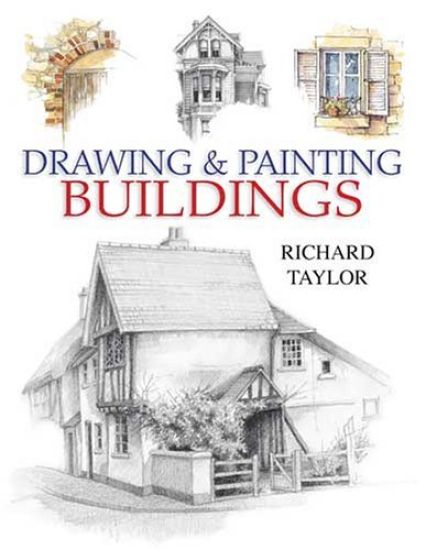
Drawing and Painting Buildings

Drawing and Painting Buildings

Richard Taylor

David Charles
2008
nidottu
"Drawing & Painting Buildings" is a comprehensive and practical guide full of advice and inspiration for anyone wishing to capture the beauty of the urban landscape. Detailed artworks in a range of styles and media are thoroughly annotated to demonstrate key techniques and important details. It includes thorough studies of a wide range of different architectural styles, from town houses and rural cottages to churches and continental cafes. Taylor's own exquisite drawings and paintings demonstrate the quality of the results that can be achieved by following his helpful guidance and advice.