
Kirjailija
Richard Wagner
Kirjat ja teokset yhdessä paikassa: 655 kirjaa, julkaisuja vuosilta 1928–2026, suosituimpiin kuuluu Siegfried. Vertaile teosten hintoja ja tarkista saatavuus suomalaisista kirjakaupoista.
655 kirjaa
Kirjojen julkaisuvuodet: 1928–2026.
Les Opéras de Wagner: Tannhaeuser, Lohengrin, Parsifal. T. Ier (Éd.1896)
Richard Wagner
Hachette Livre - BNF
2012
pokkari
Tannhaeuser, Ou Le Tournoi Des Chanteurs À La Wartburg (Éd.1896)
Richard Wagner
Hachette Livre - BNF
2012
pokkari
Secrecy, Sophistry and Gay Sex In The Catholic Church
Richard Wagner
The Nazca Plains Corporation
2012
pokkari

Philadelphia Beer: A Heady History of Brewing in the Cradle of Liberty
Richard Wagner
History Press
2012
nidottu
Discover and celebrate the untapped history of Philadelphia beer. The finely aged history of Philadelphia brewing has been fermenting since before the crack appeared in the Liberty Bell. By the time thirsty immigrants made the city the birthplace of the American lager in the nineteenth century, Philadelphia was already on the leading edge of the country's brewing technology and production. Today, the City of Brotherly Love continues to foster that enterprising spirit of innovation with an enviable community of bold new brewers, beer aficionados and brewing festivals. Pennsylvania brewery historian Rich Wagner takes readers on a satisfying journey from the earliest ale brewers and the heyday of lager beer through the dismally dry years of Prohibition and into the current craft-brewing renaissance
Tristan Et Yseult. Poème Et Musique de Richard Wagner. Version Française de Victor Wilder (Éd.1886)
Richard Wagner
Hachette Livre - BNF
2012
pokkari
Richard Wagner's Briefe an Theodor Uhlig, Wilhelm Fischer, Ferdinand Heine
Richard Wagner
Nabu Press
2011
pokkari

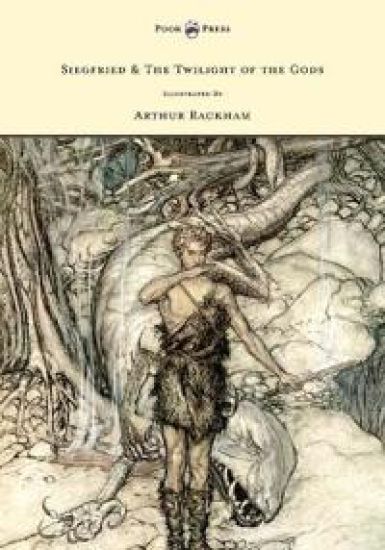
Siegfied & The Twilight of the Gods - Illustrated by Arthur Rackham
Richard Wagner
Read Books
2011
pokkari
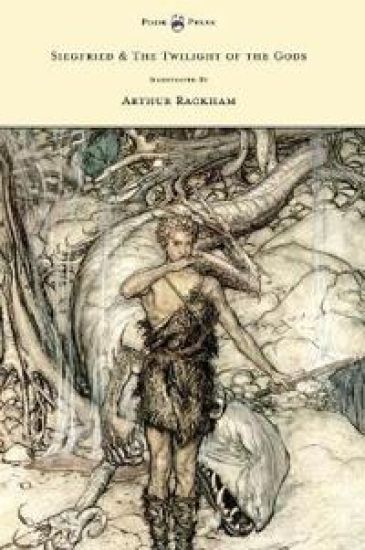
Siegfied & The Twilight of the Gods - Illustrated by Arthur Rackham
Richard Wagner
READ BOOKS
2011
sidottu
Halvin toimitettuna 50,40 €
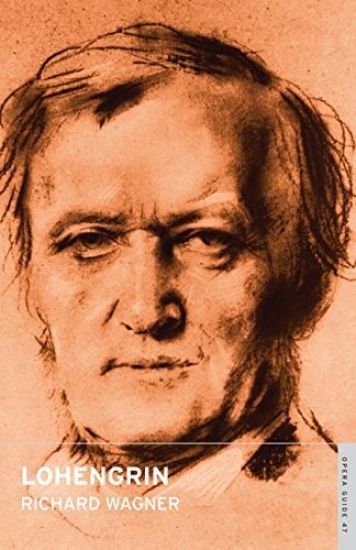
The legend of the Swan Knight who rescues a princess from the forces of pagan evil is one of Christian Europe’s foundation myths. Lohengrin transformed Wagner into an international figure almost overnight, and it remained his most popular work throughout the nineteenth century. Thomas Grey proposes that this was because it offered a “cautious taste” of his later works, while preserving some of the familiar traditions of French grand opera. John Deathridge asks why Wagner denied its Christian symbolism, and Janet Nelson argues that his vision of the Christian Middle Ages prefigured a modern historical approach. The English translation is by Amanda Holden. Contents: Wagner’s ‘Alter Ego’, John Deathridge; Wagner’s ‘Lohengrin’: between Grand Opera and Musikdrama, Thomas S. Grey; History, Women’s History and beyond History in ‘Lohengrin’, Janet L. Nelson; Lohengrin in Brabant, Jacob and Wilhelm Grimm; Lohengrin: Poem by Richard Wagner; Lohengrin: English Translation by Amanda Holden

What can explain Wagner’s obsession with Tannhäuser, which he first conceived in 1845 and still considered unfinished at his death in 1883? Describing of the struggle of a man torn between erotic love and spiritual fulfilment, the opera contains the kernels of all his later works: man’s need for love and artistic satisfaction, his desire for an existence beyond death, the operation of memory and the nature of madness. The essays in this volume examine the legends which Wagner chose to weave into his text, while Carolyn Abbate also considers the effect of his many revisions upon the score, pointing out that the initial idea already involved a contrast of musical language to focus the conflict. Contents: ‘Tannhäuser’ – an Obsession, Mike Ashman; Tanhusære, Danheüser and Tannhäuser, Stewart Spencer; Wagner’s Most Medieval Opera, Timothy McFarland; Orpheus and the Underworld: The Music of Wagner’s ‘Tannhäuser’, Carolyn Abbate; Tannhäuser: Poem by Richard Wagner; Tannhäuser: English translation by Rodney Blumer
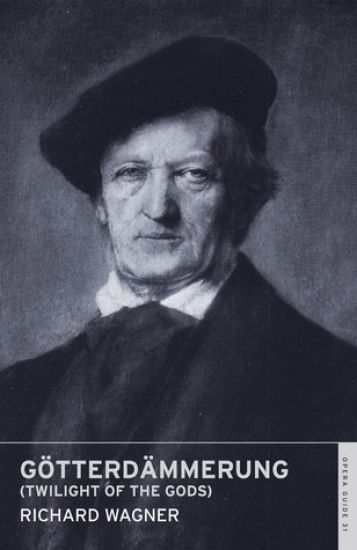
Richard Wagner’s fifteen-hour operatic cycle The Ring of the Nibelung ends with this great music drama. Michael Tanner’s essay tackles the scale and meaning not just of this work but of Wagner’s whole undertaking, showing that Götterdämmerung is – for all its length – his fastest-moving drama. Composer Robin Holloway brings the focus of creative genius to his discussion of the score, while Christopher Winkle’s article analyses Brunnhilde’s concluding monologue. The ninety numbered musical themes of the Thematic Guide are cross-referenced to the other Ring guides. Contents: An Introduction to the End, Michael Tanner; Motif, Memory and Meaning in ‘Twilight of the Gods’, Robin Holloway; The Questionable Lightness of Being: Brunnhilde’s Peroration to ‘The Ring’, Christopher Wintle; Götterdämmerung: Poem by Richard Wagner; Twilight of the Gods: English translation by Andrew Porter