Kirjojen hintavertailu – 12 859 819 kirjaa ja 27 kauppaa

Kirjailija

Richard Wagner

Kirjat ja teokset yhdessä paikassa: 655 kirjaa, julkaisuja vuosilta 1928–2026, suosituimpiin kuuluu Siegfried. Vertaile teosten hintoja ja tarkista saatavuus suomalaisista kirjakaupoista.

655 kirjaa

Kirjojen julkaisuvuodet: 1928–2026.

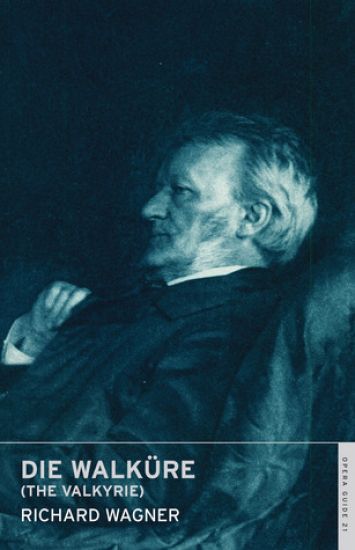
Die Walküre (The Valkyrie)

Die Walküre (The Valkyrie)

Richard Wagner

Overture Publishing
2011
nidottu
“Things like this are written only for people who have good powers of endurance (so really for nobody!)”, wrote Wagner about Die Walküre. Yet, as Geoffrey Skelton points out, the opera has enjoyed a separate popularity and existence from the Ring Cycle. George Gillespie shows just how the string of mythical events was converted into a drama remarkable for its concentrated excitement and fine construction. Barry Millington introduces the web of motifs in the complex score. The English version, with Elizabeth Forbes’s translation of the verses that Wagner did not eventually set to music but retained as footnotes to his published version, is by acclaimed translator Andrew Porter. Contents: A Conflict of Power and Love, Geoffrey Skelton; Chronology of the Composition of ‘The Valkyrie’; An Introduction to the Music of ‘The Valkyrie’, Barry Millington; New Myths for Old, George Gillespie; Translating ‘The Ring’, Andrew Porter; Die Walküre: Poem by Richard Wagner; The Valkyrie: English translation by Andrew Porter
Tristan und Isolde (Tristan and Isolde)

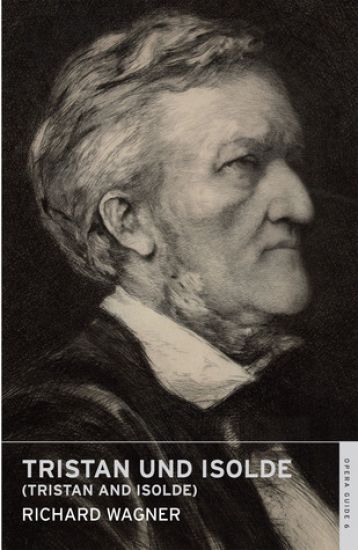
Tristan und Isolde (Tristan and Isolde)

Richard Wagner

Overture Publishing
2011
nidottu
‘A Landmark in Musical History’ is John Luke Rose’s title for the introduction to this extraordinary piece of theatre. It belongs to the German tradition of mystical writing, and a short note on the poem itself by Martin Swales and Timothy McFarland elucidates some of Wagner’s literary techniques. Anthony Negus, who assisted Reginald Goodall on the WNO production of Tristan und Isolde, has contributed a penetrating analysis of the musical structure of the opera, while Patrick Carnegy assesses the remarkable solutions to staging an opera which some argue is best experienced with your back to the performers. Contents: Synopsis, Timothy McFarland; ‘Tristan and Isolde’: A Landmark in Musical History, John Luke Rose; A Musical Commentary, Anthony Negus; The staging of ‘Tristan and Isolde’: Landmarks along the Appian Way, Patrick Carnegy; An Introduction to the German Text, Martin Swales and Timothy McFarland; Tristan und Isolde: Poem by Richard Wagner; Tristan and Isolde: English Translation by Andrew Porter
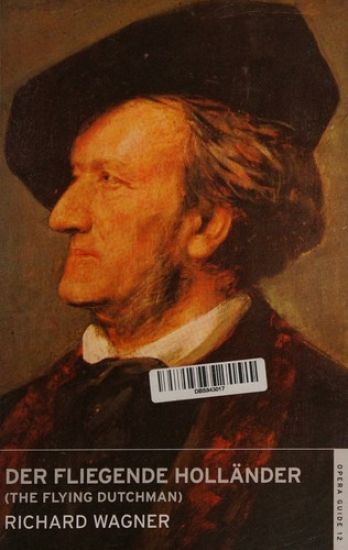
Der fliegende Holländer (The Flying Dutchman)

Der fliegende Holländer (The Flying Dutchman)

Richard Wagner

Overture Publishing
2011
nidottu
‘A Landmark in Musical History’ is John Luke Rose’s title for the introduction to this extraordinary piece of theatre. It belongs to the German tradition of mystical writing, and a short note on the poem itself by Martin Swales and Timothy McFarland elucidates some of Wagner’s literary techniques. Anthony Negus, who assisted Reginald Goodall on the WNO production of Tristan und Isolde, has contributed a penetrating analysis of the musical structure of the opera, while Patrick Carnegy assesses the remarkable solutions to staging an opera which some argue is best experienced with your back to the performers. Contents: Behind ‘The Flying Dutchman’, John Warrack; An introduction to ‘The Flying Dutchman’, John Deathridge; Loneliness, Love and Death, William Vaughan; The Overture to ‘The Flying Dutchman’, Richard Wagner; Remarks on Performing ‘The Flying Dutchman’, Richard Wagner; Der fliegende Holländer: Poem by Richard Wagner; The Flying Dutchman: English translation by David Pountney
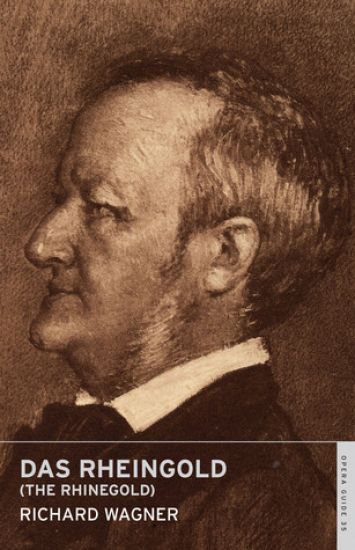
Das Rheingold (The Rhinegold)

Das Rheingold (The Rhinegold)

Richard Wagner

Overture Publishing
2011
nidottu
Das Rheingold, the opening of Wagner’s four-part The Ring of the Nibelung, stands out as more genteel and picturesque than the others. But it immediately establishes the huge scale of the overall work, and the extraordinary musical language that will be displayed throughout. It is a miracle of musical history that Wagner’s 1850 conception could be brought to completion, in an organic whole, some twenty-five years later. Stewart Spencer discusses the way in which Wagner fuses genuine mythology with his own invention and John Deathridge places the opera in the context of The Ring and its century. Contents: The Beginning of ‘The Ring’, John Deathridge; ‘The Rhinegold’ – The Music, Roger North; Language and Sources of ‘The Ring’, Stewart Spencer; Das Rheingold: Poem by Richard Wagner; The Rhinegold: English translation by Andrew Porter
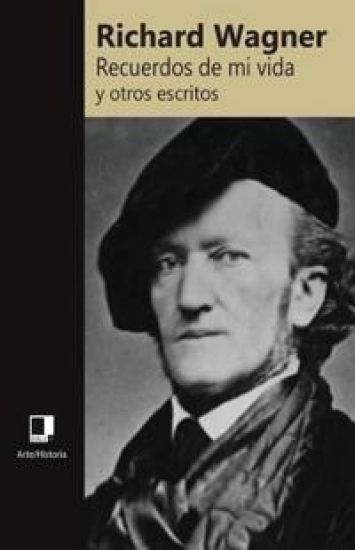
RECUERDOS DE MI VIDA Y OTROS ESCRITOS

RECUERDOS DE MI VIDA Y OTROS ESCRITOS

RICHARD WAGNER

Editorial Doble J S L U
2011
nidottu
Recuerdos de mi vida comprende un conjunto de retazos autobiogr ficos publicados hacia principios de siglo por el semanario madrile o La Espa a Moderna, donde Wagner refiere su evoluci n personal e intelectual y sus impresiones sobre la m sica y los m sicos de su tiempo. Esta edici n incluye adem s varios textos publicados entre 1834 y 1872 que esbozan algunos de los temas m s caracter sticos del pensamiento wagneriano: el ideal revolucionario socialista anarquizante; el antisemitismo, entendido como proceso de deshumanizaci n art stica, y su concepci n de la escena musical.
Charging for Government (Routledge Revivals)
Originally published in 1991, user charges and earmarked taxes are methods by which people pay directly for the services they recieve from government. As such they are frequently supported by those who oppose increased taxation, who argue that they are more like market transactions than traditional forms of taxation. This book explores the cogency of these arguments in the light of public choice analyses of political processes.
The Ring of the Nibelung

The Ring of the Nibelung

Richard Wagner

Createspace Independent Publishing Platform
2010
nidottu
"Andrew Porter's utterly natural, often poetic, faithfully rendered English text should be a revelation... The immediacy of instant comprehension gives the entire drama an added dimension."-The New York Times Richard Wagner's vast Der Ring des Nibelungen cycle comprises four full-length operas (Das Rheingold, Die Walkure, Siegfried and Gotterdammerung) and is arguably the most extraordinary achievement in the history of opera. His own libretto to the operas, translated by Andrew Porter, is an intricate system of metric patterns, imaginative metaphors and alliteration, combining to produce the music in text. Language Notes This text refers to an out of print or unavailable edition of this title.