Kirjojen hintavertailu – 12 859 829 kirjaa ja 27 kauppaa

Kirjailija

Robert J. Sternberg

Kirjat ja teokset yhdessä paikassa: 52 kirjaa, julkaisuja vuosilta 1982–2026, suosituimpiin kuuluu The Nature of Intellectual Styles. Vertaile teosten hintoja ja tarkista saatavuus suomalaisista kirjakaupoista.

Nimi esiintyy myös muodoissa: Robert J Sternberg

52 kirjaa

Kirjojen julkaisuvuodet: 1982–2026.

The Nature of Intellectual Styles

The Nature of Intellectual Styles

Li-fang Zhang; Robert J. Sternberg

Routledge Member of the Taylor and Francis Group
2006
nidottu
This book provides an up-to-date, panoramic picture of the field of intellectual styles through describing, analyzing, and integrating the major theoretical and research works on the topic. Readers will gain a broad understanding of the field--its nature, origins, historical development, theories, research, and applications, as well as the interrelationships among major theoretical constructs proposed by different theorists in the past few decades. In particular, three major controversial issues in the field are addressed by both empirical findings and literature review: styles as better versus worse or as equal in merit; styles as traits versus styles as states; and styles as different constructs versus styles as similar constructs with different style labels. Educators will find ideas on how to improve their teaching and assessment of student performance. Student development specialists will be interested in the book because intellectual styles, as evidenced by recent studies, play a critical role in many aspects of student development including cognitive, affective, psychosocial, and career development. Psychologists will gain an understanding of an important facet of the field at the interface between cognition and personality. Managers in business will find the book relevant to such issues as effective supervision and staff training and development. The Nature of Intellectual Styles is intended for anyone--particularly researchers and students in the fields of education, psychology, and business management--who is interested in understanding intellectual styles and their effects on daily life.

The Nature of Intellectual Styles

The Nature of Intellectual Styles

Li-fang Zhang; Robert J. Sternberg

Routledge Member of the Taylor and Francis Group
2006
sidottu
This book provides an up-to-date, panoramic picture of the field of intellectual styles through describing, analyzing, and integrating the major theoretical and research works on the topic. Readers will gain a broad understanding of the field--its nature, origins, historical development, theories, research, and applications, as well as the interrelationships among major theoretical constructs proposed by different theorists in the past few decades. In particular, three major controversial issues in the field are addressed by both empirical findings and literature review: styles as better versus worse or as equal in merit; styles as traits versus styles as states; and styles as different constructs versus styles as similar constructs with different style labels. Educators will find ideas on how to improve their teaching and assessment of student performance. Student development specialists will be interested in the book because intellectual styles, as evidenced by recent studies, play a critical role in many aspects of student development including cognitive, affective, psychosocial, and career development. Psychologists will gain an understanding of an important facet of the field at the interface between cognition and personality. Managers in business will find the book relevant to such issues as effective supervision and staff training and development. The Nature of Intellectual Styles is intended for anyone--particularly researchers and students in the fields of education, psychology, and business management--who is interested in understanding intellectual styles and their effects on daily life.
Practical Intelligence in Everyday Life

Practical Intelligence in Everyday Life

Robert J. Sternberg; George B. Forsythe; Jennifer Hedlund; Joseph A. Horvath; Richard K. Wagner; Wendy M. Williams; Scott A. Snook; Elena Grigorenko

Cambridge University Press
2000
pokkari
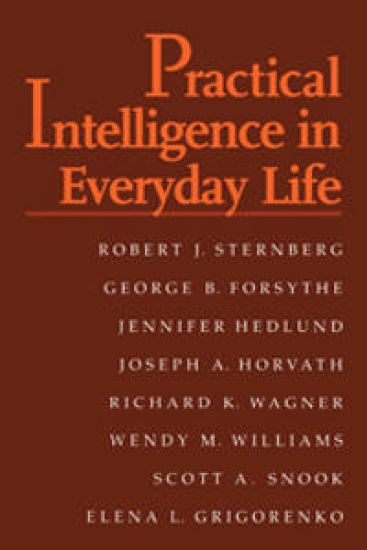
This book reviews psychological research on practical intelligence and describes its importance in everyday life. The authors reveal the importance of tacit knowledge - what we have learned from our own experience, through action. Although it has been seen as an indispensable element of expertise, intelligence researchers have found it difficult to quantify. The data shows that practical intelligence is psychologically and statistically distinct from academic intelligence, and is distinct as well from personality and styles of thought. The data also indicates that practical intelligence predicts job performance and even aspects of school performance as well as or better than does academic intelligence. This volume thoroughly examines studies of practical intelligence in the United States and in many other parts of the world as well, and for varied occupations, such as management, military leadership, teaching, research, and sales.
Practical Intelligence in Everyday Life

Practical Intelligence in Everyday Life

Robert J. Sternberg; George B. Forsythe; Jennifer Hedlund; Joseph A. Horvath; Richard K. Wagner; Wendy M. Williams; Scott A. Snook; Elena Grigorenko

Cambridge University Press
2000
sidottu
This book reviews psychological research on practical intelligence and describes its importance in everyday life. The authors reveal the importance of tacit knowledge - what we have learned from our own experience, through action. Although it has been seen as an indispensable element of expertise, intelligence researchers have found it difficult to quantify. The data shows that practical intelligence is psychologically and statistically distinct from academic intelligence, and is distinct as well from personality and styles of thought. The data also indicates that practical intelligence predicts job performance and even aspects of school performance as well as or better than does academic intelligence. This volume thoroughly examines studies of practical intelligence in the United States and in many other parts of the world as well, and for varied occupations, such as management, military leadership, teaching, research, and sales.
Cognitive Psychology

Cognitive Psychology

Robert J. Sternberg; Karin Sternberg

Cambridge University Press
2026
nidottu
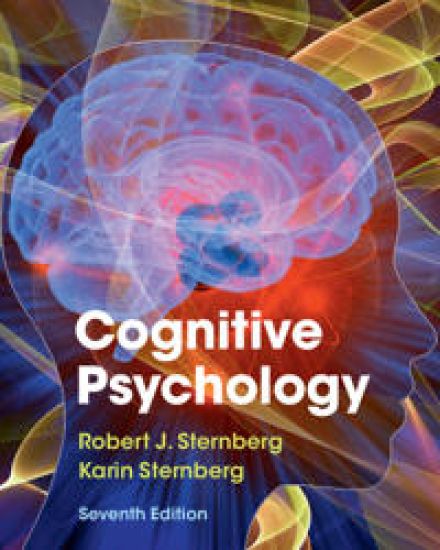
This textbook offers a foundational overview of cognitive psychology, balancing accessible writing, practical applications, and research. By incorporating biological perspectives throughout, the authors provide a concise introduction to human cognition and its evolution over time as a means of adapting to our environment. Chapters cover key topics including cognitive neuroscience, attention and consciousness, perception, memory, knowledge representation, language, problem-solving and creativity, decision-making and reasoning, cognitive development, and intelligence. This seventh edition also introduces new content on human intelligence, consolidated into a final chapter. With its 'from lab to life' approach, the authors provide thorough coverage of theory, lab, and field research, while continually highlighting real-world applications to everyday life.
The Psychologist's Companion

The Psychologist's Companion

Robert J. Sternberg; Karin Sternberg; Ophélie Allyssa Desmet

Cambridge University Press
2026
pokkari
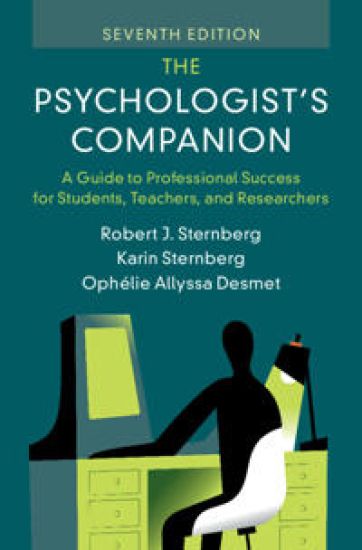
In the evolving landscape of psychological research and communication, The Psychologist's Companion, stands as the definitive guide supporting students, young professionals, and researchers in psychology at all stages of their careers. This seventh edition presents new and updated chapters covering a wide range of topics essential for success in psychology, including planning and writing research papers, presenting data effectively, evaluating one's own work, writing grant proposals, giving talks and presentations, finding a book publisher, navigating job interviews, and more! Serving as an invaluable resource for improving both written and oral communication skills in academic psychology, the content is structured as a step-by-step manual focusing on practical skills and contemporary issues. It guides readers through various tasks encountered during psychological research and academic life. Whether you're crafting your first paper or seeking to enhance your scholarly impact, this book provides the tools and knowledge to excel in today's competitive academic environment.
The Psychologist's Companion

The Psychologist's Companion

Robert J. Sternberg; Karin Sternberg; Ophélie Allyssa Desmet

Cambridge University Press
2026
sidottu
In the evolving landscape of psychological research and communication, The Psychologist's Companion, stands as the definitive guide supporting students, young professionals, and researchers in psychology at all stages of their careers. This seventh edition presents new and updated chapters covering a wide range of topics essential for success in psychology, including planning and writing research papers, presenting data effectively, evaluating one's own work, writing grant proposals, giving talks and presentations, finding a book publisher, navigating job interviews, and more! Serving as an invaluable resource for improving both written and oral communication skills in academic psychology, the content is structured as a step-by-step manual focusing on practical skills and contemporary issues. It guides readers through various tasks encountered during psychological research and academic life. Whether you're crafting your first paper or seeking to enhance your scholarly impact, this book provides the tools and knowledge to excel in today's competitive academic environment.
Critical Thinking Across Disciplines, Volumes 1 and 2

Critical Thinking Across Disciplines, Volumes 1 and 2

Robert J. Sternberg; Weihua Niu

Springer International Publishing AG
2025
sidottu
This 2 volume set takes a multidisciplinary approach to critical thinking, drawing together leading experts from disciplines including psychology, philosophy, education, and creativity. Volume 1 stages a dialogue between disciplines to demonstrate how a multidisciplinary approach advances the theory and classroom practice of critical thinking. Volume 2 considers how we might best apply critical-thinking skills to meet challenges in our everyday lives. The book’s authors consider topics ranging from conspiracy beliefs, AI and bio-ethics, to multiculturalism, health communication and social justice. This compelling work offers fresh insights for students, scholars and those with a general interest in the application and development of critical thinking skills.
Giftedness in Childhood

Giftedness in Childhood

Robert J. Sternberg; Ophélie A. Desmet

Cambridge University Press
2024
pokkari
Giftedness often is defined in a transactional way: individuals give something in return for getting something from authorities who label them as gifted; the labeling authority then expects those individuals identified as 'gifted' to act in ways that justify the label. The authors place emphasis on transformational giftedness-giftedness that serves to make the world a better place. This Element stresses the importance of intelligence, not of the kind of narrow intelligence measured by IQ tests and their proxies, but rather the kind of broad intelligence used to adapt to a variety of real-world environments. The authors further discuss the nature of dual exceptionality, whereby individuals may be identified as having a disability yet at the same time act in gifted ways and thereby harbor the potential to contribute to the world in some distinguished fashion.
Giftedness in Childhood

Giftedness in Childhood

Robert J. Sternberg; Ophélie A. Desmet

Cambridge University Press
2024
sidottu
Giftedness often is defined in a transactional way: individuals give something in return for getting something from authorities who label them as gifted; the labeling authority then expects those individuals identified as 'gifted' to act in ways that justify the label. The authors place emphasis on transformational giftedness-giftedness that serves to make the world a better place. This Element stresses the importance of intelligence, not of the kind of narrow intelligence measured by IQ tests and their proxies, but rather the kind of broad intelligence used to adapt to a variety of real-world environments. The authors further discuss the nature of dual exceptionality, whereby individuals may be identified as having a disability yet at the same time act in gifted ways and thereby harbor the potential to contribute to the world in some distinguished fashion.
The Hidden Talents Framework

The Hidden Talents Framework

Bruce J. Ellis; Laura S. Abrams; Ann S. Masten; Robert J. Sternberg; Nim Tottenham; Willem E. Frankenhuis

Cambridge University Press
2023
pokkari
Although early-life adversity can undermine healthy development, an evolutionary-developmental perspective implies that children growing up in harsh environments will develop intact, or even enhanced, skills for solving problems in high-adversity contexts (i.e., 'hidden talents'). This Element situates the hidden talents model within a larger interdisciplinary framework. Summarizing theory and research on hidden talents, it proposes that stress-adapted skills represent a form of adaptive intelligence enabling individuals to function within the constraints of harsh environments. It discusses potential applications of this perspective to multiple sectors concerned with youth from harsh environments, including education, social services, and juvenile justice, and compares the hidden talents model with contemporary developmental resilience models. The hidden talents approach, it concludes, offers exciting directions for research on childhood adversity, with translational implications for leveraging stress-adapted skills to more effectively tailor education, jobs, and interventions to fit the needs of individuals from a diverse range of life circumstances.
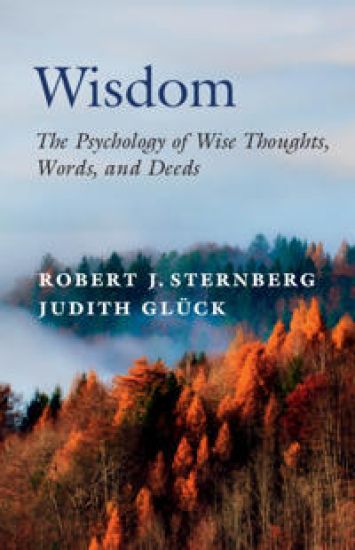
Wisdom

Wisdom

Robert J. Sternberg; Judith Glück

Cambridge University Press
2021
sidottu
The world is simultaneously facing many crises that humanity is failing to solve. Yet, at the same time, humans are smarter (with IQs on average thirty points higher than a century ago) and more knowledgeable (with the world's knowledge base at our fingertips), and scientific advances are accelerating. However, intelligence and knowledge are not enough: wisdom harnesses these strengths to serve the common good. Education is focused on acquiring knowledge, but schools would do better also to teach and test for the development of wisdom. To a lot of people, wisdom is an abstraction, but there is a growing body of scientific research into what wisdom is and how it works. This introduction sets out why wisdom is so important. Drawing on insights from psychology, philosophy, science, and common sense, this book provides a complete account of wisdom and how we can develop it throughout our lives.
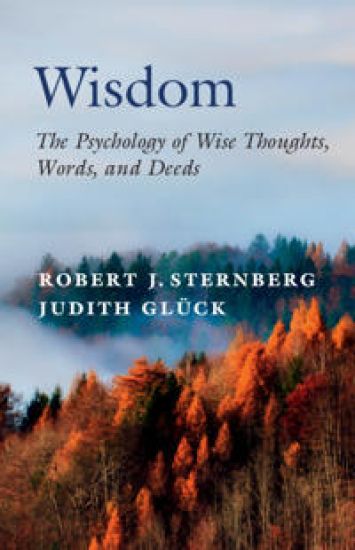
Wisdom

Wisdom

Robert J. Sternberg; Judith Glück

Cambridge University Press
2021
pokkari
The world is simultaneously facing many crises that humanity is failing to solve. Yet, at the same time, humans are smarter (with IQs on average thirty points higher than a century ago) and more knowledgeable (with the world's knowledge base at our fingertips), and scientific advances are accelerating. However, intelligence and knowledge are not enough: wisdom harnesses these strengths to serve the common good. Education is focused on acquiring knowledge, but schools would do better also to teach and test for the development of wisdom. To a lot of people, wisdom is an abstraction, but there is a growing body of scientific research into what wisdom is and how it works. This introduction sets out why wisdom is so important. Drawing on insights from psychology, philosophy, science, and common sense, this book provides a complete account of wisdom and how we can develop it throughout our lives.
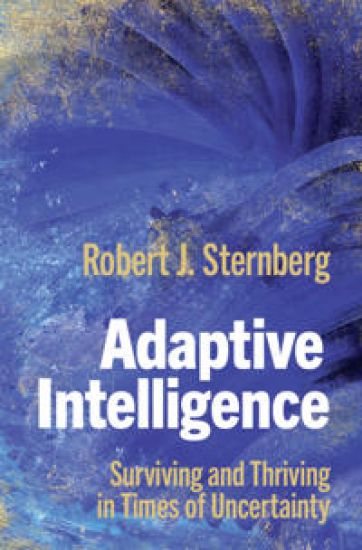
Adaptive Intelligence

Adaptive Intelligence

Robert J. Sternberg

Cambridge University Press
2021
sidottu
Adaptive Intelligence is a dramatic reappraisal and reframing of the concept of human intelligence. In a sweeping analysis, Robert J. Sternberg argues that we are using a fatally-flawed, outdated conception of intelligence; one which may promote technological advancement, but which has also accelerated climate change, pollution, the use of weaponry, and inequality. Instead of focusing on the narrow academic skills measured by standardized tests, societies should teach and assess adaptive intelligence, defined as the use of collective talent in service of the common good. This book describes why the outdated notion of intelligence persists, what adaptive intelligence is, and how it could lead humankind on a more positive path.
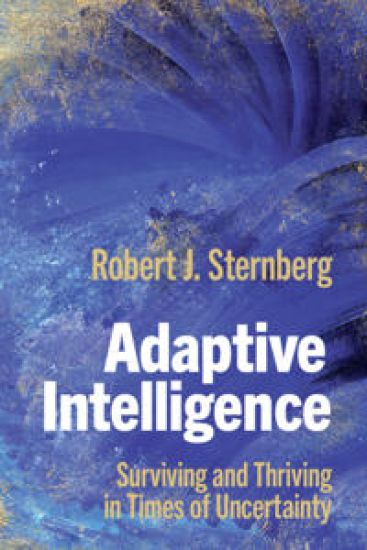
Adaptive Intelligence

Adaptive Intelligence

Robert J. Sternberg

Cambridge University Press
2021
pokkari

Halvin toimitettuna 42,00 €

Adaptive Intelligence is a dramatic reappraisal and reframing of the concept of human intelligence. In a sweeping analysis, Robert J. Sternberg argues that we are using a fatally-flawed, outdated conception of intelligence; one which may promote technological advancement, but which has also accelerated climate change, pollution, the use of weaponry, and inequality. Instead of focusing on the narrow academic skills measured by standardized tests, societies should teach and assess adaptive intelligence, defined as the use of collective talent in service of the common good. This book describes why the outdated notion of intelligence persists, what adaptive intelligence is, and how it could lead humankind on a more positive path.
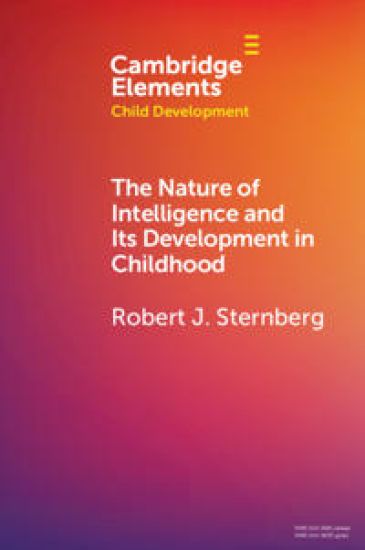
The Nature of Intelligence and Its Development in Childhood

The Nature of Intelligence and Its Development in Childhood

Robert J. Sternberg

Cambridge University Press
2020
pokkari
In this Element, I first introduce intelligence in terms of historical definitions. I show that intelligence, as conceived even by the originators of the first intelligence tests, Alfred Binet and David Wechsler, is a much broader construct than just scores on narrow tests of intelligence and their proxies. I then review the major approaches to understanding intelligence and its development: the psychometric (test-based), cognitive and neurocognitive (intelligence as a set of brain-based cognitive representations and processes), systems, cultural, and developmental. These approaches, taken together, present a much more complex portrait of intelligence and its development than the one that would be ascertained just from scores on intelligence tests. Finally, I draw some take-away conclusions.
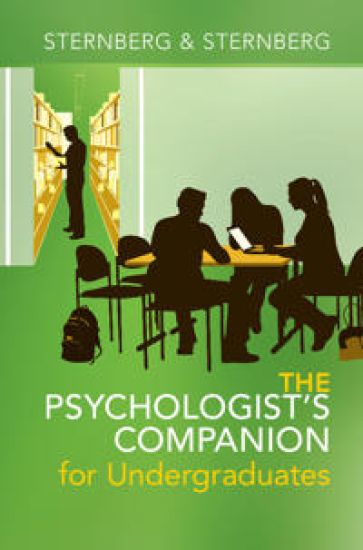
The Psychologist's Companion for Undergraduates

The Psychologist's Companion for Undergraduates

Robert J. Sternberg; Karin Sternberg

Cambridge University Press
2017
sidottu
Tailored specifically for undergraduate students, this Companion offers uniquely comprehensive coverage of the topics necessary for successful communication in psychology, making it a valuable resource for research methods and introductory psychology courses. Readers will learn how to effectively plan and write papers in accordance with the latest style guidelines from the Publication Manual of the American Psychological Association, Sixth Edition; present data in posters and talks; and evaluate their own and others' work. The clear writing style and reader-friendly format, meanwhile, allow students to absorb information easily, even when reading chapters selectively or out of order. The book includes numerous up-to-date examples drawn from career experiences to engage students and help them apply what they've learned to forward their own careers, while questions encourage them to think more deeply about larger issues in the field, preparing them for future research.
The Psychologist's Companion for Undergraduates

The Psychologist's Companion for Undergraduates

Robert J. Sternberg; Karin Sternberg

Cambridge University Press
2017
pokkari
Tailored specifically for undergraduate students, this Companion offers uniquely comprehensive coverage of the topics necessary for successful communication in psychology, making it a valuable resource for research methods and introductory psychology courses. Readers will learn how to effectively plan and write papers in accordance with the latest style guidelines from the Publication Manual of the American Psychological Association, Sixth Edition; present data in posters and talks; and evaluate their own and others' work. The clear writing style and reader-friendly format, meanwhile, allow students to absorb information easily, even when reading chapters selectively or out of order. The book includes numerous up-to-date examples drawn from career experiences to engage students and help them apply what they've learned to forward their own careers, while questions encourage them to think more deeply about larger issues in the field, preparing them for future research.