Kirjojen hintavertailu – 12 875 990 kirjaa ja 26 kauppaa

Kirjailija

Robert Samuels

Kirjat ja teokset yhdessä paikassa: 44 kirjaa, julkaisuja vuosilta 1993–2026, suosituimpiin kuuluu The Global Solution to AI. Vertaile teosten hintoja ja tarkista saatavuus suomalaisista kirjakaupoista.

44 kirjaa

Kirjojen julkaisuvuodet: 1993–2026.

(Mis)Understanding Freud with Lacan, Zizek, and Neuroscience

(Mis)Understanding Freud with Lacan, Zizek, and Neuroscience

Robert Samuels

Springer International Publishing AG
2022
sidottu
This book sets out to clarify five key Freudian concepts (the pleasure principle, the primary processes, the unconscious, transference, and the reality principle) elaborated early on in Freud’s work but, it is argued, rarely understood—even by psychoanalysts themselves. It examines in turn the post-Freudian paradigms employed in neuropsychoanalysis, Lacan, Zizek, object relations, and psychoanalytic approaches to identity politics, and in doing so reveals the extent to which they have been distorted and repressed in these new contexts. Over the course of the book the author demonstrates how Freud’s unpublished Project for a Scientific Psychology can be seen as a complete system of core concepts that both ground psychoanalysis in neurology and also introduce a vital challenge to the brain sciences. This book will appeal to students and scholars of psychoanalysis, clinical psychology, and psychoanalytic theory.
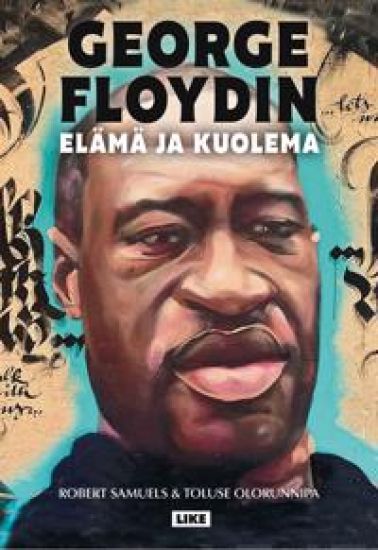
George Floydin elämä ja kuolema

George Floydin elämä ja kuolema

Robert Samuels; Toluse Olorunnipa

Otava
2022
sidottu

Halvin toimitettuna 29,90 €

Pulizer-palkinnon voittanut teos kuvaa veret seisauttavalla tavalla olosuhteita, joiden keskellä George Floyd kasvoi ja jotka lopulta veivät hänen henkensä. George Floydin traaginen kuolema poliisin käsissä nosti hänet ja Black Lives Matter -liikkeen maailman tietoisuuteen. Floydin ja hänen sukunsa tarina antaa kasvot amerikkalaisen rasismin historialle. Murhaan syyllistyneen Derek Chauvinin elämänkulku näyttää täysin toisen todellisuuden. Laajaan taustatyöhön ja satoihin haastatteluihin pohjautuva teos piirtää väkevän kuvan miehestä, joka oli isä, veli, elämänkumppani, ystävä ja lapsi ja joka onnistui kuollessaan siinä, mitä hän niin vimmaisesti halusi eläessään: muuttaa maailmaa.
His Name Is George Floyd

His Name Is George Floyd

Robert Samuels; Toluse Olorunnipa

Random House UK
2022
pokkari
*Finalist for the National Book Award for Non-fiction* 'His Name Is George Floyd is essential for our times.' Ibram X. Kendi, author of How to Be an Antiracist 'An intimate, unvarnished and scrupulous account of his life...brilliantly revealing.' NEW YORK TIMES You know how he died. This is how he lived. Who was George Floyd? What did he hope for? What was life like for him? And why has his death been the catalyst for such a powerful global response? The murder of George Floyd sparked a summer of activism and unrest all over the world in 2020, from Shetland to São Paolo, as people marched under the Black Lives Matter banner, demanding an end to racial injustice. But behind a face that would be graffitied onto countless murals, and a name that has become synonymous with civil rights, there is the reality of one man's stolen life. In His Name is George Floyd we meet the kind young boy who talked his friends out of beating up a skinny kid from another neighbourhood and then befriended him on the walk home. Big Floyd the high school American football player who ignored his coach's pleas to be more aggressive and felt queasy at the sight of blood. The man who fell victim to an opioid epidemic we are only just beginning to understand. The sensitive son and loving father, constantly in search of a better life in a society determined to write him off based on things he had no control over: where he grew up, the size of his body and the colour of his skin. Drawing upon hundreds of interviews with friends and family members, His Name Is George Floyd reveals the myriad ways that structural racism shaped Floyd's life and death - from his forebears' roots in slavery to an underfunded education, the overpolicing of his community and the devastating snare of the prison system. By offering us an intimate portrait of this one, emblematic life, Robert Samuels and Toluse Olorunnipa deliver a powerful and moving exploration of how a man who simply wanted to breathe ended up touching the world.
His Name Is George Floyd

His Name Is George Floyd

Robert Samuels; Toluse Olorunnipa

TRANSWORLD PUBLISHERS LTD
2022
sidottu
*Finalist for the National Book Award for Non-fiction*'His Name Is George Floyd is essential for our times.' Ibram X. Kendi, author of How to Be an Antiracist'An intimate, unvarnished and scrupulous account of his life...brilliantly revealing.' NEW YORK TIMESYou know how he died. This is how he lived. Who was George Floyd? What did he hope for? What was life like for him? And why has his death been the catalyst for such a powerful global response? The murder of George Floyd sparked a summer of activism and unrest all over the world in 2020, from Shetland to São Paolo, as people marched under the Black Lives Matter banner, demanding an end to racial injustice. But behind a face that would be graffitied onto countless murals, and a name that has become synonymous with civil rights, there is the reality of one man's stolen life. In His Name is George Floyd we meet the kind young boy who talked his friends out of beating up a skinny kid from another neighbourhood and then befriended him on the walk home. Big Floyd the high school American football player who ignored his coach's pleas to be more aggressive and felt queasy at the sight of blood. The man who fell victim to an opioid epidemic we are only just beginning to understand. The sensitive son and loving father, constantly in search of a better life in a society determined to write him off based on things he had no control over: where he grew up, the size of his body and the colour of his skin. Drawing upon hundreds of interviews with friends and family members, His Name Is George Floyd reveals the myriad ways that structural racism shaped Floyd's life and death - from his forebears' roots in slavery to an underfunded education, the overpolicing of his community and the devastating snare of the prison system. By offering us an intimate portrait of this one, emblematic life, Robert Samuels and Toluse Olorunnipa deliver a powerful and moving exploration of how a man who simply wanted to breathe ended up touching the world.
The Psychopathology of Political Ideologies

The Psychopathology of Political Ideologies

Robert Samuels

Taylor Francis Ltd
2021
sidottu
Inspired by Freud’s The Psychopathology of Everyday Life, this book examines the unconscious processes shaping contemporary political ideologies. Addressing ten fundamental questions, Robert Samuels identifies four basic political ideologies: liberal, conservative, Left, and Right, which are often placed in the structure of a logical square, determined by two binary oppositions, with a fifth structure of centrism complicating the square. He turns to psychoanalysis to explain the unconscious defense mechanisms that structure these political ideologies. Each chapter uses a recent, influential title as a gateway to the analysis of the ideologies and structures identified. Through this analysis, Samuels argues that belief in ideological structures is tied to triumvirates of institutions and ideals; conservatives being tied to premodern institutions of religion, feudalism, and monarchy, while modern liberals are tied to ideals of universality, objectivity, and empiricism. He concludes that this investment in universality shapes the ethics of modern globalization and democratic liberalism. Unlike other books, conclusions are reinforced through examples drawn from current events with an integrated model of different psychopathologies. The Psychopathology of Political Ideologies moves beyond providing an understanding of what drives different political investments, to offer a more rational and conscious comprehension of subjectivity and social organization. This book will be a great resource for those interested in politics, political science psychology, social psychology, globalization, and ideology.
Viral Rhetoric

Viral Rhetoric

Robert Samuels

Springer Nature Switzerland AG
2021
sidottu
This book looks at the representation of viruses in rhetoric, politics, and popular culture. In utilizing Jean Baudrillard’s concept of virality, it examines what it means to use viruses as a metaphor. For instance, what is the effect of saying that a video has gone viral? Does this use of biology to explain culture mean that our societies are determined by biological forces? Moreover, does the rhetoric of viral culture display a fundamental insensitivity towards people who are actually suffering from viruses? A key defining aspect of this mode of persuasion is the notion that due to the open nature of our social and cerebral networks, we are prone to being infected by uncontrollable external forces. Drawing from the work of Freud, Lacan, Laclau, Baudrillard, and Zizek, it examines the representation of viruses in politics, psychology, media studies, and medical discourse. The book will help readers understandthe potentially destructive nature of how viruses are represented in popular media and politics, how this can contribute to conspiracy theories around COVID-19 and how to combat such misinterpretations.
Generation X and the Rise of the Entertainment Subject
Generation X and the Rise of the Entertainment Subject defines Gen X as the first generationto be dominated by entertainment subjectivity. A social and psychological feedback loop is created as entertainment caters to adolescent consumers while the consumer, in turn, is shaped by the entertainment they internalize. While the paradigmatic latchkey young adults are immersed in media consumption, they see the world through the lens of popular culture products that seek to capitalize on the free time and disposable income of the unoccupied viewer. This book argues that Gen X entertainment subjectivity lays the foundations for contemporary society where handheld devices and other technologies detach their users from the world around them.
Teaching Writing, Rhetoric, and Reason at the Globalizing University
This timely intervention into composition studies presents a case for the need to teach all students a shared system of communication and logic based on the modern globalizing ideals of universality, neutrality, and empiricism. Based on a series of close readings of contemporary writing by Stanley Fish, Asao Inoue, Doug Downs and Elizabeth Wardle, Richard Rorty, Slavoj Zizek, and Steven Pinker, this book critiques recent arguments that traditional approaches to teaching writing, grammar, and argumentation foster marginalization, oppression, and the restriction of student agency. Instead, it argues that the best way to educate and empower a diverse global student body is to promote a mode of academic discourse dedicated to the impartial judgment of empirical facts communicated in an open and clear manner. It provides a critical analysis of core topics in composition studies, including the teaching of grammar; notions of objectivity and neutrality; empiricism and pragmatism; identity politics; and postmodernism. Aimed at graduate students and junior instructors in rhetoric and composition, as well as more seasoned scholars and program administrators, this polemical book provides an accessible staging of key debates that all writing instructors must grapple with.
Zizek and the Rhetorical Unconscious

Zizek and the Rhetorical Unconscious

Robert Samuels

Springer Nature Switzerland AG
2020
sidottu
This book builds on a critique of Slavoj Zizek’s work to outline a new theory of psychoanalytic rhetoric. It turns to Zizek because not only is he one of the most popular intellectuals in the world, but, this book argues, his discourse is shaped by a set of unconscious rhetorical processes that also determine much of contemporary politics, culture, and subjectivity. Just as Aristotle argued that the three main forms of persuasion are logos (reason), pathos (emotion), and ethos (authority), Samuels describes each one of these aspects of communication as related to a fundamental psychoanalytic concept. He also turns to Aristotle’s work on theater to introduce a fourth form of rhetoric, catharsis, which is the purging of feelings of fear and pity. Adding a strong voice to current psychoanalytic debate, this book will be of value to all scholars and students interested in both the history and modern developments of psychoanalytic theory.

Freud for the Twenty-First Century

Freud for the Twenty-First Century

Robert Samuels

Springer Nature Switzerland AG
2019
sidottu
This book places Freud’s theory of the reality principle in relation to both everyday experience and global issues of the 21st century and illustrates how it may be practically applied. Arguing against more critical recent accounts of Freud’s science, the author seeks to show how one might apply the scientific method to everyday life. It demonstrates how Freud contributes to a better understanding of reason and how this in turn can be used to unravel the role of unreason in both politics and personal relationships. Including critical examinations of topics such as Narcissism, Victimhood and Empathy, this engaging reappraisal of Freud’s relevance to contemporary life offers fresh insights for psychology, psychoanalysis and cultural theory; as well as practical guidance for a general reader.
Psychoanalyzing the Left and Right after Donald Trump

Psychoanalyzing the Left and Right after Donald Trump

Robert Samuels

Springer International Publishing AG
2018
nidottu
This book outlines a new model for global social justice movements that is based on Freud and Lacan’s central insights regarding the unconscious, repetition, drives, and transference. Since most of our current social issues are global in nature, Bob Samuels convincingly argues that we need a global solution, but that global solidarity is blocked by narcissistic nationalism and the capitalist death drive. In examining contemporary social movements for global justice, Samuels articulates a comprehensive theory of non-pathological social solidarity, and argues that in the age of multinational corporations and global climate change, we need a new model of global justice and government that requires an understanding of analytic neutrality and free association. This book uses psychoanalytic theories and practices to explain how someone like Trump can rise to power, and explores why liberals have failed to provide a convincing or effective political alternative. It will be compelling reading to students and teachers in a range of psychological and political disciplines, and to anyone interested in psychoanalysis and current politics.
Psychoanalyzing the Politics of the New Brain Sciences
This book argues that neuroscience, evolutionary psychology, and behavioral economics often function as a political ideology masquerading as a new science. In looking at works by Antonio Damasio, Steven Pinker, Richard Thaler, Cas Sunstein, and John Tooby, Robert Samuels undertakes a close reading of the new brain sciences, and by turning to the works of Freud and Lacan, offers a counter-discourse to these new emerging sciences. He argues that an unintentional political manipulation of scientific thinking serves to repress the psychoanalytic conception of the unconscious and sexuality as it reinforces neoliberalism and promotes the drugging of discontent. This innovative book is intended for those interested in science, psychoanalysis, and politics and offers a new definition of neoliberal subjectivity.
The Politics of Writing Studies

The Politics of Writing Studies

Robert Samuels

Utah State University Press
2017
nidottu
A friendly critique of the field, The Politics of Writing Studies examines a set of recent pivotal texts in composition to show how writing scholarship, in an effort to improve disciplinary prestige and garner institutional resources, inadvertently reproduces structures of inequality within American higher education. Not only does this enable the exploitation of contingent faculty, but it also puts writing studies--a field that inherently challenges many institutional hierarchies--in a debased institutional position and at odds with itself. Instead of aligning with the dominant paradigm of research universities, where research is privileged over teaching, theory over practice, the sciences over the humanities, and graduate education over undergraduate, writing studies should conceive itself in terms more often associated with labor. By identifying more profoundly as workers, as a collective in solidarity with contingent faculty, writing professionals can achieve solutions to the material problems that the field, in its best moments, wants to address. Ultimately, the change compositionists want to see in the university will not come from high theory or the social science research agenda; it must come from below. Offering new insight into a complex issue, The Politics of Writing Studies will be of great interest to writing studies professionals, university administrators, and anyone interested in the political economy of education and the reform of institutions of higher education in America.
Educating Inequality

Educating Inequality

Robert Samuels

Routledge
2017
nidottu
Politicians and school officials often argue that higher education is the solution to many of our social, and economic problems. Educating Inequality argues that in order to reduce inequality and enhance social mobility, public policies are needed to revamp the financial aid system and increase the number of good jobs. Exploring topics such as the fairness of the current social system, the focus on individual competition in an unequal society, and democracy and capitalism in higher education, this important book seeks to uncover the major myths that shape how people view higher education and its relation to the economy. Looking to models that generate economic mobility and social equality, this book advocates a broader vision for public higher education to promote universal equality and global awareness.
Educating Inequality

Educating Inequality

Robert Samuels

Routledge
2017
sidottu
Politicians and school officials often argue that higher education is the solution to many of our social, and economic problems. Educating Inequality argues that in order to reduce inequality and enhance social mobility, public policies are needed to revamp the financial aid system and increase the number of good jobs. Exploring topics such as the fairness of the current social system, the focus on individual competition in an unequal society, and democracy and capitalism in higher education, this important book seeks to uncover the major myths that shape how people view higher education and its relation to the economy. Looking to models that generate economic mobility and social equality, this book advocates a broader vision for public higher education to promote universal equality and global awareness.
Psychoanalyzing the Left and Right after Donald Trump

Psychoanalyzing the Left and Right after Donald Trump

Robert Samuels

Springer International Publishing AG
2016
sidottu
This book outlines a new model for global social justice movements that is based on Freud and Lacan’s central insights regarding the unconscious, repetition, drives, and transference. Since most of our current social issues are global in nature, Bob Samuels convincingly argues that we need a global solution, but that global solidarity is blocked by narcissistic nationalism and the capitalist death drive. In examining contemporary social movements for global justice, Samuels articulates a comprehensive theory of non-pathological social solidarity, and argues that in the age of multinational corporations and global climate change, we need a new model of global justice and government that requires an understanding of analytic neutrality and free association. This book uses psychoanalytic theories and practices to explain how someone like Trump can rise to power, and explores why liberals have failed to provide a convincing or effective political alternative. It will be compelling reading to students and teachers in a range of psychological and political disciplines, and to anyone interested in psychoanalysis and current politics.
Why Public Higher Education Should Be Free

Why Public Higher Education Should Be Free

Robert Samuels

Rutgers University Press
2013
nidottu
Universities tend to be judged by the test scores of their incoming students and not on what students actually learn once they attend these institutions. While shared tests and surveys have been developed, most schools refuse to publish the results. Instead, they allow such publications as U. S. News & World Report to define educational quality. In order to raise their status in these rankings, institutions pour money into new facilities and extracurricular activities while underfunding their educational programs. In Why Public Higher Education Should Be Free, Robert Samuels argues that many institutions of higher education squander funds and mislead the public about such things as average class size, faculty-to-student ratios, number of faculty with PhDs, and other indicators of educational quality. Parents and students seem to have little knowledge of how colleges and universities have been restructured over the past thirty years. Samuels shows how research universities have begun to function as giant investment banks or hedge funds that spend money on athletics and administration while increasing tuition costs and actually lowering the quality of undergraduate education. In order to fight higher costs and lower quality, Samuels suggests, universities must reallocate these misused funds and concentrate on their core mission of instruction and related research. Throughout the book, Samuels argues that the future of our economy and democracy rests on our ability to train students to be thoughtful participants in the production and analysis of knowledge. If leading universities serve only to grant credentials and prestige, our society will suffer irrevocable harm. Presenting the problem of how universities make and spend money, Samuels provides solutions to make these important institutions less expensive and more vital. By using current resources in a more effective manner, we could even, he contends, make all public higher education free.