Kirjojen hintavertailu – 12 903 725 kirjaa ja 27 kauppaa

Kirjailija

Rudolf Steiner

Kirjat ja teokset yhdessä paikassa: 1 477 kirjaa, julkaisuja vuosilta 1910–2026, suosituimpiin kuuluu The Cosmic New Year: A Course of Lectures by Rudolf Steiner. Vertaile teosten hintoja ja tarkista saatavuus suomalaisista kirjakaupoista.

1 477 kirjaa

Kirjojen julkaisuvuodet: 1910–2026.

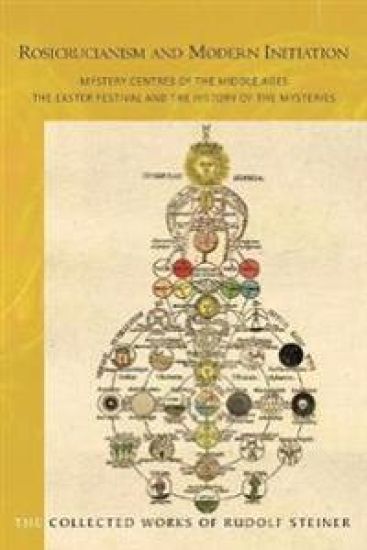
Rosicrucianism and Modern Initiation

Rosicrucianism and Modern Initiation

Rudolf Steiner

Rudolf Steiner Press
2020
nidottu

Halvin toimitettuna 27,70 €

Steiner has been able to clarify the historical reality behind the Rosicrucian story, with all its aura of glamour and fantasy. That effected, he points to the enormity of its vision for the future evolution of ideas...' - Dr Andrew Welburn (from the Introduction) In the immediate aftermath of the 'Mystery-act' of the Christmas Foundation Conference, Rudolf Steiner chose to speak on the subject of 'Rosicrucianism and Modern Initiation Mystery Centres of the Middle Ages'. Clearly connected to the events that had just taken place in Dornach - in which he not only refounded the Anthroposophical Society but took a formal position within it - Steiner begins by exploring the intellectual life of the Middle Ages and the role that Mystery culture played within it. He throws new light on the foundations of Rosicrucianism, its principles of initiation and its inherent impulse for freedom. Steiner also discusses the secret teachings of the eighteenth and nineteenth centuries, and the dawn of the age of the Archangel Michael. In the second series of lectures, entitled 'The Easter Festival and the History of the Mysteries' (April 1924), Steiner describes how festivals grew out of the Mysteries themselves. He speaks of Mysteries connected to Spring and Autumn, Adonis and Ephesus, and the significance of Sun and Moon. Throughout the volume he discusses the roles of Alexander the Great and Aristotle in world history and the significance of Aristotle's 'Categories'. Published for the first time as a single volume, the freshly revised text is complemented with an extensive introduction by Dr Andrew Welburn, detailed notes and appendices by Professor Frederick Amrine and an index. (Ten lectures, Jan. and April 1924, GA 233a)
True and False Paths of Spiritual Research

True and False Paths of Spiritual Research

Rudolf Steiner

Rudolf Steiner Press
2020
nidottu
In these much-valued lectures, Rudolf Steiner begins by positing the question, ‘Why investigate the spiritual worlds at all?’ He goes on to explore the contemporary need for spiritual knowledge and the authentic paths that can lead to it. Speaking in Torquay, England, at the International Summer School organized by his friend and colleague D. N. Dunlop, Steiner surveys the differences in various types of consciousness – from ancient to modern times, in waking and dreaming, from space into time – and the changes that have taken place in relation to knowledge and science in the course of history. He goes on to discuss the Mystery nature of crystallized minerals and metals such as copper and silver, and their relationship to the planets. He also describes how the ages of life can become organs of perception. In a dramatic conclusion Steiner explains the role of moon beings, ahrimanic elemental beings, and the true nature of mediumship, ectoplasm and spiritual possession. Presented here in a fresh translation that corrects many errors in previous editions, the text is complemented with notes, an introduction by Paul King and an index. Lectures include: ‘Nature is the Great Illusion. “Know Thyself”’; ‘The Three Worlds and their Reflected Images’; ‘Form and Substantiality of the Mineral Kingdom in relation to Human Levels of Consciousness’; ‘The Secret of Research into other Realms through the Metamorphosis of Consciousness’; ‘The Inner Enlivening of the Soul through the Qualities of Metals’; ‘Initiation Science’; ‘Star Knowledge’; ‘Possible Aberrations in Spiritual Research’. (Eleven lectures, 11-22 Aug. 1924, GA 243)
The Aims of Anthroposophy

The Aims of Anthroposophy

Rudolf Steiner

Rudolf Steiner Press
2020
nidottu
In his final lectures to the general public, Rudolf Steiner speaks with great clarity and purpose about the inner and outer necessity of the anthroposophical impulse in modern times. Following the fire that destroyed the first Goetheanum building in Dornach, Switzerland, Steiner had focused his efforts on rebuilding and reorganizing the Anthroposophical Society. But he also continued to travel and speak to the public – in Prague, Vienna and Basel – to explain the purpose of the Goetheanum and to elucidate the broader aims of his spiritual work. These lectures, including a semi-public series in Dornach, are gathered here and published in English for the first time, together with an introduction, notes and index. The volume features the following lectures: ‘The Purpose of the Goetheanum and the Aims of Anthroposophy’; ‘Enhancing Human Powers of Perception to Develop Imagination, Inspiration and Intuition’; ‘Human Soul Life and the Development of Imagination, Inspiration and Intuition’; ‘Experience and Perception of the Activities of Thinking and Speech’; ‘The Physical World and Moral-Spiritual Impulses’: ‘Four Stages of Inner Experience’; ‘Perceiving the Etheric World’; ‘Soul’s Eternity in the Light of Anthroposophy’; ‘Human Development and Education in the Light of Anthroposophy’; ‘Supersensible Perception, Anthroposophy as a Contemporary Need’; ‘Anthroposophy and the Ethical and Religious Life’; ‘How Do We Gain Knowledge of the Supersensible World?’
Memory

Memory

Rudolf Steiner

Rudolf Steiner Press
2020
nidottu
What is the meaning of memory in the information age? When all knowledge is seemingly digitised and available for reference at any time, do we actually need human memory? One consequence of the proliferation of digitization is the deterioration of our capacity to remember – a symptom that is apparent in a steady increase in dementia within contemporary society. Rudolf Steiner indicates that memory is the determining factor in awareness of oneself. Even a partial loss of memory leads to loss of self-consciousness and the sense of our ‘I’. Thus, memory is crucial for the development of I-consciousness – not only for the individual, but for humanity as a whole. Rudolf Steiner’s research on memory, recollection and forgetting has many implications for the way we learn, for inner development and spiritual growth. This unique selection of passages from his works offers insights into how consciousness can remain autonomous and creative in a digital environment. It also provides ideas for improving education and emphasizes the importance of life-long learning. Chapters include: ‘The Development of Memory Throughout Human History’; ‘The Formation of Memory, Remembering and Forgetting in the Human Individual’; ‘Remembering and Forgetting in Connection with Education’; ‘How Remembering and Forgetting are Transformed by the Schooling Path – Imagination and Inspiration’; ‘Remembering Backwards (Rückschau) and Memory Exercises’; ‘Subconscious Memories of the Pre-birth Period and of Life Between Death and a New Birth’; ‘Memory and Remembering after Death’; ‘The Development of Memory in the Future’.
The Imaginative Life Tableau

The Imaginative Life Tableau

Rudolf Steiner

Rudolf Steiner Press
2020
nidottu
Many will be familiar with the notion that a person at the point of death sees their life flash before them. Rudolf Steiner describes that when the spiritual bodies separate from the physical body, the etheric body of the dying person is revealed, giving a panoramic overview of their earthly life. This etheric body contains everything we have experienced in our consciousness and kept in memory. The etheric not only generates and sustains all life, but encompasses the life forces out of which we shape our existence. Although the revelation of the life tableau belongs to the early period after death, it can also emerge as a result of meditation. Rudolf Steiner speaks of this – through the first level of spiritual experience known as ‘imagination’ – as a conscious self-perception of the soul, taking place in the world of images. Here we are confronted with the harrowing knowledge of our doppelgänger – but we also experience the cosmic forces of childhood that are present in all our life processes. These same forces are described in psychology as the ‘inner child’. In this highly-original anthology of Steiner’s work we are led to a therapeutic, meditative approach that – through working with the imaginative life tableau – can strengthen and heal body, soul and spirit. Chapters include: ‘Experiencing the Inner Child as the Starting Point for a New Philosophy’; ‘Experiencing Life before Birth’; ‘Pain and Sadness When Reliving the Life Tableau’; ‘Intensive Backward Thinking’; ‘Feelings of Happiness When Experiencing the Life Tableau’; ‘Re-experiencing the Inner Child’; ‘Through the Forces of Childhood to the Higher Self and the Christ Experience’.
The Soul's Calendar

The Soul's Calendar

Rudolf Steiner

Threshold Publishing
2020
pokkari

Halvin toimitettuna 29,90 €

Written in 1912, the Soul's Calendar has 52 meditative verses, designed to stimulate awareness of the spiritual influences active during the seasonal cycle, of either hemisphere, and the significance of this for human beings. The Soul's Calendar is a handbook for developing a deeper rapport with nature, and its rhythms. It is one of Rudolf Steiner's greatest achievements. In his words it is, "the result of many years of esoteric research and experience." This translation is based on the actual original text from Rudolf Steiner's manuscript, avoiding the unauthorized changes made to seven of its verses, by the printer in 1912, and incorporated into every edition since that year. A page of commentary on each verse is included, which clarifies its meaning in relation to the seasonal cycle. The mirroring of each verse to 2 other verses, subtly built into the calendar's structure, is clearly shown and explained.
The Soul's Calendar

The Soul's Calendar

Rudolf Steiner

Threshold Publishing
2020
pokkari
Written in 1912, the Soul's Calendar has 52 meditative verses, designed to stimulate awareness of the spiritual influences active during the seasonal cycle, of either hemisphere, and the significance of this for human beings. German and English text are on facing pages.
Interdisciplinary Astronomy

Interdisciplinary Astronomy

Rudolf Steiner

SteinerBooks, Inc
2020
pokkari
"So you see, the most important thing to me has been to call forth within you an experience of the harmony between the human constitution and the structure of the cosmos. If you've really been following thus far, you can't possibly regard this harmony as a sin against the spirit of science" (from lecture 16)What is the relationship between the human being and the world of the stars? Can we comprehend the structure and movement of celestial bodies solely through advanced mathematics, or is there in reality a point beyond which mathematical functions no longer apply? Can we, in fact, transcend the limits of three-dimensional space through our thinking? In eighteen lively lectures from the beginning of 1921, Rudolf Steiner dives deeply and courageously, though carefully, into these and other profound questions. His conclusions and indications for further research are at once fascinating, stimulating, and quite possibly revolutionary in their implications. The subject of these lectures is not astronomy, broadly considered, but the relationship of astronomy to the other fields of natural science. As he does elsewhere, Steiner maintains that the rigid specialization so prevalent in scientific endeavors will not bring us any closer to an integrated, singularly comprehensible understanding of the reality of our world. In particular, a true grasp of the workings of the universe will not be possible until its mirror, the study of human embryology, is recognized as such and penetrated with this reflective relationship in mind. Steiner once again shows himself to be both an utterly unique and masterful commentator on scientific and intellectual history, as well as a living light, shining a possible forward path for human progress and self-knowledge.
Kohtalon yhteyksiä, osa 6

Kohtalon yhteyksiä, osa 6

Rudolf Steiner

SUOMEN ANTROPOSOFINEN LIITTO
2020
sidottu
Rudolf Steinerin esitelmätoiminta huipentui niin sanottuihin karmaesitelmiin, jotka on nyt julkaistu kuusiosaisena sarjana. Jokaisen osan voi lukea myös itsenäisenä kokonaisuutena. Viisitoista esitelmää käsittävässä ja sarjan päättävässä kuudennessa osassa Steiner tarkastelee ensin kohtalon voimien suhdetta henkisiin planeettavoimiin. Erityisenä teemana on antroposofisen liikkeen kohtalonyhteydet - erityisesti ns. aristoteelinen ja platoninen virtaus - sekä kristillisyyden kehitys Kristusta edeltäviltä ajoilta Kristuksen jälkeisiin aikoihin ja tulevaisuuteen. Steiner tarkastelee lisäksi tiettyjen historian henkilöiden kohtalollisia vaiheita eri inkarnaatioissa.