Kirjojen hintavertailu – 12 903 725 kirjaa ja 27 kauppaa

Kirjailija

Rudolf Steiner

Kirjat ja teokset yhdessä paikassa: 1 477 kirjaa, julkaisuja vuosilta 1910–2026, suosituimpiin kuuluu The Cosmic New Year: A Course of Lectures by Rudolf Steiner. Vertaile teosten hintoja ja tarkista saatavuus suomalaisista kirjakaupoista.

1 477 kirjaa

Kirjojen julkaisuvuodet: 1910–2026.

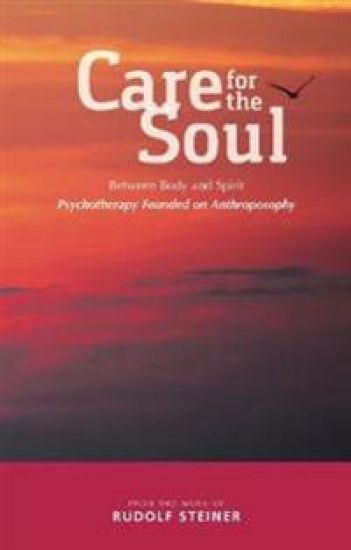
Care for the Soul

Care for the Soul

Rudolf Steiner

Rudolf Steiner Press
2019
nidottu
`We must draw the slumbering soul away from the darkness of sleep so that it no longer vanishes from its own scrutiny but stands before itself as a being of pure spirit which, in volition, is creatively active through – yet also beyond – the body.’ – Rudolf Steiner. According to Rudolf Steiner’s independent research, the soul or psyche has a relationship to both the body and the spirit. Psychologists and psychotherapists can only work in a truly healing way, he says, if they take this spiritual fact into account. This expertly-compiled anthology explores the nature of the soul as elaborated by Steiner in his writings and lectures. However, the book comprises more than an account of the psyche and life of the soul, but deals equally with the methodology for comprehending it – the scientific, and above all spiritual-scientific, means of doing so. Steiner questions methods and thought structures that are fundamental to contemporary psychology. Rather than looking backwards to conditions that influence how we are today, he focuses on our further development as beings that think, feel and act with intentionality. Given the soul’s close affinity with pictorial images, he elaborates a therapeutically-innovative meditative schooling of the faculty of imagination. As Steiner states here, his methods, `…do not draw only on the rules of the ordinary mind but first prepare in the human soul another kind of consciousness, another state of awareness, with which we then enquire into the psyche… to approach and penetrate realities of the soul.’
Un chemin vers la connaissance de soi

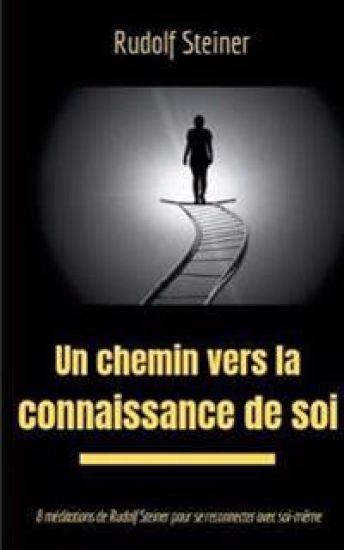
Un chemin vers la connaissance de soi

Rudolf Steiner

Books on Demand
2019
pokkari
travers 8 m ditations, le philosophe Rudolf Steiner propose ici un nouveau chemin vers la Connaissance de Soi....un chemin vers la Libert . Les deux principes fondamentaux de la th osophie sont la croyance dans la r incarnation et la loi de Karma. La premi re enseigne qu'apr s la mort, notre me rena t dans des corps successifs, en s'am liorant jusqu' la perfection. La loi de Karma affirme que toute action bonne ou mauvaise entra ne une r action proportionn e, dans cette vie ou dans une autre. Ces m ditations portent sur: - la repr sentation des corps physique, th rique, astral et du moi - La connaissance clairvoyante du monde l mentaire - La rencontre avec le Gardien du seuil - La nature des exp riences faites dans les mondes sup rieurs - Le m ditant essaie de se former une repr sentation de la succession des vies terrestres.
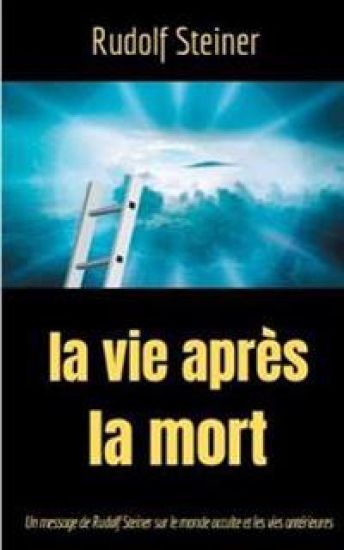
La Vie après la mort

La Vie après la mort

Rudolf Steiner

Books on Demand
2019
pokkari
Pour Rudolf Steiner, comme pour les anthroposophes et comme pour d'autres cultures, la mort est avant tout une naissance dans une autre forme d'existence, un processus qui proc de d'un d roulement sp cifique qui se d roule en plusieurs tapes. Les conf rences de Rudolf Steiner r unies ici ouvrent en grand les portes de la naissance et de la mort. Elles s'adressent ceux qui veulent comprendre ce qu'est la mort et ce qui se passe apr s. Selon son habitude, Rudolf Steiner engage ses lecteurs penser par eux-m mes et tous ses crits sur le sujet de la mort et de l'apr s-vie consisteront prodiguer des conseils pour les morts l'usage des vivants. Th mes principaux abord s par cet ouvrage: - La mort et le parcours de l' me humaine apr s la mort - Le sommeil et la mort - Entre la mort et une nouvelle naissance - Comment apprendre vivre avec les morts ? - La mort, m tamorphose de la vie.
Fairy Tales

Fairy Tales

Rudolf Steiner

Rudolf Steiner Publications
2019
pokkari
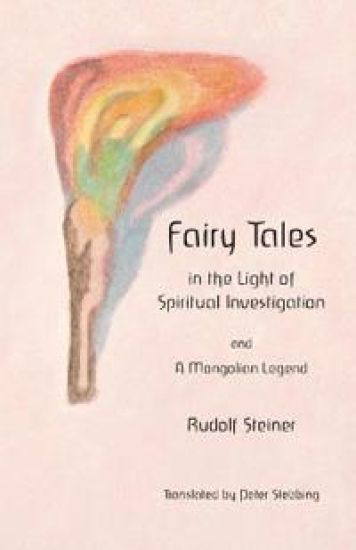
From the contents of this lecture: "Fairy tales and sagas are comparable to a good angel, granted human beings as a companion from birth on their life's wanderings, to be a trustworthy comrade throughout - offering comradeship, and making life inwardly into a truly ensouled fairy tale "This is a lecture, given by Rudolf Steiner, entitled "M rchendichtungen im Lichte der Geistesforschung," and contained in the volume "Ergebnisse der Geistesforschung" (Results of Spiritual Research) GA 62. The series in which this lecture was given at the Architektenhaus in Berlin, may be said to underline its overall importance for Rudolf Steiner: Held February 6th 1913 subsequent to a lecture January 30th on Raphael, it was followed a week later, on February 13th, by a lecture on Leonardo da Vinci. In addition, "A Mongolian Legend," an excerpt from a matinee lecture given by Rudolf Steiner: "Mythen und Sagen. Okkulte Zeichen und Symbole" (Myths and Legends. Occult Signs and Symbols), is also included. This lecture is from GA 101, lecture IV, given on the 21st of October 1907 at Berlin.
Anthroposophical Leading Thoughts 2: The Cognitional Path of Anthroposophy - The Mystery of Michael
Rudolf Steiner continues in this second installment of the Leading Thoughts to recast anthroposophy in a more succinct, coherent, and elegant form. He covers six main topics: Consciousness in the primordial past, Michael as the Ruler of Thoughts, how the Leading Thoughts are to be used, karma, dreams and higher levels of knowledge, and the Hierarchies. An austere clarity is born of brevity, making this book unsuitable for those new to anthroposophy.
Leonardo's Spiritual Stature: at the Turning Point of Modern Times
The three great masters of the Renaissance Leonardo, Michelangelo, Raphael] strove to work in the spirit of that age. And the one who already had a kind of seed, I would say, that grew into everything that has come and is still to come since that time was Leonardo. - Rudolf Steiner, Dornach, November 1, 1916. A single lecture given by Rudolf Steiner at Berlin on February 13th 1913, translated by Peter Stebbing, and edited by James D. Stewart, the e. Librarian at the Rudolf Steiner Archive & e. Lib. It is the eleventh of fourteen lectures in the volume entitled, Results of Spiritual Investigation, published in German as, Ergebnisse der Geistesforschung. From GA 62.
Growing Old

Growing Old

Rudolf Steiner

Rudolf Steiner Press
2019
nidottu
`And that is one thing we need to relearn, that all of life brings its gifts - not only the first two or three decades.' - Rudolf Steiner When are we actually old? What happens as we age? How will we cope with old age? Growing old is an art, and to grow old in the right way we need spiritual understanding. In this enlightening anthology - compiled by a director of care homes for the elderly - wide-ranging cosmological perspectives alternate with detailed observations of the phenomena of ageing. Rudolf Steiner sees ageing within the context of the earthly and spiritual evolution that encompasses all forms of existence. The book thus begins with the primary meaning that ageing has in developmental terms and ends with a consideration of the human being as co-creator in cosmic processes - and with our capacity to become increasingly conscious of the tasks this implies. These key texts by Rudolf Steiner show how spiritual knowledge can broaden the current debate on the study of old age, the process of ageing, and the particular problems faced by older people. Concerns about our `ageing population' can be seen in a broader context that recognizes the fruits of old age. The productive relationship between childhood and old age - a running theme throughout this volume - is one example. If we grow old consciously, viewing ageing not only as a period of physical decline but as a time when we can actively participate in shaping life, then we can begin to find greater meaning in it. Chapters include: `The Core Messages of Ageing'; `Fundamental Principles of Gerontology'; `Ageing as a Developmental Process'; `Ageing: the Risks and Opportunities'; The Art of Growing Old'; `Old Age and Death'; `Growing Old - A Challenge for Education'; `The Cosmological Dimensions of Ageing'.
Anthroposophical Leading Thoughts I: The Cognitional Path of Anthroposophy - The Mystery of Michael
This is one of Steiner's very most important books. Written on what would turn out to be his deathbed, it contains summaries of all of anthroposophy in the lapidary form of epigrams. This is the first of seven volumes. Steiner sought to reorganize and re-energize the Society in the aftermath of the Christmas Conference held in 1923/1924. The aphorisms contained herein were one way of making possible a kind of "concerted action" guided by the Goetheanum. A few highlights: First we must realize that the world cannot ever answer the question who we are; it can only destroy us. To answer that question ultimately, we have to develop Imagination, Inspiration, and Intuition. Deep insight into human nature is provided when we view ourselves "pictorially," like a picture being at first intuited by the painter, and only becoming of finished painting after a long imaginative and inspired process. The volume includes two appendices, with selections from The Life, Nature, and Cultivation of Anthroposophy, and Carl Unger's marvelous reflections on the Leading Thoughts in aphoristic form.
Kundalini

Kundalini

Rudolf Steiner

Rudolf Steiner Press
2019
nidottu

Halvin toimitettuna 22,50 €

In Hindu tradition, the concept of kundalini refers to a form of primal energy located at the base of the spine. Through traditional Eastern methods, efforts were made to `awaken’ the kundalini in order to achieve transformed consciousness. Rudolf Steiner offers an entirely new perspective, integrating the kundalini idea into his spiritual philosophy. This anthology contains all relevant comments and notes by Steiner on the theme, highlighting how his thinking evolved. At the same time, it accentuates the differences – and similarities – between Western and Eastern spiritual paths, and in the process reveals what is new and original about Steiner’s esoteric teachings. In contrast to most yoga traditions – which cultivate the energy rising from the lower life centre – the Western path of esoteric schooling starts in our upper centre of consciousness, in thinking and the `I’. From there, the centre of experience is shifted downward, from the head to the heart. After development of the `new heart centre’, as Rudolf Steiner describes it, forces can be guided consciously and, through specific exercises, the `kundalini snake’ can be fully awoken. In his detailed introduction, editor Andreas Meyer distils the perspectives and instructions from Steiner’s complete works, presenting a valuable synopsis for our understanding and practice of meditation today. Chapters include: `The Meaning of Meditation, and the Six Exercises’; `Developing and Cleansing the Lotus Flowers’; `The Snake Symbol’; `The Kundalini Fire’; `The Kundalini Light’; `Developing the New Heart Organ’; `The Reversal in Thinking and Will’; `Specific Aspects of Kundalini Schooling’; `Transforming Physical Love and the Division of the Sexes’; `Breathing, the Light-Soul Process, and the New Yoga Will’; `The Polarity of Light and Love’ and `Transforming the Kundalini Fire into Fraternity’.
Foundations of Esotericism

Foundations of Esotericism

Rudolf Steiner

Rudolf Steiner Press
2019
nidottu
`It is a cosmic law that what has once taken place can never vanish, but must reappear later in a metamorphosed form. Every thought, feeling and action brought about by man does not only affect the world around him but will re-appear in the future…’ (From the Preface) This course of lectures was originally offered as private, strictly verbal instruction to a select group of esoteric pupils. In an atmosphere of earnest study, Rudolf Steiner `translated’ from the Akashic Script valuable concepts of human and cosmic knowledge into words of earthly language – content that is often not to be found in his later lectures. Although working within the Theosophical Society, Steiner was an independent spiritual teacher: `… I would only bring forward the results of what I beheld in my own spiritual research.’ The manifold, exact and detailed descriptions of the events of evolution in these lectures form a background to the evolving figure of the human being. The mighty event of the moon leaving the Earth, vividly described, took place – according to Rudolf Steiner – in order to provide an environment suited to human progress. The wonderful moment when the higher being of man descended in a bell-like form and enveloped the lower human body, still on a level with the animals, depicts what eventually provided human beings with a body suited to the development of the self or `I’. Spiritual beings and the great initiates led humanity along the path it was destined to tread. Rudolf Steiner presents a sweep of occult knowledge, including the phases of planetary evolution, various myths and symbols, human physical and spiritual organs, illness, reincarnation, and much more. Also included are unexpected insights into specific phenomena such as dinosaurs, bacteria, radiation, black and white magic, the Sphinx and Freemasonry.