Kirjojen hintavertailu – 12 903 725 kirjaa ja 27 kauppaa

Kirjailija

Rudolf Steiner

Kirjat ja teokset yhdessä paikassa: 1 477 kirjaa, julkaisuja vuosilta 1910–2026, suosituimpiin kuuluu The Cosmic New Year: A Course of Lectures by Rudolf Steiner. Vertaile teosten hintoja ja tarkista saatavuus suomalaisista kirjakaupoista.

1 477 kirjaa

Kirjojen julkaisuvuodet: 1910–2026.

Toward a Threefold Society

Toward a Threefold Society

Rudolf Steiner

Rudolf Steiner Publications
2019
pokkari
This book was first published in Germany in 1919, immediately after the First World War. It recommends that Germany, still suffering the "calamity" of the war, organize itself in a Threefold Society with autonomous economic, political and cultural systems. He wrote at the end of the book: "One can anticipate the experts who object to the complexity of these suggestions and find it uncomfortable even to think about three systems cooperating with each other, because they wish to know nothing of the real requirements of life and would structure everything according to the comfortable requirements of their own thinking. This must become clear to them: either people will accommodate their thinking to the requirements of reality, or they will have learned nothing from the calamity and will cause innumerable new ones to occur in the future." The "calamity" referred to is the First World War, and since that time history has shown these words to be prophetic. Rudolf Steiner's suggestions were ignored in Europe at that time, and the calamities have been occurring "innumerably" ever since. The "social question" has not been resolved, nor have the steps been taken which are necessary to initiate the healing process. Is it not now time to reconsider them for the world in a new age?
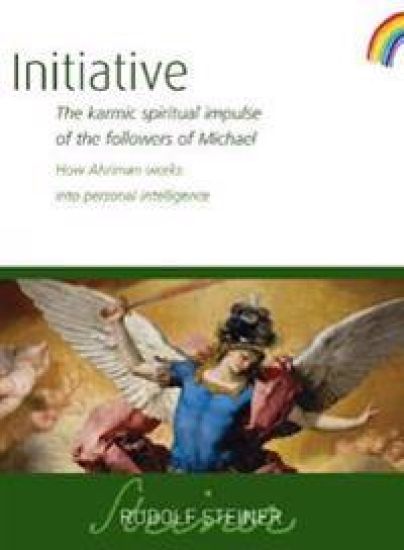
Initiative

Initiative

Rudolf Steiner

Rudolf Steiner Press
2019
nidottu
`Be a person of initiative, and take care that the hindrances of your own body, or hindrances that otherwise confront you, do not prevent you from finding the centre of your being, where the source of your initiative lies. Likewise, you will find that all joy and sorrow, all happiness and pain, depend on finding or not finding your own individual initiative. - Rudolf Steiner, Dornach, 4 August 1924 Rudolf Steiner urges those who feel the calling of the Archangel Michael to become people of initiative. The anthroposophist should be aware that, `... initiative lies in his karma, and much of what meets him in this life will depend on the extent to which he can become willingly, actively conscious of it.' In the second half of this inspiring lecture, Steiner describes how the being of Ahriman is able to work through the personal intellect of human beings today. As a consequence, we are called upon to be inwardly awake and vigilant at all times.
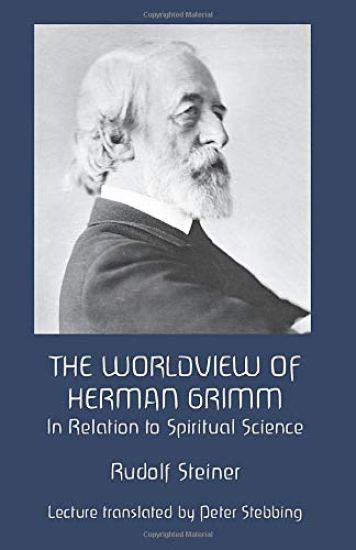
The Worldview of Herman Grimm: In Relation to Spiritual Science
In content, this translation into English of Rudolf Steiner's lecture on the art historian, author and researcher Herman Grimm, can be said to be a paean to Grimm's wholly original and unorthodox approach to art history. Herman Grimm's work differs substantially from standard, more intellectual approaches, as becomes evident from this statement of Herman Grimm quoted here: "Raphael is a citizen of world-history. He is like one of the four rivers that, according to the belief of the ancient world, flowed out of Paradise.
Imagination, Inspiration, and Intuition: Intermediate Lectures
The present volume of intermediate lectures contains excerpts from three different works. The first is from GA 21; Enigmas of the Soul ( Amazon: ] Keryx, 2017). This is the rather brief passage that would prove foundational both for Waldorf education and the threefold social order in which Steiner first sets out the correspondences between thinking and the nervous system, feeling and the rhythmic system, and willing and the metabolic or limb system. Steiner also has quite a bit to say about Imagination, Inspiration, and Intuition. The second is also quite short, but extremely sublime: here he describes the ways that Imagination, Inspiration, and Intuition yield higher cognition to incarnated spirits, while the same three faculties represent spiritual realities guiding us into incarnation. The third is likewise short and likewise sublime, detailing the ways in which Imagination and Inspiration and Intuition rise up to direct intuition of the cosmic ethers and the workings of the planets
Eurythmy, Its Birth and Development

Eurythmy, Its Birth and Development

Rudolf Steiner

Rudolf Steiner Press
2019
nidottu
`This gave my mother the opportunity of mentioning to Dr Steiner an idea… Could one affect the physical body in a healing, strengthening and regulating way through certain rhythmical movements of the etheric body – which after all was the centre of all that was rhythmical – as well as of health and illness? Dr Steiner not only enthusiastically affirmed this possibility, but spontaneously declared himself ready to give the necessary directions which I could then work out with my mother’s help.’ – Lory Maier-Smits Alongside original material by Rudolf and Marie Steiner, this volume features unique first-hand accounts of the birth of the art of eurythmy by a number of its early students and practitioners. The practical and artistic stages of its development are chronicled in detail, alongside reports from the first public performance onwards. Rudolf Steiner offers inspiration to the original eurythmists to make their own discoveries – to perceive and fashion in movement their creative `inner voice’. The artistic principles are established for later development and elaboration, to reveal and foster human creativity in many poetic and musical contexts. Through the text, links between eurythmy and temple-dances, that accompanied ancient initiations, gradually emerge. The impulse to dance is rediscovered as inherent in the `lost Word’, or the primordial root language still available in `genetic etymology’– the sounds of speech used in all languages. Music eurythmy, we learn, did not start from dancing, but from the archetypal structure of the musical system. Consequently, we can witness directly how an eloquent performing art can properly develop when technique and inspiration meet. The text is supported by extensive supplementary material, including eurythmy forms, a chronological survey, notes and indexes.
Eurythmy as Visible Singing

Eurythmy as Visible Singing

Rudolf Steiner

Rudolf Steiner Press
2019
nidottu
`The study of music is the study of the human being. The two are inseparable, and eurythmy is the art which brings this most clearly to expression. In these lectures, Rudolf Steiner guides us along a path toward an understanding of the human form as music comes to rest – the movements of eurythmy bringing this music back to life.’ – Dorothea Mier `Fundamentally speaking, music is the human being, and indeed it is from music that we rightly learn how to free ourselves from matter.’ – Rudolf Steiner The focus of these eight lectures is the source of movement and gesture in the human being. The movement in musical experience is thus traced back to its origin in the human instrument itself. Like the degrees of the musical scale, Rudolf Steiner leads his select audience of young artists through eight stages, focusing on the living principles of discovery and renewal. Eurythmy was born in the turbulent decades of the early twentieth century. From an individual question as to whether it was possible to create an art based on meaningful movement, Rudolf Steiner responded with fresh creative possibilities for a renewal of the arts in their totality. The new art of eurythmy was an unexpected gift. Today, music eurythmy, along with its counterpart based on speech, is practiced as an art, taught as a subject in schools, enjoyed as a social activity and applied as a therapy. This definitive translation of Steiner’s original lecture course on eurythmy includes a facsimile, transcription and translation of the lecturer’s notes, together with an introduction and index. The volume is supplemented with an extensive `companion’, featuring full commentary and notes compiled by Alan Stott, as well as a translation of Josef Matthias Hauer’s Interpreting Melos.
Letters and Documents

Letters and Documents

Rudolf Steiner; Marie Steiner von Sivers

Rudolf Steiner Press
2019
nidottu
`I send you fondest thoughts on your birthday. On this day I will think a lot of all the beautiful things which were, and are contained in our work together, and which now always stand so beautifully before my inner eye when I describe them. Let me assure you that I write this description with love.’ – Rudolf Steiner to Marie Steiner, 13 March 1925 Containing all the correspondence between Rudolf and Marie Steiner to be found in their respective estates, this volume provides unique insight into the couple’s pivotal relationship. The years 1901-25 were a time of struggle, as Rudolf Steiner – faithfully supported by the young Marie von Sivers (later to become Marie Steiner in 1914) – endeavoured to build a completely new spiritual movement on earth. Their letters cover everything from the esoteric view of evolution and human advancement to dealing with organizational details, challenging personalities and, of course, their own relationship. In addition to the correspondence, a number of documents have been inserted chronologically throughout the text. The famous `notes’ written by Rudolf Steiner for Edouard Schure, for example, provide a unique introduction to the volume, giving profound insights into the development of the anthroposophical movement. Also included are the many versions of Rudolf Steiner’s will. Comprehensive notes are provided, as well as an index of persons and an itinerary giving dates of relevant lectures and eurythmy performances.