Kirjailija
Rudolf Steiner
Kirjat ja teokset yhdessä paikassa: 1 477 kirjaa, julkaisuja vuosilta 1910–2026, suosituimpiin kuuluu The Cosmic New Year: A Course of Lectures by Rudolf Steiner. Vertaile teosten hintoja ja tarkista saatavuus suomalaisista kirjakaupoista.
1 477 kirjaa
Kirjojen julkaisuvuodet: 1910–2026.

Grundlegendes für eine Erweiterung der Heilkunst nach geisteswissenschaftlichen Erkenntnissen
Rudolf Steiner; Ita Wegman
Steiner Verlag, Dornach
2014
sidottu

Grundlinien Einer Erkenntnistheorie Der Goetheschen Weltanschauung (1886)
Rudolf Steiner
Literary Licensing, LLC
2014
nidottu

'Fundamentally, all of spiritual science ultimately aims to understand human beings in their essence, in their tasks and endeavours - in their necessary endeavours in the course of development.' - Rudolf Steiner In the midst of the division and destruction of the Great War, Rudolf Steiner speaks of the spiritual unification of all human beings. Rather than preaching a traditional morality, however, he states esoteric facts as he perceives them, based on spiritual-scientific research. These observations relate to the powerful universal impulse of Christ - a healing spiritual force that works through the various nations and races, irrespective of creed or colour - as a source of potential unity. Rudolf Steiner describes this impulse as the central core of human evolution. It allows for a conscious and newly-acquired connection between all human beings, in the context of the continuing diversification and fragmentation of the human race. The central motif in these lectures relates to the appearance of Christ on earth - knowledge of his historical incarnation, as well as Christ's manifestation in the present and future periods of human development. Rudolf Steiner creates an arc from the pre-Christian mysteries through Gnosticism and the older studies of the early Church Fathers, to Scholasticism and neo-Scholasticism. After ancient faculties of clairvoyance had began to fade, he explains, human beings could no longer see beyond the world of outer appearances, and direct perceptions of Christ were therefore no longer possible. And so the question arose as to how limitations on human knowledge could be overcome - a question which remains pertinent in our time. Steiner asserts that only a transformation of thinking, enabling a living and conscious inner conceptual life, can allow for a true understanding of the relationship between the earthly Jesus and the cosmic Christ. Such living thinking leads in turn to direct experience. Other topics in this volume include the birth date of the 'two Jesus children'; the wisdom of Gnostic teachings; the provenance of the Cross; the mysteries of the Christmas festival; insights into ancient Christmas plays, and reflections on individual consciousness of karma in the future
'Our contemporaries - who wish to keep to a narrow-minded and superficial outlook, are annoyed to find that spiritual science continually seeks the whole picture - that it has to create a bridge between the body and the soul, and truly explores how the psyche becomes corporeal and the body becomes psychological.' How do the soul and the spirit live in human physical bodies? In our materialistic age, in which the very existence of the metaphysical is widely rejected, such questions are rarely posed let alone addressed. In this exceptional series of lectures, Rudolf Steiner speaks in scientific detail about the connection of the subtle aspects of human nature - our soul and spirit - to our physical constitution. At the heart of this course are the well-loved 'Bridge' lectures, which appear in English for the first time in their wider context. Steiner discusses the solid, fluid, air and warmth bodies, and how these are connected with the various ethers, the 'I' and human blood. He goes on to describe how ideals and ideas impact the various aspects of the human constitution - how morality is a source of 'world creativity' - with moral thinking imbuing life into substance and will. Moral ideas have a positive effect, he says, whereas theoretical ones have a negative impact. In the realm of the moral, a new natural world comes into being, and thus the moral order and the natural order are intertwined. This volume also features Steiner's classic lecture on the Isis legend and its renewal today as divine wisdom - Sophia. Other themes include the mystery of Christ as the connection between the spiritual and physical sun; the permeation of the life of thought with will (love) and permeation of the life of will with thoughts (wisdom); the path to freedom and love and their importance in the universe; the metamorphosis of head and limbs through successive lives on earth; the threefold nature of the human form (head, thorax, limbs), the threefold nature of the soul (thinking, feeling, will) and the threefold nature of the spirit (waking, dreaming, sleeping).
Rudolf Steiner's four mystery dramas are powerful portrayals of the complex laws of reincarnation and karma. They transport us into a landscape of the human soul and spirit, where suprasensory beings are active. Through the perception of these hidden worlds, we are given the opportunity to understand the struggles we face in attempting to apply spiritual knowledge to our everyday lives and relationships. Written between 1910 and 1913 during periods of intense inner and outer work, these dramas are powerful testimonies to Steiner's artistic creativity. By manifesting soul and spirit forms on a stage, they foreshadow a dramatic art for the future. The complete cycle of four plays is reproduced here in the classic translation by Ruth and Hans Pusch. The Four Plays: The Portal of Initiation: A Rosicrucian Mystery, through Rudolf Steiner The Soul's Probation: A Life Tableau in Dramatic Scenes As Sequel to the Portal of Initiation, through Rudolf Steiner The Guardian of the Threshold: Soul Events in Dramatic Scenes, by Rudolf Steiner The Souls' Awakening: Soul and Spirit Events in Dramatic Scenes, by Rudolf Steiner This volume is a translation of Vier Mysteriendramen (vol. 14 of Rudolf Steiner's Complete Works).
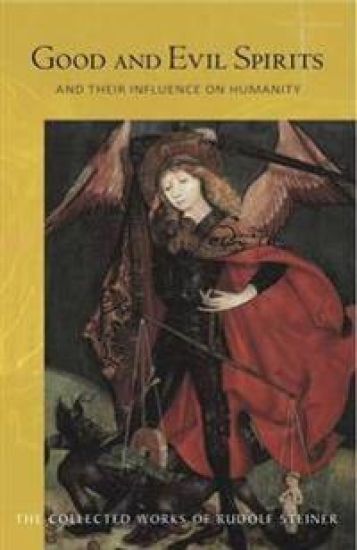
'We learn gradually to raise our eyes not only to material existence; instead we discover spiritual entities and their actions wherever we look in the universe... We get to know the deeds of these spirits. We are alive and active and we are within the spiritual entities and their activities.' - Rudolf Steiner This classic series of lectures presents systematic knowledge on many different spiritual entities, ranging from the higher hierarchies of angels down to hindering demons. Basing his presentation on spiritual-scientific research, Rudolf Steiner intends to awaken us to the existence of these beings and how they interact with all aspects of our lives. Steiner describes how animals, plants and minerals have group souls - with even an inert stone having a spiritual counterpart in the invisible world. The various planets in the cosmos are connected to great spiritual beings and hierarchies too, as is the zodiac, which is not a static band of fixed stars but is also evolving. Steiner gives a remarkable picture of how Christ relates to the zodiacal constellations and to our own higher aspects. Spiritual entities are associated with the evolution of earth and the previous stages of its existence - and here Steiner elaborates relevant chapters of his book Occult Science, An Outline, explaining how our task on earth is ultimately to develop love rather than wisdom (which was the goal of earth's previous stage). From cosmic considerations, Steiner leads to the spirits of the kingdoms of nature - the elemental beings, with their four classes connecting to the four elements - gnomes, undines, sylphs and salamanders, or earth, water, air and fire spirits. He describes how elemental beings are created by human activities - with coercion of the views of others leading to 'demons', lying leading to 'phantoms', and bad social systems to 'spectres'. Spirits are also created in the association of humans and animals, whilst other spiritual entities connect us with the arts. Steiner emphasises the importance of developing and appreciating the arts - such as music, sculpture, architecture, painting and poetry - for the sake of humanity's future evolution.
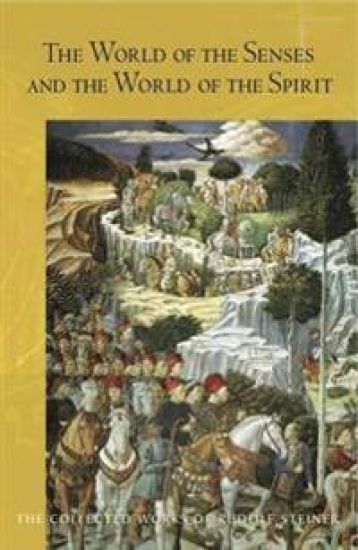
The World of the Senses
Rudolf Steiner
Rudolf Steiner Press
2014
nidottu
Halvin toimitettuna 24,60 €
'When we consider the plant world in all its greenery, or the stars with their golden glory; when we look at all this without forming any judgement from within ourselves but instead permit the things to reveal themselves to us...then all things are transformed from what they were in the world of the senses into something entirely different - something for which no word exists other than one which is taken from our very life of soul...' - Rudolf Steiner One of Rudolf Steiner's most fundamental objectives was to show how the spiritual world connects to and penetrates the material world. In doing so, he was pioneering a modern form of Rosicrucianism - countering traditional religious conceptions (that spirit and matter are polar opposites) as well as contemporary materialistic science (that ignores the existence of spiritual phenomena altogether). In this concise series of lectures, Rudolf Steiner shows how the human senses reveal the mysterious world of the will, which is at once a spiritual and physical phenomenon. The senses act as a portal connecting our physical and etheric bodies with what Steiner refers to as worlds of 'all-pervading will' and 'all-pervading wisdom'. He elaborates this theme, giving some unexpected and delightful insights into the senses of hearing and sight, and in particular how we experience colour. Steiner suggests that divine spiritual beings had different intentions for the formation of physical human beings, but that adversary powers caused disruption, leading to a more materialized constitution. He describes disorders in the connections between the human physical, etheric, astral and ego bodies, and the ill effects of one aspect overpowering the others. He gives insight into human glandular secretions, and why we need to eat and digest - also connected to the intervention of adversary beings. Among the many other themes tackled here, Rudolf Steiner describes the transformation of the human senses and organs, giving special consideration to the function of the larynx, which in future times will develop a special kind of reproductive power.
Die Erziehung des Kindes / Die Methodik des Lehrens
Rudolf Steiner
Steiner Verlag, Dornach
2014
pokkari

Wie erlangt man Erkenntnisse der höheren Welten?
Rudolf Steiner
Steiner Verlag, Dornach
2014
pokkari
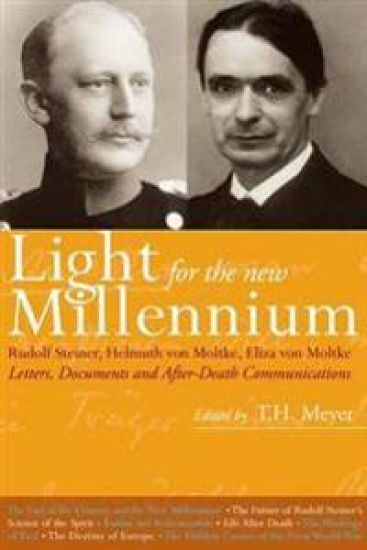
Light for the New Millennium
Rudolf Steiner; Helmuth von Moltke; Eliza von Moltke
Rudolf Steiner Press
2014
nidottu
Containing a wealth of material on a variety of subjects, Light for the New Millennium tells the story of the meeting of two great men and their continuing relationship beyond the threshold of death: Rudolf Steiner (1861-1925) - the seer, scientist of the spirit, and cultural innovator - and Helmuth von Moltke (1848-1916) - a renowned military man, Chief of the General Staff of the German army during the outbreak of the First World War. In 1914, following disagreements with the Kaiser, Moltke was dismissed from his post. This led to a great inner crisis in the General, that in turn drew him closer to Steiner. When Moltke died two years later, Steiner maintained contact with his excarnated soul, receiving communications that he passed on to Moltke's wife, Eliza. These remarkable and unique messages are reproduced here in full, together with relevant letters from the General to his wife. The various additional commentaries, essays and documents give insights to themes of continuing significance for our time, including the workings of evil; karma and reincarnation; life after death; the new millennium and the end of the last century; the hidden causes of the First World War; the destiny of Europe, and the future of Rudolf Steiner's science of the spirit. Also included are Moltke's private reflections on the causes of the Great War ('the document that could have changed world history'), a key interview with Steiner for Le Matin, an introduction and notes by T. H. Meyer, and studies by Jurgen von Grone, Jens Heisterkamp and Johannes Tautz.