
Kirjailija
Rudolf Steiner
Kirjat ja teokset yhdessä paikassa: 1 477 kirjaa, julkaisuja vuosilta 1910–2026, suosituimpiin kuuluu The Cosmic New Year: A Course of Lectures by Rudolf Steiner. Vertaile teosten hintoja ja tarkista saatavuus suomalaisista kirjakaupoista.
1 477 kirjaa
Kirjojen julkaisuvuodet: 1910–2026.

spacer In these unique lectures, given to members of his Esoteric School (1904-14), Rudolf Steiner's main intention is to throw light on the hidden content of the picture-language of myths, sagas and legends. Pictures, he explains, are the real origin of all things - the primeval spiritual causes. In order to work in a healthy way with pictures or symbols today, however, it is necessary that one should first become acquainted with their esoteric content - to understand them. At the time of these lectures Steiner was planning to inaugurate the second section of the Esoteric School, which was to deal in a direct way with a renewal - out of his own spiritual research - of ritual and symbolism. He gave these lectures as a necessary preparation, to clarify the history and nature of the cultic tradition. He thus discusses principally Freemasonry and its background, but also the Rosicrucians, Manichaeism, the Druids, the Prometheus Saga, the Lost Temple, Cain and Abel - and much else besides.
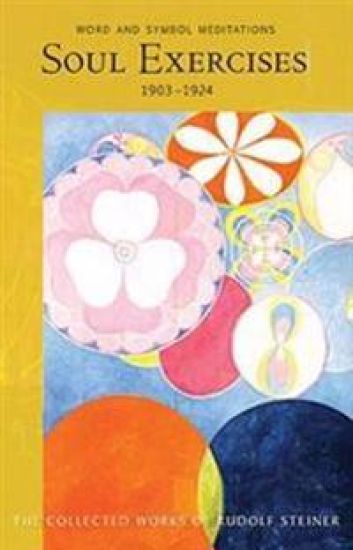
Soul Exercises, 1903-1924 (CW 267)"The whole world stands facing the human soul--dark, unknown as the blue of the sky. But what is unknown comes. The human soul must feel this coming as its own extinguishing. Sensing this self-extinguishing is followed by the right to re-create oneself anew from the outer world that has been absorbed.... "I am 'I.'"Rudolf Steiner made it his task to teach nothing that he had not experienced himself and always encouraged others to make individual spiritual-meditative research the basis of their spiritual lives. Therefore he gave many spiritual exercises to his pupils who asked for them. This was especially the case during the period of the Esoteric School (1904-1914), which closed with the outbreak of World War I, which made a certain kind of esoteric work impossible. Steiner, however, continued to give individuals exercises and meditations in private conversations until 1924, when his health no longer allowed it. Usually he would write all instructions out by hand. A few were communicated verbally. Although every exercise originated in a particular context, he believed that because the same conditions apply to all who take up this path of training, in principle the exercises should be available in "the widest possible context." Beginning with general rules and conditions (the so-called supplementary exercises), meditations for the days of the week, and morning and evening exercises, Soul Exercises collects all of the word and symbol meditation exercises Steiner gave. This includes nine groups of exercises based on Mabel Collins' "Light on the Path" and a multitude of exercises with individually composed meditative verses. The book concludes with explanations and contextual commentary relating to the exercises, including notes on the value of symbolic ideas on the path of spiritual schooling; the Rose Cross meditation; the verse "More radiant than the Sun"; the backward review (R ckshau); contemplation of one's own divine ideal; and alcohol and diet. Soul Exercises is an essential help to all who take up the anthroposophic path of inner work. This volume is a translation from German of Seelen bungen: Band I. bungen mit Wort- und Sinnbild-Meditationen zur methodischen Entwicklung h herer Erkenntniskr fte, 1904-1924 (GA 267). Cover art: De tio st rsta, n 2 (1907) by Hilma af Klint (1862-1944), Swedish artist and mystic.
'Essentially we do not really have the right to talk about normality or abnormality in a child's inner life, nor indeed in the inner life of human beings altogether... One does not gain much from such labelling, and the first thing to happen should be that the physician or the teacher rejects such an assessment, and goes further than saying that something is clever or sensible according to the way people are habitually thinking.' - Rudolf Steiner Speaking in 1924, when general attitudes to people with special needs were far from enlightened, Rudolf Steiner gave this seminal course of lectures to a small group of teachers and doctors as a fundamental basis for their future work. In the cultural context of the time, regressive ideas such as Social Darwinism and Eugenics were not only tolerated but popular (some 15 years after these lectures were delivered, the Nazis were to initiate their so-called 'euthanasia' programme). In contrast, Steiner - who as a young man had successfully tutored a boy with special needs - was devoted to the progressive task of special education and, in the words of one of those present, '...gave the course with pleasure and satisfaction'. In the twelve lectures, Rudolf Steiner describes polarities of illness and derives courses of treatment from a comprehensive analysis. He considers many individual cases in detail and gives indications on therapeutic exercises, diet and medicine. The 'I' (or self), he states, relates directly to the physical body, and spirit and soul need to be taken into consideration when making diagnoses. Throughout the course Steiner gives valuable advice regarding the educator's own development, emphasizing the need for enthusiasm, humour and courage. As with Steiner's lectures on agriculture, which stimulated the birth of the worldwide biodynamic movement, this single course has had a huge international impact, inspiring the founding of hundreds of schools and communities for people with special needs - encompassing both the Camphill and Steiner special education movements. Revolutionary in its approach, the far-reaching perspectives of these lectures are a living source of inspiration to both professionals in the field and parents and others seeking spiritual insight. This new edition features a fresh translation, introductory material, notes, colour plates and an index. 12 lectures, Dornach, Jun. - Jul. 1924, CW 317
'Let us be courageous and not draw back in fear when realities of the world of spirit that play into human life are unveiled. You see, the future of humanity depends on us learning to live with the world of spirit in the same way that we live with the physical world here on earth.' - Rudolf Steiner In a wide-ranging series of lectures, Rudolf Steiner demonstrates the integral nature of spirit and matter and their manifold connections. Speaking to audiences in London, Holland, Germany and Switzerland, Steiner explains how, through a process of evolving consciousness, humanity lost its knowledge and direct experience of the spiritual sources of existence, but now needs to reconnect with them. Spirit is the essence and power of life which, in Steiner's vivid image, 'strikes a match in our whole being' when we allow it to inform us fully. Our world cannot be understood only in physical terms but is inseparable from the divine realities continually creating and sustaining it. Reconnecting with the spirit calls upon us to heal the fractures between everyday consciousness and the metaphysical realms in which we are already embedded. In Steiner's descriptions, there is no end to the numerous reconnections possible: between our past, present and future; between the active, individualizing principle of the 'I' and the physical human body it works upon and shapes; between our physical actions and limb movements in one life and the forming or sculpting of our head in a future one; and above all, between the moral actions and insights we develop whilst alive on earth and our developing 'eye' for spiritual reality in the life after death, with all that this can mean for the future of human evolution. Taking a truly holistic approach, Rudolf Steiner tackles an eclectic series of subjects throughout these sixteen lectures - all united by the common theme of rediscovering how spirit pervades life. Apart from a focus on education in several lectures, he discusses: experiences during sleep; the human spirit and soul between death and a new birth; how spirit 'sculpts' the human organism; Christ from the perspective of anthroposophy; the battle for human nature between luciferic and ahrimanic beings; karma and the creation of conditions for our return to a new life on earth; human experience of the etheric cosmos; and the human being's faculties of hearing, speaking, singing, walking, and thinking. Together, these lectures offer a cornucopia of spiritual insights and wisdom for the present day. 16 lectures, various cities, 1922, CW 218
'Anyone who takes hold of what we call spiritual science, not with purely abstract thoughts but with his whole being, will see that this spiritual science goes right into the dexterity of the hands, that it makes a person more capable and enables him to extend his interest over wider areas and his will over a wider world.' - Rudolf Steiner Returning from travels in war-torn Europe, Rudolf Steiner gives a stark impression of the disastrous conditions of the time, encouraging deeper esoteric work as a counter to the world-situation. Speaking under the broad theme of human development in the light of anthroposophy, he analyses the gulf between contemporary culture and science - which he says are characterized by 'narrow-mindedness, philistinism and ineptitude' - and a scientific approach to the spirit. At the same time, Steiner is clear-sighted about the shortcomings of his followers, mentioning past failures and a continuing tendency towards sectarianism and dogmatic judgements. Rudolf Steiner discusses how we experience a state of separateness with the world through our physical form, whilst our aura - or soul-spiritual being - is already living actively in cosmic surroundings. A conscious crossing of the threshold into the spiritual world is urgent and necessary today, although Steiner warns of the dangers inherent in certain eastern and western approaches. The tendency of initiates of the Orient is to abandon the human race, whilst the American impulse is immersed too strongly in physical, bodily nature. And a potential demonic influence works through technology. However, a spiritual-scientific path of knowledge and development can allow us to navigate through these challenges. Other themes featured include: the threefold Sun Mystery of ancient times; the Mystery of Christ Jesus and the threefold being of man; the human limbs as thoughts of the higher hierarchies; the loss of the spiritual knowledge of the old Mysteries; the gulf between idealism and realism; the formation of language from Cosmic Intelligence; the Pythagorean School and the mendacity of the world at that time; the disintegration of words after death; the twelve senses; the spiritual impact of old people's death on the physical Earth; and the impulse of socialism. The wealth of spiritual thoughts and knowledge presented in these lectures remain as relevant today as they did when the they were first delivered. 9 lectures, Dornach, Aug. - Sept. 1918, CW 183
How the Spiritual World Projects into Physical Existence
Rudolf Steiner
Rudolf Steiner Press
2014
nidottu
Halvin toimitettuna 24,60 €
'By cultivating spiritual thoughts here on earth we can provide nourishment for the dead... When fields lie fallow they produce no crops to feed humanity and people may die of starvation. The dead cannot die of starvation, of course; all they can do is suffer when spiritual life lies fallow on earth.' - Rudolf Steiner The founding of the Anthroposophical Society in 1913 marked a major change in Rudolf Steiner's work. Although Steiner had always been an independent spiritual researcher, the break with the theosophists removed all constraints, allowing for a full flowering of anthroposophy. These lectures, presented to audiences in Germany, France and Sweden, are filled with a freshness and vitality that reflect this new beginning, providing intriguing glimpses of great themes that Steiner was to develop in the years ahead. A predominant topic here is that of death. Rudolf Steiner seeks to explain how people on earth can reach the dead in a non-mediumistic way, and how such interaction between 'living' and 'dead' is mutually beneficial. Startlingly, he states that people who do not recognize the being of Lucifer during their earthly life - who have not 'already got to intuit and know the luciferic impulses in the human soul properly whilst here in life' - will be 'vampirized' by this being after death. Rudolf Steiner also elaborates on the activities of the adversary beings in present-day civilization - spiritual powers that play a necessary role in Earth evolution - and how we can counteract them. The longer someone can stay alive, for example, is a victory over Ahriman's activity. Even the losing of teeth has beneficial aspects, allowing us to '...gain certain impulses and these overcome Ahriman'. Steiner relates the actions of such spiritual entities to child development too, indicating the various influences in the seven-year cycles of growth. Also included are lectures on the Christian festivals and various artworks, including 'The Triumph of Death' in the Composanto cemetery at Pisa, which reveals great secrets of humanity's evolution. Whatever the subject addressed, it soon becomes apparent that these lectures were not just relevant to Steiner's audience in 1913, but also speak to contemporary souls around the world seeking spiritual orientation and understanding. 10 lectures, various cities, Jan. - Dec. 1913, CW 150
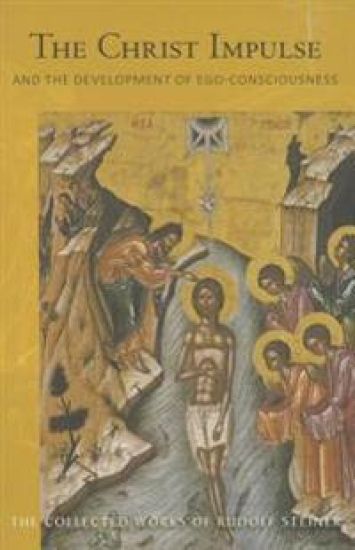
Christ will reappear but in a higher reality than the physical one - in a reality which we will only see if we have first acquired a sense and understanding of spiritual life. Inscribe in your hearts what anthroposophy should be: a preparation for the great epoch of humanity which lies ahead of us.' Rudolf Steiner's teachings of Christ - and in particular what he refers to as the 'Christ impulse' - are unique. Christ, he says, is an objective universal force, existing independently of Christian churches and confessions, and working for the whole of humanity. The impulse that Christ brought to earth acts for the advancement of all people, irrespective of religion, creed or race. Speaking in Berlin whilst still a representative of the largely eastern-oriented Theosophical Society, Rudolf Steiner presents multifaceted perspectives on the Christ impulse, based on his independent spiritual research: from the vast cycles of time preceding Christ's incarnation and the preparation for his coming, to the actual physical embodiment of Christ in Palestine, in Jesus of Nazareth, some two thousand years ago. Steiner also describes how Christ will influence the future development of the earth and humanity. In his opening lecture, Rudolf Steiner discusses the nature of the Bodhisattvas and their role in relation to Christ and human evolution. The Bodhisattvas are the great teachers of humanity, incarnating in human form during their passage through the various cycles of cultural development, and are intimately involved in preparing the work of the Christ impulse. In other lectures Steiner addresses subjects as diverse as the Sermon on the Mount in relation to the development of the faculty of conscience, and the current duality of male and female (microcosm) and its correspondence in the cosmos (macrocosm). The latter phenomenon is related to initiation within the Germanic and Egyptian mysteries, which reach their higher unity in Christian initiation. Among the myriad other themes that emerge here are: the introduction of the 'I' (or self) in human development and its essential connection to Christ; the preparation of the Christ impulse through the Jahveh religion and the law of Moses; the meaning of the Ten Commandments; and the new clairvoyance in relation to the appearance of Christ in the etheric. 7 lectures, Berlin, Oct. - May 1909, CW 116


Esoterische Betrachtungen karmischer Zusammenhänge 2
Rudolf Steiner
Steiner Verlag, Dornach
2014
pokkari
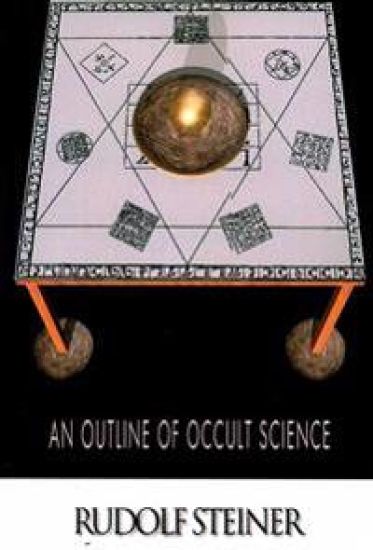
An Outline of Occult Science
Rudolf Steiner
Createspace Independent Publishing Platform
2014
nidottu





Das esoterische Christentum und die geistige Führung der Menschheit
Rudolf Steiner
Steiner Verlag, Dornach
2014
nidottu