Kirjojen hintavertailu – 12 903 725 kirjaa ja 27 kauppaa

Kirjailija

Rudolf Steiner

Kirjat ja teokset yhdessä paikassa: 1 477 kirjaa, julkaisuja vuosilta 1910–2026, suosituimpiin kuuluu The Cosmic New Year: A Course of Lectures by Rudolf Steiner. Vertaile teosten hintoja ja tarkista saatavuus suomalaisista kirjakaupoista.

1 477 kirjaa

Kirjojen julkaisuvuodet: 1910–2026.

True Knowledge of the Christ

True Knowledge of the Christ

Rudolf Steiner

Rudolf Steiner Press
2015
nidottu
'All existence is spirit. Just as ice is water, so matter is also spirit. Mineral, vegetable, animal or human - all are a condensed form of spirit.' - Rudolf Steiner In the two lecture courses featured in this volume, Rudolf Steiner presents a radical new paradigm. Tackling the central dilemma of modern civilization - the polarisation of science and spirituality - he seeks to broaden natural science through a comprehensive spiritual science. Rather than harking back to old spiritual forms or religions, Steiner's approach is based on a conscious and systematic intensification of thinking and perception. Rudolf Steiner approaches this spiritual-scientific task from two perspectives. In Kassel, Germany, he deepens insight into theosophy and Rosicrucianism, showing their relationship to science and religion. Although presented as an 'introduction', Steiner was never interested in simply providing information - not even in the form of new revelations - and his insights are from fresh angles and with new illustrative examples. These lectures deepen and develop key elements found in his fundamental works Occult Science, An Outline and Theosophy. Also featured are the fascinating question-and-answer sessions from the Kassel lectures. In Basel, Switzerland, Rudolf Steiner discusses that most esoteric of the accounts of the life of Christ: the Gospel of John. Whilst the focus is on the gospel, basic tenets of spiritual science, human existence and world evolution are considered, as is the concept of karma and the true nature of Christianity. In both sets of lectures Steiner dwells on the Prologue to the Gospel of John (given in his own translation), which offers a meditative approach to gaining insight into both the gospel and Christianity as a whole. Rather than distancing us from life, each of the lectures in this volume brings us closer to reality. As Rudolf Steiner states: 'Rosicrucian theosophy...does not make us into eccentrics, outsiders, but into friends of existence, for it doesn't look down on everyday life, alienating us from our mission on earth; it brings us closer.'
Dying Earth and Living Cosmos

Dying Earth and Living Cosmos

Rudolf Steiner

Rudolf Steiner Press
2015
nidottu
These authoritative lectures, delivered during a period of deep crisis and conflict in world history, present a comprehensive spiritual teaching for contemporary humanity. Despite the raging world war, Rudolf Steiner was still actively touring Central Europe whilst simultaneously completing work on his architectural masterpiece, the first Goetheanum, in neutral Switzerland. The building of the Goetheanum - undertaken by a community of people from seventeen nations at war - forms a thematic backdrop to the lectures. In speaking of the walls in the new building, for example, Rudolf Steiner describes how their forms are not confining, but rather express an openness to the surrounding cosmos. Likewise, the carved motifs on the architraves of the wooden pillars are not fixed 'symbols' but are alive and continually metamorphosing . These observations are reflected in Steiner's broader discussions. He speaks of extending and deepening our connection with the world and the cosmos, going beyond our usual narrow limits and definitions to engage in 'community with the realities of existence'. We can do this, for example, with the so-called 'dead', who find it difficult to relate to sense-bound thinking. Rudolf Steiner explains how we can connect with them, greatly enriching our lives and 'making an enormous difference to their souls'. The distinction between fixed symbols and living motifs takes us to the core of anthroposophy, striving never to rest in inert forms of thought. In the field of education, Steiner thus warns about 'external measuring' of pupils and linear models of cognitive learning. Throughout the three lecture courses included here - which together form a kind of compendium of anthroposophy at the time - Steiner touches upon a wealth of absorbing themes, including the 'discovery' of America, the contrast between East and West, the qualities of European 'folk souls', Valentin Andreae's Chymical Wedding, and Darwinism. Regardless of his topic, however, Steiner consistently makes the urgent appeal that we 'grasp reality', looking further than abstract schemes of all kinds - such as social and political 'programmes' - to participate in the cosmos as conscious and fully human co-creators.
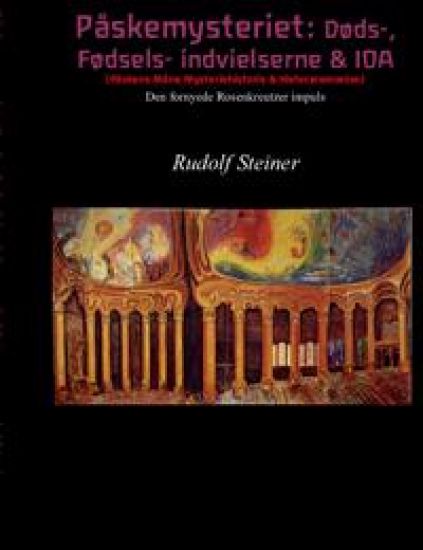
Påskemysteriet: Døds-, Fødsels- indvielserne & IOA
Men derved kommer vi til et punkt, hvor vi må betone at den kristne påske ikke på nogen som helst måde er en højtid som ifølge sin indre betydning og indre natur falder sammen med den hedenske forårsjævndøgnsfest. Når vi først skal gå tilbage til de gamle hedenske tider, som den kristne påske fest er sammenlignelig med er det de fester som er vokset frem ud fra Mysterierne og som fandt sted ved høsttid. Det allermest forunderlige, hvad berammelsen af påske angår, er jo; at denne højtid efter sit indhold ganske tydeligt hænger sammen med visse gamle mysterier. Det mest forbavsende er at netop påsken viser os hvilke radikale og dybtgående misforståelser der er sket i løbet af menneskehedsudviklingen, hvad angår de allermest betydningsfulde ting i verdensopfattelsen. For der er jo intet mindre sket end; at påsken i de første kristne århundreder er blevet forvekslet med en ganske anden fest, således at den derved fra [at være] en høstfest er blevet gjort til en forårsfest. Dette faktum peger faktisk hen på noget stort i menneskehedsudviklingen. Men lad os først se lidt på indholdet af påskehøjtiden. Hvad er det væsentlige i den ?
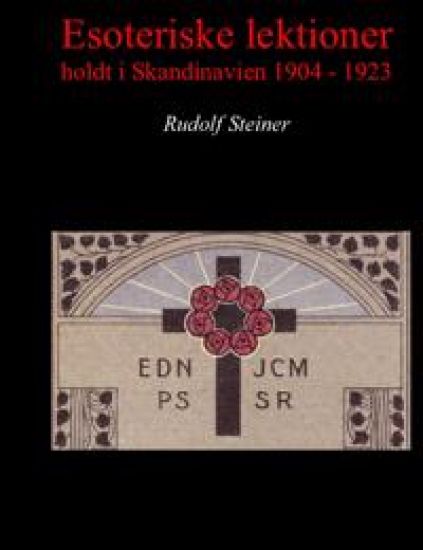
Esoteriske lektioner holdt i Skandinavien 1904 - 1923
De fleste af disse esoteriske lektioner bærer tydeligt præg af, ikke at være komplette stenografier af de lektioner, der blev givet. Oprindeligt var det ikke tilladt at tage notater under lektionerne, og de er derfor, formentlig, nedskrevet efter mødet ud fra hukommelsen. Flere at lektionerne fremstår derfor meget koncentrerede og flere steder, i referaterne, af løsrevne”statements”, som ikke er sammenkædede. Det var sædvane ved møderne i den 1. klasse af den esoteriske skoles 3 klasser, at indlede med dagens mantra. Dagens mantra fremsiges dagen før for den efterfølgende dag. Esoterisk begynder ugen med Lørdag, altså Saturns dag, den første planetariske inkarnation af vores nuværende jord, og i den sjette time på dagen - altså kl. 6.00 om morgenen. Inden kl. 6.00 om morgen kan verset for dagen altså gennemføres, i stedet for aftenen før. Ved gendannelsen af den esoteriske skole efter 1. verdenskrig blev denne tradition afløst af fremsigelsen af ”O Menneske” versets 1. del. D.v.s. fra 1918. Alle uge mantraer er opdelt i 2 dele: et selvstændigt mantra, og et afsluttende mantra, der er ens for alle ugedagene. I de vers som omhandler fortiden afsluttes med DU VAR, og i de som omhandler fremtiden sluttes med DU ER. Den overvejende del af de esoteriske timer i 1. klasse i perioden 1904 til 1914, blev afsluttet med meditationen ”I ånden dvæler mit legemes kim.” Den er i nærværende skrift kun gengivet i et af referaterne. Disse foredrag er holdt i Teosofisk selskab, og betegnelsen Teosofi kan her ses som synonym med Antroposofi. Så længe Rudolf Steiner arbejdede i Teosofisk sammenhæng, benyttede han betegnelsen Teosofi for det, som efter løsrivelsen fra Det teosofiske selskab, blev fremført under betegnelsen Antroposofi. Legenden om de 4 rabbinere indtager en særlig stilling i de esoteriske lektioner, som blev afholdt i Skandinavien. I ingen andre nationer er der lagt så megen vægt på denne legende som i Skandinavien. Legendens indhold varierer lidt fra lektion til lektion, formentlig efter deltagernes behov. Hvorledes det skal opfattes overlades til læseren.
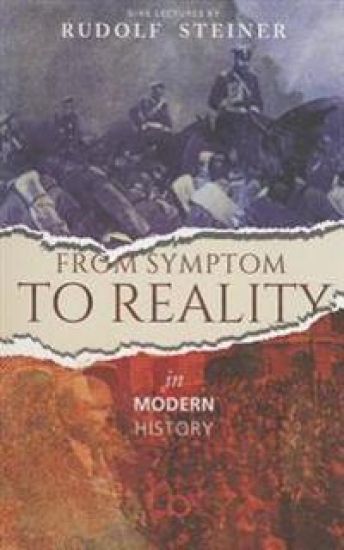
From Symptom to Reality

From Symptom to Reality

Rudolf Steiner

Rudolf Steiner Press
2015
nidottu
In a radical approach to understanding current affairs and history, Rudolf Steiner presents a method of penetrating to the hidden causes and realities that lie behind outer appearances. Contemporary life cannot fully be understood by an analysis that is restricted to external events, he says. Deeper levels of meaning are revealed when one begins to view such events as symptoms. The causes of these symptoms - the reality behind them - are to be discovered on other levels of existence. Steiner demonstrates such a 'symptomatological' approach in these lectures, surveying some of the great developments in consciousness that have helped form the world over the last centuries. He examines the role of true socialism, the rise of nationalism, and characterises contrasting approaches to religion by drawing a distinction between 'the People of the Christ' in Russia, 'the People of the Church' in Central Europe, and 'the People of the Lodges' in the West. Amongst the wealth of material covered here, Rudolf Steiner discusses 'the mystery of evil' and 'the mystery of death', the birth of the consciousness soul, the significance of the scientific mode of thought, the metaphysical element in the study of history, as well as specific events such as the Russian Revolution and the suppression of the Knights Templar. He also reviews the circumstances surrounding the publication of new editions of his books The Philosophy of Freedom and Goethe's World View. Anyone seeking a more profound understanding of our times will find a firm basis for a meaningful exploration in this course of lectures.
Pearls of Thought

Pearls of Thought

Rudolf Steiner

Rudolf Steiner Press
2015
nidottu
'Truth is simple only for those who first wrestle their way though multiplicity. It is like a thread of many pearls.' - Rudolf Steiner Like pearls in the oyster, pearls of thought are easily overlooked. Lying hidden in texts, they keep their light under a bushel, serving the greater framework and context. But if we draw them out they begin to shine, revealing their translucent facets and intrinsic harmony. In this meditative treasure, the editor has harvested and threaded together such pearls from Rudolf Steiner's books, creating new textures and striking panoramas. Dynamic constellations of thought arise, allowing us unusual and surprising access to Steiner's spiritual and philosophical thinking. In contrast to the prevailing view that meaning arises only in context, these self-sufficient verbal universes show us that the opposite can also be true. The pearls of thought in this compact pocket book acquire enhanced meaning in isolation, mysteriously becoming independent of the thoughts and phrases that precede or follow them. This collection of quotations, free of jargon or technical terminology, is accessible to all readers interested in developing a meaningful understanding of the human being's place in the world and cosmos.
Self-Knowledge

Self-Knowledge

Rudolf Steiner

Rudolf Steiner Press
2015
nidottu
Many spiritual traditions speak of a 'guardian' or 'dweller' who protects the threshold to the spiritual world, warning the unprepared to pause in their quest for access to higher knowledge. The Guardian reveals the consequences of our negative actions and points to the full reality of our untransformed nature. This experience is said to be one of the deepest and most harrowing on the inner path, but is an essential precondition to any form of true initiation. The words 'Know thyself' were inscribed at the forecourt of the ancient Greek Temple of Apollo. Those who sought initiation in 'the mysteries' were thus instructed first to look within themselves. Likewise today, as spiritual seekers we need true self-knowledge, to distinguish between what belongs to our consciousness and what is objectively part of the spiritual environment. Rudolf Steiner taught that as long as we draw back from such knowledge, our spiritual quest will be unsuccessful. When we begin engaging with anthroposophy, it becomes clear that Steiner's teachings are not a doctrine or set of dogmas, but a path towards deeper insights. In this essential handbook, the editor has drawn together many of Rudolf Steiner's statements on the intricate and arduous path of self-knowledge, offering ongoing support and guidance. Chapters include: The Importance of Self-Knowledge for Acquiring Higher Knowledge; Seeking to Form an Idea of the 'Guardian of the Threshold'; The Guardian of the Threshold and Some Characteristics of Supersensible Consciousness; Morality on the Path of Knowledge; Self-Knowledge and Nearness to Christ; The Powers of Christ in Our Own Life; Knowing Ourselves in the Other; Self-Knowledge - World-Knowledge.
Karmic Relationships

Karmic Relationships

Rudolf Steiner

Rudolf Steiner Press
2015
nidottu
During 1924, before his last address in September, Rudolf Steiner gave over eighty lectures on the subject of karma to members of the Anthroposophical Society. These profoundly esoteric commentaries examine the underlying laws of reincarnation and karma, and explore in detail the incarnations of specific historical figures. In Rudolf Steiner's words, the study of karma is '...a matter of penetrating into the most profound mysteries of existence, for within the sphere of karma and the course it takes lie those processes which are the basis of the other phenomena of world existence...' In this eighth and final volume of the series, Rudolf Steiner offers insights on a variety of subjects, including Cosmic Christianity, the Michael impulse, the Arthur and Grail streams of wisdom, as well as the individualities of Gregory VII, Haeckel, Swedenborg, Loyola, Haroun al Raschid, Byron, Voltaire and others.
Anthroposophy and the Inner Life

Anthroposophy and the Inner Life

Rudolf Steiner

Rudolf Steiner Press
2015
nidottu
Although these nine lectures were given to an audience that had been studying anthroposophy, or spiritual science, for many years, they were nevertheless described by Rudolf Steiner as an 'introductory course'. Given shortly after the Christmas Foundation Meeting, in which Rudolf Steiner refounded and renewed the Anthroposophical Society, these lectures reformulate the content of spiritual science from a condensed, personal, experiential point of view. What Steiner presented in his fundamental work Theosophy in a descriptive, systematic way, is complemented here with great intensity, challenging us to cultivate a living experience of the spiritual nature of ourselves and of the world. This volume is therefore an invaluable companion to the book Theosophy. Given the unique nature of these lectures, they are suitable for both the advanced student and the beginner who wishes to embark on an exploration, however tentative, of the vast range of Rudolf Steiner's work.
Mikaelin tehtävä

Mikaelin tehtävä

Rudolf Steiner

SUOMEN ANTROPOSOFINEN LIITTO
2015
nidottu

Halvin toimitettuna 31,90 €

Rudolf Steinerin tärkeät esitelmät luovat kuvaa Mikael-voimasta ja Mikael-ajanhengen velvoittavasta viestistä nykyajalle: mitä on mikaelinen ajattelu, miten uusi Mikael-impulssi on suhteessa vanhaan mysteerikulttuuriin, mitä on uusi jooga-tahto suhteessa vanhaan jooga-kulttuuriin, mihin pyrkii tulevaisuuden Mikael-kulttuuri, jonka on läpäistävä aikamme syvä materialismi uudenlaisella, hengen ja luonnon elävästi tajuavalla otteella. Mikaeliseen kulttuuriin kuuluu ihmisen yliaistisen olemuksen tiedostaminen. Ajattelussa on kehitettävä kolminaisuuksien tajua mustavalkoisen dualismin sijaan. Henkisten voimien alueella tämä koskee erityisesti LusiferKristusAhriman-kolminaisuutta. Steiner käsittelee mm. valon, tilan ja maan mysteereitä, jotka maapallon puitteissa liittyvät maantieteelliseen Itään, Eurooppaan sekä Länteen. Tässä yhteydessä nousee vahvasti esille yhteiskunnallisen kolmijäsenteisyyden merkitys tulevaisuuden kulttuurille.