Kirjailija
Rudolf Steiner
Kirjat ja teokset yhdessä paikassa: 1 477 kirjaa, julkaisuja vuosilta 1910–2026, suosituimpiin kuuluu The Cosmic New Year: A Course of Lectures by Rudolf Steiner. Vertaile teosten hintoja ja tarkista saatavuus suomalaisista kirjakaupoista.
1 477 kirjaa
Kirjojen julkaisuvuodet: 1910–2026.
Knowledge of the Higher Worlds and Its Attainment
Rudolf Steiner
KESSINGER PUBLISHING CO
2007
sidottu
Concerning Initiation And The Perception Of Higher Worlds
Rudolf Steiner
KESSINGER PUBLISHING CO
2007
muu

Rudolf Steiner, the often undervalued, multifaceted genius of modern times, contributed much to the regeneration of culture. In addition to his philosophical teachings, he provided ideas for the development of many practical activities, including education - both general and special - agriculture, medicine, economics, architecture, science, religion and the arts. Steiner's original contribution to human knowledge was based on his ability to conduct 'spiritual research', the investigation of metaphysical dimensions of existence. With his scientific and philosophical training, he brought a new systematic discipline to the field, allowing for conscious methods and comprehensive results. A natural seer from childhood, he cultivated his spiritual vision to a high degree, enabling him to speak with authority on previously veiled mysteries of life. Samples of Steiner's work are to be found in this introductory reader in which Matthew Barton brings together excerpts from Steiner's many talks and writings on Christmas. The volume also features an editorial introduction, afterword, commentary and notes.

The wisdom contained in this book is not derived via the usual methods of scholarly and historical research, and neither is it based on theory or speculation. Rudolf Steiner acquired his original contribution to human knowledge from metaphysical dimensions of reality which are hidden to most people - but visible to anybody who is prepared to develop spiritual means of perception. With his philosophical and scientific training, Steiner brought a new systematic discipline to the field of spiritual research, allowing for fully conscious methods and comprehensive results. A natural seer, he cultivated his spiritual vision to a high degree, enabling him to speak with authority on previously veiled mysteries. Samples of his work is to be found in this book of edited texts, which brings together excerpts from his many talks and writings on the subject of Atlantis. This volume also features an editorial introduction, commentary and notes by Dr Andrew Welburn.
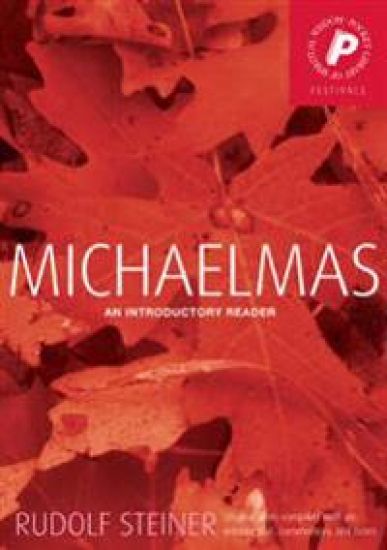
Rudolf Steiner, the often undervalued, multifaceted genius of modern times, contributed much to the regeneration of culture. In addition to his philosophical teachings, he provided ideas for the development of many practical activities, including education - both general and special - agriculture, medicine, economics, architecture, science, religion and the arts. Steiner's original contribution to human knowledge was based on his ability to conduct 'spiritual research', the investigation of metaphysical dimensions of existence. With his scientific and philosophical training, he brought a new systematic discipline to the field, allowing for conscious methods and comprehensive results. A natural seer from childhood, he cultivated his spiritual vision to a high degree, enabling him to speak with authority on previously veiled mysteries of life. Samples of Steiner's work are to be found in this introductory reader in which Matthew Barton brings together excerpts from Steiner's many talks and writings on Michaelmas. The volume also features an editorial introduction, afterword, commentary and notes.

For hundreds of years, ordinary folk in the small Austrian village of Oberufer on the Danube gathered in the local tavern at Christmas time to perform these plays to their neighbours. With their roots lost in medieval times, the plays gradually evolved to incorporate a unique mixture of broad peasant humour and deep reverence in their celebration of the birth of the baby Jesus. "The Paradise Play" serves as a Preface, presenting the expulsion of Adam and Eve from Paradise, but with the promise of future salvation through Christ. "The Shepherds Play" follows with its portrayal of the birth of Jesus in a stable where he is sought out by a group of simple shepherds. "The Kings Play", the final in the trilogy, depicts the visit of three wise Kings to the birthplace of the 'King of Humanity', and the murderous measures taken by Herod to try and thwart Jesus' mission. This revised edition of the plays - eminently suitable for amateur and professional companies alike - offers a clear layout of the texts, greatly elaborated director's and make-up indications, stage and lighting directions, and detailed costume designs illustrated in colour.

Founded in the early twelfth century, allegedly to protect pilgrims to the Holy Land, the Knights Templar became famous for their pioneer banking system, crusading zeal, and strict vows of obedience, chastity and poverty. Having grown to some 15,000 men, they came to be perceived as a threat by Philip the Fair, who in 1307 disbanded the group and tortured their leaders for confessions. The French king accused the order of heresy, sodomy and blasphemy. Recent works of fiction and popular histories have created a resurgence of interest in the mysterious Knights Templar. Numerous contradictory and fantastic claims are made about them, adding to the enigma that already surrounds the warrior monks of France. In this unique collection of lecture material and writings from Rudolf Steiner, a new perspective emerges. Based on his spiritual perceptions, Steiner speaks of the Templars' connection to the esoteric tradition of St John, their relationship with the Holy Grail, and their spiritual dedication to Christ. He describes the secret order that existed within the Templars, and the strange rituals they performed. He also throws light on the Templars' attitude to the Roman Church, and the spiritual forces that inspired their torture and confessions.

'The Lord's Prayer' stands at the heart of Christianity. Over the past two millennia, it has been spoken millions of times by millions of people around the world. Rudolf Steiner affirms the power of this prayer, given by Jesus Christ himself, and encourages us to begin to understand it at deeper levels. Such an understanding, he explains, is now necessary for humanity's further development. In the four lectures he gave on this subject, collected here under one cover, Rudolf Steiner penetrates the esoteric meanings of the Lord's Prayer, relating its seven petitions to the seven spiritual and physical bodies of the human being. He also discusses the difference between prayer and meditation, and shows how true prayer is selfless in nature. This volume features an introduction by Judith von Halle, whose work is valued for her experiential knowledge of the Lord's Prayer and the events of Christ's life.

An Exercise for Karmic Insight
Rudolf Steiner
Rudolf Steiner Press
2007
nidottu
Halvin toimitettuna 12,20 €
"There is the possibility of a comparatively quick maturing of insight into karmic relationships if, for a considerable time, we try patiently, and with inner energy, to picture with greater and greater consciousness an experience which would otherwise simply take its course, without being properly grasped, and fade away in the course of life..." In this unique lecture, Rudolf Steiner presents a practical exercise for gaining insight into karma. He draws our attention to the ordinary events of life, encouraging us to take an image of a single event and meditate on it. He describes the method in great detail, and explains how, over several days and nights, the image becomes incorporated into our various spiritual bodies. Eventually, this image reaches our physical body in a transformed state, leading to a perception of a previous earth life and the cause of the event first pictured in meditation...
Rudolf Steiner, the often undervalued, multifaceted genius of modern times, contributed much to the regeneration of culture. In addition to his philosophical teachings, he provided ideas for the development of many practical activities, including education - both general and special - agriculture, medicine, economics, architecture, science, religion and the arts. Steiner's original contribution to human knowledge was based on his ability to conduct 'spiritual research', the investigation of metaphysical dimensions of existence. With his scientific and philosophical training, he brought a new systematic discipline to the field, allowing for conscious methods and comprehensive results. A natural seer from childhood, he cultivated his spiritual vision to a high degree, enabling him to speak with authority on previously veiled mysteries of life. Samples of Steiner's work are to be found in this introductory reader in which Matthew Barton brings together excerpts from Steiner's many talks and writings on the festivals of Whitsun and Ascension. The volume also features an editorial introduction, afterword, commentary and notes.
Notes written from memory by the participants and meditation verses by Rudolf Steiner (CW 266/1) To read this book is to be part of Rudolf Steiner's Esoteric School, to experience the growth and development of Anthroposophy from within. First and most essential here is the primacy of practice. Steiner stresses attention and concentration. We waste much of our time and energy on thoughts and feelings that to nowhere. Meditation--concentration on a living thought, an idea of higher origin--begins the process of self-gathering. Controlling our thoughts, we begin to form our "mental" (etheric) body; ordering our memories, we begin to work on our astral body. These two tasks are our preliminary goal. "We must make our life into a school for learning." Humility is the key--when the world becomes our teacher, we must become humble. With the beginning of these esoteric lessons, the path is deepened. We witness Rudolf Steiner the spiritual teacher in action. Throughout the lessons, Steiner moves between the so-called Christian-Gnostic path and the theosophical framework of the Masters. As the years unfold, however, the lessons move from the framework given by H. P. Blavatsky toward a deeper, more universal and, at the same time, more contemporary focus. Steiner reveals that behind what Blavatsky brought is the wisdom of Atlantis, which today must come to life again. Here, Christian Rosenkreutz, the Rosicrucians, and the "old philosophers" (alchemists) become important, for it was their task to bring this wisdom, now "enchristed," into the West. This volume is the English translation of Aus den Inhalten der esoterischen Stunden, Ged chtnisaufzeichnungen von Teilnehmern. Band.1, 1904-1909 (GA 266/1).
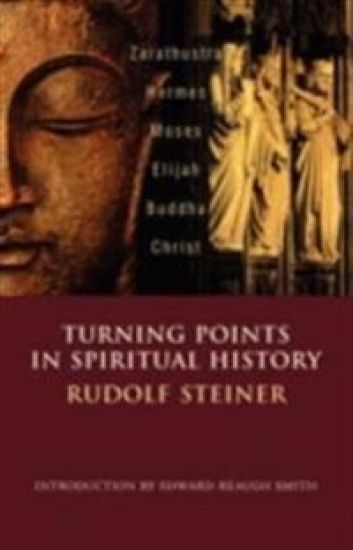
"In our long human journey, individual and collective, the journey that science calls evolution, many indeed are the turning points. But they are not so much turning points in outer, material manifestation in the fossils of paleontology, for those fossils are only the shed garments worn by humans in an earlier age, vestments designed by providence to meet the need of a changing human consciousness moving through time. Where the real evolution occurs, for which the necessary outer garments are tailored over time, is in the realm of consciousness as it transitions from spirit to matter and back to spirit." --Edward Reaugh Smith (from the introduction)Rudolf Steiner gave the six lectures in this volume between January 1911 and January 1912. Soon after Steiner's death in 1925, Marie Steiner--realizing the importance of those lectures for understanding the evolution of consciousness and the central role of the Christ event in that process--collected them under the title Turning Points in Spiritual History. According to Rudolf Steiner, Earth is the crucible of cosmic evolution, and earthly evolution is accomplished through humanity. Further, there were five turning points--or critical, transformative moments--in the process leading to the culmination of the Christ's incarnation through the Mystery of Golgotha. Each of those five points is exemplified by an individual: Zarathustra, Hermes, Moses, Elijah, and the Buddha. Each of these lectures deals in turn with one of these great beings. In them, Steiner provides us with astonishing views of esoteric history and shows the remarkable ways in which the spiritual world guided and nurtured the spiritual evolution in preparation for the Christ's appearance on Earth.
Rudolf Steiner, the often undervalued, multifaceted genius of modern times, contributed much to the regeneration of culture. In addition to his philosophical teachings, he provided ideas for the development of many practical activities, including education - both general and special - agriculture, medicine, economics, architecture, science, religion and the arts. Steiner's original contribution to human knowledge was based on his ability to conduct 'spiritual research', the investigation of metaphysical dimensions of existence. With his scientific and philosophical training, he brought a new systematic discipline to the field, allowing for conscious methods and comprehensive results. A natural seer from childhood, he cultivated his spiritual vision to a high degree, enabling him to speak with authority on previously veiled mysteries of life. Samples of Steiner's work are to be found in this introductory reader in which Matthew Barton brings together excerpts from Steiner's many talks and writings on Easter. The volume also features an editorial introduction, afterword, commentary and notes.