Kirjojen hintavertailu – 12 903 725 kirjaa ja 27 kauppaa

Kirjailija

Rudolf Steiner

Kirjat ja teokset yhdessä paikassa: 1 477 kirjaa, julkaisuja vuosilta 1910–2026, suosituimpiin kuuluu The Cosmic New Year: A Course of Lectures by Rudolf Steiner. Vertaile teosten hintoja ja tarkista saatavuus suomalaisista kirjakaupoista.

1 477 kirjaa

Kirjojen julkaisuvuodet: 1910–2026.

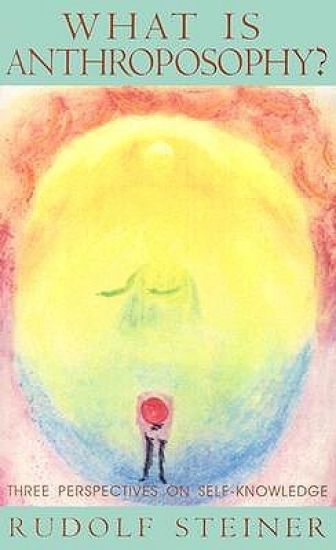
What is Anthroposophy?

What is Anthroposophy?

Rudolf Steiner; Christopher Bamford

SteinerBooks, Inc
2002
nidottu
This is one of those books that can change your life. Radical, thought-provoking, and indeed mind-boggling, it leads to a completely new way of looking at what it means to be human - a spiritual being in a universe that itself is not just physical, but psychic and spiritual as well. These three previously untranslated lectures are a masterly introduction to what Rudolf Steiner means by "anthroposophy." They explain why Steiner describes this path-which means literally "the wisdom of the human being"- as one that "unites what is spiritual in the human being with what is spiritual in the universe." Steiner begins by describing what happens when we die. He shows the relationship between our physical life on earth and the etheric, astral, and spiritual life of the cosmos. He also explains how physical lives are completely interwoven with cosmic existence, and how the "miss-ing links" in evolution are spiritual in nature. Steiner then demonstrates what he calls the "dilettantism" and "soullessness" of mainstream psychology. He points out that since the second half of the nineteenth century the idea of the soul has been lost, and that, consequently, understanding of our inner lives is without a sure foundation. A quite different view, however, emerges from a truly spiritual perspective. In the third lec-ture, Steiner takes as his guide our three states of being - waking, dreaming, and sleeping. He describes in detail what happens in these three states, and how each is bound up with our lives as physical, psychic, and spiritual beings. With the profound insights in this book, the world becomes a much larger, richer, and more exciting place to live.
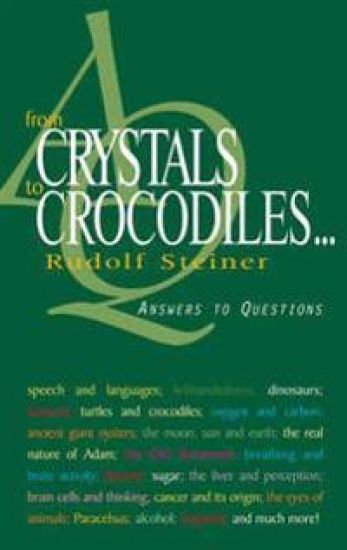
From Crystals to Crocodiles

From Crystals to Crocodiles

Rudolf Steiner

Rudolf Steiner Press
2002
nidottu
The remarkable discussions in these two volumes took place between Rudolf Steiner and workers at the Goetheanum, Switzerland, who chose the varied subject matter. The astonishing nature of his responses the questions--their insight, knowledge, and spiritual depth--is testimony to his outstanding ability as a spiritual initiate and teacher. Accessible and stimulating, the records of these sessions are both entertaining and profound. In From Crystals to Crocodiles, Steiner discusses speech and languages; lefthandedness; dinosaurs; Lemuria; turtles and crocodiles; oxygen and carbon; ancient giant oysters; the moon, sun, and earth; the Old Testament; the real nature of Adam; breathing and brain activity; dreams; sugar; the liver and perception; brain cells and thinking; illnesses such as cancer and its origin, migraines, and diabetes; the eyes of animals; Paracelsus; alcohol, and more.
Genesis

Genesis

Rudolf Steiner

Rudolf Steiner Press
2002
nidottu
11 lectures, Munich, August 16-26, 1910 (CW 122)How was the world created? From a direct spiritual perception of the facts, Rudolf Steiner presents a new perspective that transcends the bipolar arguments of both the creationists and the scientific reductionists. He affirms that clairvoyant research accords with the biblical descriptions, but he emphasizes that the text of Genesis has to be interpreted in a special way. In this extraordinary document, Steiner speaks of the six days of creation as a reawakening of the previous phases of the Earth's development. He describes the work of spiritual hierarchies in the creation of Earth and clarifies the relationship of the Elohim and the biblical Jehovah. In addition, Steiner discusses themes of light and darkness, the meaning of Adam and Eve, the "day of rest" on the seventh day, the stages of human development on Earth, and the special character of the Hebrew language. Also featured in this new edition is a previously unpublished introductory lecture on the meaning of mystery drama. This book is a translation from German of Die Geheimnisse der biblischen Schoepfungsgeschichte. Das Sechtagwerk im 1. Buch Moses (GA 122).
From Sunspots to Strawberries

From Sunspots to Strawberries

Rudolf Steiner

Rudolf Steiner Press
2002
nidottu
14 lectures, Dornach, Jun 30 - Sept 24, 1924 (CW 354)The remarkable discussions in this volume took place between Rudolf Steiner and workers at the first Goetheanum in Dornach, Switzerland. At Rudolf Steiner's instigation, the varied subjects were chosen by his audience. He took their questions and usually gave immediate answers. The astonishing nature of these responses--their insight, knowledge, and spiritual depth--is testimony to Steiner's outstanding ability as a spiritual initiate and profound thinker. Accessible, entertaining and stimulating, the records of these sessions will be a delight to anyone with an open mind. Here, Steiner discusses Lemuria and Atlantis; vegetarianism; children's nutrition; manure and soil; hardening of the arteries; the sense of smell; weather and its causes; origin of the human being; Darwinism; earth strata and fossils; Biela's comet; lightning; volcanoes; and much more. This volume is a translation from German of Die Schoepfung der Welt und des Menschen. Erdenleben und Sternenwirken (GA 354).
Start Now

Start Now

Rudolf Steiner

SteinerBooks, Inc
2002
nidottu

Halvin toimitettuna 22,90 €

Meditation instructions, meditations, exercises, verses for living a spiritual year, prayers for the dead, and other practices for both beginning and experienced practitioners--Start Now has become the classic, indispensable text and reference for all those who are serious about the practice of Rudolf Steiner's spiritual science. Start Now is an inspiring guide to the practical aspects of Anthroposophy. It offers the most extensive collection available of Steiner's spiritual instructions and practices, including meditation instructions; mantric verses; daily, weekly, and monthly practices for developing one's soul qualities; karmic exercises and meditations for working with the dead, with the angelic hierarchies, and with our guardian angels. Start Now might be the most unique and comprehensive spiritual guidebook available, and it will become a lifelong friend and help along the way. No one who is serious about spiritual practice--beginners or seasoned students--should be without this book CONTENTS: Introduction by Christopher Bamford Prologue - Framing the Work (including Steiner's early "Credo")Meditation Instructions and ExplanationsThe Way of ThinkingThe Way of Reverence & Its FruitsDeveloping the Chakras, or "Lotus Flowers"Six Essential ExercisesThe Backward Review, or "Retrospect"Living the Year Spiritually (including the complete "Calendar of the Soul")Meditations from the Esoteric SchoolThe Rosicrucian PathThe Christian-Gnostic PathWorking with the DeadThe Foundation Stone MeditationMeeting the Guardians
The Light Course

The Light Course

Rudolf Steiner

SteinerBooks, Inc
2002
nidottu
11 lectures, Stuttgart and Dornach, Dec. 23, 1919 - Aug. 8, 1921 (CW 320) Rudolf Steiner's course on light, which includes explorations of color, sound, mass, electricity and magnetism, presages the dawn of a new worldview in the natural sciences that will stand our notion of the physical world on its head. This "first course" in natural science, given to the teachers of the new Stuttgart Waldorf school as an inspiration for developing the physics curriculum, is based on Goethe's phenomenological approach to the study of nature. Acknowledging that modern physicists had come to regard Goethe's ideas on physics as a "kind of nonsense," Steiner contrasts the traditional scientific approach, which treats phenomena as evidence of "natural laws," with Goethean science, which rejects the idea of an abstract law behind natural phenomena and instead seeks to be a "rational description of nature." Steiner then corrects the mechanistic reductionism practiced by scientific positivists, emphasizing instead the validity of human experience and pointing toward a revolution in scientific paradigms that would reclaim ground for the subject--the human being--in the study of nature. READ BOBBY MATHERNE'S REVIEW OF THIS BOOK German source: Geisteswissenschaftliche impulse zur Entwikkelung der Physik, Erster Naturwissenschaftlicher Kurs: Licht, Farbe, Ton-Masse, Elektrizit t, Magnetismus (GA 320).
The Four Seasons and the Archangels

The Four Seasons and the Archangels

Rudolf Steiner

Rudolf Steiner Press
2002
nidottu
These five profound lectures look at the cosmic forces behind the four great festivals of the year, providing a wealth of material for fruitful thought and meditation. Steiner presents great imaginative pictures that unite the heavens and the Earth through a portrayal of the activities of the archangels Michael, Gabriel, Raphael, and Uriel. In the course of the lectures, Rudolf Steiner offers spiritual insight into subjects that include the alchemical processes of sulfur, mercury, and salt in the cosmos; the realms of humankind and plants; spiritual combustion processes; crystals; clouds and meteors; the movements of elemental beings in nature; and the conflicting efforts of Lucifer and Ahriman the two great adversaries to divert Earth from its true purpose. The Four Seasons and the Archangels includes five color plates of Rudolf Steiner s blackboard drawings made during the lectures."
The Festivals and Their Meaning

The Festivals and Their Meaning

Rudolf Steiner

Rudolf Steiner Press
2002
nidottu

Halvin toimitettuna 25,60 €

30 Selected lecturesThe Festivals and Their Meaning collects thirty of Rudolf Steiner's most important lectures on the festivals of the year. He identifies and illumines the true meaning behind Christmas, Easter, Ascension, Pentecost, and Michaelmas, emphasizing their inner spiritual and outer cosmic aspects. Steiner shows that the festivals do not only commemorate great historical events and truths of the Christian tradition; they are in themselves--each year--spiritual events that manifest in seasonal and natural rhythms and carry a significance that grows and deepens with the development of human evolution. CONTENTSChristmasIntroduction by Ann DruittThe Christmas Festival: Heralding the Victory of the SunSigns and Symbols of the Christmas FestivalThe Birth of the Sun-spirit as the Spirit of the Earth: The Thirteen Holy NightsChristmas as a time of Grievous DestinyThe Proclamations to the Magi and the ShepherdsOn the Three MagiThe Revelation of the Cosmic ChristThe Birth of Christ within UsEasterEaster: The Festival of WarningThe Blood Relationship and the Christ RelationshipThe Death of a God and Its Fruits in HumanitySpirit TriumphantThe Teachings of the Risen ChristEaster: The Mystery of the FutureSpiritual Bells of Easter, parts 1 & 2Ascension and PentecostThe Whitsun Mystery and Its Connection with the AscensionWhitsun: The Festival of the Free IndividualityWorld Pentecost: The Message of AnthroposophyWhitsun: A Symbol of the Immortality of the EgoThe Whitsuntide Festival: Its Place in the Study of KarmaWhitsun VerseMichaelmasMichael MeditationThe Michael Inspiration: Spiritual Milestones in the Course of the YearA Michael LectureThe Michael Impulse and the Mystery of Golgotha, parts 1 & 2Michael and the DragonThe Creation of a Michael Festival out of the SpiritThe Michael Path to Christ
Renewal of Education

Renewal of Education

Rudolf Steiner

SteinerBooks, Inc
2002
nidottu
Following a lecture of November 27, 1919 requested by the Basel Department of Education, sixty members of the audience invited Rudolf Steiner to return and deliver a complete lecture course on his approach to education. These lectures are the result. Rudolf Steiner begins by outlining the gradual development of the child with the help of spiritual forces and enlightened educational practices, which form the basis for Steiner's approach to education. He describes the problems that modern educators face and provides practical solutions. Steiner explains the effects of morality on real freedom and how the development of a child's will leads to a free, flexible ability to think. He describes the life-long effects that teachers have on children through the ways they teach in the early grades. The subjects of these lectures cover a broad range, from the threefold nature of the human being to the teacher's responsibility toward their students' future; from arts such as music and eurythmy to the problems involved in training teachers; from zoology and botany to language, geography, and history. Like many of Steiner's lectures to public audiences, these are accessible and practical and provide a real overview to his ideas for renewing modern education. About the Author: Rudolf Steiner (1861-1925) became a respected and well-published scientific, literary, and philosophical scholar, particularly known for his work on Goethe's scientific writings. At the beginning of the twentieth century, he began to develop his earlier philosophical principles into an approach to methodical research of psychological and spiritual phenomena. His multifaceted genius has led to innovative and holistic approaches in medicine, philosophy, religion, education (Waldorf schools), special education (the Camphill movement), economics, agriculture (biodynamics), science, architecture, and the arts (drama, speech and eurythmy). In 1924 he founded the General Anthroposophical Society, which has branches throughout the world.
Human Values in Education

Human Values in Education

Rudolf Steiner

SteinerBooks, Inc
2002
pokkari
10 lectures, Arnheim, Holland, July 17-24, 1924 (CW 310) The underlying thesis of these lectures, volume 20 in the "Foundations of Waldorf Education" series, is that true education must be based on knowledge of the whole human being and that such knowledge cannot be attained without love. On this basis, Steiner presents his understanding of every aspect of child development--bodily, psychological, and spiritual. At the same time, Rudolf Steiner shows that, to prove worthy of their calling, teachers must begin a process of inner development. In Steiner's view, it is human beings who give value and meaning to the world. Modern education, however, is gradually undermining this meaning. These lectures demonstrate that education can heal that lack of meaning and restore the meaning of humankind for the world. Steiner also discusses the practical, day-to-day operation of the school. He talks about styles of teaching, teacher conferences, parent-teacher meetings, and how Waldorf education is related to the anthroposophic movement. This book, while serving as a good introduction to Steiner's ideas on education, also represents the fruits of four years experience in the Waldorf school. "No such lecture cycle is ever complete in an encyclopedic way, but each nevertheless covers 'the basics' in its own way. Any lecture by Rudolf Steiner also has its own incomparable value. Yet this sequence is truly extraordinary and incomparable in a different way, both because it is the last that Steiner gave on education and because, in his last months, Steiner was graced with a remarkable clarity and penetration that allowed him to address old topics (as well as new) with uncanny spiritual luminosity, precision, and sheer humanity. If anyone is looking for the 'last word' on Waldorf education, this is perhaps it--in more ways than one." --Christopher Bamford (from the introduction) C O N T E N T S Introduction by Christopher Bamford 1. The Need for Understanding the Human Being2. Incarnation of the Human Being in a Physical Body3. Walking, Speaking, Thinking4. The Three Stages of Childhood5. Teachers' Conferences in the Waldorf School6. Parent-Teacher Meetings7. The Temperaments and the Human Organism8. Diet and the Four Temperaments9. Styles of Education10. Education and the Anthroposophic Movement Index German source: Der p dagogisch Wert der Menschenerkenntnis und der Kulturwert der P dagogik (CW 310).
According to Matthew

According to Matthew

Rudolf Steiner

SteinerBooks, Inc
2002
nidottu
12 lectures, Berne, September 1-12, 1910 (CW 123)For centuries people have been baffled by the varying accounts of Christ's life as presented in the four Gospels and have struggled to reconcile them. In these profound and stimulating lectures, Steiner addresses this conundrum. He shows how each of the Gospels presents a different lens onto Christ's life and message. Here Steiner reveals the Gospel of Matthew as the one that emphasizes Christ's humanity. But he does not stop there; his visionary perspective traces Christ's life and message to spiritual impulses that go back centuries, even millennia, to the legendary civilization of Atlantis, to the mysterious Zarathustra, and to the Jewish sect known as the Essenes. An introduction by Richard Smoley, author of Inner Christianity, puts Steiner's vision into perspective for modern readers. Once you have experienced Steiner's powerful exploration of Matthew, you will never see the Gospels in the same way again. Previous translation titled The Gospel of St. Matthew. READ BOBBY MATHERNE'S REVIEW OF THIS BOOK"If we read Steiner's] lectures with an open and attentive inner eye, we may be able to see the Christ mystery, not as a collection of dogmas or facts, but as a spiritual impulse that stretches far beyond the limits of Christ's own time and even of the lifespan of Christianity itself. We may even catch a glimpse of the high powers that govern the life of civilizations and of the great entity known as the human race." --Richard Smoley (from the introduction)According to Matthew is a translation from German of Das Matthaeus-evangelium. A previous translation was titled The Gospel of St. Matthew.
Broken Vessels

Broken Vessels

Rudolf Steiner

SteinerBooks, Inc
2002
pokkari
11 lectures in Dornach, September 8-19, 1924 (CW 318)Today we hear a great deal about holistic medicine--an approach to healing that integrates body, mind, and spirit. For Rudolf Steiner, healing is not possible unless it takes into account all the dimensions that make up a human being-both visible and invisible. Unless we begin to understand these dimensions of ourselves, real health will always be hard to attain. To meet inner frailty with truly adequate concepts, Steiner describes specific inner structures of both healthy and unhealthy states that escape ordinary perception. Addressing topics ranging from sleepwalking to "hyperliteracy" to the visions of St. Teresa of Avila, he suggests how to approach the misalignments of nonstandard inner structures and other psychic difficulties with what he calls "pastoral medicine"--a truly holistic healing that can bring body and soul together and help them function in the most effective and powerful way. Dr. Michael Lipson's foreword provides background for Steiner's lectures and brings them into the context of modern psychology. "You can see that one must recognize the spirit in nature, the spirit that is in the mineral and plant kingdoms of the world. It is the spirit, not the substance, that one must know, because in reality one heals the human being through the spirit that is in the mineral and in the plant." --Rudolf Steiner "Rudolf Steiner reveals something about the invisible structure of health and illness as they are seen with the second sight of spiritual research.... His comments about the opening to spiritual worlds that can accompany severe mental retardation or illness foreshadow some of the most important alternative psychiatry of our own times. He anticipates elements in the work of R. D. Laing, the Windhorse movement of Povall, and also the new practice of 'facilitated communication, ' whereby some autistic patients have been aided in expressing a full and conscious inner life to which their bizarre outward behavior gives no clue." --Michael LipsonREAD A REVIEW OF THIS BOOK BY BOBBY MATHERNEThis work is a translation of Das Zusammenwirken von rzten und Seelsorgern (CW 318). A previous edition was published as Pastoral Medicine: The Collegial Working of Doctors and Priests.
Viides evankeliumi

Viides evankeliumi

Rudolf Steiner

SUOMEN ANTROPOSOFINEN LIITTO
2002
nidottu
"Viidennellä evankeliumilla" tekijä tarkoittaa Raamatun neljää evankeliumia täydentävää tietoa Kristuksesta, joka voidaan saavuttaa henkisen tiedostamisen avulla. Seitsemässä esitelmässä hän kertoo henkisen havainnon esille tuomia tapahtumia Jeesuksen lapsuudesta ja nuoruudesta 30. ikävuoteen asti sekä Kristuksen kolmesta vuodesta Jordanin kasteesta Golgatan mysteeriin. Näissä tapahtumissa käy ilmi Jeesuksen suhde essealaisuuteen, juutalaisuuden henkiseen perintöön sekä vanhoihin 'pakanallisiin' traditioihin.
According to Luke

According to Luke

Rudolf Steiner

SteinerBooks, Inc
2001
nidottu
10 lectures, Basel, September 15-26, 1909 (CW 114)Rudolf Steiner was born with clairvoyant capacities, but it was not until he was forty that he could connect his inner experiences with Jesus Christ. After that "solemn festival of knowledge," as he described it in his Autobiography, Steiner received ceaseless revelations about the significance of the Christ's incarnation. For the next twenty years, he spoke of the hidden background to all four gospels, the Book of Revelations, and even what he called the Fifth Gospel, read directly from the spirit worlds. These lectures present the most accessible and illuminating of Steiner's revelations about the significance of the Christ for the spiritual development of humanity. He discusses the link between the Buddha and the Christ, which unites Buddhism and Christianity--not in theory but in the spiritual activities of those two beings. Steiner also describes the relationship between the Greek Mystery traditions and the Mystery of Golgotha: "A sign was to be placed before them as well, a sign that would now be enacted before the eyes of all humankind. The 'mystical death, ' which had been a ceremonial act in the Mystery temples for hundreds and thousands of years, would now be presented on the great stage of world history. Everything that had taken place in the secrecy of initiation temples was brought into the open as a single event on Golgotha." Utilizing a historical overview, revealing the relationship between the great religious traditions, and how they have conspired together for the good of humanity, Steiner never loses sight of the Gospel's great inner meaning, as echoed in the Gospel of St. Luke: "The revelation of the spiritual worlds from the Heights and its answering reflection from human hearts brings peace to all whose purpose upon the evolving Earth is to develop good will." Contents: Introduction by Robert A. McDermott The Four Gospels in the Light of Anthroposophy The Luke Gospel As an Expression of Love and Compassion Buddha's Contribution to Humanity Formation of the Nathan-Jesus Child Contributions of the Nathan Jesus from Buddha and Zarathustra Elijah, John the Baptist, and Zarathustra Christ, the Great Mystery of Earth Evolution Illness and Healing in Luke and in the Evolution of Consciousness Christ and Maitreya buddha Robert A. McDermott's descriptive outline of Steiner's Lectures on Luke
Harmony of the Creative Word

Harmony of the Creative Word

Rudolf Steiner

Rudolf Steiner Press
2001
nidottu
In one of his most popular lecture courses - formerly published as Man as Symphony of the Creative Word - Rudolf Steiner presents an extraordinary panorama of spiritual knowledge centring on the human being. We are the harmony of creation - a microcosm - containing within us 'all the laws and secrets of the world'. Steiner begins by speaking about our inner relationship to three ancient and sacred representatives of the animal kingdom - eagle, lion and bul - and to the forces of the cosmos that form them. He goes on to deepen these themes by approaching the plant and animal worlds in the context of planetary and cosmic evolution. A new category is then introduced: the elemental nature spirits - the metaphysical beings who work with plants and animals. Steiner gives a unique and intimate description of them and describes the cooperation they offer to mankind. Finally, the human being - the 'harmony of the Creative Word' - is placed at the heart of this spiritual celebration of life.
Mystery of the Universe

Mystery of the Universe

Rudolf Steiner

Rudolf Steiner Press
2001
nidottu
What is the principal secret of the universe? The ancient mystery saying called on the human being to 'Know Yourself!' Rudolf Steiner explains that this maxim is not asking us to study subjectively our own personal character, but rather to come to a knowledge of our true, archetypal human nature-and with it the position we occupy in the universe. In these eloquent lectures - formerly published as Man, Hieroglyph of the Universe - Rudolf Steiner speaks of the human being as the model of creation, the primary focus of the cosmos. In an extensive exposition he talks of the constellation of cosmic forces, zodiac and planets amongst which we find ourselves situated. Only a true knowledge of our human nature and the spiritual forces which surround us - the microcosm within the greater macrocosm - can enable humanity to progress, he says. This book is an important contribution to that goal: the development of a contemporary spiritual science of the human being.
The Fourth Dimension

The Fourth Dimension

Rudolf Steiner

SteinerBooks, Inc
2001
pokkari
6 lectures, Berlin, March - June 19052 lectures, November 7, 1905 & October 22, 1908 (CW 324) The point, line, plane and solid objects represent the first three dimensions, but a kind of reversal of space is involved in the ascent to a fourth dimension. Steiner leads us to the brink of this new perspective--as nearly as it can be done with words, diagrams, analogies, and examples of many kinds. In doing so, he continues his lifelong project of demonstrating that our objective, everyday thinking is the lowest rung of a ladder that reaches up to literally infinite heights. The talks in this series and the selections from the question-and-answer sessions on many mathematical topics over the years are translated into English for the first time in The Fourth Dimension. They bring us to tantalizing new horizons of awareness where Steiner hoped to lead his listeners: Topics include: ∞ The relationship between geometric studies and the development of direct spiritual perception∞ How to construct a fourth-dimensional hypercube∞ The six dimensions of the self-aware human being∞ Problems with the theory of relativity∞ The Trinity and angelic hierarchies and their relationship to physical space∞ The dimensional aspect of the spiritual being encountered by Moses on Mt. Sinai This volume is a translation from German of Die vierte Dimension Mathematik und Wirklichkeit (GA 324a).