Kirjailija
Rudolf Steiner
Kirjat ja teokset yhdessä paikassa: 1 477 kirjaa, julkaisuja vuosilta 1910–2026, suosituimpiin kuuluu The Cosmic New Year: A Course of Lectures by Rudolf Steiner. Vertaile teosten hintoja ja tarkista saatavuus suomalaisista kirjakaupoista.
1 477 kirjaa
Kirjojen julkaisuvuodet: 1910–2026.

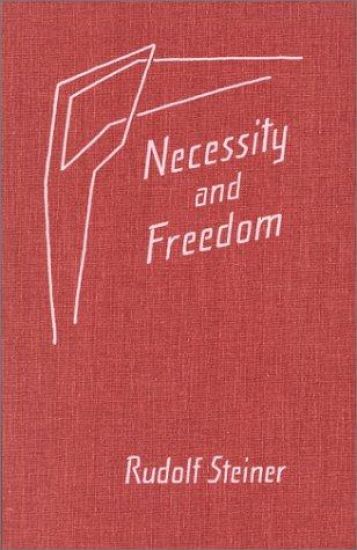
The age-old question of free will is still a mystery to most people today. Even religious and philosophical circles have difficulty reconciling the concepts of morality, destiny, karma, and necessity with true freedom. Steiner illuminates questions of freedom and necessity, and guilt and innocence, by discussing various aspects of evolution, history, and culture and showing that human beings carry the responsibility for these developments. He shows that the past represents necessity, whereas true freedom belongs to the future. Steiner states that, whereas the human I is revealed in acts of volition on the physical plane, ultimately we will find our true I-being only through the Christ impulse and the completely free act of the Mystery of Golgotha. German edition titled: Notwendigkeit und Freiheit im Weltengeschehen und im menschlichen Handeln.


Das Christentum als mystische Tatsache und die Mysterien des Altertums
Rudolf Steiner
Steiner Verlag, Dornach
1989
sidottu
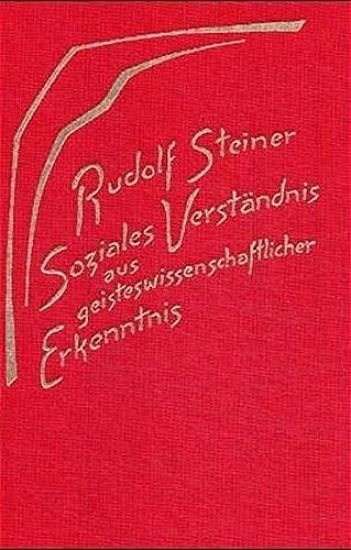
Soziales Verständnis aus geisteswissenschaftlicher Erkenntnis. Die geistigen Hintergründe der sozialen Frage III
Rudolf Steiner
Steiner Verlag, Dornach
1989
sidottu


Goethean Science features Rudolf Steiner's introductions to Goethe's works, re-visioning the meaning of knowledge and how we attain it. Goethe had discovered how thinking could be applied to organic nature and that this experience requires not just rational concepts but a whole new way of perceiving. At the youthful age of twenty-one, Steiner was chosen to edit Goethe's scientific writings for the principle Goethe edition of his time. Goethe's literary genius was universally acknowledged; it was Steiner's task to understand and comment on Goethe's scientific achievements. Steiner recognized the significance of Goethe's work with nature and his epistemology, and here began Steiner's own training in epistemology and spiritual science. In an age when science and technology have been linked to great catastrophes, many are looking for new ways to interact with nature. With a fundamental declaration of the interpenetration of our consciousness and the world around us, Steiner shows how Goethe's approach points the way to a more compassionate and intimate involvement with nature.






Lecture topics include: Lecture 1: The first reference to eurhythmy; the fourth mystery play, The Souls' Awakening. Lecture 2: Ahriman and Lucifer are both necessary and cannot be eliminated but only balanced. Lecture 3: Elemental world; the first condition is the ability to transform into a foreign being. Lecture 4: Ascent from elemental world to spiritual world; everything sensory must be abandoned. Lecture 5: Professor Capesius. Lecture 6: Roman letter Ahriman. Lecture 7: No royal road; each soul has a unique path. Lecture 8: Lucifer and Ahriman change their roles in different epochs.
8 lectures, Dornach, Sep-Oct, 1920 (CW 322)"We must begin by acquiring the discipline that modern science can teach us. We must school ourselves in this way and then, taking the strict methodology, the scientific discipline we have learned from modern natural science, transcend it, so that we use the same exacting approach to rise into higher regions, thereby extending this methodology to the investigation of entirely different realms as well." --Rudolf SteinerIf only sensory phenomena are within the reach of scientific research, the doors are closed to those worlds from which the human being originates and where the creative forces of the world are found. Rudolf Steiner challenges us to develop organs of perception needed to go beyond these limits of perception, so that we can witness the spirit that is active in all natural phenomena. Read Bobby Matherne's review of this book