Kirjojen hintavertailu – 12 903 725 kirjaa ja 27 kauppaa

Kirjailija

Rudolf Steiner

Kirjat ja teokset yhdessä paikassa: 1 477 kirjaa, julkaisuja vuosilta 1910–2026, suosituimpiin kuuluu The Cosmic New Year: A Course of Lectures by Rudolf Steiner. Vertaile teosten hintoja ja tarkista saatavuus suomalaisista kirjakaupoista.

1 477 kirjaa

Kirjojen julkaisuvuodet: 1910–2026.

Genius of Language

Genius of Language

Rudolf Steiner

SteinerBooks, Inc
1995
nidottu
During the first year of the first Waldorf school, Rudolf Steiner agreed to give a science course to the teachers, which was to be on the nature of light. At the last minute, he was asked to give an additional course on language, which he improvised. "The Genius of Language" is the result. Steiner demonstrates how history and psychology together form the different languages and how ideas, images, and vocabulary travel through time within various cultural streams. He describes how the power to form language has declined, but that we can still recover the seed of language, the penetration of sound by meaning. He also explains how consonants imitate outer phenomena, whereas vowels convey a more inner sense of events; he talks about the differentiation of language as it is influenced by geography; he speaks of the "folk soul" element and the possibility of "wordless thinking"; we hear about the capacity of language to transform us and of its importance to our spiritual lives. This is not just a course on language for those who love words but demonstrates ways to teach children. This little book will prove tremendously valuable to both educators and parents-in fact, to anyone who wants a deeper understanding of language and its significance for our lives. German source: Geisteswissenschaftlische Sprachbetrachtungen (GA 299).
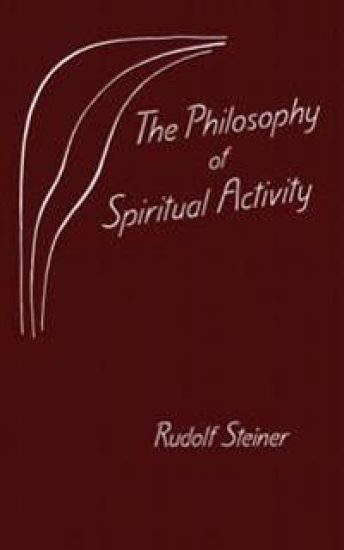
Intuitive Thinking as a Spiritual Path

Intuitive Thinking as a Spiritual Path

Rudolf Steiner

SteinerBooks, Inc
1995
nidottu
Of all of his works, Intuitive Thinking as a Spiritual Path is the one that Steiner himself believed would have the longest life and the greatest spiritual and cultural consequences. It was written as a phenomenological account of the "results of observing the human soul according to the methods of natural science. This seminal work asserts that free spiritual activity--understood as the human ability to think and act independently of physical nature--is the suitable path for human beings today to gain true knowledge of themselves and of the universe. This is not merely a philosophical volume, but rather a warm, heart-oriented guide to the practice and experience of living thinking. Readers will not find abstract philosophy here, but a step-by-step account of how a person may come to experience living, intuitive thinking--"the conscious experience of a purely spiritual content." During the past hundred years since it was written, many have tried to discover this "new thinking" that could help us understand the various spiritual, ecological, social, political, and philosophical issues facing us. But only Rudolf Steiner laid out a path that leads from ordinary thinking to the level of pure spiritual activity--intuitive thinking--in which we become co-creators and co-redeemers of the world. "When, with the help of Steiner's book, we recognize that thinking is an essentially spiritual activity, we discover that it can school us. In that sense--Steiner's sense--thinking is a spiritual path" (Gertrude Reif Hughes). Contents: Translator's Introduction Introduction by Gertrude Reif Hughes Preface to the Revised Edition, 1918 Part 1: Theory: The Knowledge of Freedom Conscious Human Action The Fundamental Urge for Knowledge Thinking in the Service of Understanding the World The World as Percept Knowing the World Human Individuality Are There Limits to Cognition? Part 2: Practice: The Reality of Freedom The Factors of Life The Idea of Freedom Freedom--Philosophy and Monism World Purpose and Life Purpose (Human Destiny) Moral Imagination (Darwinism and Ethics) The Value of Life (Pessimism and Optimism) Individuality and Genus Final Questions: The Consequences of Monism Appendixes Bibliography Index This volume is arguably the most essential of Steiner's works. The thoughts in this book establish the foundation for all of Anthroposophy. Other translations: The Philosophy of Freedom and The Philosophy of Spiritual Activity. German edition: Die Philosophie der Freiheit
The Gospel of St.John and its Relation to the Other Gospels
Beginning at the turn of the century, Rudolf Steiner began to express a passionate interest in Christianity. For him, the event he called the "Mystery of Golgotha" is more than the central event of Christianity; it is, in fact, the turning point in time for all human and earthly evolution. In his Autobiography, Steiner clarified his views on Christianity: Some of what I said and wrote during that period 1890s] seems to contradict the way I described Christianity later on. This is because, when I wrote the word Christianity, I was referring to the teachings of a "world beyond" that was active in all Christian doctrines at the time. The whole meaning of religious experiences pointed to a world of spirit, one that was supposed to be unattainable by human intellect. Whatever religion might have to say and whatever precepts for moral life it might offer arise from what is revealed to human beings from outside. My own direct, inner perception of spirit objected to this; it wanted to experience the worlds of both spirit and the physical in perceptions of the human being and nature. And my ethical individualism objected to this. It rejected the external support of commandments for morality; such support came instead as the result of spiritual soul development within the human being, where divinity lives. That was a trying time for my soul as I looked at Christianity. This period lasted from the time I left the Weimar work until I wrote my book Christianity as Mystical Fact. These kinds of tests are obstacles, placed in one's path by destiny (or karma), and they must be overcome through spiritual development. In these talks, Rudolf Steiner offers his profound insights into the essential truths behind the Christ event, as well as the historic and prehistoric events--on Earth and in the spiritual worlds--leading up to the turning point in time. He shows that the ancient mysteries of the East, the Persians, the Egyptians, the Greeks, and the streams behind those impulses--going back to Atlantis and Lemuria--all lead to the event of Christ's incarnation and the Mystery of Golgotha, through which the Earth became the body of Christ. Further, Steiner talks about what those events mean for the future of humanity and the Earth. The Gospel of St. John and Its Relation to the Other Gospels is an essential document in the literature of Christology and for understanding the central place of esoteric Christianity in Anthroposophy. The essential topics discussed in these lectures: The Christians of St. John; the rebirth of the higher "I" in individuals and in humanity The living spiritual history; the leaders of humanity; the creative Word The transformation of Earth; the prototypes of created types; the servants of the Word The hierarchies of our solar system and the kingdoms of the Earth Human development during the incarnations of our Earth; the kingdom of the luciferic and ahrimanic spirits and the kingdom of the divine spiritual beings The Atlantean oracles; post-Atlantean sanctuaries of initiation; the baptism by John The baptism with water and the baptism with fire and spirit The Mysteries of initiation; rebirth through Jesus Christ The artistic composition of the Gospel of St. John; the climax of power in the signs and miracles Events at the baptism by John; Christ's mastery over the laws of the skeletal structure and the conquest of death The establishment of harmony in the inner forces of human beings through the Christ impulse; the connection between the ancient mysteries and the Gospels The decline of the ancient wisdom and its renewal through the Christ impulse; the significance of the Mystery of Golgotha for human evolution on Earth The cosmic significance of the Mystery of Golgotha; the conquest of death through the expulsion of the luciferic and ahrimanic influence; death as the bringer of life; the Earth becomes a new sun; the effects of the Christ light and its reflection in the Earth's periphery as a spiritual sphere; the Holy Spirit The Earth as the body of Christ and as a new center of light; the Last Supper as a preparation for mystical union with Christ; Paul, the apostle of the spiritually living Christ; the seven stages of Christian initiation; death as the seed of eternal "I" being; spirit knowledge is the fire of life The Gospel of St. John and Its Relation to the Other Gospels is a translation of Das Johannes-Evangelium im Verh ltnis zu den drei anderen Evangelien, besonders zu dem Lukas-Evangelium (GA 112).

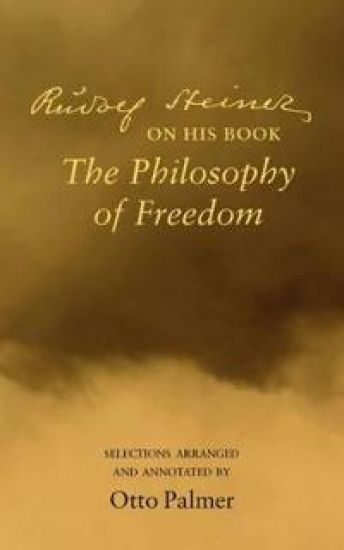
Rudlof Steiner on His Book the "Philosophy of Freedom"

Rudlof Steiner on His Book the "Philosophy of Freedom"

Rudolf Steiner; Otto Palmer

SteinerBooks, Inc
1994
nidottu
Eternal becoming in thinkingEvery step a deepeningOvercoming the surfacePenetrating the depths." --Rudolf SteinerMuch has been written by students of spiritual science on The Philosophy of Freedom, but the advantage of discovering what the author himself had to say about this most important and seminal work should be obvious. Not only were the words of the text chosen most carefully, but also its very structure was intended to become a powerful inner experience for the careful reader. In a sense, all of the works that flowed from Rudolf Steiner in the following years were to elaborate on this great work. At the age of twenty-seven, Rudolf Steiner "was beset by questions" related to outer human life, whereas inner human nature had been revealing itself to him with increasing clarity as a world of reality. In all his works, Steiner had relied on contemplation of that inner world, which led to writing The Philosophy of Freedom. His intention was to join inner and outer so that true inner work would lead to fully incarnating as human beings. The book that resulted became a pillar of anthroposophic practice and essential study for every student of inner development. Otto Palmer has provided an invaluable service by extracting numerous references from the words of Rudolf Steiner, providing keys to the deeper meanings behind the words of The Philosophy of Freedom, making it more accessible and meaningful to readers. Contents: How the Book Came To Be The Book's Aims and Artistic Composition New Thinking The Sphere of Freedom New Willing New Thinking, New Willing; The Thinking-Will Transition to the Social Problem The Socially Oriented Will Forces at Work in the Contemporary Scene The Book as a Training Manual Confrontations The Book's Christian Substance Epilogue, Notes, Partial Bibliography, Collateral Reading
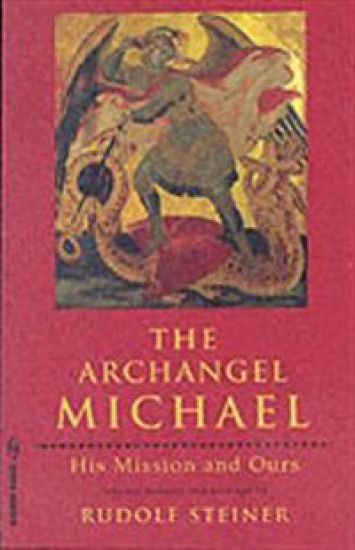
The Archangel Michael

The Archangel Michael

Rudolf Steiner

SteinerBooks, Inc
1994
nidottu
For centuries, the tradition of the "mystical chronology" of the world's seven archangelic regents has been part of Western esoteric teaching. According to this tradition, 1879 marked the return of the solar spirit Michael--the archangel of the Sun--to oversee earthly evolution. Steiner always placed his life and work in the service of Michael's evolutionary task. And he recognized that, at the beginning of the twentieth century, humanity emerged from the Kali Yuga--the Dark Age--and entered the Age of Light. Against this background, Steiner described the ascent of Michael as cosmic ruler, his battle with the "dragon" of the spirits of darkness, and his roles as the countenance of Christ and the guardian of cosmic intelligence. He also gave many profound indications of how Michael's evolutionary task depends on the free and independent collaboration of human coworkers. Speaking on behalf of Michael, Steiner laid out the essentials for a new Michaelic path to full humanity. Among the elements of this path are the development of selfless individuality; cosmopolitanism; the practice of the presence of Christ; fearlessness; the transformation of thinking and perception in a new synthesis of science, art, and religion; the spiritualization of space; and the separation of thought from language. The Archangel Michael gathers most of Steiner's statements on this subject, making it an important source for coming to terms with today's political, social, psychological, and spiritual crises. Read Bobby Matherne's review of this book
How to Know Higher Worlds

How to Know Higher Worlds

Rudolf Steiner

SteinerBooks, Inc
1994
nidottu
This is the classic account of the modern Western esoteric path of initiation made public by Steiner in 1904. He begins with the premise that "the capacities by which we can gain insights into the higher worlds lie dormant within each one of us." Steiner carefully and precisely leads the reader from the cultivation of the fundamental soul attitudes of reverence and inner tranquility to the development of inner life through the stages of preparation, illumination, and initiation. Steiner provides practical exercises of inner and outer observation and moral development. By patiently and persistently following his guidelines, new "organs" of soul and spirit begin to form, which reveal the contours of the higher worlds thus far concealed from us. Steiner in this important work becomes a teacher, a counselor, and a friend whose advice is practical, clear, and effective. The challenges we face in life require increasingly deeper levels of understanding, and Steiner's text helps readers to cultivate the capacities for such insights and places them at the service of humanity. This is Steiner's most essential guide to the modern path of initiation he advocated throughout his life. It has been translated into many languages and has inspired hundreds of thousands of readers around the world. How to Know Higher Worlds has been admired by some of the most brilliant minds of our time. Contents: Foreword by Arthur Zajonc Prefaces by Rudolf Steiner How to Know Higher Worlds The Stages of Initiation Initiation Practical Considerations Requirements for Esoteric Training Some Effects of Initiation Changes in the Dream Life of the Esoteric Student Achieving Continuity of Consciousness The Splitting of the Personality in Esoteric Training The Guardian of the Threshold Life and Death: The Great Guardian of the Threshold Epilogue (1918) Afterword by Arthur Zajonc Index "A true classic of spiritual literature. It is one of the best ways I know for opening up one's life to the spiritual realms in a manner that is balanced, integrated, and loving. It is the product of a great soul who pointed out new routes into the interior." --David Spangler, author of Blessing: The Art and the Practice "It is not only a personal guide to the spirit, but also a path through self-knowledge to compassionate action in the world."--Arthur Zajonc, author of Catching the Light: The Entwined History of Light and Mind
World Ether, Elemental Beings, Kingdoms of Nature: Texts from Rudolf Steiner's Spiritual Science
This book presents an annotated bibliography of books and lectures for advanced study of what Rudolf Steiner had to say about the etheric realm and its manifestations in the physical world. Ernst Hagemann has gathered a systematic collection of Steiner's many descriptions of the highly differentiated world of elemental beings.