Kirjailija
Rudolf Steiner
Kirjat ja teokset yhdessä paikassa: 1 477 kirjaa, julkaisuja vuosilta 1910–2026, suosituimpiin kuuluu The Cosmic New Year: A Course of Lectures by Rudolf Steiner. Vertaile teosten hintoja ja tarkista saatavuus suomalaisista kirjakaupoista.
1 477 kirjaa
Kirjojen julkaisuvuodet: 1910–2026.
Die Philosophie der Freiheit
Rudolf Steiner
Henricus - Edition Deutsche Klassik GmbH, Berlin
2025
sidottu

Die Philosophie der Freiheit
Rudolf Steiner
Henricus - Edition Deutsche Klassik GmbH, Berlin
2025
pokkari


Kasvatuskunst - teekond waldorfpedagoogika sügavustesse
Rudolf Steiner
Kriimu kiisu kirjastus
2025
nidottu
"Kasvatuskunst" on loengukursus, mis viib lugeja waldorfpedagoogika sügavustesse ja mille Rudolf Steiner pidas 1919. aasta sügisel Stuttgardi Vaba Waldorfkooli esimestele õpetajatele. 14 loengu lõppsõnas pani ta alustavatele õpetajatele südamele järgmist: " ... Õpetaja olgu initsiatiivikas nii suurtes kui ka väikestes küsimustes. [ ... ] Õpetaja peab olema inimene, kes huvitub kogu maisest ja inimlikust eksistentsist. [ ... ] Õpetaja on inimene, kes ei tee kunagi kompromisse valega. [ ... ] Õpetaja ei tohi muutuda tundevaeseks kuivikuks ega olla kibestunud. Närbumatu vaimuerksus! Mitte muutuda kuivikuks ega kibestunuks - see on hingelaad, mille poole õpetaja peab püüdlema ..." Raamat on teejuhiks waldorfkooli õpetajale ning kõigile, kes tegutsevad südamega koolimaailmas.

Die Wochensprüche des anthroposophischen Seelenkalenders im Doppelstrom der Zeit beider Hemisphären
Rudolf Steiner
Steiner Verlag, Dornach
2025
sidottu
Mystics of the Renaissance and their relation to modern thought
Rudolf Steiner
Alicia Editions
2025
sidottu
Mystics of the Renaissance and their relation to modern thought
Rudolf Steiner
Alicia Editions
2025
pokkari


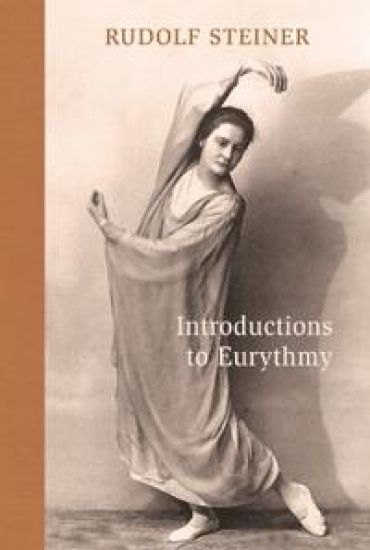
Introductions to eurythmy performances, 1913-1924 This volume features introductory addresses given by Rudolf Steiner to the first audiences of the newly minted art of eurythmy. Before each eurythmy performance at which he was present, Steiner gave such an introduction. His intention, as he remarked on several occasions, was not to elucidate the meaning of eurythmy intellectually--a vain and inartistic endeavor--but rather to orient the audience to this new undertaking in the realm of art. Steiner took many approaches to this end, describing in his introductions a range of themes, from the origins of eurythmy as a Goethean art form to its role in pedagogy and therapy. As this volume gathers a large collection of these introductions, repetition is inevitable but not without value. A slight nuance of expression can awaken new insight. From its inception, Steiner emphasized that eurythmy would be "a matter of the word, not of dancing to] music." Later, he called eurythmy "the art that has grown entirely from the soil of anthroposophy." In these introductions, he stresses the connection of this new art form with Goethe's concept of metamorphosis: "We need only recall how it was that Goethe rose up to the idea that each individual organ of the plant should be viewed as a transformation of the other organs that manifest within the same plant.... If we permeate ourselves with the intuitive insights latent within this view of nature, then it is possible to transpose this insight into artistic feeling and artistic form. That is what our art of eurythmy has attempted to accomplish with regard to certain artistically formed movements of the human body itself. And our way of attaining that ideal is by here transposing into movement what Goethe initially intuited within the realm of form." (Feb. 24, 1919)This is just one of the many keys to unlocking the open secret of this new art form--inaugurated a century ago but still in its infancy--with applications in the fields of education and therapy. Given as they were to a broad range of audiences, these introductions speak to everyone interested in expanding the possibilities of artistic expression through the greatest instrument of all: the human being. "Here nothing is a spontaneous expression; rather, everything has been submitted to an inner lawfulness...the heart of the matter is that everything subjective, everything arbitrary has been excluded from our art of eurythmy." (Feb. 24, 1919)This volume is a translation from German of portions of the following volumes: GA 36, Der Goetheanumgedanke inmitten der Kulturkrisis der Gegenwart: Gesammelte Aufs tze aus der Wochenschrift "Das Goetheanum" 1921-1925; GA 260a, Die Konstitution der Allgemeinen Anthroposophischen Gesellschaft und der Freien Hochschule f r Geisteswissenschaft: Der Wiederaufbau des Goetheanum; GA 277, Eurythmie: Die Offenbarung der sprechenden Seele: Eine Fortbildung der Goetheschen Metamorphosenanschauung im Bereich der menschlichen Bewegung: Ansprachen zu Eurythmie-Auff hrungen aus den Jahren 1918 bis 1924 mit Notizbucheintragungen und dazugeh rigen Programmen; GA 277a, Die Entstehung und Entwickelung der Eurythmie; GA 301, Die Erneuerung der p dagogisch-didaktischen Kunst durch Geisteswissenschaft

Leitsatze - Leading Thoughts
Rudolf Steiner; Peter Selg
ANTHROPOSOPHIC PRESS INC
2025
pokkari
Halvin toimitettuna 51,90 €
"Anthroposophy is a path of knowledge that would guide the spiritual in the human being to the spiritual in the universe." This newly revised special edition of the Leading Thoughts, coinciding with the 100th anniversary of Rudolf Steiner's death (March 30, 2025), marks the first ever bilingual (German-English) publication of his final written work, which he largely composed in the last months of his life (October 1, 1924-March 30, 1925). The Leading Thoughts and the essays that introduce them form the culmination of Steiner's endeavors to communicate the essence of anthroposophical spiritual science. They deal with the dawn of the Consciousness Soul Age, with Michael's battle with Ahriman for human intelligence, with the forces of Christ and Anti-Christ, with the future of the Earth and humanity. As his last written testament, this volume stands as a bulwark against the dehumanizing forces of modern civilization and as a call to all who would look earnestly at the state of our world and choose, in freedom, to seek a human way forward.

The Way Of Initiation; Or, How To Attain Knowledge Of The Higher Worlds
Rudolf Steiner
Alpha Editions
2025
pokkari

Agriculture: Spiritual Foundations for the Renewal of Agriculture (Cw 327)
Rudolf Steiner
Steiner Books
2025
sidottu
8 lectures and 4 discussions, Koberwitz, June 7-20, 1924 (CW 327)With this remarkable series of lectures presented in Koberwitz, Silesia, June 7 to 16, 1924, Rudolf Steiner founded biodynamic agriculture. They contain profound insights into farming, the plant and animal world, the nature of organic chemistry, and the influences of heavenly bodies. This translation from the original German by Catherine E. Creeger and Malcolm Gardner is a fundamental text for many intermediate and advanced students of biodynamic agriculture--one to which the biodynamic practitioner will refer again and again over the years. In addition to the eight lectures, this edition includes: Four discussions by Rudolf Steiner; Color plates of Steiner's blackboard drawings;An address to the members of the Agricultural Experimental group;Rudolf Steiner's report to members of the Anthroposophical Society following the lectures;Rudolf Steiner's handwritten notes for the course;Additional agricultural indications by Rudolf Steiner;An essay: "New Directions in Agriculture," by Ehrenfried E. Pfeiffer, a biodynamic pioneer in North America. This book is the primary resource for anyone involved in biodynamic gardening or farming. Agriculture is a translation from German of the book Geisteswissenschaftliche Grundlagen zum Gedeihen der Landwirtschaft. Landwirtschaftlicher Kursus (GA 327).