Kirjojen hintavertailu – 12 859 828 kirjaa ja 27 kauppaa

Kirjailija

Serhii Plokhy

Kirjat ja teokset yhdessä paikassa: 65 kirjaa, julkaisuja vuosilta 2001–2027, suosituimpiin kuuluu Chernobyl : The History of a Nuclear Catastrophe. Vertaile teosten hintoja ja tarkista saatavuus suomalaisista kirjakaupoista.

65 kirjaa

Kirjojen julkaisuvuodet: 2001–2027.

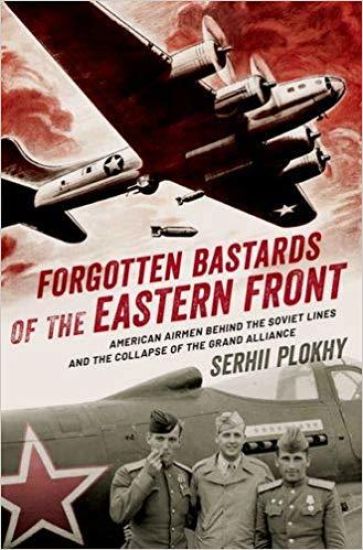
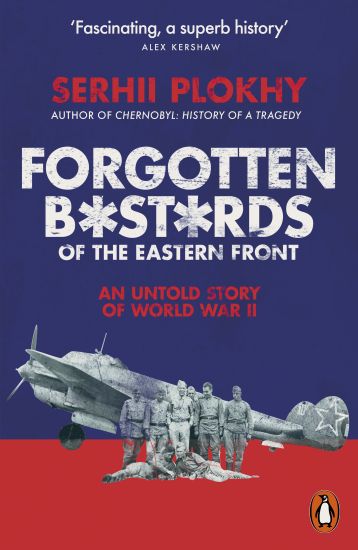
Forgotten Bastards of the Eastern Front

Forgotten Bastards of the Eastern Front

Serhii Plokhy

Penguin Books Ltd.
2020
pokkari

Halvin toimitettuna 17,00 €

In November 1943, with the outcome of the Second World War hanging in the balance, the Allies needed a new plan. The Americans' audacious suggestion to the Soviets was to open a second air front, with the US Air Force establishing bases in Soviet-controlled territory. Despite Stalin's obvious reservations about the presence of foreign troops in Russia, he was persuaded. Operation Baseball and then Frantic were initiated in early 1944 as B-17 Superfortresses were flown from bases in Italy to the Poltova region in today's Ukraine. Award-winning historian Serhii Plokhy tells the gripping, little-known story of this encounter between American and Soviet soldiers and how their collaboration quickly fell apart, mirroring the transition from the Grand Alliance to the Cold War. Soviet secret policemen watched over the Americans, shadowing their every move. A catastrophic air raid by the Germans revealed the limitations of Soviet air defences. As their initial enthusiasm turned into disappointment, the American soldiers started calling themselves the Forgotten Bastards of Ukraine. Ultimately, no common purpose could overcome their cultural and political differences. Drawing on newly opened Russian archives as well as CIA records, Forgotten Bastards of the Eastern Front offers a riveting bottom-up history of one of the Second World War's most unlikely Alliances.
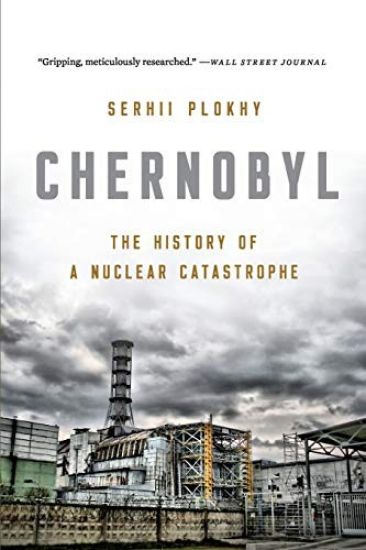
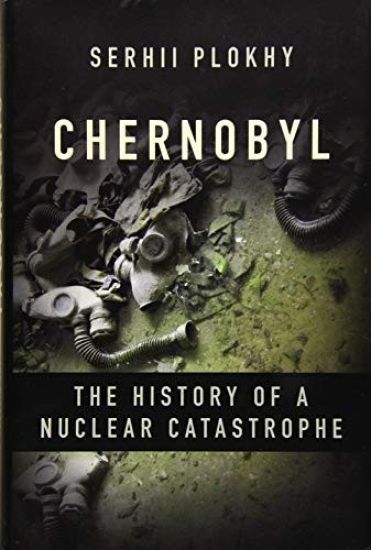
Chernobyl: The History of a Nuclear Catastrophe

Chernobyl: The History of a Nuclear Catastrophe

Serhii Plokhy

BASIC BOOKS
2020
nidottu

Halvin toimitettuna 23,70 €

A Chernobyl survivor and the New York Times bestselling author of The Gates of Europe "mercilessly chronicles the absurdities of the Soviet system" in this "vividly empathetic" account of the worst nuclear accident in history (Wall Street Journal). On the morning of April 26, 1986, Europe witnessed the worst nuclear disaster in history: the explosion of a reactor at the Chernobyl Nuclear Power Plant in Soviet Ukraine. Dozens died of radiation poisoning, fallout contaminated half the continent, and thousands fell ill. In Chernobyl, Serhii Plokhy draws on new sources to tell the dramatic stories of the firefighters, scientists, and soldiers who heroically extinguished the nuclear inferno. He lays bare the flaws of the Soviet nuclear industry, tracing the disaster to the authoritarian character of the Communist party rule, the regime's control over scientific information, and its emphasis on economic development over all else. Today, the risk of another Chernobyl looms in the mismanagement of nuclear power in the developing world. A moving and definitive account, Chernobyl is also an urgent call to action.
Forgotten Bastards of the Eastern Front: American Airmen Behind the Soviet Lines and the Collapse of the Grand Alliance
The full story of the first and only time American and Soviets fought side-by-side in World War II At the conference held in in Moscow in October 1943, American officials proposed to their Soviet allies a new operation in the effort to defeat Nazi Germany. The Normandy Invasion was already in the works; what American officials were suggesting until then was a second air front: the US Air Force would establish bases in Soviet-controlled territory, in order to "shuttle-bomb" the Germans from the Eastern front. For all that he had been pushing for the United States and Great Britain to do more to help the war effort--the Soviets were bearing by far the heaviest burden in terms of casualties--Stalin, recalling the presence of foreign troops during the Russian Revolution, balked at the suggestion of foreign soldiers on Soviet soil. His concern was that they would spy on his regime, and it would be difficult to get rid of them afterword. Eventually in early 1944, Stalin was persuaded to give in, and Operation Baseball and then Frantic were initiated. B-17 Flying Fortresses were flown from bases in Italy to the Poltava region in Ukraine. As Plokhy's book shows, what happened on these airbases mirrors the nature of the Grand Alliance itself. While both sides were fighting for the same goal, Germany's unconditional surrender, differences arose that no common purpose could overcome. Soviet secret policeman watched over the operations, shadowing every move, and eventually trying to prevent fraternization between American servicemen and local women. A catastrophic air raid by the Germans revealed the limitations of Soviet air defenses. Relations soured and the operations went south. Indeed, the story of the American bases foreshadowed the eventual collapse of the Grand Alliance and the start of the Cold War. Using previously inaccessible archives, Forgotten Bastards offers a bottom-up history of the Grand Alliance, showing how it first began to fray on the airfields of World War II.
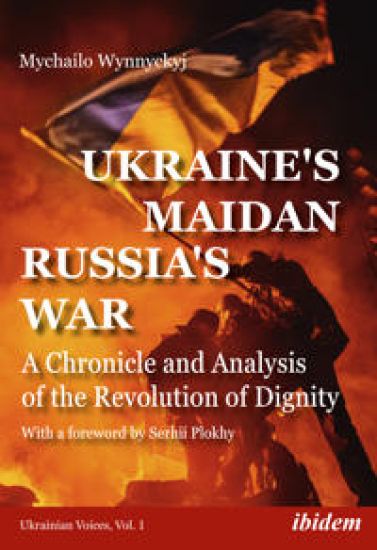
Ukraine's Maidan, Russia's War

Ukraine's Maidan, Russia's War

Mychailo Wynnyckyj; Serhii Plokhy

ibidem-Verlag, Jessica Haunschild u Christian Schon
2019
sidottu
In early 2014, sparked by an assault by their government on peaceful students, Ukrainians rose up against a deeply corrupt, Moscow-backed regime. Initially demonstrating under the banner of EU integration, the Maidan protesters proclaimed their right to a dignified existence; they learned to organize, to act collectively, to become a civil society. Most prominently, they established a new Ukrainian identity: territorial, inclusive, and present-focused with powerful mobilising symbols. Driven by an urban bourgeoisie that rejected the hierarchies of industrial society in favor of a post-modern heterarchy, a previously passive post-Soviet country experienced a profound social revolution that generated new senses: Dignity and fairness became rallying cries for millions. Europe as the symbolic target of political aspiration gradually faded, but the impact (including on Europe) of Ukraines revolution remained. When Russia invaded -- illegally annexing Crimea and then feeding continuous military conflict in the Donbas -- Ukrainians responded with a massive volunteer effort and touching patriotism. In the process, they transformed their country, the region, and indeed the world. This book provides a chronicle of Ukraines Maidan and Russias ongoing war, and puts forth an analysis of the Revolution of Dignity from the perspective of a participant observer.
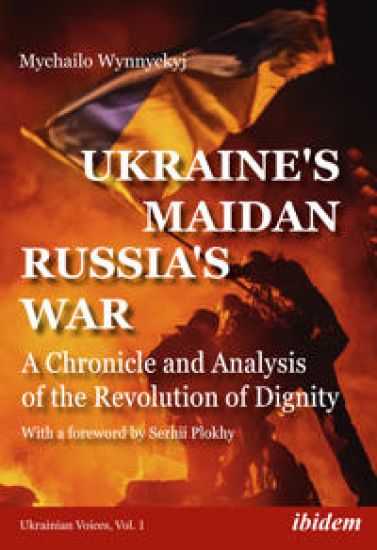
Ukraine's Maidan, Russia's War

Ukraine's Maidan, Russia's War

Mychailo Wynnyckyj; Serhii Plokhy

ibidem-Verlag, Jessica Haunschild u Christian Schon
2019
nidottu

Halvin toimitettuna 34,70 €

In early 2014, sparked by an assault by their government on peaceful students, Ukrainians rose up against a deeply corrupt, Moscow-backed regime. Initially demonstrating under the banner of EU integration, the Maidan protesters proclaimed their right to a dignified existence; they learned to organize, to act collectively, to become a civil society. Most prominently, they established a new Ukrainian identity: territorial, inclusive, and present-focused with powerful mobilizing symbols. Driven by an urban bourgeoisie that rejected the hierarchies of industrial society in favor of a post-modern heterarchy, a previously passive post-Soviet country experienced a profound social revolution that generated new senses: Dignity and fairness became rallying cries for millions. Europe as the symbolic target of political aspiration gradually faded, but the impact (including on Europe) of Ukraines revolution remained. When Russia invaded -- illegally annexing Crimea and then feeding continuous military conflict in the Donbas -- Ukrainians responded with a massive volunteer effort and touching patriotism. In the process, they transformed their country, the region, and indeed the world. This book provides a chronicle of Ukraines Maidan and Russias ongoing war, and puts forth an analysis of the Revolution of Dignity from the perspective of a participant observer.
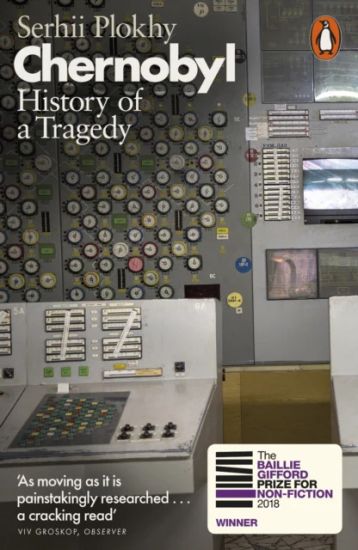
Chernobyl

Chernobyl

Serhii Plokhy

Penguin Books Ltd.
2019
pokkari

Halvin toimitettuna 18,70 €

*WINNER OF THE BAILLIE GIFFORD PRIZE FOR NON-FICTION 2018**WINNER OF THE PUSHKIN HOUSE BOOK PRIZE 2019*'As moving as it is painstakingly researched. . . a cracking read' Viv Groskop, Observer'A riveting account of human error and state duplicity. . . rightly being hailed as a classic' Hannah Betts, Daily TelegraphOn 26 April 1986 at 1.23am a reactor at the Chernobyl Nuclear Power Plant in Soviet Ukraine exploded. While the authorities scrambled to understand what was occurring, workers, engineers, firefighters and those living in the area were abandoned to their fate. The blast put the world on the brink of nuclear annihilation, contaminating over half of Europe with radioactive fallout. In Chernobyl, award-winning historian Serhii Plokhy draws on recently opened archives to recreate these events in all their drama. A moment by moment account of the heroes, perpetrators and victims of a tragedy, Chernobyl is the first full account of a gripping, unforgettable Cold War story.'A compelling history of the 1986 disaster and its aftermath . . . plunges the reader into the sweaty, nervous tension of the Chernobyl control room on that fateful night when human frailty and design flaws combined to such devastating effect' Daniel Beer, Guardian'Haunting ... near-Tolstoyan. His voice is humane and inflected with nostalgia' Roland Elliott Brown, Spectator'Extraordinary, vividly written, powerful storytelling ... the first full-scale history of the world's worst nuclear disaster, one of the defining moments in the Cold War, told minute by minute' Victor Sebestyen Sunday Times'Plays out like a classical tragedy ... fascinating' Julian Evans, Daily Telegraph'Here at last is the monumental history the disaster deserves' Julie McDowall, The Times
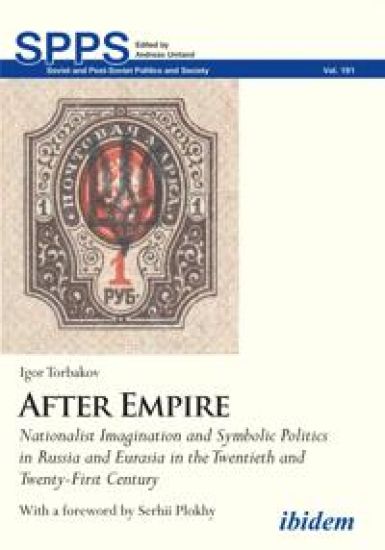
After Empire

After Empire

Igor Torbakov; Serhii Plokhy

ibidem-Verlag, Jessica Haunschild u Christian Schon
2018
nidottu
Igor Torbakov explores the nexus between various forms of Russian political imagination and the apparently cyclic process of decline and fall of Russias imperial polity over the last hundred years. While Russias historical process is by no means unique, two features of its historical development stand out. First, the countrys history is characterized by dramatic political discontinuity. In the past century, Russia changed its historical skin three times: following the disintegration of the Tsarist Empire accompanied by violent civil war, it was reconstituted as the communist USSR, whose breakup a quarter century ago led to the emergence of the present-day Russian Federation. Each of the dramatic transformations in the 20th century powerfully affected the notion of what Russia is and what it means to be Russian. Second, alongside Russias political instability, there is, paradoxically, a striking picture of geopolitical stability and of remarkable longevity as an imperial entity. At least since the beginning of the 18th century, Russia has been a permanent geopolitical fixture on Europes north-eastern margins with its persistent pretense to the status of a great power. Against this backdrop, the books three sections investigate (a) the emergence and development of Eurasianism as a form of (post-)imperial ideology, (b) the crucial role Ukraine has historically played for the Russians self-understanding, and (c) the contemporary Russian elites exercises in historical legitimation.
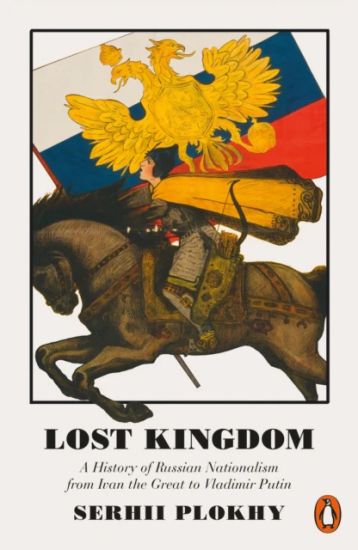
Lost Kingdom

Lost Kingdom

Serhii Plokhy

Penguin Books Ltd
2018
pokkari

Halvin toimitettuna 18,70 €

'Brisk and thoughtful, this book could hardly be more timely' Dominic Sandbrook, BBC History Magazine, Books of the YearFrom a preeminent scholar of Eastern Europe and the prize-winning author of Chernobyl, the essential history of Russian imperialismIn 2014, Russia annexed Crimea and attempted to seize a portion of Ukraine. While the world watched in outrage, this violation of national sovereignty was in fact only the latest iteration of a centuries-long effort to expand Russian boundaries and create a pan-Russian nation. In Lost Kingdom, award-winning historian Serhii Plokhy argues that we can only understand the merging of imperialism and nationalism in Russia today by delving into its history. Spanning over two thousand years, from the end of the Mongol rule to the present day, Plokhy shows how leaders from Ivan the Terrible to Joseph Stalin to Vladimir Putin have exploited existing forms of identity, warfare and territorial expansion to achieve imperial supremacy. A strikingly ambitious book, Lost Kingdom chronicles the long and belligerent history of Russia's empire and nation-building quest.
Chernobyl : The History of a Nuclear Catastrophe
A Chernobyl survivor and award-winning historian "mercilessly chronicles the absurdities of the Soviet system" in this "vividly empathetic" account of the worst nuclear accident in history (The Wall Street Journal). On the morning of April 26, 1986, Europe witnessed the worst nuclear disaster in history: the explosion of a reactor at the Chernobyl Nuclear Power Plant in Soviet Ukraine. Dozens died of radiation poisoning, fallout contaminated half the continent, and thousands fell ill. In Chernobyl, Serhii Plokhy draws on new sources to tell the dramatic stories of the firefighters, scientists, and soldiers who heroically extinguished the nuclear inferno. He lays bare the flaws of the Soviet nuclear industry, tracing the disaster to the authoritarian character of the Communist party rule, the regime’s control over scientific information, and its emphasis on economic development over all else. Today, the risk of another Chernobyl looms in the mismanagement of nuclear power in the developing world. A moving and definitive account, Chernobyl is also an urgent call to action.
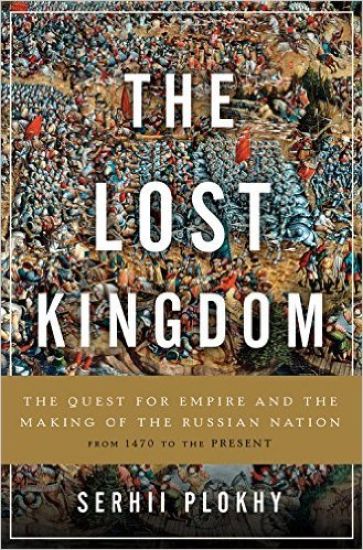
Lost Kingdom

Lost Kingdom

Serhii Plokhy

Basic Books
2017
sidottu
From a preeminent scholar of Eastern Europe and the prizewinning author of Chernobyl, the essential history of Russian imperialism. In 2014, Russia annexed the Crimea and attempted to seize a portion of Ukraine -- only the latest iteration of a centuries-long effort to expand Russian boundaries and create a pan-Russian nation. In Lost Kingdom, award-winning historian Serhii Plokhy argues that we can only understand the confluence of Russian imperialism and nationalism today by delving into the nation's history. Spanning over 500 years, from the end of the Mongol rule to the present day, Plokhy shows how leaders from Ivan the Terrible to Joseph Stalin to Vladimir Putin exploited existing forms of identity, warfare, and territorial expansion to achieve imperial supremacy. An authoritative and masterful account of Russian nationalism, Lost Kingdom chronicles the story behind Russia's belligerent empire-building quest.
The Man with the Poison Gun

The Man with the Poison Gun

Serhii Plokhy

Oneworld Publications
2017
pokkari

Halvin toimitettuna 17,90 €

1961. The height of the Cold War. Just hours before work begins on the Berlin Wall, a KGB assassin and his young wife flee for the West before the Iron Curtain comes down and traps them in the East forever. This gripping story of real-life espionage and intrigue began when the Soviets invented a special weapon that killed without leaving a trace and put it in the hands of Bogdan Stashinsky. It is a tale of exploding parcels, fake identities, forbidden love and a man who knew the truth about the USSR’s most classified programme. By the time Stashinsky had his day in court, the whole world was watching.
The Man with the Poison Gun

The Man with the Poison Gun

Serhii Plokhy

Oneworld Publications
2016
sidottu
1961. The height of the Cold War. Just hours before work begins on the Berlin Wall, a KGB assassin and his young wife flee for the West before the Iron Curtain comes down and traps them in the East forever. This gripping story of real-life espionage and intrigue began when the Soviets invented a special weapon that killed without leaving a trace and put it in the hands of Bogdan Stashinsky. It is a tale of exploding parcels, fake identities, forbidden love and a man who knew the truth about the USSR’s most classified programme. By the time Stashinsky had his day in court, the whole world was watching.
The Man with the Poison Gun

The Man with the Poison Gun

Serhii Plokhy

Basic Books
2016
sidottu
In the fall of 1961, KGB assassin Bogdan Stashinsky defected to West Germany. After spilling his secrets to the CIA, Stashinsky was put on trial in what would be the most publicized assassination case of the entire Cold War. The publicity stirred up by the Stashinsky case forced the KGB to change its modus operandi abroad and helped end the career of Aleksandr Shelepin, one of the most ambitious and dangerous Soviet leaders. Stashinsky's testimony, implicating the Kremlin rulers in political assassinations carried out abroad, shook the world of international politics. Stashinsky's story would inspire films, plays, and books,including Ian Fleming's last James Bond novel, The Man with the Golden Gun. A thrilling tale of Soviet spy craft, complete with exploding parcels, elabourately staged coverups, double agents, and double crosses, The Man with the Poison Gun offers unparalleled insight into the shadowy world of Cold War espionage.
The Gates of Europe

The Gates of Europe

Serhii Plokhy

Penguin Books Ltd
2016
pokkari

Halvin toimitettuna 18,70 €

THE NEW YORK TIMES BESTSELLER FROM THE AWARD-WINNING AUTHOR OF CHERNOBYL: HISTORY OF A TRAGEDY'An indispensable guide to the tragic history of a great European nation' Sunday Telegraph'This is present-minded history at its most urgent. Anyone wanting to understand why Russia and the West confront each other over the future of Ukraine will want to read Serhii Plokhy's reasoned, measured yet passionate account' Michael IgnatieffLocated at the western edge of the Eurasian steppe, Ukraine has long been the meeting place of empires - Roman to Ottoman, Habsburg to Russian - and they all left their imprint on the landscape, the language and the people living within these shifting borders. In this authoritative book, Harvard Professor and acclaimed author of Chernobyl, Serhii Plokhy traces the history of Ukraine from the arrival of the Vikings in the tenth century to the current Russian invasion of eastern Ukraine and annexation of Crimea. Fascinating and multilayered, The Gates of Europe is the essential guide to understanding not just Ukraine's past but also its future.
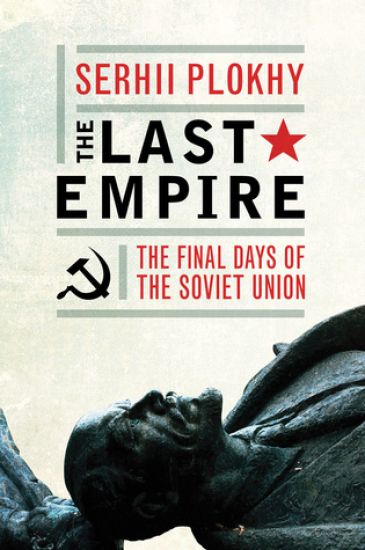
The Last Empire

The Last Empire

Serhii Plokhy

Basic Books
2015
nidottu
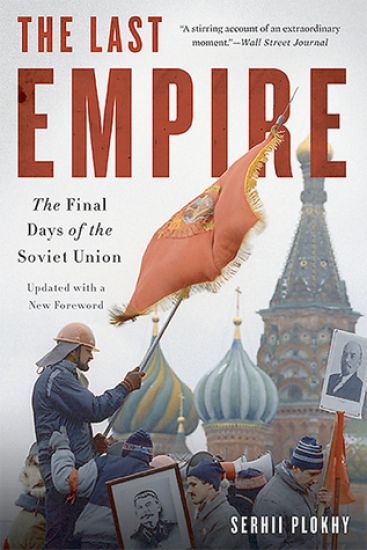
On Christmas Day, 1991, President George H. W. Bush addressed the nation to declare an American victory in the Cold War: earlier that day Mikhail Gorbachev had resigned as the first and last Soviet president. The enshrining of that narrative, one in which the end of the Cold War was linked to the disintegration of the Soviet Union and the triumph of democratic values over communism, took centre stage in American public discourse immediately after Bush's speech and has persisted for decades,with disastrous consequences for American standing in the world. As Prize-winning historian Serhii Plokhy reveals in The Last Empire , the collapse of the Soviet Union was anything but the handiwork of the United States. On the contrary, American leaders dreaded the possibility that the Soviet Union,weakened by infighting and economic turmoil,might suddenly crumble, throwing all of Eurasia into chaos. Bush was firmly committed to supporting his ally and personal friend Gorbachev, and remained wary of nationalist or radical leaders such as recently elected Russian President Boris Yeltsin. Fearing what might happen to the large Soviet nuclear arsenal in the event of the union's collapse, Bush stood by Gorbachev as he resisted the growing independence movements in Ukraine, mouldova, and the Caucasus. Plokhy's detailed, authoritative account shows that it was only after the movement for independence of the republics had gained undeniable momentum on the eve of the Ukrainian vote for independence that fall that Bush finally abandoned Gorbachev to his fate. Drawing on recently declassified documents and original interviews with key participants, Plokhy presents a bold new interpretation of the Soviet Union's final months and argues that the key to the Soviet collapse was the inability of the two largest Soviet republics, Russia and Ukraine, to agree on the continuing existence of a unified state. By attributing the Soviet collapse to the impact of American actions, US policy makers overrated their own capacities in toppling and rebuilding foreign regimes. Not only was the key American role in the demise of the Soviet Union a myth, but this misplaced belief has guided,and haunted,American foreign policy ever since.
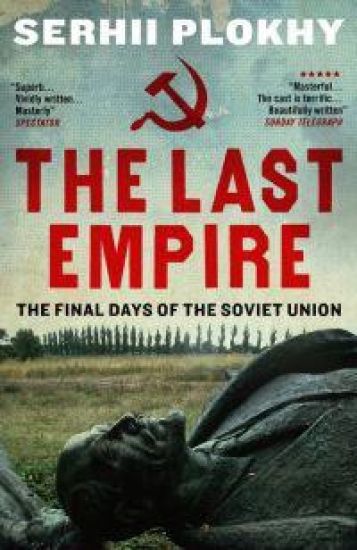
The Last Empire

The Last Empire

Serhii Plokhy

Oneworld Publications
2015
nidottu

Halvin toimitettuna 18,70 €

BY THE AUTHOR OF CHERNOBYL: HISTORY OF A TRAGEDY, WINNER OF THE BAILLIE GIFFORD PRIZE 2018 WINNER OF THE PUSHKIN HOUSE RUSSIAN BOOK PRIZE 2015 On Christmas Day 1991 Mikhail Gorbachev resigned as president of the Soviet Union. By the next day the USSR was officially no more and the USA had emerged as the world’s sole superpower. Award-winning historian Serhii Plokhy presents a page-turning account of the preceding five months of drama, filled with failed coups d’état and political intrigue. Honing in on this previously disregarded but crucial period and using recently declassified documents and original interviews with key participants, he shatters the established myths of 1991 and presents a bold new interpretation of the Soviet Union’s final months. Plokhy argues that contrary to the triumphalist Western narrative, George H. W. Bush desperately wanted to preserve the Soviet Union and keep Gorbachev in power, and that it was Ukraine and not the US that played the key role in the collapse of the Soviet Union. The consequences of those five months and the myth-making that has since surrounded them are still being felt in Crimea, Russia, the US, and Europe today. With its spellbinding narrative and strikingly fresh perspective, The Last Empire is the essential account of one of the most important watershed periods in world history, and is indispensable reading for anyone seeking to make sense of international politics today.
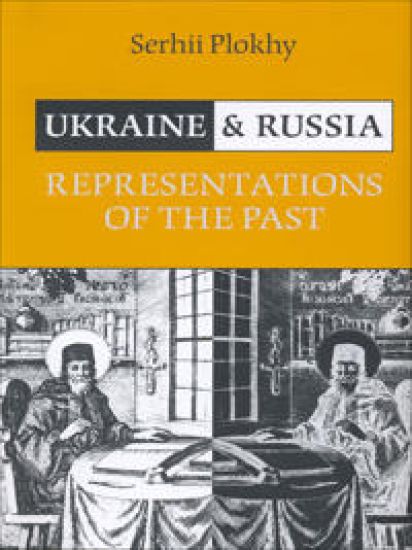
Ukraine and Russia

Ukraine and Russia

Serhii Plokhy

University of Toronto Press
2014
pokkari
The question of where Russian history ends and Ukrainian history begins has not yet received a satisfactory answer. Generations of historians referred to Kyiv, the capital of Ukraine, as the starting point of the Muscovite dynasty, the Russian state, and, ultimately, the Russian nation. However, the history of Kyiv and that of the Scythians of the Northern Black Sea region have also been claimed by Ukrainian historians, and are now regarded as integral parts of the history of Ukraine. If these are actually the beginnings of Ukrainian history, when does Russian history start? In Ukraine and Russia, Serhii Plokhy discusses many questions fundamental to the formation of modern Russian and Ukrainian historical identity. He investigates the critical role of history in the development of modern national identities and offers historical and cultural insight into the current state of relations between the two nations. Plokhy shows how history has been constructed, used, and misused in order to justify the existence of imperial and modern national projects, and how those projects have influenced the interpretation of history in Russia and Ukraine. This book makes important assertions not only about the conflicts and negotiations inherent to opposing historiographic traditions, but about ways of overcoming the limitations imposed by those traditions.
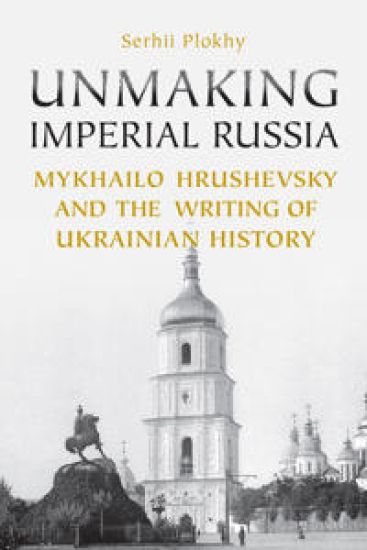
Unmaking Imperial Russia

Unmaking Imperial Russia

Serhii Plokhy

University of Toronto Press
2014
pokkari
From the eighteenth century until its collapse in 1917, Imperial Russia ? as distinct from Muscovite Russia before it and Soviet Russia after it ? officially held that the Russian nation consisted of three branches: Great Russian, Little Russian (Ukrainian), and White Russian (Belarusian). After the 1917 revolution, this view was discredited by many leading scholars, politicians, and cultural figures, but none were more intimately involved in the dismantling of the old imperial identity and its historical narrative than the eminent Ukrainian historian Mykhailo Hrushevsky (1866?1934). Hrushevsky took an active part in the work of Ukrainian scholarly, cultural, and political organizations and became the first head of the independent Ukrainian state in 1918. Serhii Plokhy's Unmaking Imperial Russia examines Hrushevsky's construction of a new historical paradigm that brought about the nationalization of the Ukrainian past and established Ukrainian history as a separate field of study. By showing how the ?all-Russian? historical paradigm was challenged by the Ukrainian national project, Plokhy provides the indispensable background for understanding the current state of relations between Ukraine and Russia.
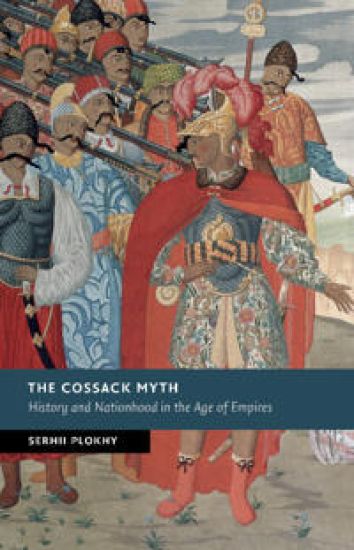
The Cossack Myth

The Cossack Myth

Serhii Plokhy

Cambridge University Press
2014
pokkari
In the years following the Napoleonic Wars, a mysterious manuscript began to circulate among the dissatisfied noble elite of the Russian Empire. Entitled The History of the Rus', it became one of the most influential historical texts of the modern era. Attributed to an eighteenth-century Orthodox archbishop, it described the heroic struggles of the Ukrainian Cossacks. Alexander Pushkin read the book as a manifestation of Russian national spirit, but Taras Shevchenko interpreted it as a quest for Ukrainian national liberation, and it would inspire thousands of Ukrainians to fight for the freedom of their homeland. Serhii Plokhy tells the fascinating story of the text's discovery and dissemination, unravelling the mystery of its authorship and tracing its subsequent impact on Russian and Ukrainian historical and literary imagination. In so doing he brilliantly illuminates the relationship between history, myth, empire and nationhood from Napoleonic times to the fall of the Soviet Union.
The Last Empire

The Last Empire

Serhii Plokhy

Oneworld Publications
2014
sidottu
On Christmas Day 1991 Mikhail Gorbachev resigned as president of the Soviet Union. By the next day the USSR was officially no more and the USA had emerged as the world’s sole superpower. Award-winning historian Serhii Plokhy presents a page-turning account of the preceding five months of drama, filled with failed coups d’état and political intrigue. Honing in on this previously disregarded but crucial period and using recently declassified documents and original interviews with key participants, he shatters the established myths of 1991 and presents a bold new interpretation of the Soviet Union’s final months. Plokhy argues that contrary to the triumphalist Western narrative, George H. W. Bush desperately wanted to preserve the Soviet Union and keep Gorbachev in power, and that it was Ukraine and not the US that played the key role in the collapse of the Soviet Union. The consequences of those five months and the myth-making that has since surrounded them are still being felt in Crimea, Russia, the US, and Europe today. With its spellbinding narrative and strikingly fresh perspective, The Last Empire is the essential account of one of the most important watershed periods in world history, and is indispensable reading for anyone seeking to make sense of international politics today.