Kirjailija
Sigmund Freud
Kirjat ja teokset yhdessä paikassa: 1 311 kirjaa, julkaisuja vuosilta 1920–2027, suosituimpiin kuuluu The Freud/Jung Letters. Vertaile teosten hintoja ja tarkista saatavuus suomalaisista kirjakaupoista.
1 311 kirjaa
Kirjojen julkaisuvuodet: 1920–2027.
There exist, of course, few more famous figures in the field of psychology than Sigmund Freud. As the founding father of psychoanalysis, or the clinical method for treating psychopathology through dialogue between a patient and a psychoanalyst, his impact on the field of psychology cannot be overstated. This short work, "Five Lectures on Psycho-Analysis", is a collection of a series of lectures given by Freud at the 20th Anniversary Celebration of the founding of Clark University in Worcester, Massachusetts during September 1909 and was published as a collection in 1910. This event, at which Freud was awarded an honorary doctorate, received widespread media attention and marked the beginning of public popularity for Freud and his ideas. The publication of the lectures brought an even greater public attention to his theories. "Five Lectures on Psycho-Analysis" predates the more extensive collection "Introductory Lectures on Psychoanalysis", which is a series of lectures given by Freud from 1915 to 1917 and which delve more deeply into the topics of dreams, the unconscious mind, and the source of neuroses. "Five Lectures on Psycho-Analysis" is an excellent and accessible introduction to Freud's influential work in which he summarizes his basic ideas and speaks on the foundations of psychoanalysis. This edition is printed on premium acid-free paper and follows the translation of Harry W. Chase.
Freud drew the concept of animism from anthropologists such as Herbert Spencer, James George Frazer, Andrew Lang, Edward Burnett Tyler, and Wilhelm Wundt, who used it to refer to the tendency, thought to belong to people in primitive cultures and children, of attributing a soul to things and thus ascribing an intentionality to phenomena that would otherwise be understood in mechanistic causal terms. In psychoanalysis, the concept of animism is inextricably connected with projective mechanisms.
This work has been selected by scholars as being culturally important and is part of the knowledge base of civilization as we know it. This work is in the public domain in the United States of America, and possibly other nations. Within the United States, you may freely copy and distribute this work, as no entity (individual or corporate) has a copyright on the body of the work. Scholars believe, and we concur, that this work is important enough to be preserved, reproduced, and made generally available to the public. To ensure a quality reading experience, this work has been proofread and republished using a format that seamlessly blends the original graphical elements with text in an easy-to-read typeface. We appreciate your support of the preservation process, and thank you for being an important part of keeping this knowledge alive and relevant.
Metapsykologi var for Freud det modsatte af metafysik. Ikke filosofiske spekulationer om menneskets væsen, men opstilling og afprøvning af videnskabelige hypoteser om psykens opbygning og udvikling. De metapsykologiske hypoteser udgør tilsammen psykoanalysens teori. Metapsykologi 1 indeholder otte afhandlinger: Formuleringer om de to principper for psykiske processer (1911) Bemærkninger om begrebet det ubevidste i psykoanalysen (1912) Om indførelsen af begrebet narcissisme (1914) Drifter og driftsskæbner (1915) Fortrængningen (1915) Det ubevidste (1915) Metapsykologisk supplement til drømmelæren (1915, udgivet 1917) Sorg og melankoli (1915, udgivet 1917). Til Metapsykologi 1 er skrevet en generel indledning, hvor metapsykologiens udvikling gennemgås. Metapsykologi 2 indeholder fem afhandlinger: Hinsides lystprincippet (1920) Massepsykologi og jeg-analyse (1921) Jeg’et og det’et (1923) Notits om den ’magiske blok’ (1925 [1924]) Benægtelsen (1925). Hver afhandling har en mindre redaktionel indledning samt et antal kommenterende noter. Begge bind afsluttes med en komplet fortegnelse over Freuds skrifter. Metapsykologi 1 og 2 udkom første gang på dansk i 1983 og genudgives nu i Hans Reitzels Forlags klassikerserie.
Guía de lectura La interpretación de los sueños de Sigmund Freud (análisis literario de referencia y resumen completo)
Sigmund Freud
Paideia Educacion
2021
pokkari
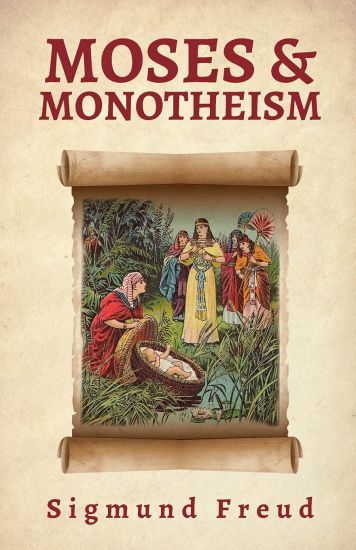
This volume contains Freud's speculations on various aspects of religion, on the basis of which he explains certain characteristics of Jewish people in their relations with Christians. From an intensive study of the Moses legend, Freud comes to the startling conclusion that Moses himself was an Egyptian who brought from his native country the religion he gave to the Jews. He accepts the hypothesis that Moses was murdered in the wilderness, but that his memory was cherished by the people and that his religious doctrine ultimately triumphed. Freud develops his general theory of monotheism, which enabled him to throw light on the development of Judaism and Christianity.
Dream Psychology Psychoanalysis for Beginners
Sigmund Freud; Andr? Tridon
Mjp Publishers
2021
nidottu
On Narcissism: An Introduction is widely considered an introduction to Freud's theories of narcissism. In the paper, Freud sums up his earlier discussions on the subject of narcissism and considers its place in sexual development. Furthermore, he looks at the deeper problems of the relation between the ego and external objects, drawing a new distinction between the 'ego-libido' and 'object-libido'. He introduces the idea of the 'ego ideal', and the self-observing agency related to it. Freud also looks briefly at his controversies with Carl Jung and Alfred Adler; indeed one of his motives for writing this was probably to show that the concept of narcissism offers an alternative to Jung's non-sexual 'libido' and Adler's 'masculine protest'.