
Kirjailija
Sigmund Freud
Kirjat ja teokset yhdessä paikassa: 1 311 kirjaa, julkaisuja vuosilta 1920–2027, suosituimpiin kuuluu The Freud/Jung Letters. Vertaile teosten hintoja ja tarkista saatavuus suomalaisista kirjakaupoista.
1 311 kirjaa
Kirjojen julkaisuvuodet: 1920–2027.

Sigmund Freud (born Sigismund Schlomo Freud; 6 May 1856 - 23 September 1939) was an Austrian neurologist and the founder of psychoanalysis, a clinical method for treating psychopathology through dialogue between a patient and a psychoanalyst. In founding psychoanalysis, Freud developed therapeutic techniques such as the use of free association and discovered transference, establishing its central role in the analytic process. Freud's redefinition of sexuality to include its infantile forms led him to formulate the Oedipus complex as the central tenet of psychoanalytical theory. His analysis of dreams as wish-fulfillments provided him with models for the clinical analysis of symptom formation and the underlying mechanisms of repression. On this basis Freud elaborated his theory of the unconscious and went on to develop a model of psychic structure comprising id, ego and super-ego. Freud postulated the existence of libido, a sexualised energy with which mental processes and structures are invested and which generates erotic attachments, and a death drive, the source of compulsive repetition, hate, aggression and neurotic guilt. In his later works, Freud developed a wide-ranging interpretation and critique of religion and culture. Though in overall decline as a diagnostic and clinical practice, psychoanalysis remains influential within psychology, psychiatry, and psychotherapy, and across the humanities. It thus continues to generate extensive and highly contested debate with regard to its therapeutic efficacy, its scientific status, and whether it advances or hinders the feminist cause. Nonetheless, Freud's work has suffused contemporary Western thought and popular culture. W. H. Auden's 1940 poetic tribute to Freud describes him as having created "a whole climate of opinion / under whom we conduct our different lives." (wikipedia.org)
Sigmund Freud (born Sigismund Schlomo Freud; 6 May 1856 - 23 September 1939) was an Austrian neurologist and the founder of psychoanalysis, a clinical method for treating psychopathology through dialogue between a patient and a psychoanalyst. In founding psychoanalysis, Freud developed therapeutic techniques such as the use of free association and discovered transference, establishing its central role in the analytic process. Freud's redefinition of sexuality to include its infantile forms led him to formulate the Oedipus complex as the central tenet of psychoanalytical theory. His analysis of dreams as wish-fulfillments provided him with models for the clinical analysis of symptom formation and the underlying mechanisms of repression. On this basis Freud elaborated his theory of the unconscious and went on to develop a model of psychic structure comprising id, ego and super-ego. Freud postulated the existence of libido, a sexualised energy with which mental processes and structures are invested and which generates erotic attachments, and a death drive, the source of compulsive repetition, hate, aggression and neurotic guilt. In his later works, Freud developed a wide-ranging interpretation and critique of religion and culture. Though in overall decline as a diagnostic and clinical practice, psychoanalysis remains influential within psychology, psychiatry, and psychotherapy, and across the humanities. It thus continues to generate extensive and highly contested debate with regard to its therapeutic efficacy, its scientific status, and whether it advances or hinders the feminist cause. Nonetheless, Freud's work has suffused contemporary Western thought and popular culture. W. H. Auden's 1940 poetic tribute to Freud describes him as having created "a whole climate of opinion / under whom we conduct our different lives." (wikipedia.org)

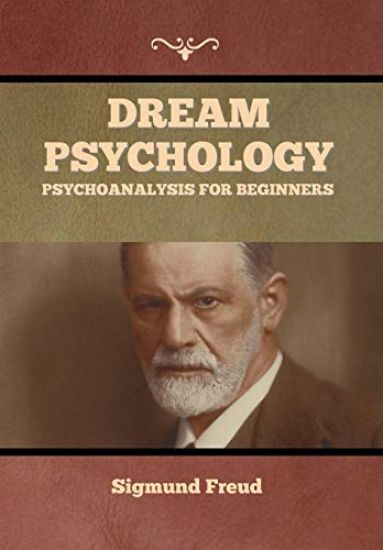
First published in 1900, it provides a groundbreaking theory of dreams and an innovative method for interpreting them that captivates readers to this day. The book represents Freud's first major attempt to set out his theory of a dynamic unconscious, created in childhood, which operates continuously in every human mind. For Freud, dreaming is a mental activity that follows its own logic. By identifying its mechanisms, Freud also shed new light on the workings of the unconscious and its powerful role in human life.
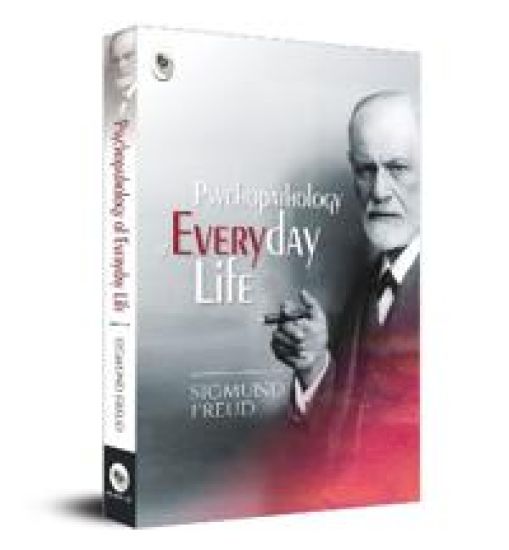
Psychopathology of Everyday Life is a seminal work by Sigmund Freud, the father of psychoanalysis. This captivating book delves into the hidden meanings behind everyday slips of the tongue, forgetfulness, and other seemingly innocent errors. Freud's groundbreaking theories shed light on the unconscious mind and reveal the psychological underpinnings of common human experiences. Freud's insightful analysis of common mental phenomena and their significance. Engaging case studies that illustrate the principles of psychoanalysis. Thought-provoking exploration of the unconscious and its impact on behavior. A foundational text for students, psychologists, and those interested in the workings of the mind. A must-read for anyone seeking a deeper understanding of human psychology and behavior.
Dette essay blev skrevet i eftera°ret 1915 i Wien et a°r efter Den Store Krigs udbrud. Anledningen var et nationalistisk prydbind med korte bidrag fra mere end ethundrede forfattere, kunstnere, videnskabsfolk, politikere og soldater, for at samle penge ind til de tyske biblioteker. Spadsereturen, der udgør essayets ramme, foregik i Dolomitterne, og de to samtalepartnere er formentlig Rainer Maria Rilke og Lou Andreas-Salome´. Freud udgav tre a°r senere hovedværket Trauer und Melancholie, hvori hans psykoanalytiske teori om sorg udfoldes. Træsnittet pa° smudsomslaget forestiller en »Melancholicus«, og er et ofte brugt kalendermotiv fra omtrent 1480.
This book has been considered by academicians and scholars of great significance and value to literature. This forms a part of the knowledge base for future generations. So that the book is never forgotten we have represented this book in a print format as the same form as it was originally first published. Hence any marks or annotations seen are left intentionally to preserve its true nature.

V knige, ozaglavlennoj v originale "Leonardo da Vinchi i pamjat ego detstva", Frejd ochertil "psikhobiografiju" velikogo khudozhnika, uchenogo i izobretatelja kak kvintessentsiju cheloveka epokhi Vozrozhdenija. Frejd nachal issledovanie lichnosti Leonardo da Vinchi (1452-1519) osenju 1909 goda i opublikoval ee v mae 1910 g. Ego monografija o Leonardo da Vinchi byla pervoj i poslednej popytkoj napisanija shirokomasshtabnoj biografii. Pechataetsja po izdaniju 1912 g. Dlja shirokogo kruga chitatelej.
"Psikhopatologija obydennoj zhizni" (1904) - odna iz kljuchevykh rabot avstrijskogo psikhologa, psikhiatra Zigmunda Frejda (1856-1939), sozdavshego teoriju psikhoanaliza, kotoraja okazala znachitelnoe vlijanie na meditsinu, gumanitarnye nauki i iskusstvo XX veka. Predstavljaet soboj sbornik esse, v kotorom na primere sluchaev iz svoej zhizni i zhizni svoikh znakomykh avtor objasnjaet, kak projavljaetsja bessoznatelnoe v povsednevnosti. Kniga vyzvala shirokij rezonans i stala odnoj iz naibolee populjarnykh u shirokoj publiki rabot avtora. Perevodchik: Medem V. D. Redaktor: Semenova A.

Raboty Zigmunda Frejda davno stali klassikoj. Ikh chitajut ne tolko psikhologi i psikhoterapevty, no vse ljudi, kotorym interesna ikh zhizn, vnutrennij mir cheloveka. Frejd otvechaet na voprosy: "Chto takoe soznanie? Chto sprjatano v nashem bessoznatelnom? Pochemu odno i to zhe sobytie ljudi mogut vspominat sovershenno po-raznomu? Chto takoe psikhicheskaja zaschita?" S etoj knigoj vy nachnete luchshe ponimat sebja i okruzhajuschikh ljudej.


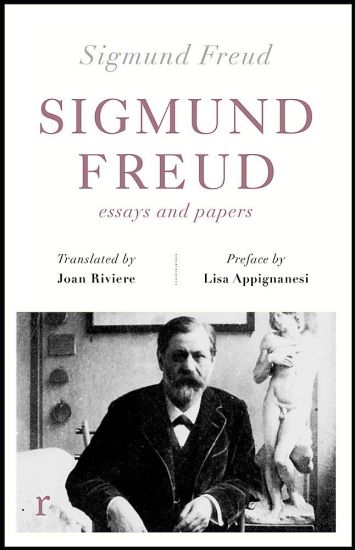
'Freud the writer is what Joan Riviere so elegantly presents to the English-Language reader'Lisa Appignanesi from her preface to Sigmund Freud: Essays and PapersThis collection focuses in on the set of Riviere's translations that made up the first library of Freud in English. Including his papers on metapsychology, applied psychoanalysis and technique, and within those broader categories are subjects as diverse as narcissism, love, paranoia and homosexuality. Riviere's great understanding of Freud's work is evident as we see his engrossingly direct arguments - the style that distinguished him from academics of his day - take shape in her talented translations. We are presented with Freud's various guises, both an essayist and master storyteller he brings to life the vagaries of his patients. Riviere was a major player in disseminating psychoanalysis into English, 'no less than the man she translated is she a figure to be hidden from history', in this collection the translator and the scientist come together in a rich, engrossing brew.
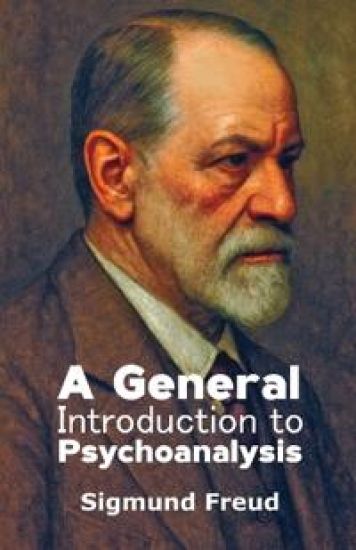
Introduction to Psychoanalysis (1916-1917) Introduction to Psychoanalysis or Introductory Lectures on Psycho-Analysis (German: Vorlesungen zur Einf hrung in die Psychoanalyse) is a set of lectures given by Sigmund Freud, the founder of psychoanalysis, in 1915-1917 (published 1916-1917). The 28 lectures offer an elementary stock-taking of his views of the unconscious, dreams, and the theory of neuroses at the time of writing, as well as offering some new technical material to the more advanced reader. The lectures became the most popular and widely translated of his works. However, some of the positions outlined in Introduction to Psychoanalysis would subsequently be altered or revised in Freud's later work and in 1932 he offered a second set of seven lectures numbered from 29-35 - New Introductory Lectures on Psychoanalysis - as complement (though these were never read aloud and featured a different, sometimes more polemical style of presentation.)In his three-part Introductory Lectures, by beginning with a discussion of Freudian slips in the first part, moving on to dreams in the second, and only tackling the neuroses in the third, Freud succeeded in presenting his ideas as firmly grounded in the common-sense world of everyday experience. Making full use of the lecture-form, Freud was able to engage in a lively polemic with his audience, constantly engaging the reader/listener in a discussion, so as to take on their views and deal with their possible objections. The work allows the reader acquainted with the concepts of Freud to trace the logic of his arguments afresh and follow his conclusions, backed as they were with examples from life and from clinical practice. But Freud also identified elements of his theory requiring further elaboration, as well as bringing in new material, for example on symbolism and primal fantasies, taking up with the latter a train of thought he would continue in his re-working of The Wolfman. In the New Introductory Lectures, those on dreams and anxiety/instinctual life offered clear accounts of Freud's latest thinking, while the role of the Superego received an update in lecture 31. More popular treatments of occultism, psychoanalytic applications and its status as a science helped complete the volume. AppraisalsKarl Abraham considered the lectures elementary in the best sense, for presenting the core elements of psychoanalysis in an accessible way. G. Stanley Hall in his preface to the 1920 American translation wrote: These twenty-eight lectures to laymen are elementary and almost conversational. Freud sets forth with a frankness almost startling the difficulties and limitations of psychoanalysis, and also describes its main methods and results as only a master and originator of a new school of thought can do. These discourses are at the same time simple and almost confidential, and they trace and sum up the results of thirty years of devoted and painstaking research. While they are not at all controversial, we incidentally see in a clearer light the distinctions between the master and some of his distinguished pupils. Freud himself was typically self-deprecating about the finished work, describing it privately as "coarse work, intended for the multitude".
Leonardo da Vinci, A Memory of His ChildhoodSigmund Freud Leonardo da Vinci and A Memory of His Childhood (German: Eine Kindheitserinnerung des Leonardo da Vinci) is a 1910 essay by Sigmund Freud about Leonardo da Vinci. It consists of a psychoanalytic study of Leonardo's life based on his paintings. In the Codex Atlanticus Leonardo recounts being attacked as an infant in his crib by a bird. Freud cites the passage as: "It seems that it had been destined before that I should occupy myself so thoroughly with the vulture, for it comes to my mind as a very early memory, when I was still in the cradle, a vulture came down to me, he opened my mouth with his tail and struck me a few times with his tail against my lips." According to Freud, this was a childhood fantasy based on the memory of sucking his mother's nipple. He backed up his claim with the fact that Egyptian hieroglyphs represent the mother as a vulture, because the Egyptians believed that there are no male vultures and that the females of the species are impregnated by the wind. In most representations the vulture-headed maternal deity was formed by the Egyptians in a phallic manner, her body which was distinguished as feminine by its breasts also bore the penis in a state of erection. However, the translation "Geier" (vulture), which Maria Herzfeld had used for "nibbio" in 1904 in the first edition of her book Leonardo da Vinci, der Denker, Forscher und Poet, was not exactly the kite Leonardo da Vinci had meant: a small hawk-like bird of prey, common in the Vinci area, which is occasionally a scavenger. This disappointed Freud because, as he confessed to Lou Andreas-Salom in a letter of 9 February 1919, he regarded the Leonardo essay as "the only beautiful thing I have ever written". The psychologist Erich Neumann, writing in Art and the Creative Unconscious, attempted to repair the theory by incorporating the kite. Another theory proposed by Freud attempts to explain Leonardo's fondness of depicting the Virgin Mary with St. Anne in the picture The Virgin and Child with St. Anne. Leonardo, who was illegitimate, was raised by his blood mother initially before being "adopted" by the wife of his father Ser Piero. The idea of depicting the Mother of God with her own mother was therefore particularly close to Leonardo's heart, because he, in a sense, had 'two mothers' himself. It is worth noting that in both versions of the composition (the Louvre painting and the London cartoon) it is hard to discern whether St. Anne is a full generation older than Mary. Freud also points out that, in the painting, the outline of a vulture can be seen. This is connected to the original fantasy involving the vulture in Leonardo da Vinci's crib.

Introduction to Psychoanalysis or Introductory Lectures on Psycho-Analysis (German: Vorlesungen zur Einf hrung in die Psychoanalyse) is a set of lectures given by Sigmund Freud, the founder of psychoanalysis, in 1915-1917 (published 1916-1917). The 28 lectures offer an elementary stock-taking of his views of the unconscious, dreams, and the theory of neuroses at the time of writing, as well as offering some new technical material to the more advanced reader. The lectures became the most popular and widely translated of his works. However, some of the positions outlined in Introduction to Psychoanalysis would subsequently be altered or revised in Freud's later work; and in 1932 he offered a second set of seven lectures numbered from 29-35 - New Introductory Lectures on Psychoanalysis - as complement (though these were never read aloud and featured a different, sometimes more polemical style of presentation.)In his three-part Introductory Lectures, by beginning with a discussion of Freudian slips in the first part, moving on to dreams in the second, and only tackling the neuroses in the third, Freud succeeded in presenting his ideas as firmly grounded in the common-sense world of everyday experience. Making full use of the lecture-form, Freud was able to engage in a lively polemic with his audience, constantly engaging the reader/listener in a discussion, so as to take on their views and deal with their possible objections. 4] The work allows the reader acquainted with the concepts of Freud to trace the logic of his arguments afresh and follow his conclusions, backed as they were with examples from life and from clinical practice. But Freud also identified elements of his theory requiring further elaboration, as well as bringing in new material, for example on symbolism and primal fantasies, taking up with the latter a train of thought he would continue in his re-working of The Wolfman. In the New Introductory Lectures, those on dreams and anxiety/instinctual life offered clear accounts of Freud's latest thinking, while the role of the Superego received an update in lecture 31. More popular treatments of occultism, psychoanalytic applications and its status as a science helped complete the volume.

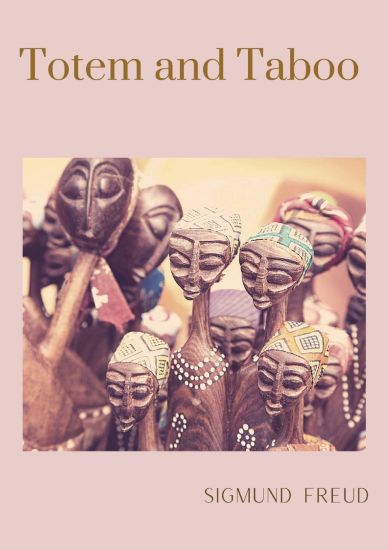
Totem and Taboo by Sigmund FreudTotem and Taboo: Resemblances Between the Mental Lives of Savages and Neurotics, or Totem and Taboo: Some Points of Agreement between the Mental Lives of Savages and Neurotics, (German: Totem und Tabu: Einige bereinstimmungen im Seelenleben der Wilden und der Neurotiker) is a 1913 book by Sigmund Freud, the founder of psychoanalysis, in which the author applies his work to the fields of archaeology, anthropology, and the study of religion. It is a collection of four essays inspired by the work of Wilhelm Wundt and Carl Jung and first published in the journal Imago (1912-13): "The Horror of Incest", "Taboo and Emotional Ambivalence", "Animism, Magic and the Omnipotence of Thoughts", and "The Return of Totemism in Childhood". Though Totem and Taboo has been seen as one of the classics of anthropology, comparable to Edward Burnett Tylor's Primitive Culture (1871) and Sir James George Frazer's The Golden Bough (1890), the work is now considered discredited by anthropologists. The cultural anthropologist Alfred L. Kroeber was an early critic of Totem and Taboo, publishing a critique of the work in 1920. Some authors have seen redeeming value in the work. Freud, who had a longstanding interest in social anthropology and was devoted to the study of archaeology and prehistory, wrote that the work of Wilhelm Wundt and Carl Jung provided him with his "first stimulus" to write the essays included in Totem and Taboo. The work was translated twice into English, first by Abraham Brill and later by James Strachey. Freud was influenced by the work of James George Frazer, including The Golden Bough (1890)." The Horror of Incest" concerns incest taboos adopted by societies believing in totemism. Freud examines the system of Totemism among the Australian Aborigines. Every clan has a totem (usually an animal, sometimes a plant or force of nature) and people are not allowed to marry those with the same totem as themselves. Freud examines this practice as preventing against incest. The totem is passed down hereditarily, either through the father or the mother. The relationship of father is also not just his father, but every man in the clan that, hypothetically, could have been his father. He relates this to the idea of young children calling all of their parents' friends as aunts and uncles. There are also further marriage classes, sometimes as many as eight, that group the totems together, and therefore limit a man's choice of partners. He also talks about the widespread practices amongst the cultures of the Pacific Islands and Africa of avoidance.

A Young Girl's Diary: by the author of The Ego and the Id An Outline of Psycho-Analysis Inhibitions Symptoms and Anxiety New Introductory Le
Sigmund Freud
Les prairies numeriques
2020
nidottu
Freud writes in his preface: '...a gem. Never before, I believe, has anything been written enabling us to see so clearly into the soul of a young girl'(first published 1915) PrefaceTHE best preface to this journal written by a young girl belonging to the upper middle class is a letter by Sigmund Freud dated April 27, 1915, a letter wherein the distinguished Viennese psychologist testifies to the permanent value of the document: "This diary is a gem. Never before, I believe, has anything been written enabling us to see so clearly into the soul of a young girl, belonging to our social and cultural stratum, during the years of puberal development. We are shown how the sentiments pass from the simple egoism of childhood to attain maturity how the relationships to parents and other members of the family first shape themselves, and how they gradually become more serious and more intimate how friendships are formed and broken. We are shown the dawn of love, feeling out towards its first objects. Above all, we are shown how the mystery of the sexual life first presses itself vaguely on the attention, and then takes entire possession of the growing intelligence, so that the child suffers under the load of secret knowledge but gradually becomes enabled to shoulder the burden. The only alterations she has made have been such as were essential to conceal the identity of the writer and of other persons mentioned in the document. Consequently, surnames, Christian names, and names of places, have been changed. These modifications have enabled the original author of the diary to allow me to place it at the free disposal of serious readers. No attempt has been made to correct trifling faults in grammar and other inelegancies of style. For the most part, these must not be regarded as the expression of a child's incapacity for the control of language. Rather must they be looked upon as manifestations of affective trends, as errors in functioning brought about by the influence of the Unconscious. About the AuthorSigmund Freud (1856-1939) is one of the twentieth century's greatest minds and the founder of the psychoanalytic school of psychology. His many works include The Ego and the Id An Outline of Psycho-Analysis Inhibitions Symptoms and Anxiety New Introductory Lectures on Psycho-Analysis Civilization and Its Discontent, and others. This early work by Sigmund Freud was originally published in 1921 and we are now republishing it with a brand new introductory biography. 'A Young Girl's Diary' is a diary of developmental interest written by a girl in early adolescence. Sigismund Schlomo Freud was born on 6th May 1856, in the Moravian town of Pr bor, now part of the Czech Republic. He studied a variety of subjects, including philosophy, physiology, and zoology, graduating with an MD in 1881. Freud made a huge and lasting contribution to the field of psychology with many of his methods still being used in modern psychoanalysis. He inspired much discussion on the wealth of theories he produced and the reactions to his works began a century of great psychological investigation.