Kirjojen hintavertailu – 12 859 818 kirjaa ja 27 kauppaa
Kirjailija
Sinclair Lewis
Kirjat ja teokset yhdessä paikassa: 346 kirjaa, julkaisuja vuosilta 1905–2026, suosituimpiin kuuluu Main Street. Vertaile teosten hintoja ja tarkista saatavuus suomalaisista kirjakaupoista.
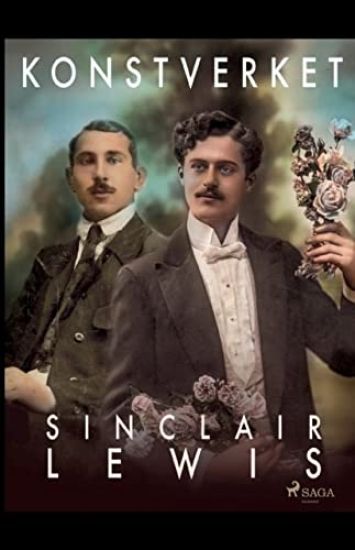
Myron och Ora är bröder och så olika varandra man kan bli. Myron är en hårt arbetande rationell person. Ora är en dagdrömmare. I generationer har deras familj arbetat på hotell och värdshus. Alla väntar sig att de två bröderna ska göra detsamma. Men inom Ora växer en önskan om att slå sig fri, om att ge sig ut i den vida världen på äventyr ... -
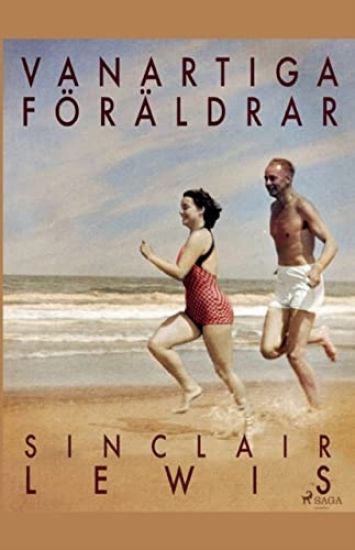
Något är fel i Fred Complows liv. Som en medelålders, välförsedd realist har han allt man kan tänka sig: fru, två välartade barn, ett hem, en respekterad karriär och något som skulle kunna kallas integritet. Men det är något som skaver. Det är som om hans barn inte tar honom på allvar. För dem är han en vandrande bank som förser dem med pengar utan att de behöver ge något tillbaka. Men Complow börjar ärligt talat bli trött på det. Det är föräldrarnas tur att begå revolt! -
Ralph Prescott håller på att tappa balansen. Livet som advokat i New York City tär på honom, men framför allt tankarna på att saker och ting inte blev som han hade hoppats plågar honom. För att finna tillbaka till meningen tar han en resa ut i Kanadas vildmarker. Men det blir inte som han tänkt sig. Vildmarken är tuff och det är lätt att gå vilse. Han blir erbjuden att stanna över hos en vänlig man, och det är då han först gången träffar den vackra, charmiga Alverna. Det blir upptakten till en snårig kärlekshistoria som bara kan sluta på ett sätt...
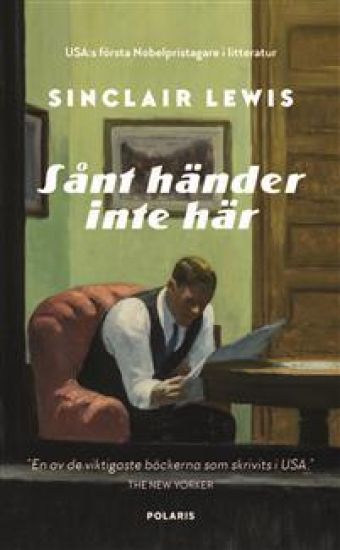
Sånt händer inte här är klart inspirerad av fascismens framväxt i Europa under 1930-talet. Det är lätt att identifiera ledare som Hitler i texten. Samtidigt är Sånt händer inte här en skrämmande aktuell roman som fått nytt liv i dagens USA.
Three years before the civic-minded Carol Kennicott came to life in Main Street, Una Golden was confronting the male dinosaurs of business. Like Carol, the heroine of The Job is one of Sinclair Lewis's most fully realized creations and was his first controversial novel. A "working girl" in New York City, Una Golden-caught in the dilemmas of marriage or career, husband or office, birth control or motherhood-is the prototype of the businesswoman of popular and literary culture.
If this were a ponderous work of realism, such as the author has attempted to write, and will doubtless essay again, it would be perilous to dedicate it to the splendid assembly of young British writers, lest the critics search for Influences and Imitations. But since this is a flagrant excursion, a tale for people who still read Dickens and clip out spring poetry and love old people and children, it may safely confess the writer's strident admiration for Compton Mackenzie, Hugh Walpole, Oliver Onions, D. H. Lawrence, J. D. Beresford, Gilbert Cannan, Patrick MacGill, and their peers, whose novels are the histories of our contemporaneous Golden Age. Nor may these be mentioned without a yet more enthusiastic tribute to their master and teacher (he probably abominates being called either a master or a teacher) - H. G. Wells
Satirical novel about American culture, society, and middle-class pressure toward conformity. An immediate and controversial bestseller, Babbitt was influential in the decision to award Lewis the Nobel Prize in literature. The word 'Babbitt' entered the English language as a person and especially a business or professional man who conforms unthinkingly to prevailing middle-class dogmas.
Rare edition with unique illustrations and elegant classic cream paper. Babbitt, first published in 1922, is a novel by Sinclair Lewis. Largely a satire of American culture, society, and behavior, it critiques the vacuity of middle-class American life and its pressure toward conformity. An immediate and controversial bestseller, Babbitt was influential in the decision to award Lewis the Nobel Prize in literature in 1930. Includes vintage illustration
Sinclair Lewis (February 7, 1885 - January 10, 1951) was an American novelist, short-story writer, and playwright. In 1930 he became the first American to be awarded the Nobel Prize in Literature, "for his vigorous and graphic art of description and his ability to create, with wit and humour, new types of characters." His works are known for their insightful and critical views of American society and capitalist values. His style is at times droll, satirical, and yet sympathetic.
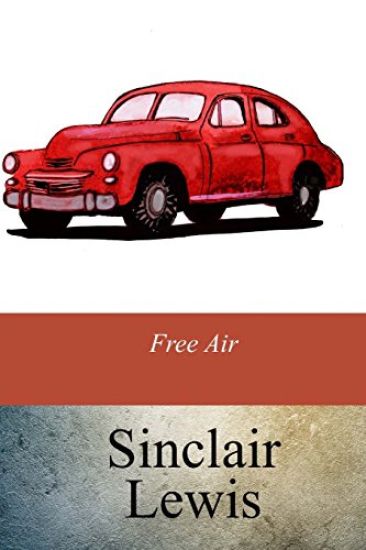
"This cheerful little road novel, published in 1919, is about Claire Boltwood, who, in the early days of the 20th century, travels by automobile from New York City to the Pacific Northwest, where she falls in love with a nice, down-to-earth young man and gives up her snobbish Estate." (From the Book Stub) From a critical perspective, Free Air is consistent with Sinclair Lewis's lean towards egalitarian politics, which he displays in his other works (most notably in It Can't Happen Here). Examples of his politics in Free Air are found in Lewis's emphasis on the heroic role played by the book's protagonist, Milt Dagget, a working class everyman type. Conversely, Lewis presents nearly every upper-class character in Claire Boltwood's world (including her railroad-mogul father) as snobby elitists. The story also champions the democratic nature of the automobile versus the more aristocratic railroad travel. Lewis's emphasis on the freedom which automobiles would eventually give the working and middle classes bolsters the egalitarian, democratic aesthetic. Free Air is one of the first novels about the road trip, a subject around which the Beats (most notably Jack Kerouac) would build a cult following in the mid-20th century. Composer Ferde Grofe used the novel as the basis for the music to his adventurous composition Free Air. In the HBO series Boardwalk Empire, set initially in 1920, Jimmy and his girlfriend Pearl are reading Free Air. The 18-year-old Chicago prostitute Pearl hopes to head West like the heroine, along with Jimmy.
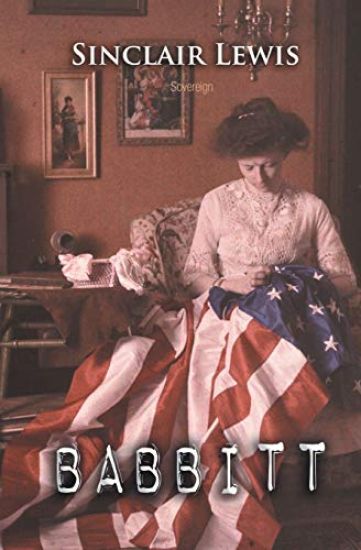
A satiric look at American society following the First World War, Babbitt is one of Sinclair Lewis's best-known works. Real estate agent George Babbitt says all the right things, has all the right friends, and belongs to all the right clubs. Though he's a man on the rise, Babbitt finds his days empty and yearns for romance and an escape from his tightly ordered life.
In this sardonic portrait of the up-and-coming middle class during the prosperous 1920s, Sinclair Lewis perfectly captures the sound, the feel, and the attitudes of the generation that created the cult of consumerism. With a sharp eye for detail and keen powers of observation, Lewis tracks successful realtor George Babbitt's daily struggles to rise to the top of his profession while maintaining his reputation as an upstanding family man. On the surface, Babbitt appears to be the quintessential middle-class embodiment of conservative values and enthusiasm for the well-to-do lifestyle of the small entrepreneur. But beneath the complacent facade, he also experiences a rising, nameless discontent. These feelings eventually lead Babbitt into risky escapades that threaten his family and his standing in the community.
A satiric look at American society following the First World War, Babbitt is one of Sinclair Lewis's best-known works. Real estate agent George Babbitt says all the right things, has all the right friends, and belongs to all the right clubs. Though he's a man on the rise, Babbitt finds his days empty and yearns for romance and an escape from his tightly ordered life.
This work has been selected by scholars as being culturally important, and is part of the knowledge base of civilization as we know it. This work was reproduced from the original artifact, and remains as true to the original work as possible. Therefore, you will see the original copyright references, library stamps (as most of these works have been housed in our most important libraries around the world), and other notations in the work. This work is in the public domain in the United States of America, and possibly other nations. Within the United States, you may freely copy and distribute this work, as no entity (individual or corporate) has a copyright on the body of the work. As a reproduction of a historical artifact, this work may contain missing or blurred pages, poor pictures, errant marks, etc. Scholars believe, and we concur, that this work is important enough to be preserved, reproduced, and made generally available to the public. We appreciate your support of the preservation process, and thank you for being an important part of keeping this knowledge alive and relevant.