Kirjojen hintavertailu – 12 859 818 kirjaa ja 27 kauppaa
Kirjailija
Sinclair Lewis
Kirjat ja teokset yhdessä paikassa: 346 kirjaa, julkaisuja vuosilta 1905–2026, suosituimpiin kuuluu Main Street. Vertaile teosten hintoja ja tarkista saatavuus suomalaisista kirjakaupoista.
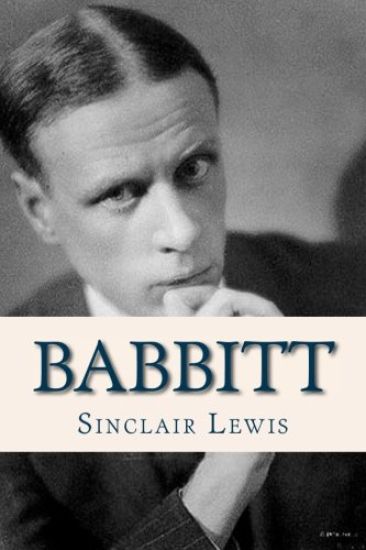
Babbitt (1922), by Sinclair Lewis, is a satirical novel about American culture and society that critiques the vacuity of middle-class life and the social pressure toward conformity. The controversy provoked by Babbitt was influential in the decision to award the Nobel Prize in literature to Lewis in 1930. The word "Babbitt" entered the English language as a "person and especially a business or professional man who conforms unthinkingly to prevailing middle-class standards".
Instantly, the dismay of it rushing at her, she saw the end of the patch of gravel. The road ahead was a wet black smear, criss-crossed with ruts. The car shot into a morass of prairie gumbo-which is mud mixed with tar, fly-paper, fish glue, and well-chewed, chocolate-covered caramels. When cattle get into gumbo, the farmers send for the stump-dynamite and try blasting. It was her first really bad stretch of road. She was frightened. Then she was too appallingly busy to be frightened, or to be Miss Claire Boltwood, or to comfort her uneasy father. She had to drive. Her frail graceful arms put into it a vicious vigor that was genius.
Babbitt es posiblemente su mejor trabajo y est considerado como uno de los libros fundamentales para entender la sociedad americana de la primera mitad del siglo pasado. Esta novela, publicada en 1922, es el retrato perfecto de una clase, la middle-class norteamericana, dentro de un marco t pico, una ciudad del Medio Oeste.
English summary: French translation of Sinclair Lewiss classic parody and critique of early twentieth-century American religiosity. French description: Elmer Gantry (introuvable en librairie depuis des annees) est le livre qui valut a Sinclair Lewis, le Nobel de litterature en 1930: un prix qui fit grincer des dents toute l'Amerique, severement epinglee pour son conformisme et son hypocrisie. Les cinephiles ont encore en memoire l'interpretation de Burt Lancaster a l'ecran, dans le role d'Elmer. Les annees ont passe et ce recit picaresque, dans la lignee des grands classiques anglo-saxons du genre, loin de nous parler d'une epoque qui s'efface dans les limbes du siecle (les Annees folles, le crime organise, les premiers predicateurs mediatiques ), nous renvoie directement a la notre. Une sympathique canaille, qui n'a pour lui qu'un culot monstre, une belle gueule et une jolie voix de baryton, decide de faire commerce dans la religion... et finit eveque d'une des plus severes eglises protestantes du pays. On assiste a son irresistible ascension, tandis qu'un frisson nous parcourt l'echine: rien n'a vraiment change.
Babbitt, by Sinclair Lewis, is largely a satire of American culture, society, and behavior, it critiques the vacuity of middle-class American life and its pressure toward conformity. An immediate and controversial bestseller, Babbitt is one of Lewis's best-known novels and was influential in the decision to award him the Nobel Prize in literature in 1930. Lewis has been both criticized and congratulated for his unorthodox writing style in Babbitt. As one reviewer puts it: "There is no plot whatever... Babbitt simply grows two years older as the tale unfolds." Lewis presents a chronological series of scenes in the life of his title character. After introducing George F. Babbitt as a middle-aged man, "nimble in the calling of selling houses for more than people could afford to pay," Lewis presents a meticulously detailed description of Babbitt's morning routine. In writing Babbitt, Lewis had very clear goals. He wanted to create not a caricature but a living and breathing individual with recognizable hopes and dreams. In a letter to his publisher, Lewis wrote: "He is all of us Americans at 46, prosperous but worried, wanting - passionately - to seize something more than motor cars and a house before it's too late." Babbitt's mediocrity is central to Lewis's hopes of creating a realistic character. He believed the fatal flaw of other authors' attempts to capture the American businessman was that they always made him out to be exceptional. In early descriptions of Babbitt, Lewis mused: "This is the story of the ruler of America." As he saw it, the "Tired American Businessman" wielded power not through his exceptionality, but through militant normalcy. But Lewis also strove to portray the American businessman as deeply dissatisfied and privately aware of his shortcomings. He was "the most grievous victim of his own militant dullness" and secretly longed for freedom and romance. Readers praising Lewis for his "realism" eagerly admitted the regularity with which they encountered Babbitts in their daily lives, but could also relate to some of Babbitt's anxieties about conformity and personal fulfillment. The word "Babbitt" entered the English language as a "person and especially a business or professional man who conforms unthinkingly to prevailing middle-class standards".