Kirjojen hintavertailu – 12 859 818 kirjaa ja 27 kauppaa

Kirjailija

Slavoj Zizek

Kirjat ja teokset yhdessä paikassa: 185 kirjaa, julkaisuja vuosilta 1991–2026, suosituimpiin kuuluu Nakanune Gospodina. Sotrjasaja ramki. Vertaile teosten hintoja ja tarkista saatavuus suomalaisista kirjakaupoista.

Nimi esiintyy myös muodoissa: Slavoj Žižek

185 kirjaa

Kirjojen julkaisuvuodet: 1991–2026.

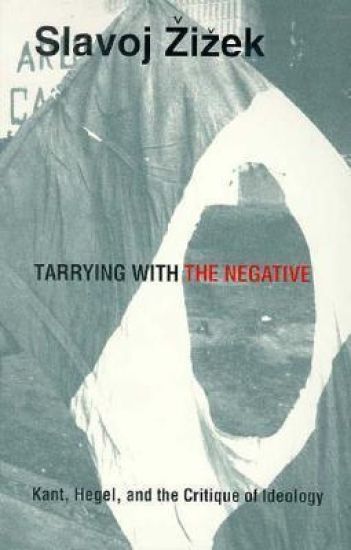
Tarrying with the Negative

Tarrying with the Negative

Slavoj Zizek

Duke University Press
1993
pokkari

Halvin toimitettuna 32,20 €

In the space of barely more than five years, with the publication of four pathbreaking books, Slavoj Žižek has earned the reputation of being one of the most arresting, insightful, and scandalous thinkers in recent memory. Perhaps more than any other single author, his writings have constituted the most compelling evidence available for recognizing Jacques Lacan as the preemient philosopher of our time. In Tarrying with the Negative, Žižek challenges the contemporary critique of ideology, and in doing so opens the way for a new understanding of social conflict, particularly the recent outbursts of nationalism and ethnic struggle. Are we, Žižek asks, confined to a postmodern universe in which truth is reduced to the contingent effect of various discursive practices and where our subjectivity is dispersed through a multitude of ideological positions? No is his answer, and the way out is a return to philosophy. This revisit to German Idealism allows Žižek to recast the critique of ideology as a tool for disclosing the dynamic of our society, a crucial aspect of which is the debate over nationalism, particularly as it has developed in the Balkans-Žižek's home. He brings the debate over nationalism into the sphere of contemporary cultural politics, breaking the impasse centered on nationalisms simultaneously fascistic and anticolonial aspirations. Provocatively, Žižek argues that what drives nationalistic and ethnic antagonism is a collectively driven refusal of our own enjoyment. Using examples from popular culture and high theory to illuminate each other-opera, film noir, capitalist universalism, religious and ethnic fundamentalism-this work testifies to the fact that, far more radically than the postmodern sophists, Kant and Hegel are our contemporaries.
Tarrying with the Negative

Tarrying with the Negative

Slavoj Zizek

Duke University Press
1993
sidottu
In the space of barely more than five years, with the publication of four pathbreaking books, Slavoj Žižek has earned the reputation of being one of the most arresting, insightful, and scandalous thinkers in recent memory. Perhaps more than any other single author, his writings have constituted the most compelling evidence available for recognizing Jacques Lacan as the preemient philosopher of our time. In Tarrying with the Negative, Žižek challenges the contemporary critique of ideology, and in doing so opens the way for a new understanding of social conflict, particularly the recent outbursts of nationalism and ethnic struggle. Are we, Žižek asks, confined to a postmodern universe in which truth is reduced to the contingent effect of various discursive practices and where our subjectivity is dispersed through a multitude of ideological positions? No is his answer, and the way out is a return to philosophy. This revisit to German Idealism allows Žižek to recast the critique of ideology as a tool for disclosing the dynamic of our society, a crucial aspect of which is the debate over nationalism, particularly as it has developed in the Balkans-Žižek's home. He brings the debate over nationalism into the sphere of contemporary cultural politics, breaking the impasse centered on nationalisms simultaneously fascistic and anticolonial aspirations. Provocatively, Žižek argues that what drives nationalistic and ethnic antagonism is a collectively driven refusal of our own enjoyment. Using examples from popular culture and high theory to illuminate each other-opera, film noir, capitalist universalism, religious and ethnic fundamentalism-this work testifies to the fact that, far more radically than the postmodern sophists, Kant and Hegel are our contemporaries.
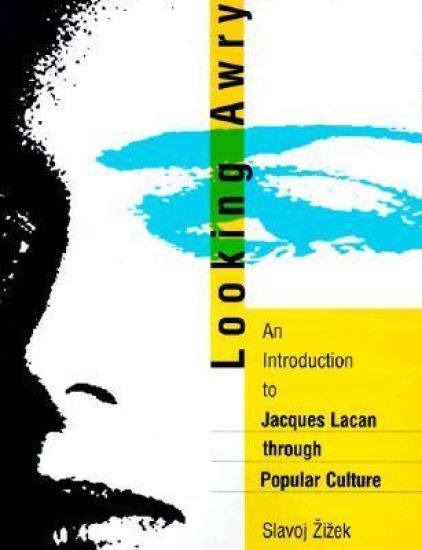
Looking Awry

Looking Awry

Slavoj Žižek

MIT Press
1992
pokkari
Slavoj Zizek, a leading intellectual in the new social movements that are sweeping Eastern Europe, provides a virtuoso reading of Jacques Lacan. Zizek inverts current pedagogical strategies to explain the difficult philosophical underpinnings of the French theoretician and practician who revolutionized our view of psychoanalysis. He approaches Lacan through the motifs and works of contemporary popular culture, from Hitchcock's Vertigo to Stephen King's Pet Sematary, from McCullough's An Indecent Obsession to Romero's Return of the Living Dead-a strategy of "looking awry" that recalls the exhilarating and vital experience of Lacan. Zizek discovers fundamental Lacanian categories the triad Imaginary/Symbolic/Real, the object small a, the opposition of drive and desire, the split subject-at work in horror fiction, in detective thrillers, in romances, in the mass media's perception of ecological crisis, and, above all, in Alfred Hitchcock's films. The playfulness of Zizek's text, however, is entirely different from that associated with the deconstructive approach made famous by Derrida. By clarifying what Lacan is saying as well as what he is not saying, Zizek is uniquely able to distinguish Lacan from the poststructuralists who so often claim him.