
Kirjailija
Slavoj Zizek
Kirjat ja teokset yhdessä paikassa: 185 kirjaa, julkaisuja vuosilta 1991–2026, suosituimpiin kuuluu Nakanune Gospodina. Sotrjasaja ramki. Vertaile teosten hintoja ja tarkista saatavuus suomalaisista kirjakaupoista.
Nimi esiintyy myös muodoissa: Slavoj Žižek
185 kirjaa
Kirjojen julkaisuvuodet: 1991–2026.
In Zizek's long-awaited magnum opus, he theorizes the "parallax gap" in the ontological, the scientific, and the political-and rehabilitates dialectical materialism. The Parallax View is Slavoj Zizek's most substantial theoretical work to appear in many years; Zizek himself describes it as his magnum opus. Parallax can be defined as the apparent displacement of an object, caused by a change in observational position. Zizek is interested in the "parallax gap" separating two points between which no synthesis or mediation is possible, linked by an "impossible short circuit" of levels that can never meet. From this consideration of parallax, Zizek begins a rehabilitation of dialectical materialism. Modes of parallax can be seen in different domains of today's theory, from the wave-particle duality in quantum physics to the parallax of the unconscious in Freudian psychoanalysis between interpretations of the formation of the unconscious and theories of drives. In The Parallax View, Zizek, with his usual astonishing erudition, focuses on three main modes of parallax: the ontological difference, the ultimate parallax that conditions our very access to reality; the scientific parallax, the irreducible gap between the phenomenal experience of reality and its scientific explanation, which reaches its apogee in today's brain sciences (according to which "nobody is home" in the skull, just stacks of brain meat-a condition Zizek calls "the unbearable lightness of being no one"); and the political parallax, the social antagonism that allows for no common ground. Between his discussions of these three modes, Zizek offers interludes that deal with more specific topics-including an ethical act in a novel by Henry James and anti-anti-Semitism. The Parallax View not only expands Zizek's Lacanian-Hegelian approach to new domains (notably cognitive brain sciences) but also provides the systematic exposition of the conceptual framework that underlies his entire work. Philosophical and theological analysis, detailed readings of literature, cinema, and music coexist with lively anecdotes and obscene jokes.
Slavoj Zizek, the maverick philosopher, author of over 30 books, acclaimed as the "Elvis of cultural theory", and today's most controversial public intellectual. His work traverses the fields of philosophy, psychoanalysis, theology, history and political theory, taking in film, popular culture, literature and jokes-all to provide acute analyses of the complexities of contemporary ideology as well as a serious and sophisticated philosophy. His recent films The Pervert's Guide to the Cinema and Zizek! reveal a theorist at the peak of his powers and a skilled communicator. Now Verso is making his classic titles, each of which stand as a core of his ever-expanding life's work, available as new editions. Each is beautifully re-packaged, including new introductions from Zizek himself. Simply put, they are the essential texts for understanding Zizek's thought and thus cornerstones of contemporary philosophy. The Ticklish Subject: The Absent Centre of Political Ontology: A specter is haunting Western thought, the specter of the Cartesian subject. In this book Slavoj Zizek unearths a subversive core to this elusive specter, and finds within it the indispensable philosophical point of reference for any genuinely emancipatory project.
Modern audiovisual media have spawned a 'plague of fantasies', electronically inspired phantasms that cloud the ability to reason and prevent a true understanding of a world increasingly dominated by abstractions-whether those of digital technology or the speculative market. Into this arena, enters Zizek: equipped with an agile wit and the skills of a prodigious scholar, he confidently ranges among a dazzling array of cultural references-explicating Robert Schumann as deftly as he does John Carpenter-to demonstrate how the modern condition blinds us to the ideological basis of our lives.
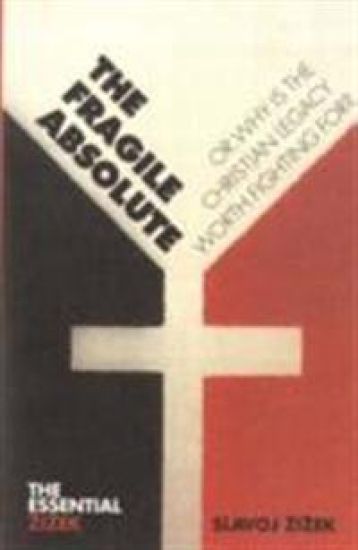
One of the signal features of our era is the re-emergence of the 'sacred' in all its different guises, from New Age paganism to the emerging religious sensitivity within cultural and political theory. The wager of Zizek's The Fragile Absolute - published here with a new preface by the author - is that Christianity and Marxism can fight together against the contemporary onslought of vapid spiritualism. The revolutionary core of the Christian legacy is too precious to be left to the fundamentalists.
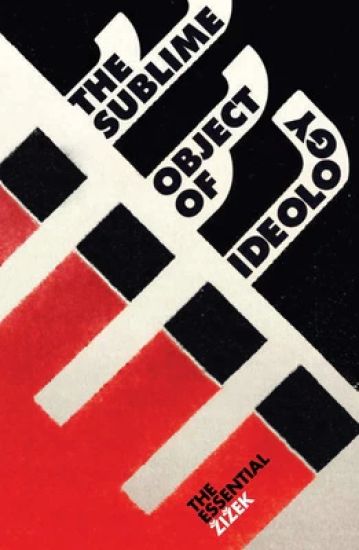
Slavoj Zizek, the maverick philosopher, author of over 30 books, acclaimed as the "Elvis of cultural theory", and today's most controversial public intellectual. His work traverses the fields of philosophy, psychoanalysis, theology, history and political theory, taking in film, popular culture, literature and jokes-all to provide acute analyses of the complexities of contemporary ideology as well as a serious and sophisticated philosophy. His recent films The Pervert's Guide to the Cinema and Zizek! reveal a theorist at the peak of his powers and a skilled communicator. Now Verso is making his classic titles, each of which stand as a core of his ever-expanding life's work, available as new editions. Each is beautifully re-packaged, including new introductions from Zizek himself. Simply put, they are the essential texts for understanding Zizek's thought and thus cornerstones of contemporary philosophy. The Sublime Object of Ideology: Slavoj Zizek's first book is a provocative and original work looking at the question of human agency in a postmodern world. In a thrilling tour de force that made his name, he explores the ideological fantasies of wholeness and exclusion which make up human society.
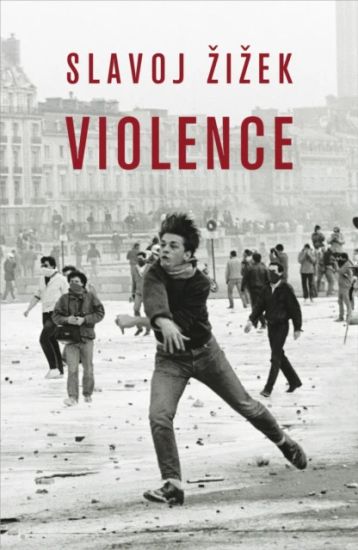
Zizek argues that the physical violence we see is often generated by the systemic violence that sustains our political and economic systems. With the help of eminent philosophers like Marx, Engel and Lacan, as well as frequent references to popular culture, he examines the real causes of violent outbreaks like those seen in Israel and Palestine and in terrorist acts around the world. Ultimately, he warns, doing nothing is often the most violent course of action we can take.

Philosopher, cultural critic, and agent provocateur Slavoj Zizek constructs a fascinating new framework to look at the forces of violence in our world. Using history, philosophy, books, movies, Lacanian psychiatry, and jokes, Slavoj Zizek examines the ways we perceive and misperceive violence. Drawing from his unique cultural vision, Zizek brings new light to the Paris riots of 2005; he questions the permissiveness of violence in philanthropy; in daring terms, he reflects on the powerful image and determination of contemporary terrorists. Violence, Zizek states, takes three forms--subjective (crime, terror), objective (racism, hate-speech, discrimination), and systemic (the catastrophic effects of economic and political systems)--and often one form of violence blunts our ability to see the others, raising complicated questions. Does the advent of capitalism and, indeed, civilization cause more violence than it prevents? Is there violence in the simple idea of "the neighbour"? And could the appropriate form of action against violence today simply be to contemplate, to think? Beginning with these and other equally contemplative questions, Zizek discusses the inherent violence of globalization, capitalism, fundamentalism, and language, in a work that will confirm his standing as one of our most erudite and incendiary modern thinkers.
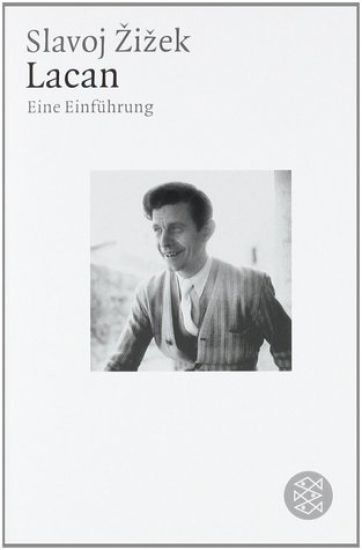
Der Psychoanalytiker Jacques Lacan gilt als ein so einflu?reicher wie schwieriger Denker. Der bekannte Kulturkritiker Slavoj Äi?ek hat sich daher die Aufgabe gestellt, Lacan einem breiteren Publikum zug?nglich zu machen. Dies gelingt ihm, indem er die zentralen Begriffe anschaulich und am?sant mit Hilfe von bekannten HollywoodFilmen erkl?rt. Eine Zeittafel sowie eine kommentierte Bibliographie zur weiterf?hrenden Lekt?re runden den Band ab.

Psychoanalysis is less merciful than Christianity. Where God the Father forgives our ignorance, psychoanalysis holds out no such hope. Ignorance is not a sufficient ground for forgiveness since it masks enjoyment; an enjoyment which erupts in those black holes in our symbolic universe that escape the Father's prohibition. Today, with the disintegration of state socialism, we are witnessing this eruption of enjoymnet in the re-emergence of aggressive nationalism and racism. With the lid of repression lifted, the desires that have emerged are far from democratic. To explain this apparent paradox, says Slavoj Zizek, socialist critical thought must turn to psychoanalysis. For They Know Not What They Do seeks to understand the status of enjoyment within ideological discourse, from Hegel through Lacan to these political and ideological deadlocks. The author's own enjoyment of "popular culture" makes this an engaging and lucid exposition, in which Hegel joins hands with Rossellini, Marx with Hitchcock, Lacan with Frankenstein, high theory with Hollywood melodrama.
The title is just the first of many startling asides, observations and insights that fill this guide to Hollywood on the Lacanian psychoanalyst’s couch. Zizek introduces the ideas of Jacques Lacan through the medium of American film, taking his examples from over 100 years of cinema, from Charlie Chaplin to The Matrix and referencing along the way such figures as Lenin and Hegel, Michel Foucault and Jesus Christ. Enjoy Your Symptom! is a thrilling guide to cinema and psychoanalysis from a thinker who is perhaps the last standing giant of cultural theory in the twenty-first century.
The Universal Exception is the second volume of the selected writings of Slavoj ek-one of the most provocative and inspiring writers on culture at work today. Bringing together a broad selection of ek's major writings on politics, The Universal Exception showcases Zizek's formidable range of interests and his style. The book includes his interventions on such world political events as the terrorist attacks of 11 September 2001 and the American-led invasion of Iraq, his celebration of the revolutionary potential of Stalinism, and his critique of Third Way politics. Together with Interrogating the Real, the first volume of ek's selected writings, this collection offers a superb introduction to the work of this prolific, controversial and vastly entertaining cultural commentator.

The feature which distinguishes the great works of materialist thought, from Lucretius' De rerum natura through Capital to the writings of Lacan, is their unfinished character: again and again they tackle their chosen problem. Schelling's Weltalter drafts belong to this same series, with their repeated attempt at the formulation of the 'beginning of the world,' of the passage from the pre-symbolic pulsation of the Real to the universe of logos. F. W. J. Schelling, the German idealist who for too long dwelled in the shadow of Kant and Hegel, was the first to formulate the post-idealist motifs of finitude, contingency and temporality. His unique work announces Marx's critique of speculative idealism, as well as the properly Freudian notion of drive, of a blind compulsion to repeat which can never be sublated in the ideal medium of language. The Indivisible Remainder begins with a detailed examination of the two works in which Schelling's speculative audacity reached its peak: his essay on human freedom and his drafts on the "Ages of the World." After reconstituting their line of argumentation, Slavoj Zizek confronts Schelling with Hegel, and concludes by throwing a Schellingian light on some "related matters": the consequences of the computerization of daily life for sexual experience; cynicism as today's predominant form of ideology; the epistemological deadlocks of quantum physics. Although the book is packed with examples from politics and popular culture - the unmistakable token of Zizek's style - from Speed and Groundhog Day to Forrest Gump, it signals a major shift towards a systematic concern with the basic questions of philosophy and the roots of the crisis of our late-capitalist universe, centred around the enigma of modern subjectivity.
The How to Read series provides a context and an explanation that will facilitate and enrich your understanding of texts vital to the canon. These books use excerpts from the major texts to explain essential topics, such as Jacques Lacan's core ideas about enjoyment, which re-created our concept of psychoanalysis. Lacan s motto of the ethics of psychoanalysis involves a profound paradox. Traditionally, psychoanalysis was expected to allow the patient to overcome the obstacles which prevented access to "normal" sexual enjoyment; today, however, we are bombarded by different versions of the injunction "Enjoy!" Psychoanalysis is the only discourse in which you are allowed not to enjoy. Slavoj i ek s passionate defense of Lacan reasserts Lacan s ethical urgency. For Lacan, psychoanalysis is a procedure of reading and each chapter reads a passage from Lacan as a tool to interpret another text from philosophy, art or popular ideology."
'The only thing of which one can be guilty is of having given ground relative to one's desire' Jacques Lacan. Is psychoanalysis dead or are we to read frequent attacks on its theoretical 'mistakes' and clinical 'frauds' as a proof of its vitality? Slavoj Zizek's passionate defence of Lacan reasserts the ethical urgency of psychoanalysis. Traditionally, psychoanalysis was expected to allow the patient to overcome the obstacles which prevented access to 'normal' sexual enjoyment. Today, however, we are bombarded from all sides by different versions of the injunction 'Enjoy!' Lacan reminds us that psychoanalysis is the only discourse in which you are allowed not to enjoy. Since for Lacan psychoanalysis itself is a procedure of reading, each chapter uses a passage from Lacan as a tool to interpret another text from philosophy, art or popular ideology, applying his ideas to Hegel and Hitchcock, Shakespeare and Dostoevsky.
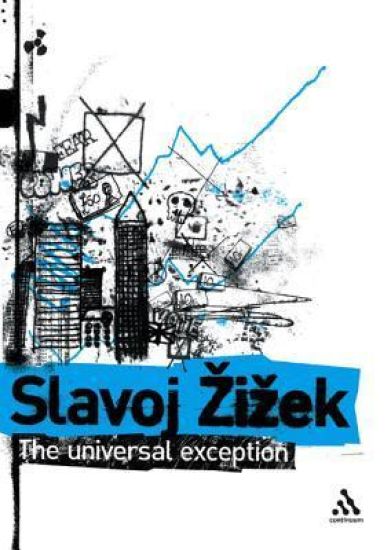
The second volume of the key writings of leading contemporary cultural commentator, Slavoj Zizek. Collecting together a broad selection of Zizek's major writings on politics, The Universal Exception showcases his formidable range of interests and his style. The book includes his writings on such right-wing icons as Ayn Rand and Leni Riefenstahl; his take on the logic of capitalism and the condition of contemporary radical politics; and his views on major current global issues and events, including the Iraq war. Together with Interrogating the Real, the first volume of Zizek's selected writings, this collection offers a superb introduction to the work of this prolific, controversial and vastly entertaining cultural commentator.

The experience of the Yugoslav war and the rise of "irrational" violence in contemporary societies provides the theoretical and political context of this book, which uses Lacanian psychoanalysis as the basis for a renewal of the Marxist theory of ideology. The author's analysis leads into a study of the figure of woman in modern art and ideology, including studies of The Crying Game and the films of David Lynch, and the links between violence and power/gender relations.

In order to render the strange logic of dreams, Freud quoted the old joke about the borrowed kettle: (1) I never borrowed a kettle from you, (2) I returned it to you unbroken, (3) the kettle was already broken when I got it from you. Such an enumeration of inconsistent arguments, of course, confirms exactly what it attempts to deny-that I returned a broken kettle to you. That same inconsistency, Zizek argues, characterized the justification of the attack on Iraq: A link between Saddam's regime and al-Qaeda was transformed into the threat posed by the regime to the region, which was then further transformed into the threat posed to everyone (but the US and Britain especially) by weapons of mass destruction. When no significant weapons were found, we were treated to the same bizarre logic: OK, the two labs we found don't really prove anything, but even if there are no WMD in Iraq, there are other good reasons to topple a tyrant like Saddam ... Iraq: The Borrowed Kettle - which can be considered as a sequel to Zizek's acclaimed post-9/11 Welcome to the Desert of the Real - analyzes the background that such inconsistent argumentation conceals and, simultaneously, cannot help but highlight: what were the actual ideological and political stakes of the attack on Iraq? In classic Zizekian style, it spares nothing and nobody, neither pathetically impotent pacifism nor hypocritical sympathy with the suffering of the Iraqi people.
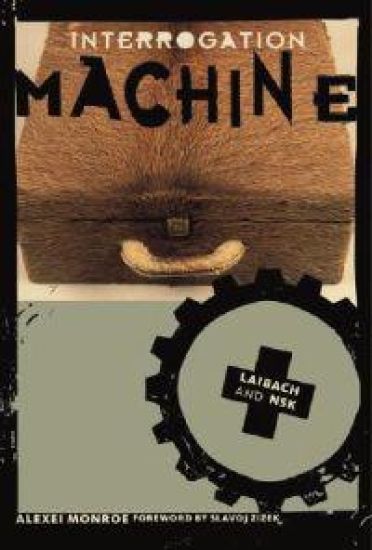
The first English-language study of NSK-one of the contemporary art world's most radical forces-with particular focus on the performances and productions of NSK's musical and conceptual division, Laibach. NSK is considered by many to be the last true avant-garde of the twentieth century and the most consistently challenging artistic force in Eastern Europe today. The acronym refers to Neue Slowenische Kunst, a Slovene collective that emerged in the wake of Tito's death and was shaped by the breakup of Yugoslavia. Its complex and disturbing work-in fields including experimental music and theater, painting, philosophy, writing, performance, and design-has an international following but a powerful and specific cultural context. Within the NSK organization are a number of divisions, the best-known of which is Laibach, an alternative music group known for its blending of popular culture with subversive politics, high art with underground provocation-reflecting the political and cultural chaos of its time. In Interrogation Machine, Alexei Monroe offers the first critical appraisal of the entire NSK phenomenon, from its elaborate organizational structure and its internal logics to its controversial public actions. The result is a fascinating portrait not only of NSK but of the complex political and cultural context within which it operates. Monroe analyzes the paradoxes, perplexities, and traumas of NSK's work at its deepest levels. His investigation of the relationships between conceptual content, stylistic method, and ideological subtext demonstrates the relevance of NSK in general and Laibach in particular to current debates about culture, power, war, politics, globalization, the marketplace, and life itself. As Slavoj Zizek writes in his foreword, "Today, the lesson of Laibach is more pertinent than ever." Monroe uses a variety of theoretical and historical approaches, as is appropriate to the shifting and elusive nature of his subject. The use of theory reflects NSK's own theoretical engagement; it is also a valuable way to read the issues raised by the work. Neither oversimplifying nor uncritically mystifying, Monroe leaves intact the "gaps, contradictions, and shadows" inherent in his subject, demonstrating that "it should still be possible to appreciate the work as art that moves, confuses, agitates, or fascinates."
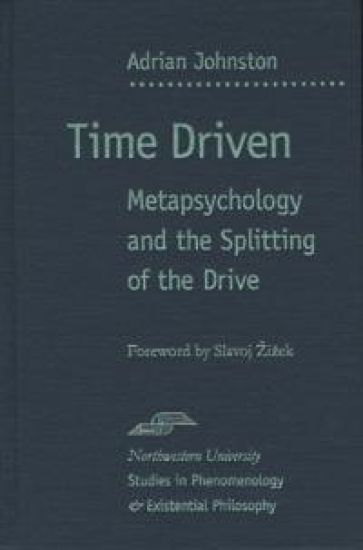
Elaborating the fundamental concept of Trieb, or drive, Freud outlines two basic types of conflict that at once disturb and organize mental life; the conflict between drives and reality; and the conflict between the drives themselves (as in amorous Eros against the aggressive death drive). In Time Driven, Adrian Johnston identifies a third distinct type of conflict overlooked by Freud; the conflict embedded within each and every drive. By bringing this critical type of conflict to light and explaining its sobering consequences for an understanding of the psyche, Johnston's book makes an essential theoretical contribution to Continental philosophy. His work offers a philosophical interpretation and reassessment of psychoanalysis that places it in relationship to the larger stream of ideas forming our world and, at the same time, clarifies its original contribution to our understanding of the human situation. Johnston draws on Jacques Lacan's oeuvre in conjunction with certain philosophical resources - elements from transcendental philosophy, structuralism, and phenomenology - to rectify the inconsistencies within the Freudian metapsychological model of drive. In doing so, he helps to answer a question haunting Freud at the end of his career: Why is humanity plagued by a perpetual margin of discontent, despite technological and cultural progress? In Time Driven, Johnston is able to make sense of Freud's metapsychology both as a whole and in its historical development of Lacan's reinterpretation of Freud, and of the place of both Freud and Lacan in modern philosophy.